If you’re still asking yourself “what is an electric vehicle, exactly?” you’re not alone. EVs have gone from quirky outliers to more than one in ten new cars sold in the U.S., and over a quarter of new cars globally. Yet the basics, how they work, what kinds exist, and what they’re like to live with, are still fuzzy for a lot of drivers.
Big picture: EVs are becoming the new normal
What is an electric vehicle, really?
An electric vehicle (EV) is any car that uses one or more electric motors for propulsion and stores energy in a rechargeable battery. Instead of burning gasoline or diesel in an engine, an EV draws electricity from its battery, sends it to the motor, and turns that into motion.
- A conventional car: fuel tank → engine → transmission → wheels
- An electric vehicle: battery → inverter → electric motor → wheels
That’s the basic definition. In practice, there are several flavors of “electric”, from hybrids that only dabble in electrons to pure battery‑electric vehicles that never visit a gas station. We’ll get to those in a moment.
Plain‑English definition
How an electric vehicle works in plain English
Strip away the marketing gloss and an electric vehicle is surprisingly simple. Compared with a gas car’s hundred‑piece orchestra of pumps, pulleys, belts, filters, and fluids, an EV is more like a three‑piece jazz trio.
The key parts of an electric vehicle
Fewer moving parts, different failure points
High‑voltage battery
This is the EV’s "fuel tank," usually a big, flat pack under the floor. It stores energy in kilowatt‑hours (kWh). The higher the number, the more range, much like gallons in a gas tank.
Electric motor
The motor converts electrical energy into motion. It delivers instant torque, which is why even ordinary EVs feel quick from a stop.
Inverter & power electronics
These components manage power flow between the battery, motor, and charger. Think of them as the conductor making sure everyone plays in time.
What happens when you press the pedal in a gas car
- Air and fuel mix, ignite, and explode in cylinders.
- Pistons move up and down thousands of times per minute.
- A crankshaft, transmission, and driveshaft send power to the wheels.
- Heat, vibration, and friction wear out hundreds of parts over time.
What happens in a battery electric vehicle (BEV)
- The car’s computer requests power from the battery.
- The inverter feeds electricity to the motor.
- The motor spins immediately, driving the wheels directly.
- When you lift off or brake, the motor often runs in reverse, sending energy back to the battery (regenerative braking).
Why this matters for ownership
The main types of electric vehicles
“Electric vehicle” is now a big tent. To understand what you’re shopping for, it helps to know the three main categories you’ll see on spec sheets and window stickers.
Types of electric vehicles at a glance
How BEVs, plug‑in hybrids, and regular hybrids compare.
| Type | Fuel source | Plug‑in? | Typical electric range | Gas backup? |
|---|---|---|---|---|
| BEV (Battery Electric Vehicle) | Electricity only | Yes | 150–350+ miles | No |
| PHEV (Plug‑in Hybrid) | Electricity + gasoline | Yes | 20–60 miles | Yes |
| HEV (Hybrid, non plug‑in) | Gasoline (with small battery assist) | No | N/A (can’t drive electric‑only very far) | Yes |
All three use electricity, but only two can be plugged in.
Which type of electric vehicle is which?
Battery Electric Vehicle (BEV)
This is the purest form of electric vehicle. It runs only on battery power, charges from the grid, and never burns fuel. Examples include many Teslas, the Hyundai Ioniq 5, Kia EV6, and most new‑generation EVs. This is also what most people mean when they say “EV.”
Plug‑in Hybrid Electric Vehicle (PHEV)
A PHEV has a battery you can plug in plus a gasoline engine. You might get 30–50 miles of electric range for commuting, with the gas engine taking over for longer trips. It’s a bridge technology: part EV, part traditional car.
Hybrid Electric Vehicle (HEV)
A conventional hybrid (like many Toyota Prius models) charges its small battery from the engine and braking, not from a plug. It still uses gasoline for essentially all long‑distance travel, but the electric assist improves efficiency in stop‑and‑go driving.
Shopping gotcha
Why people buy electric vehicles
EVs aren’t fringe anymore
Key advantages of electric vehicles
What owners usually notice first
Quick, smooth acceleration
Even modest EVs jump off the line thanks to instant motor torque. There’s no gear hunting, no lag, just a smooth, continuous shove. For city driving, that responsiveness is addictive.
Quieter, calmer drive
No engine growl, almost no vibration. Around town an EV feels more like a good pair of noise‑canceling headphones for your commute.
Lower local emissions
A battery electric vehicle has no tailpipe at all, which means no exhaust fumes where you and your neighbors live, walk, and breathe.
Low running costs
Electricity is often cheaper per mile than gasoline, especially if you can charge at home or take advantage of off‑peak rates. Maintenance tends to be lower too, with fewer wear items.
"Fuel" at home
For many owners, the biggest quality‑of‑life upgrade isn’t the tech, it’s waking up every morning with a full "tank" and skipping the gas station entirely.
Modern safety and tech
EVs tend to be newer designs, often with the latest driver‑assist systems, over‑the‑air software updates, and strong crash‑test performance.
Used EVs: where a lot of the value is
Ready to find your next EV?
Browse VehiclesTradeoffs and myths about electric vehicles
An honest definition of “what is an electric vehicle” has to include the downsides. Some are real compromises, others are holdover fears from the first generation of EVs.
Real tradeoffs to consider
- Charging time: Even a fast DC charger takes longer than a gas pump, especially if you arrive with a low battery and need a big refill.
- Public charging coverage: In many U.S. regions it’s improving, but still uneven. Road‑tripping in an EV requires more planning than in a gas car.
- Cold‑weather range: Batteries are like people; they don’t love the cold. Expect reduced range in winter, especially at highway speeds.
- Towing & payload: EVs can tow, but heavy loads eat into range quickly.
Lingering myths that are fading
- “EVs are slow and boring”: Reality check: many family EVs out‑accelerate legacy sports sedans.
- “Batteries only last a few years”: Modern packs typically outlive typical loan terms, and many are covered by 8‑year warranties.
- “You’ll be stranded constantly”: Most daily driving fits well below an EV’s range. With home or workplace charging, top‑ups feel routine, not risky.
- “They’re worse for the environment overall”: Over the full life cycle, most EVs produce significantly less CO₂ than comparable gas vehicles, even on grids that still use fossil fuels.
Where EVs don’t fit (yet)
EV charging basics: where the “fuel” comes from
Think of EV charging as choosing between sipping slowly overnight or gulping quickly on the road. The hardware changes; the basic idea doesn’t.
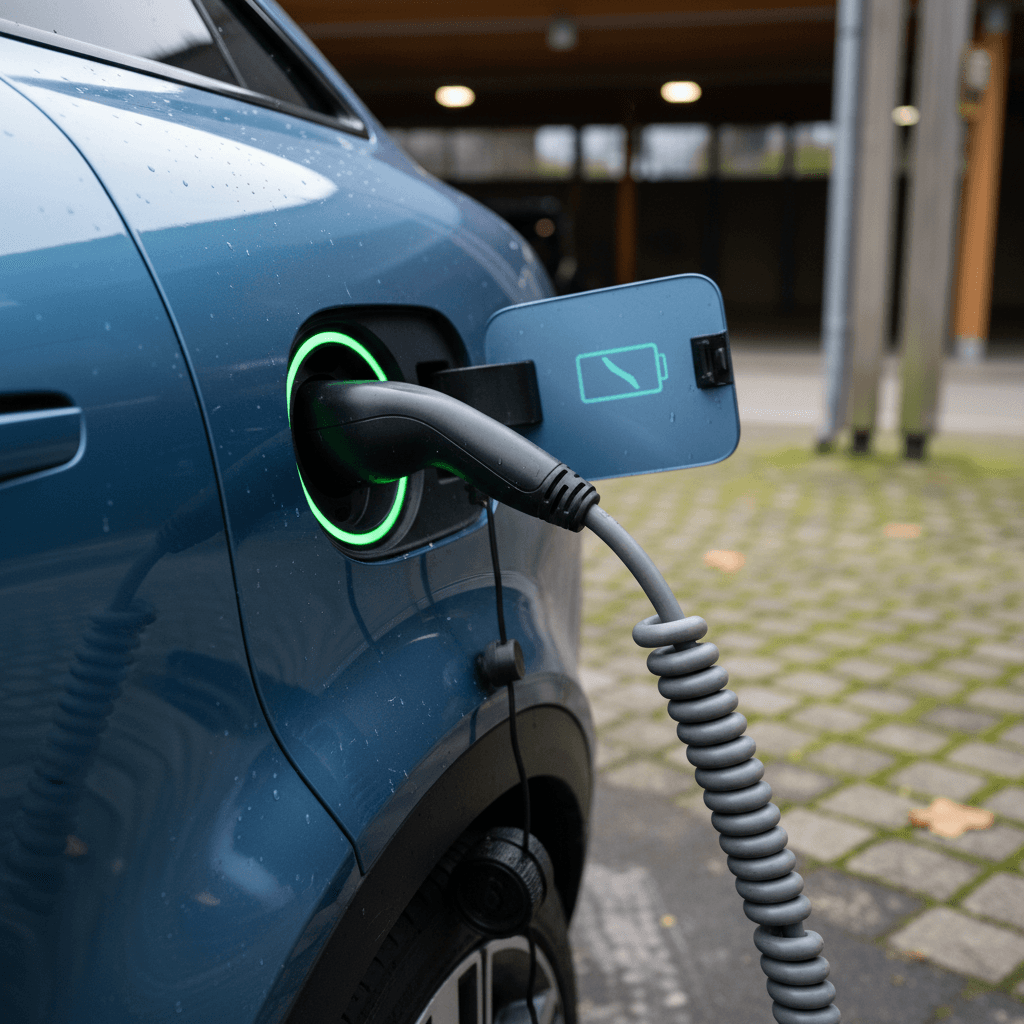
- Level 1 (120V household outlet): The slowest option. Think of this as an emergency charger or a solution for very short daily commutes, only a few miles of range per hour.
- Level 2 (240V, like a dryer outlet): The sweet spot for home and workplace charging. Typically adds 15–40 miles of range per hour depending on the car and charger.
- DC fast charging (public stations): High‑power chargers along highways and in cities. They can take you from low to 80% in roughly 20–45 minutes on many modern EVs, depending on conditions.
How to think about charging day‑to‑day
In the U.S., charging networks and standards are converging. More non‑Tesla EVs are gaining access to high‑reliability fast‑charging networks, and future models are adopting the same connector standard used by Tesla. For shoppers, that means the “where will I charge?” question is getting easier to answer each year, though it’s still important to check coverage where you actually drive.
Battery life, degradation, and why it matters
If the battery is the fuel tank and the heart of the car rolled into one, it’s natural to worry about how long it lasts. Modern EV packs use sophisticated thermal management and software to preserve health over hundreds of thousands of miles, but like phone batteries, they do slowly lose capacity over time.
- Most EV batteries lose a small amount of capacity in the first few years, then typically degrade more slowly.
- Manufacturers commonly back packs with 8‑year or 100,000‑mile (or more) warranties against excessive degradation.
- Gentle use, avoiding frequent 0–100% fast charges, keeping the car out of extreme heat when possible, can help the pack age gracefully.
Battery health matters most when you buy used
What an electric vehicle really costs to own
The sticker price is only the first chapter. To understand what an electric vehicle is in financial terms, you have to look at total cost of ownership: purchase price, fuel, maintenance, and resale value.
Where EVs save you money (and where they don’t)
Costs vary by model, electricity rates, and how you drive
Fuel vs electricity
Mile for mile, electricity often beats gasoline on cost, especially if you charge at home and avoid pricey public fast chargers. In regions with low electricity costs, savings can be substantial over several years.
Maintenance and repairs
No oil changes, no spark plugs, no exhaust system. You’ll still buy tires and brake pads, but on many EVs even the brakes last longer thanks to regenerative slowing.
Depreciation & used values
EV resale values are still sorting themselves out as tech advances. Some models depreciate faster than others, which is exactly why the used market can be a sweet spot, new‑car tech at a big discount, if you know how to read the battery’s health.
Don’t forget incentives and charging costs
Is an electric vehicle right for you?
Now that you have a working definition of what an electric vehicle is, the more important question is whether one fits your actual life. Not the life in ads; the one where you juggle school runs, meetings, road trips, and surprise hardware‑store runs.
Quick self‑check: will an EV fit my life?
1. Where will I charge most of the time?
If you can reliably charge at home or work, you’re in the EV sweet spot. If you rely entirely on public charging, you’ll want to map your local options and be honest about your patience for planning.
2. How many miles do I really drive each day?
Most U.S. drivers average well under 50 miles per day. If that sounds like you, even a modest‑range EV will feel effortless for day‑to‑day use.
3. What’s my road‑trip reality?
If you take a few long trips a year, an EV can still work, just plan charging stops along major corridors. If you live on the highway with constant 500‑mile days, a hybrid might be less stressful right now.
4. Do I prefer new tech or proven familiarity?
EVs skew toward the tech‑forward: big touchscreens, apps, and over‑the‑air updates. If that appeals to you, you’ll probably enjoy living with an EV. If you hate change, a plug‑in hybrid can be a softer landing.
5. What’s my budget, and am I open to used?
With more EVs coming off lease, the used market is growing fast. Shopping used with a solid battery‑health report, like the Recharged Score, can deliver a lot of car for the money.
How Recharged can help
Electric vehicle FAQ
Frequently asked questions about electric vehicles
So what is an electric vehicle? It’s not just a car with a battery. It’s a different way of powering the daily ritual of getting from A to B, quicker off the line, quieter on the move, and increasingly cheaper to live with, provided it fits the contours of your life. If you’re EV‑curious, the next step isn’t memorizing acronyms; it’s looking at real cars, real ranges, and real numbers. That’s where Recharged comes in: helping you translate the technology into a used EV that feels less like a gamble and more like an upgrade.