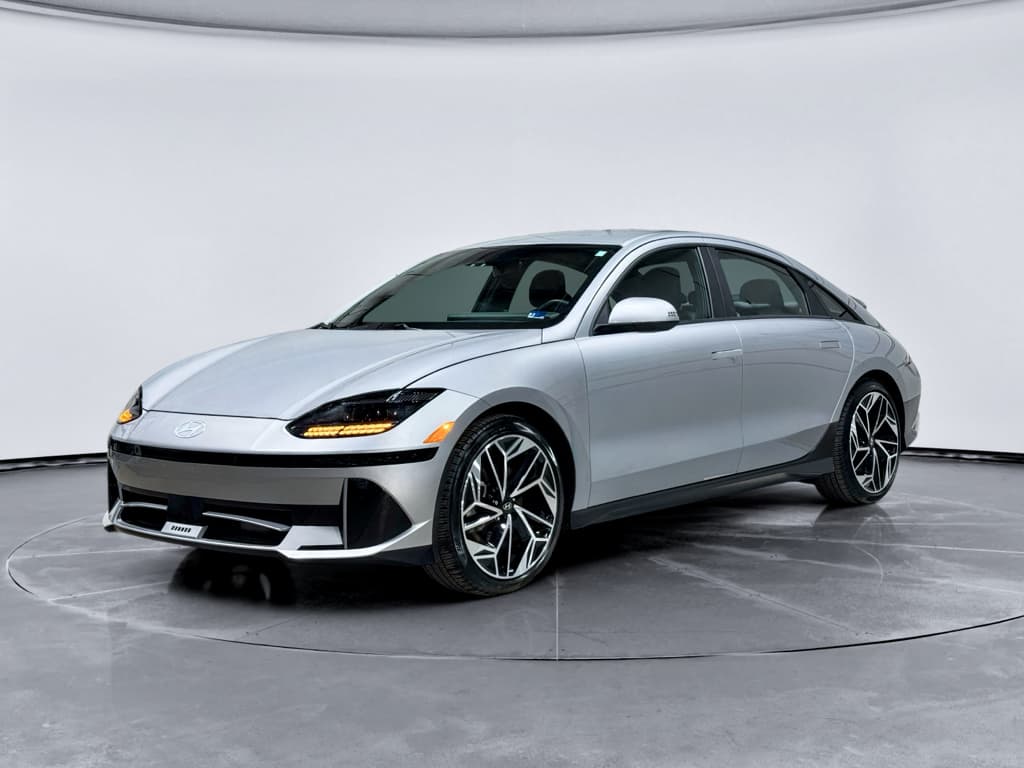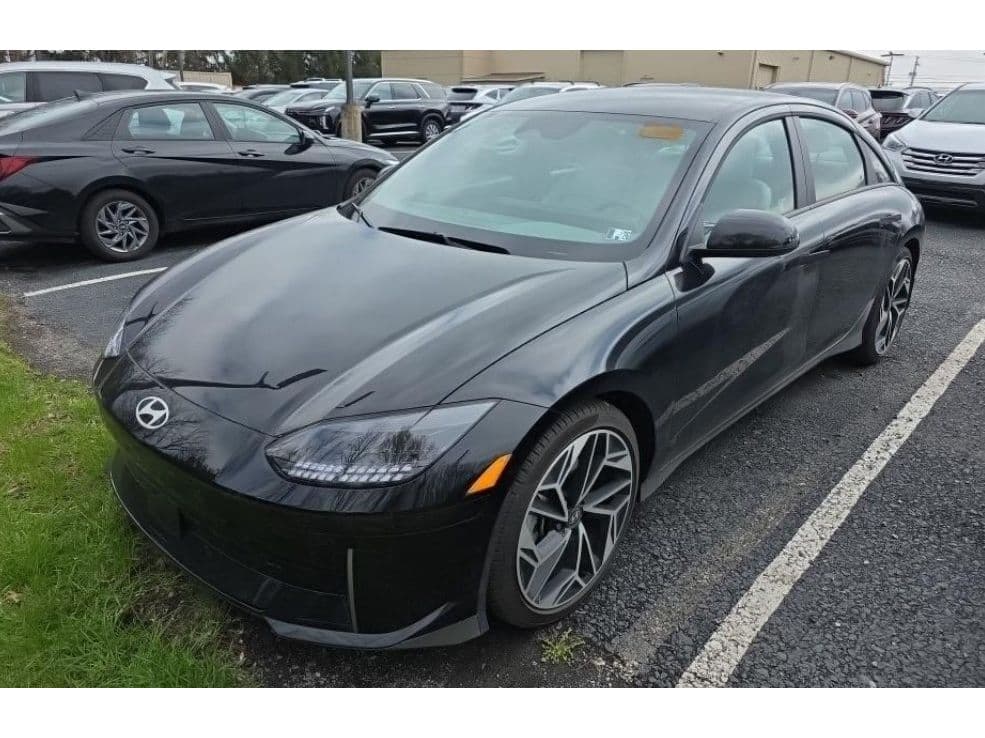
If you’re eyeing a Hyundai Ioniq 6, or already have one in the driveway, the big money question is simple: **what does the Hyundai Ioniq 6 depreciation curve look like over 5 years?** That curve quietly decides how expensive this sleek electric sedan really is to own, whether you buy new, pick one up used, or consider a lease buyout down the road.
Quick definition
Why Hyundai Ioniq 6 depreciation matters
The Hyundai Ioniq 6 is still a relatively new model, but we already have enough real‑world pricing and forecast data to sketch a clear depreciation curve. Like most EVs sold since 2023, it’s been caught in a market that shifted fast: falling EV prices, aggressive discounting from Hyundai, and changing federal tax credit rules. All of that shows up in **how hard an Ioniq 6 falls in value in the first 5 years**.
- If you’re buying new, depreciation tells you how much value you’ll likely lose if you sell in 3–5 years.
- If you’re buying used, depreciation tells you whether today’s asking price is a bargain or a future headache.
- If you’re leasing, residual values (the bank’s guess at future value) show what the market thinks the car will be worth.
EV depreciation is steeper early on
Hyundai Ioniq 6 depreciation at a glance
Snapshot of Hyundai Ioniq 6 5‑year depreciation
Multiple independent depreciation tools and ownership‑cost models point to roughly **58% depreciation for the Ioniq 6 over five years**, which matches what we’re already seeing from used‑car pricing and 5‑year ownership forecasts for 2025 models. In other words, a mainstream trim that stickers in the mid‑ to high‑$30Ks today is likely a low‑$20Ks car by year five.
The Hyundai Ioniq 6 5‑year depreciation curve explained
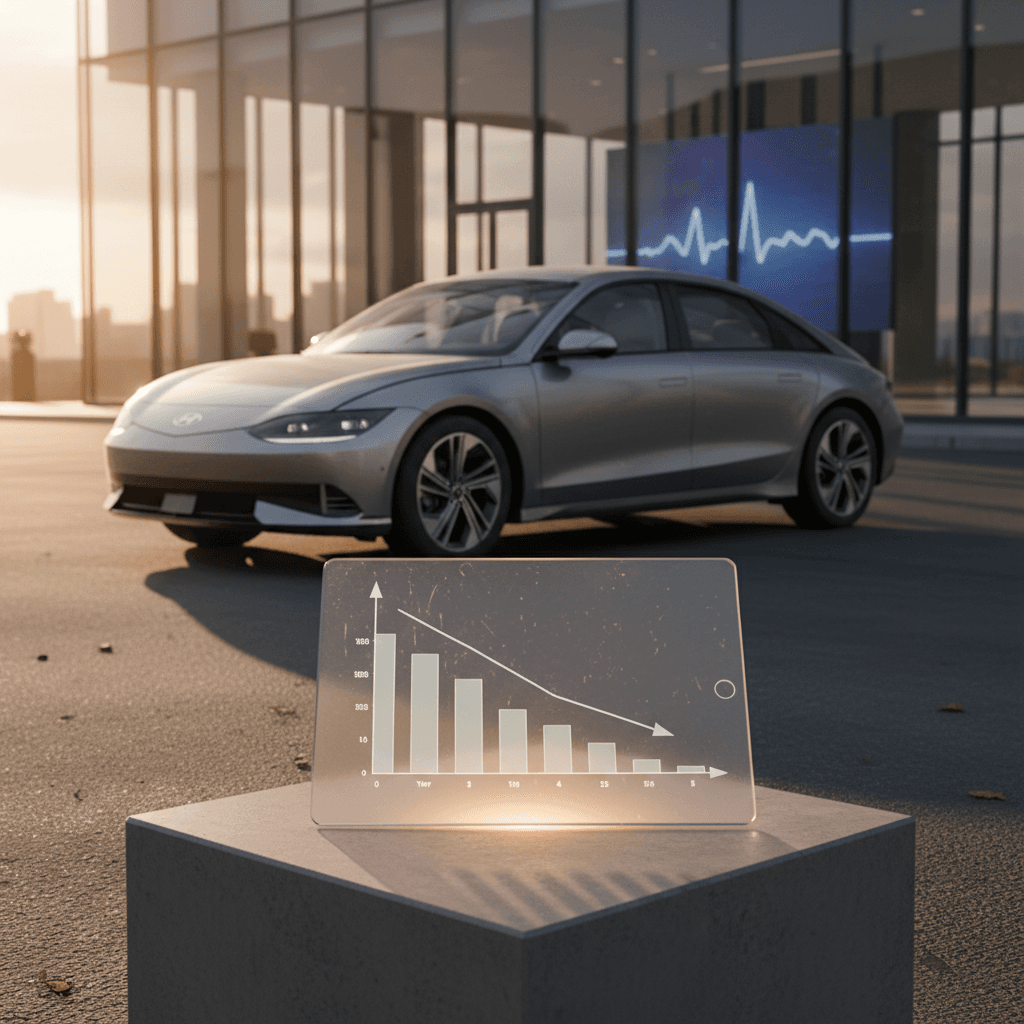
Every car’s value trace looks a little different, but the **shape** of the Hyundai Ioniq 6 depreciation curve is fairly consistent: a steep drop in the first 2–3 years, then a slower slide through years 4 and 5 as the market settles in.
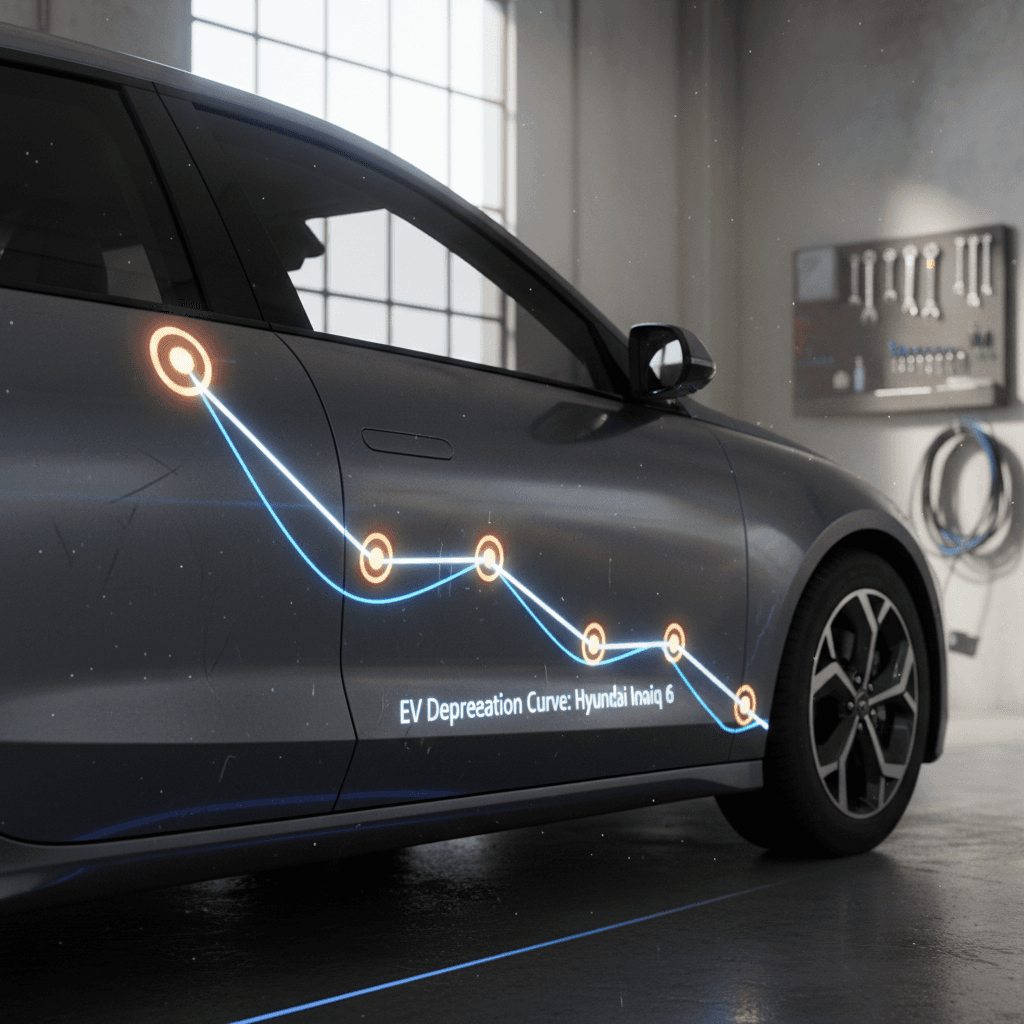
Illustrative 5‑year Hyundai Ioniq 6 depreciation curve
This example uses a notional $37,500 MSRP for a 2024 Hyundai Ioniq 6 SE, assuming average mileage and normal wear. Your actual numbers will depend on trim, incentives, and how the EV market behaves over the next few years.
| Year of ownership | Approx. % of original MSRP | Illustrative value on a $37,500 car | What’s happening |
|---|---|---|---|
| New (purchase price) | 100% | $37,500 | You’re paying close to MSRP, minus any rebates or tax credits. |
| End of Year 1 | ~80–82% | ≈$30,000–$31,000 | Initial drop once the car becomes "used" and as incentives and discounts on new Ioniq 6s reset market pricing. |
| End of Year 2 | ~68–70% | ≈$25,500–$26,000 | Price cuts on new EVs plus more used supply usually push values down another big step. |
| End of Year 3 | ~60–62% | ≈$22,500–$23,500 | The steep part of the curve starts to ease, but you’re still feeling EV‑market jitters and tech improvements. |
| End of Year 4 | ~45–48% | ≈$16,500–$18,000 | Battery age and range competitiveness matter more; shoppers compare you against newer, longer‑range rivals. |
| End of Year 5 | ~40–45% | ≈$15,000–$17,000 | The car is now "just another used EV"; its condition, miles, and battery health drive price more than model‑year bragging rights. |
Example only, not a guaranteed future price. Use it as a guide to understand the shape of the curve, not as an appraisal.
Why this doesn’t match every calculator to the dollar
Hyundai Ioniq 6 vs other EVs on depreciation
Compared with other EV sedans
Across multiple data sources, the Hyundai Ioniq 6 is tracking as a middle‑of‑the‑pack EV on depreciation over five years. It’s not the rock‑solid outlier that a Tesla Model 3 can be in some regions, but it’s also not crashing as hard as some first‑generation EVs did.
- Similar 5‑year loss to many midsize EV sedans (roughly mid‑50s to high‑50s percent).
- Better than a few early‑tech models that shed well over 60% by year five.
- Worse than the strongest‑resale EVs and some desirable plug‑in hybrids.
Compared with gas cars
Typical gas sedans still tend to hold value slightly better: think 45–55% depreciation in five years for mainstream models rather than pushing up against 60%. The catch is that EVs claw back a lot of that gap through lower running costs and, in some years, generous incentives up front.
That’s why EV ownership math always has to weigh depreciation against electricity costs, maintenance, and incentives, not just the resale price tag alone.
A used‑buyer sweet spot
7 factors that shape your personal Ioniq 6 depreciation curve
Two Ioniq 6s can start life on the same showroom floor and end up with very different resale values five years later. Here are the biggest levers that bend your **individual** depreciation curve up or down.
What pushes your Ioniq 6’s curve up or down?
You can’t control the whole market, but you can stack the deck in your favor.
Trim & options
Limited and high‑spec trims often cost more up front but don’t always return that extra money at resale. For value retention, well‑equipped mid‑trims with popular colors tend to be safer bets than oddball builds.
Mileage
Depreciation models typically assume 12,000–15,000 miles per year. Come in well under that with documented service, and you’ll usually beat the average curve; run ride‑share‑level mileage, and you’ll lag it.
Battery health
Serious EV shoppers care more about usable range than model year. A healthy battery that still delivers close to its original range helps keep your Ioniq 6’s value from sliding too far in years 4 and 5.
Region & climate
Coastal EV‑dense markets often have stronger resale for popular electric sedans. Extremely hot or cold regions can raise extra questions about battery wear unless you have good documentation.
Cosmetic condition
Buyers will forgive some miles if the car looks and feels loved. Paint, wheels, interior wear, and repair history can easily be the difference between average‑trade and top‑dollar offers.
Incentives & discounts
Big factory incentives, dealer discounts, or tax credits lower your real purchase price. That doesn’t change resale dollars later, but it can flatten your personal depreciation curve if you bought right.
The quiet killer: big price cuts on new Ioniq 6s
Buying new vs used: where you land on the curve
Whether you’re shopping new or used Ioniq 6, what you’re really deciding is **where you want to land on the depreciation curve** and who pays for which slice of it.
If you buy new
- You’re on the hook for most of the first 3 years of value loss.
- You get the full warranty timeline and the latest tech, colors, and options.
- Incentives and discounts can quietly lower your real purchase price and soften your effective depreciation.
New can still make sense if you plan to keep the car 8–10 years and are less concerned with 5‑year resale snapshots.
If you buy used (3–5 years old)
- You’re often picking the car up after it has already lost 50% or more of its MSRP.
- Your curve from year 3 to year 8 is usually much flatter, even if the first owner took a beating.
- You’ll care more about battery health and service history than about whether the window sticker ever said $37,500 or $51,000.
This is where the Ioniq 6 can be a **quietly smart buy**, modern, efficient, and still under EV warranty in many cases, but priced like a conventional used sedan.
How Recharged approaches used Ioniq 6 pricing
What leases and residual values tell you
Even if you’re not planning to lease an Ioniq 6, it’s worth peeking at the fine print. Lease programs publish **residual values**, the bank’s best guess at what the car will be worth at the end of the term. Those numbers offer a useful sanity check against online depreciation charts.
Illustrative Hyundai Ioniq 6 residual values
These sample numbers mirror the kind of residuals seen in recent Ioniq 6 lease programs. Exact figures vary by bank, mileage allowance, and month, but the pattern lines up closely with 3‑ to 5‑year depreciation forecasts.
| Lease term & miles per year | Typical residual % of MSRP | What it implies for depreciation |
|---|---|---|
| 24 months / 10,000–12,000 mi | ~60–65% | Banks expect the car to lose roughly 35–40% of MSRP in the first two years. |
| 36 months / 10,000–12,000 mi | ~52–60% | Three‑year depreciation of about 40–48%, right in line with many EV forecasts. |
| 48 months / 12,000–15,000 mi | ~42–48% | Now we’re into the heart of the 5‑year curve; another few years typically take you down into the low‑40s or high‑30s. |
Residual values aren’t guarantees, but they show how lenders think your Ioniq 6 will depreciate.
How to read lease numbers as a shopper
How to protect your Hyundai Ioniq 6 resale value
You can’t control the whole EV market, but you can absolutely influence where your own Ioniq 6 lands on the graph. Think of depreciation as partly a market story and partly a **care‑and‑feeding story.**
7 moves that flatten your personal depreciation curve
1. Keep a clean paper trail
Save every service invoice and recall repair, and keep your digital records organized. A tidy history reassures buyers and appraisers, especially as the car approaches years 4 and 5.
2. Baby the battery
Avoid frequent 100% fast‑charges and chronic deep discharges. Use scheduled charging, keep the car in a garage when possible, and show buyers that the battery has been treated well.
3. Stay on top of software
Install over‑the‑air updates and dealer software campaigns. Up‑to‑date software can improve charging behavior, range estimates, and feature stability, small things that matter on a test drive.
4. Fix small cosmetic issues early
Curb‑rashed wheels, door dings, and torn interior trim cheapen the car long before they affect how it drives. A modest investment in reconditioning often returns more than it costs when you sell.
5. Watch your miles
If you’re close to 15,000 miles per year already, think about whether long‑distance trips might be better in a rental or second car. Sliding from 12k to 20k miles per year absolutely shows up in pricing tools.
6. Time your sale
Selling right after a big wave of new‑car discounts can hurt you. If possible, list your car when incentives on new Ioniq 6s are modest and used‑EV inventory in your area is thin.
7. Get an independent battery health report
When you’re ready to sell or trade, a documented battery health check, like the Recharged Score, turns vague range anxiety into clear, verifiable data that helps justify a stronger asking price.
Don’t rely on just one pricing tool
How Recharged can help you buy or sell an Ioniq 6
Because the Hyundai Ioniq 6 is still a relatively young model with a fast‑moving market, it rewards careful, data‑driven shopping. That’s where Recharged comes in.
Making sense of Ioniq 6 depreciation with Recharged
Whether you’re buying, selling, or just curious what your car is worth, you don’t have to guess.
Recharged Score battery diagnostics
Every Ioniq 6 sold through Recharged includes a Recharged Score Report with verified battery health. Instead of guessing how the pack has aged, you see objective data that feeds into pricing and financing decisions.
Fair market pricing & financing
Recharged uses real‑time market data, not just a single depreciation curve, to price each car. You can also apply for financing online and see how different down‑payments and terms handle the expected value loss.
Selling, trade‑in, or consignment
If you’re moving on from an Ioniq 6, Recharged can make an instant offer, take a trade‑in, or list your car on consignment, backed by that same transparent battery and condition data buyers want to see.
Ready to find your next EV?
Browse VehiclesAnd if you’d rather touch and feel a few EVs before you commit, Recharged operates an **Experience Center in Richmond, VA**, where EV‑specialist staff can walk you through battery reports, ownership costs, and how depreciation plays into the total cost of ownership.
Hyundai Ioniq 6 depreciation: FAQs
Frequently asked questions about Hyundai Ioniq 6 depreciation
Bottom line: Is the Hyundai Ioniq 6 a depreciation disaster?
The short answer is no, but it’s also not a magic‑carved‑in‑stone investment. The **Hyundai Ioniq 6 depreciation curve over 5 years** looks a lot like the broader EV market: steep in the early going, then more relaxed once the car finds its place in the used‑car ecosystem. If you buy smart, keep the battery and body in good shape, and use real data, not wishful thinking, to time your exit, the Ioniq 6 can be a stylish, efficient sedan that costs you less in value loss than the headlines suggest.
And if you’d like help making the numbers real instead of theoretical, exploring used Hyundai Ioniq 6 listings with Recharged, complete with Recharged Score reports and transparent pricing, is one of the easiest ways to see exactly where each car sits on that 5‑year curve.