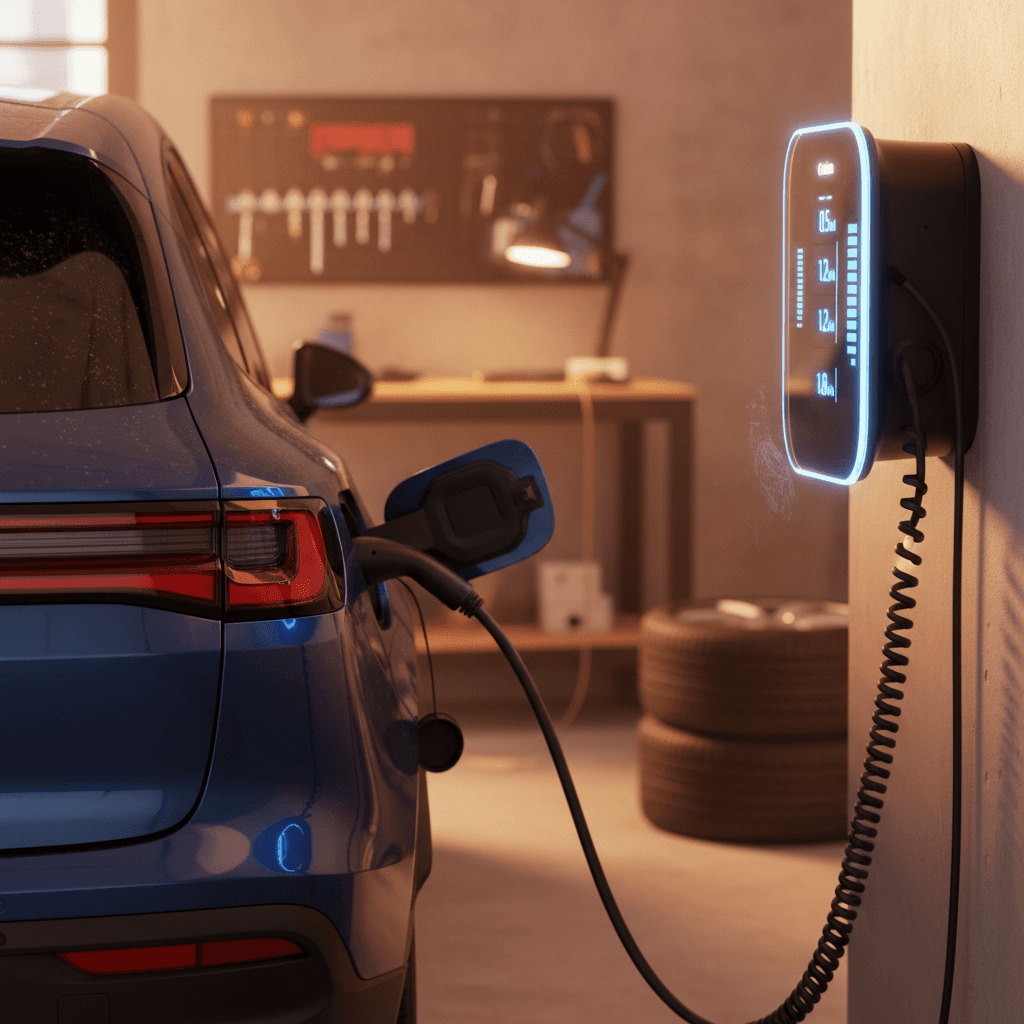
Open the window sticker on any electric car and you’re hit with a wall of numbers: 60 kWh, 82 kWh, 250 miles of range, 7.6 kW onboard charger. If you’re new to EVs, it can feel like you’ve walked into a physics exam you didn’t study for. The good news is that once you understand what a kilowatt-hour (kWh) means in electric car terms, those numbers turn into something very familiar: how big your “tank” is, how far you can go, and what it’ll cost you to drive.
In one sentence
What is a kWh in electric car terms?
A kilowatt-hour (kWh) is a unit of energy. It tells you how much electricity is stored in your battery or used while driving or charging. Think of it as the size of your fuel tank, the bigger the kWh number, the more energy the car can carry, and the farther you can potentially drive.
- If a battery is 60 kWh, it can store 60 kilowatt-hours of energy when new.
- If your car uses 30 kWh to go 100 miles, that’s its energy consumption.
- Your electric bill is charged in kWh, so the same unit describes both what your car uses and what your utility sells.
Household comparison
kWh vs kW: the two units every EV driver must know
The most common confusion is between kWh and kW. One is energy, the other is power. Here’s the plain-English version you can keep in your back pocket:
kWh: energy (the size of the tank)
- What it measures: How much electricity is stored or used.
- Where you see it: Battery size (e.g., 57 kWh), energy consumption (e.g., 27 kWh/100 miles).
- Analogy: Gallons of gas in the tank.
kW: power (how fast you fill or empty it)
- What it measures: How quickly energy flows.
- Where you see it: Charger speed (e.g., 7.2 kW home charger, 150 kW fast charger), motor power.
- Analogy: How fast the pump at the gas station can pour fuel.
Don’t mix them up
How battery size in kWh translates to real-world range
Most modern electric cars have batteries anywhere from about 50 kWh to 100 kWh, with the global sales‑weighted average for fully electric cars around the low‑60s in recent years. That raw kWh number is your starting point for understanding how far the car can actually go.
Typical EV battery sizes and rough range
Approximate ranges assume moderate driving and average efficiency. Real-world results vary with speed, weather, and terrain.
| Battery size (kWh) | Example use case | Rough range (miles) | Who it fits best |
|---|---|---|---|
| 50–60 kWh | Compact EV or base model | 180–230 miles | City and suburban drivers, shorter trips |
| 70–80 kWh | Mainstream crossover or sedan | 240–300 miles | Most families and commuters |
| 90–110 kWh | Large SUV or luxury sedan | 270–340+ miles | Road‑trip fans, towing, or large vehicles |
Use this as a ballpark guide, not a promise. Always check the specific EPA or WLTP rating for the car you’re considering.
To turn battery size into range, you need one more ingredient: efficiency, usually shown as miles per kWh (mi/kWh) or kWh per 100 miles. For 2024–2025 EVs, real‑world efficiency typically falls somewhere between about 2 and 4.5 miles per kWh, depending on how big and slippery, or brick‑shaped, your vehicle is.
Range math in action

Miles per kWh: the EV version of MPG
In gas cars, everyone talks about miles per gallon (MPG). In electric cars, the equivalent number is miles per kilowatt-hour (mi/kWh). It tells you how far the car drives on a single unit of energy, and it’s the key to understanding how thrifty, or thirsty, your EV really is.
How efficient are today’s EVs?
Here’s how that plays out on the road:
- A very efficient sedan might do 4–5 mi/kWh, stretching a 75 kWh pack to 300+ miles in the right conditions.
- A big electric pickup or SUV might return closer to 2 mi/kWh, turning that same 75 kWh into roughly 150 miles.
- Most mainstream crossovers land around 2.5–3.5 mi/kWh, depending on speed, temperature, and how much you love the accelerator pedal.
Why efficiency matters more than you think
How kWh affects charging time and speed
Charging time is just a tug of war between how much energy you need (kWh) and how fast you can add it (kW). Once you see both sides of that equation, those charger screens at the rest stop stop being mysterious.
Approximate charging times by charger power
Assumes adding 40 kWh of energy (for example, charging a mid‑size EV from about 20% to 80%). Real times vary by vehicle and conditions.
| Charger type | Power (kW) | Time to add ~40 kWh | Typical use |
|---|---|---|---|
| Level 1 (wall outlet) | 1.4 kW | ~28 hours | Emergency only, very light daily use |
| Level 2 home / workplace | 7.2 kW | ~5.5–6 hours | Overnight or all‑day top‑ups |
| Faster Level 2 | 11 kW | ~3.5–4 hours | Some home, many public stations |
| DC fast charger | 150 kW | ~15–20 minutes* | Highway stops, long trips |
Use this to compare home Level 2 charging with DC fast charging when planning your routine and road trips.
Why the asterisk on fast charging?
If you know how many kWh you typically need between charges, say 20–30 kWh for your weekday commute, you can match that to home charging power. For many drivers, a 7–11 kW Level 2 charger at home easily replenishes daily use overnight.
What a kWh means for your charging costs
Your utility charges you per kWh, so once you know how many kWh your car uses per mile and what you pay per kWh, you can ballpark your fuel costs with surprising precision.
- Find your electricity rate on your bill. In the U.S., it’s often around $0.12–$0.20 per kWh, depending on where you live and time‑of‑use pricing.
- Check your car’s efficiency. If the car uses 30 kWh/100 miles (that’s 3.3 mi/kWh), that’s 0.30 kWh per mile.
- Multiply: kWh per mile × cost per kWh. For example, 0.30 kWh × $0.16 = about $0.048, or 4.8 cents per mile.
Rule‑of‑thumb comparison to gas
Public DC fast charging is usually billed per kWh or per minute at a higher rate than home electricity. That’s normal, you’re paying for speed and infrastructure. For regular commuting, home or workplace kWh are where the real savings live.
Battery health: why your kWh “shrinks” as the car ages
Your battery’s kWh rating, 60 kWh, 82 kWh, 100 kWh, is a when-new number. Over time, all lithium‑ion batteries lose a bit of capacity. In plain language, your 75 kWh pack gradually behaves more like a 70, then 68, then 65 kWh pack as the years and miles roll on.
- Most modern EVs lose capacity slowly, often around 2–3% per year early on under normal use, then tapering off.
- After many years, an EV battery might still retain around 70–80% of its original kWh, depending on climate, fast‑charging habits, and chemistry.
- You may not notice the first few percent, but eventually your real‑world range shrinks because the battery can no longer store as many kWh.
Habits that protect your kWh
When you’re looking at a used EV, that original kWh number only tells part of the story. What matters is how many of those kilowatt‑hours are still available today, and that’s where tools like Recharged’s Recharged Score battery health report become critical.
How to use kWh numbers when shopping for a used EV
If you’re browsing used EV listings, the kWh number on the spec sheet can either be a helpful lighthouse or a misleading streetlight. Here’s how to make it work in your favor instead of tripping you up.
Smart ways to read kWh when buying used
1. Start with battery size and efficiency together
Don’t just chase the biggest kWh number. A 60 kWh pack in a very efficient sedan can travel as far as a 75 kWh pack in a chunky SUV. Look at the EPA range and estimated mi/kWh alongside capacity.
2. Think about your real daily needs
Add up your typical round‑trip miles with a margin for weather and detours. If you drive 40–60 miles a day, you may not need a 100 kWh pack; a well‑kept 60–70 kWh battery could be plenty.
3. Ask about battery health, not just kWh on paper
A car that left the factory with 82 kWh might have closer to 72–75 kWh of usable capacity years later. A proper battery health check tells you how many kWh are still actually available.
4. Consider future‑you and seasons
Range drops in cold weather, and road‑trip ambitions tend to grow over time. If a car barely covers your needs on paper, its aging kWh and winter conditions might make it feel cramped in practice.
5. Use an independent assessment
A third‑party battery health report, like the Recharged Score on every vehicle sold through <strong>Recharged</strong>, translates chemistry and kWh into an easy‑to‑read score and real‑world range estimate.
Where Recharged fits in
Ready to find your next EV?
Browse VehiclesCheat sheet: quick kWh reference for EV owners
Turn the jargon into simple rules of thumb
Bookmark these for your next test drive or charger install.
Battery size (kWh)
- 50–60 kWh: Solid for daily use and shorter trips.
- 70–80 kWh: Sweet spot for most families.
- 90+ kWh: Larger vehicles, long‑range road warriors.
Efficiency (mi/kWh)
- 4+ mi/kWh: Very efficient.
- 3–4 mi/kWh: Typical modern EV.
- <3 mi/kWh: Big, heavy, or driven hard.
Charging & cost
- Daily use: Multiply miles by kWh/mi to see what you’ll use.
- Home cost: kWh used × your rate.
- Trips: Plan around 10–80% charge windows.
FAQ: common kWh questions from EV owners
Frequently asked questions about kWh and EVs
Wrap-up: thinking in kWh like a seasoned EV driver
Once you translate the alphabet soup, kWh in electric car terms is simply your energy budget. It tells you how big your battery “tank” is, how far that tank can take you when paired with efficiency, how long you’ll spend at the plug, and what you’ll pay for every mile you drive. Combine that with a basic feel for kW (how fast you’re adding those kWh) and miles per kWh (how efficiently you’re using them), and you’re already ahead of most dealership salespeople.
If you’re just getting into EVs, or graduating from your first to your next, don’t worry about memorizing formulas. Start with your life: how far you drive, where you’ll charge, and what you can comfortably spend. Then let the kWh numbers help you compare options. And if you’d rather skip the guesswork entirely, shopping used EVs through Recharged means every car comes with a battery health report and expert support that turn those numbers into plain‑English advice tailored to you.