If you’ve started looking at used electric cars, you’ve probably run across the phrase “certified pre-owned EV” or “CPO electric vehicle.” The badge sounds reassuring, but what is a certified pre-owned EV, how is it different from any other used electric car, and is it really worth paying extra for that label?
In a nutshell
What is a certified pre-owned EV?
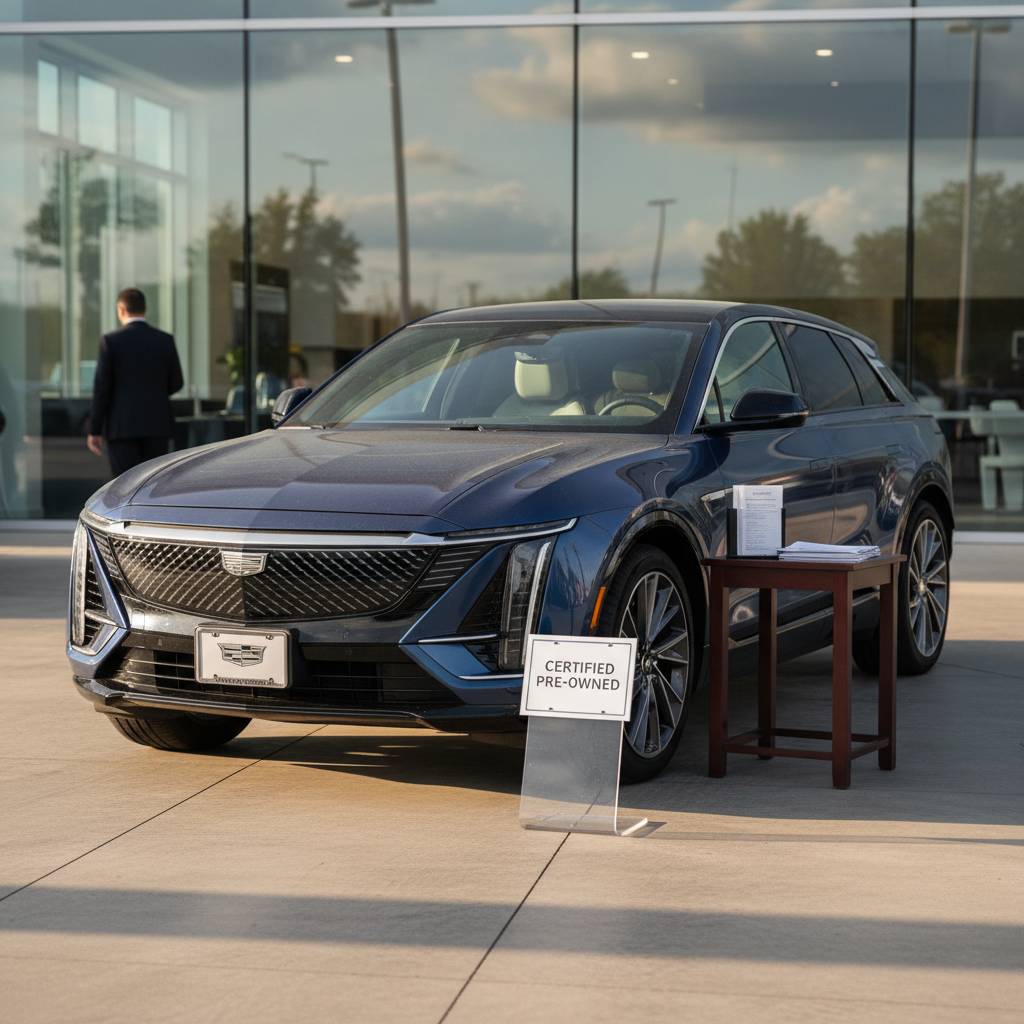
A certified pre-owned (CPO) EV is a used electric vehicle that meets specific age, mileage, and condition requirements set by the manufacturer or dealer and has passed a formal multi-point inspection. Once it clears that bar, it’s sold as part of a branded program, think “Ford Blue Advantage EV Certified,” “Hyundai Certified,” or a luxury brand’s CPO lineup, with added perks like extended warranties, roadside assistance, and sometimes special financing.
At its core, certification is about reducing the perceived risk of buying used. With EVs, that risk centers on two big questions: battery health and future repair costs. CPO programs try to answer those questions by putting the car through a standardized checklist and backing it with stronger warranty coverage than you’d get on a typical used EV purchase.
Important distinction
How certified pre-owned EV programs work
Typical certified pre-owned EV eligibility
While every brand does it differently, most CPO EV programs follow the same basic playbook:
- The dealer takes in a used EV via trade-in, lease return, auction, or company fleet.
- They screen it against the program’s age, mileage, and title-history requirements. If it falls outside those limits, it’s usually sold as a regular used vehicle instead.
- A factory-trained technician performs a multi-point inspection that covers mechanical systems, electronics, body condition, interior wear, and, importantly for EVs, battery and charging hardware checks.
- Any issues that don’t meet the program standard are repaired or parts are replaced, often using OEM components.
- Once it passes, the vehicle is enrolled in the CPO program, gets extra warranty coverage on top of whatever factory coverage is left, and is listed at a premium price compared with non-certified used EVs.
Example: Ford’s EV Certified program
What actually gets inspected on a CPO EV?
On a gasoline car, a CPO inspection is all about leaks, belts, fluids, brakes, and cosmetic issues. With an EV, the list shifts. There’s still a basic safety and drivability check, but the electric powertrain and battery system move to the center of the stage.
Key inspection areas on a certified pre-owned EV
What most branded programs say they look at
High-voltage battery & charging
- Battery diagnostic scan or capacity check
- DC fast-charge and Level 2 charge operation
- Onboard charger and charge port function
- High-voltage cabling and connectors
Electronics & software
- Infotainment and instrument cluster
- ADAS systems (lane keep, adaptive cruise, etc.)
- HVAC and heat pump operation
- Over-the-air update status where applicable
Chassis & cosmetics
- Tires, brakes, suspension, steering
- Glass, lights, body panels, paint
- Interior wear and tear
- Evidence of accident or flood damage
Look for battery-specific documentation
Battery health and warranty on certified pre-owned EVs
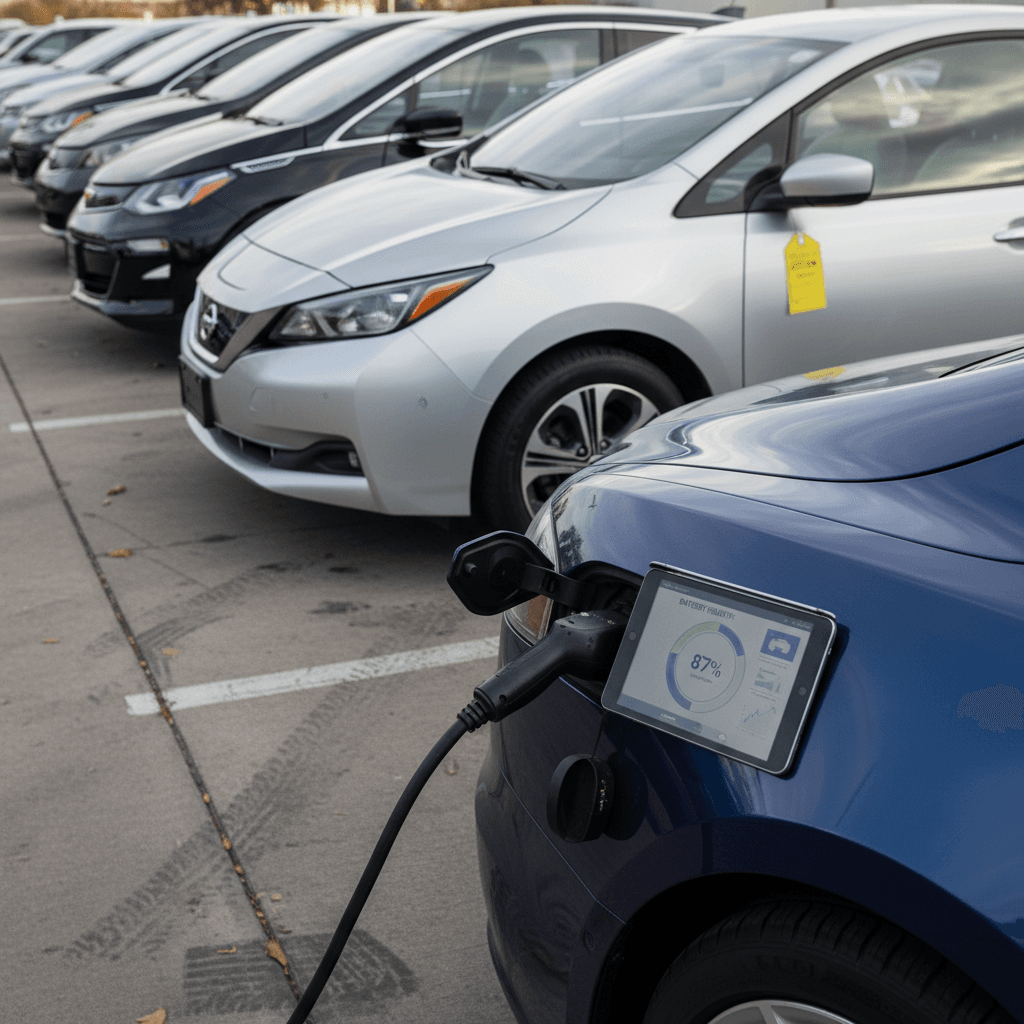
If you only remember one thing about certified pre-owned EVs, make it this: the battery warranty is the single most valuable piece of the puzzle. Replacing a high-voltage pack can run well into five figures, so knowing what’s covered, and for how long, matters more than a freshly detailed interior.
Baseline: Federal battery warranty rules
Since the mid‑2010s, U.S. rules have required that new EVs carry at least an 8‑year/100,000‑mile warranty on their propulsion batteries. Some brands go further, Hyundai and Kia, for instance, advertise 10‑year/100,000‑mile coverage on certain EV models, while premium brands like Mercedes and Rivian may extend either the mileage or specific components.
Most warranties also promise the pack will retain at least around 70% of its original capacity during that coverage window, though the exact terms vary by brand and model.
What changes when the EV is certified pre-owned?
With a CPO EV, you’re usually getting two layers of coverage:
- The remaining original battery warranty, which usually transfers to subsequent owners as long as age and mileage limits haven’t been exceeded.
- An additional CPO limited warranty that covers non‑battery systems (and sometimes extends powertrain or EV‑specific components) for a set time or mileage after you buy.
Some brands explicitly restore or enhance coverage for second owners if the car is certified, owners of CPO Kia Niro EVs, for example, often highlight that certification reinstated the full 10‑year/100,000‑mile powertrain warranty that would otherwise be reduced for a second owner.
Typical EV battery warranty coverage by brand (new vehicles)
These are example factory battery warranties on new EVs. A certified pre-owned EV usually keeps the remainder of this coverage, plus an added CPO limited warranty for other components.
| Brand | Example EV Models | Battery Warranty (Time) | Mileage Limit | Capacity Guarantee* |
|---|---|---|---|---|
| Tesla | Model 3, Model Y | 8 years | 100,000–120,000 mi | ~70% |
| Nissan | Leaf | 8 years | 100,000 mi | 70% |
| Hyundai | Ioniq 5, Kona Electric | 10 years | 100,000 mi | ~70% |
| Kia | Niro EV, EV6 | 10 years | 100,000 mi | ~70% |
| Ford | Mustang Mach‑E | 8 years | 100,000 mi | 70% |
| Polestar | Polestar 2 | 8 years | 100,000 mi | ~70% |
Always confirm exact terms for the model year you’re considering, battery and CPO warranties change over time.
Don’t assume the battery is fully tested
Certified pre-owned EV vs. regular used EV
Think of a CPO EV as a used car with a franchise dealer and an automaker standing behind it, versus a regular used EV where you’re relying largely on the seller’s word and whatever you (or your mechanic) can inspect.
Certified pre-owned EV vs. regular used EV
Where paying for the badge can make a real difference
Certified pre-owned EV
- Factory-backed or dealer-backed warranty beyond remaining factory coverage.
- Standardized multi‑point inspection and basic battery/charging checks.
- Access to brand-specific perks like roadside assistance, loaner cars, or special financing.
- Often limited to newer, lower‑mileage vehicles with clean histories.
Regular used EV
- Sold as‑is or with a short dealer warranty, if any.
- Inspection quality varies wildly from excellent to barely‑there.
- May still have plenty of original battery warranty left, but you must verify it.
- Usually lower upfront price and more negotiating room.
Where Recharged fits in
Ready to find your next EV?
Browse VehiclesHow much more do certified pre-owned EVs cost?
A certified pre-owned EV almost always carries a premium over a comparable non‑certified used EV. Depending on the brand and market, that gap can range from a few hundred dollars to several thousand.
- Brand perception and demand. Premium brands with highly rated CPO programs (think Lexus on the gas side, some luxury EV brands on the electric side) can charge more simply because shoppers trust the badge.
- Warranty length. Programs that add several years of coverage beyond factory terms, or restore first‑owner coverage for second owners, tend to price higher.
- Vehicle mix. Many CPO lineups skew toward newer, low‑mileage lease returns and high‑trim models, which already command higher prices even before certification.
- Local supply and incentives. In some markets, aggressive discounts or financing offers on new EVs can compress used prices and narrow what dealers can realistically charge for CPO inventory.
Premium vs. peace of mind
When a certified pre-owned EV is (and isn’t) worth it
When a CPO EV often makes sense
- You’re new to EVs. If this is your first electric car, the added structure and support of a CPO program can feel like training wheels while you learn the ropes of charging, range, and software updates.
- You want warranty coverage to match a new car. A late‑model CPO EV with restored or extended coverage can give you years of worry‑free driving at a lower price than brand‑new.
- You’re financing and plan to keep the car awhile. Knowing big repairs are likely covered during your loan term can be worth paying more up front.
- You’re eyeing a complex, tech‑heavy model. The more advanced the EV (air suspension, elaborate ADAS suites, four‑motor setups), the more valuable a robust CPO warranty can be.
When you may be better off with a non‑CPO used EV
- You’re paying cash and can self‑insure. If you can afford the occasional big repair, saving thousands on the purchase price of a non‑certified EV may pencil out.
- The EV still has plenty of factory battery warranty. A 3‑ or 4‑year‑old EV with a strong transferable pack warranty and a clean independent inspection can be just as safe a bet.
- The CPO premium is huge. If the certified option costs far more than a similar non‑certified vehicle, consider whether that money might be better spent on a higher‑range trim or newer model year instead.
- You prefer brand‑agnostic transparency. Independent marketplaces like Recharged can provide objective battery diagnostics and pricing benchmarks across brands, rather than tying you to a single automaker’s store.
How to shop smart for a CPO EV
Step-by-step checklist for evaluating a CPO EV
1. Look beyond the badge
Don’t stop at the “certified” logo. Ask for the brand’s <strong>full CPO brochure</strong> or web page and read what’s actually covered, what’s excluded, and how long the coverage lasts.
2. Verify battery and powertrain warranty dates
Use the in‑service date and mileage to calculate how much <strongfactory battery warranty</strong> remains. Then layer the CPO warranty on top, does it truly extend coverage or just overlap what you already have?
3. Ask how battery health was checked
Request a written <strong>battery State of Health</strong> reading, not just “it passed.” If the program offers a battery health certificate, get a copy. If not, consider ordering an independent report or working with a marketplace like Recharged that includes battery diagnostics upfront.
4. Get the full inspection report
Ask for the actual <strong>multi-point checklist</strong> with technician notes. You want to see what was inspected, what was repaired or replaced, and whether any items were borderline but passed.
5. Check for accident, flood, or lemon history
Pull a third‑party history report and compare it with the dealer’s story. A vehicle with a <strong>branded title</strong> or repeated buybacks is a poor candidate for long‑term EV ownership, certified or not.
6. Test‑drive like you mean it
On your drive, pay attention to <strong>range behavior</strong>, charging behavior (if you can test it), unexplained warning lights, and the feel of the brakes and steering. A quiet EV should make any clunks or vibrations easy to hear.
7. Run your total cost of ownership
Compare a CPO EV and a similar non‑certified EV over the years you plan to keep it. Factor in price, interest rate, projected maintenance, and the value of extra warranty coverage.
8. Consider an independent pre‑purchase inspection
Even with certification, a second set of eyes, ideally from a <strong>shop that knows EVs</strong>, can save you headaches. If you’re buying through Recharged, you’ll already have a detailed Recharged Score health report to lean on.
Bring a list of EV-specific questions
Alternatives to traditional CPO programs
CPO programs aren’t the only path to a trustworthy used EV. In fact, as the electric market matures, we’re seeing EV‑specific alternatives that can deliver equal, or better, peace of mind without the constraints of an automaker’s in‑house program.
Three paths to confidence with a used EV
Certified pre-owned is one option, not the only option
Independent EV marketplaces
Third‑party inspections & warranties
Manufacturer-backed used without full CPO
How Recharged can help
FAQ: Certified pre-owned EVs
Frequently asked questions about certified pre-owned EVs
Bottom line: Choosing the right used EV for you
A certified pre-owned EV can be a smart middle ground between new and used, especially if you value factory-backed structure, clear warranty coverage, and dealer perks. But the CPO badge is just a starting point, not a guarantee. The real story lives in the warranty terms, the battery health data, and how the specific car fits your budget and driving life.
If you’re the kind of driver who sleeps better knowing a major repair is likely covered, and you find a fairly priced CPO EV with strong battery and powertrain protection, that premium can be money well spent. If you’re more value‑driven, comfortable doing your homework, and drawn to transparent diagnostics and fair pricing across brands, a non‑certified used EV, especially one backed by a Recharged Score and EV‑savvy support, might be the better move.
Either way, slow down just long enough to read the fine print, ask detailed EV‑specific questions, and compare options side by side. The right used electric car will make every quiet, torque‑rich mile feel like you made a smart, informed choice, not a leap of faith.