If your EV keeps flashing messages about "battery preconditioning" before fast charging, you’re not imagining things. Preconditioning is your car quietly fussing over its battery temperature so it can charge faster, drive more efficiently, and age a little more gracefully. But what does preconditioning actually do for an EV battery, and when is it worth using?
Quick definition
What battery preconditioning actually does
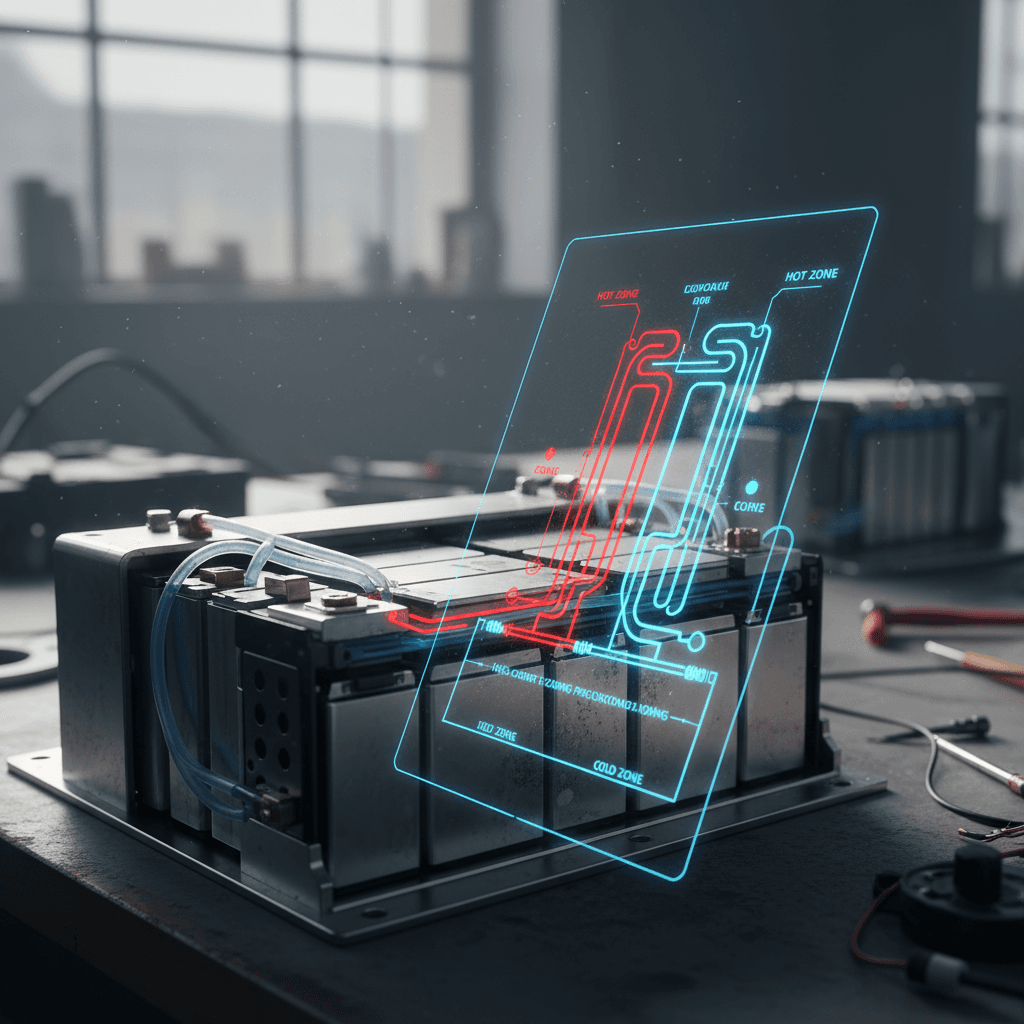
Think of preconditioning as a warm‑up lap for your EV’s battery. A modern lithium‑ion pack is happiest in a fairly narrow temperature range, roughly the mid‑teens to mid‑30s °C (about 60–95 °F), depending on chemistry. Preconditioning uses the car’s thermal management system to steer the pack into that sweet spot before you ask it to work hard, usually before DC fast charging or a cold start drive.
- Heats the pack in cold weather using resistive heaters, a heat pump, or waste motor/inverter heat routed through coolant loops.
- Cools the pack in hot weather by circulating refrigerant or coolant through the battery to shed heat before charging.
- Coordinates with the battery management system (BMS), which limits or unlocks charging power based on pack temperature and state of charge.
- Times this process so the pack is at or near target temperature right when you plug into a DC fast charger or pull out of the driveway.
The visible sign it’s working
Why battery temperature matters so much
Your EV battery isn’t a fuel tank; it’s a chemical factory. When it’s too cold, the chemistry slows down, internal resistance rises, and the pack can’t safely accept high charging power. When it’s too hot, reactions speed up in all the wrong ways, accelerating wear and sometimes forcing the car to throttle charging to avoid damage.
How temperature affects your EV battery
Same pack, very different behavior at different temps
Too cold
- Sluggish chemical reactions
- High internal resistance
- Reduced power and regen
- Very slow DC fast charging
Just right
- Healthy reaction rates
- Pack can take high charge power
- Predictable range
- Less stress per kWh charged
Too hot
- Faster degradation over time
- Charging power may be limited
- Thermal runaway risk if unmanaged
- Car burns energy to cool pack
Preconditioning is simply the car moving the battery from the “too cold” or “too hot” ends of that spectrum back toward the middle before you slam it with a high‑power DC fast charge or a demanding drive.
Key benefits of preconditioning your EV battery
What preconditioning can do for you
Those numbers vary wildly by model and conditions, but the direction is consistent: when the pack starts a charging session at the right temperature, you spend more time actually adding energy and less time waiting for the car to babysit its battery.
The big win on road trips
When you should actually use battery preconditioning
Not every drive deserves a full spa day for your battery. Preconditioning uses energy, so the trick is to deploy it when the payoff, faster charging, better power, more range, outweighs the cost.
Smart times to use battery preconditioning
1. Before DC fast charging in cold weather
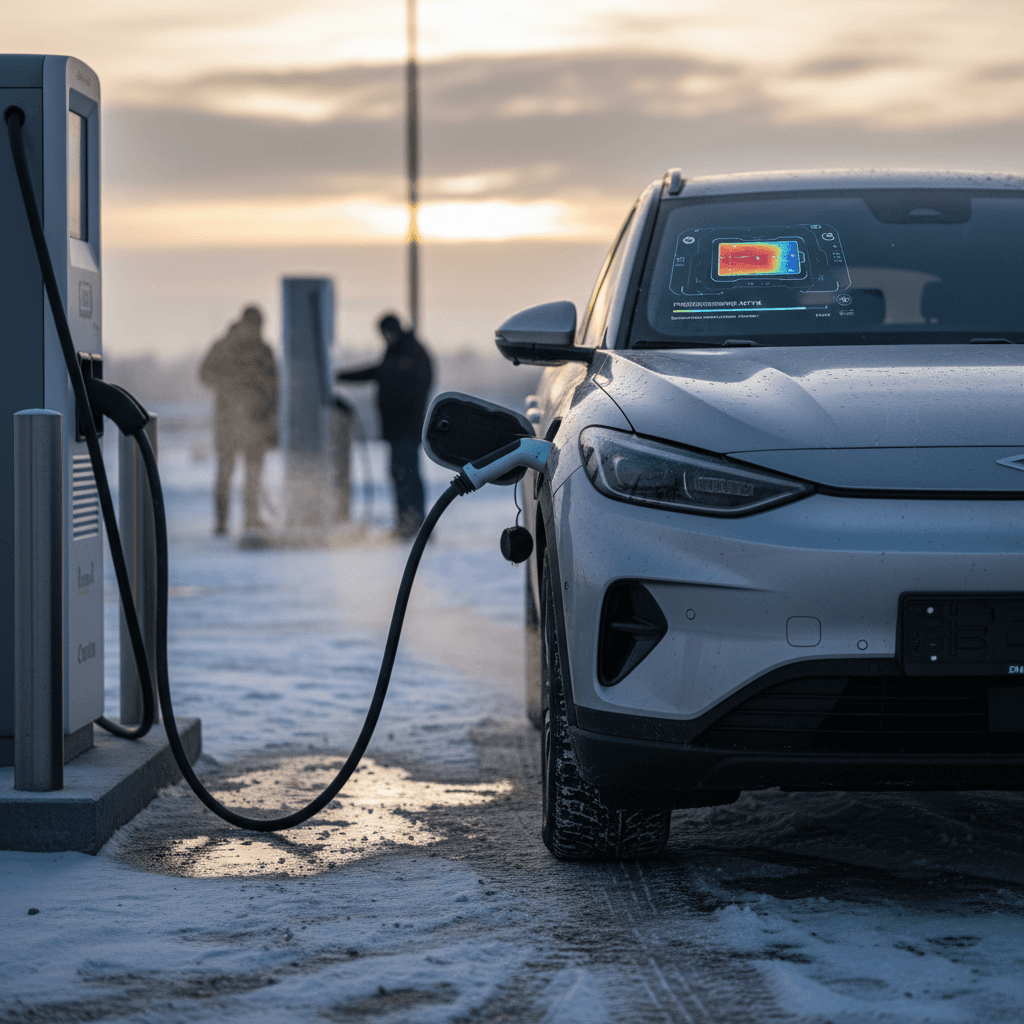
This is the headline use case. If temps are near or below freezing, start preconditioning 20–45 minutes before you reach a DC fast charger (or let the car do it automatically when you navigate there).
2. Before DC fast charging in very hot weather
In extreme heat, some EVs will actively cool the battery as part of preconditioning, allowing higher sustained charging power and reducing heat soak during the session.
3. Before an early‑morning winter commute
If your car supports scheduled departure, warming the pack while plugged in can restore regen, improve efficiency, and keep your cabin toasty without yanking as much from the battery.
4. Before towing or spirited driving
If you’re about to hitch a trailer or head into mountain passes, a battery that’s in its optimal zone will deliver more consistent power and efficiency.
5. When your EV specifically recommends it
Some brands, like Tesla, Hyundai/Kia, and GM, explicitly suggest enabling battery conditioning in certain conditions or when you plan DC fast charging. When the car asks, it’s usually for a good reason.
When you can skip it
Preconditioning myths: what it does NOT do
Myth 1: Preconditioning always saves energy
Preconditioning moves heat around; it doesn’t create free energy. If you warm the battery while plugged in, you’re shifting that energy cost to the grid instead of your pack, which helps preserve range. But if you precondition when you’re not plugged in, you’re spending battery energy up front to gain efficiency later. Sometimes that nets out positive, sometimes it’s a wash.
Myth 2: Preconditioning lets you abuse fast charging
Getting the pack to the right temperature reduces some stress, particularly things like lithium plating at very low temps, but it doesn’t erase the wear from frequent, high‑C‑rate charging. Good preconditioning is like stretching before a sprint; it helps, but it doesn’t turn you into a marathon runner.
Myth 3: It only matters below freezing
Cold is where drivers feel preconditioning most (because slow charging is so painful), but high‑temperature conditioning and cooling are just as important for long‑term health. A battery that routinely sits or charges hard when very hot will age faster.
Myth 4: It’s just cabin preconditioning
Many automakers blur the language. Cabin preconditioning heats or cools the interior; battery preconditioning is about the pack. Some vehicles do both together, some let you separate them, and a few only expose cabin controls while silently managing pack temperature in the background.
How different EV brands handle preconditioning
The idea is the same across the industry, get the battery into its happy temperature zone, but each automaker implements it differently, and the user experience ranges from seamless to “buried three menus deep.”
Examples of battery preconditioning across brands
Feature sets change quickly; always check your specific model year and software version, but these patterns are common.
| Brand / Platform | How you trigger it | Typical focus | Notes |
|---|---|---|---|
| Tesla | Navigate to a Supercharger; Scheduled Departure; app climate in some cases | Fast charging & cold‑start performance | Shows "preconditioning battery for fast charging" and, on newer software, time remaining until optimal charging. |
| Hyundai / Kia (E‑GMP: Ioniq 5/6, EV6, EV9, etc.) | Battery conditioning or Winter Mode; navigating to a DC charger; scheduled departure | Optimizing high‑power 800V DC charging | Uses heat pump and clever coolant loops to share heat between motors, cabin, and pack. |
| GM Ultium (e.g., Lyriq, Blazer EV) | Battery preconditioning settings; route planning to DC fast chargers | Cold‑weather DC charging | Owner materials often recommend starting preconditioning 30–60 minutes before a fast‑charge stop in deep cold. |
| Ford (Mach‑E, F‑150 Lightning) | Built‑in route planning; DC fast‑charge prep in settings | DC charging & winter performance | Later software updates improved automatic pre‑heating when navigating to a DC fast charger. |
| Others (VW, Nissan, Toyota, etc.) | Varies by model, some rely on nav to charger, others have limited or no explicit controls | Mix of automatic and manual | On certain models, pack heating for DC charging is mostly automatic and only partially exposed to the driver. |
How mainstream EVs trigger and use battery preconditioning
Check your manual and app
Does preconditioning help or hurt battery life?
There’s a paradox here: to protect the battery, you sometimes have to heat it up, which sounds like the opposite of babying it. In practice, used correctly, preconditioning is generally a net positive for long‑term battery health, especially if you fast‑charge regularly.
- Reduces risk of lithium plating at low temperatures by ensuring the anode isn’t being slammed with ions when it’s too cold to absorb them evenly.
- Improves reaction uniformity within cells, so you’re less likely to have localized hotspots or high‑resistance areas that age faster than the rest of the pack.
- Helps the BMS stay in its comfort zone, so it doesn’t have to clamp charging power as aggressively or as often, which makes every session shorter and less stressful.
- Still doesn’t make fast charging consequence‑free; frequent high‑power DC charging will age a battery faster than slower AC charging, even with excellent preconditioning.
Don’t chase heat for its own sake
Preconditioning, range, and real‑world cold‑weather driving
Cold‑weather range loss is where battery preconditioning earns its keep in day‑to‑day driving. When the pack is cold‑soaked, say your car sat outside overnight at 10 °F, energy goes into simply warming the battery and cabin before it can go into motion. You see this as reduced rated range, sluggish acceleration, and almost no regenerative braking.
If you precondition while plugged in, you let the grid shoulder that initial warming burden. The battery starts closer to its optimal temperature, so your first few miles are more efficient, you regain stronger regen sooner, and, if you head straight to a DC fast charger, you hit closer to the car’s published charging curve instead of limping along at a fraction of the advertised power.
Short hops vs. longer drives
Practical tips to get the most from preconditioning
Make preconditioning work in your favor
1. Precondition while plugged in whenever possible
That way, most of the heating or cooling energy comes from the wall, not your battery. You preserve more range for the actual drive or road‑trip leg.
2. Use navigation to a fast charger
On vehicles that support it, start route guidance to the DC fast charger you plan to use. Many EVs only trigger full battery preconditioning when they know you’re headed for a high‑power charger.
3. Time it so you arrive and plug in immediately
Preconditioning too early wastes energy: the pack warms, then cools off again. Aim to arrive at the charger while the car is still in, or just finishing, its preconditioning cycle.
4. Be selective on mild days
At 50–70 °F, your pack is often close enough to ideal that extra preconditioning offers marginal benefit. Save it for very cold or very hot days, or when you need your fastest possible DC session.
5. Keep an eye on energy use screens
Many EVs show when the battery heater or conditioner is running. Watching those graphs over a few trips will help you decide when preconditioning is worth the trade‑off.
6. Update your software
Automakers are continuously tweaking thermal strategies. Over‑the‑air updates can significantly improve how smartly your car handles preconditioning and cold‑weather charging.
Used EV shopping: what preconditioning means for battery health
If you’re shopping for a used EV, preconditioning is part of a larger story about how the previous owner treated the battery. A car that spent its life fast‑charging in all weather with no thermal management is a very different animal from one that mostly AC‑charged at home and only hit DC fast chargers on road trips with proper pack conditioning.
How Recharged looks at this
- If a used EV supports battery preconditioning, that’s a plus for long‑term health, especially when paired with a robust liquid‑cooled pack.
- Models that lack proper pack conditioning can still be great buys, but they may charge more slowly in cold weather and can be more finicky on road trips.
- A healthy battery today suggests that either the previous use wasn’t abusive, or the BMS and thermal system have done their job managing temperature over time.
If you’re trading in or consigning your EV, mentioning that you mainly charged at home and used preconditioning for road trips is the sort of detail a savvy buyer, and a platform like Recharged, will quietly appreciate.
FAQ: EV battery preconditioning
Frequently asked questions about EV battery preconditioning
Used thoughtfully, battery preconditioning is one of those invisible helpers that makes EV life smoother: shorter winter fast‑charge stops, more consistent range, and a battery that ages on your schedule instead of the weather’s. Learn how your specific model handles preconditioning, lean on it when temperature is working against you, and, if you’re shopping used, look for cars, and sellers, who treat the pack like the expensive, hard‑working machine it really is.