If you’ve been googling “West Virginia electric car rebate 2026”, you’ve probably noticed something strange: plenty of noise, very few straight answers. West Virginia doesn’t have a big, splashy state EV rebate like Colorado or New Jersey, but that doesn’t mean there’s nothing on the table. In 2026, most of the real money for WV drivers is hiding in utility programs, electricity rates, and smart used-EV shopping.
Quick answer
Overview: What “electric car rebate” means in West Virginia in 2026
EV incentives in West Virginia: 2026 snapshot
When people say “electric car rebate,” they usually mean a check, discount at the dealer, or tax credit that knocks thousands off the price of the car. In West Virginia, 2026 looks different: you’re not getting a state check for buying an EV, but you can still lower your costs through utility rebates, smarter charging, and used-vehicle pricing.
Cash you can actually claim
- $300 Level 2 charger rebate from Appalachian Power (TakeChargeWV Go Electric).
- Potential local electrician promos bundled with that upgrade.
- Lower per‑kWh off‑peak rates that shave your monthly bill.
Savings that behave like rebates
- Buying a used EV at a discount versus new.
- Paying far less per mile for energy than gasoline.
- Lower maintenance: no oil changes, fewer moving parts.
None of these show up as a giant line item on your tax return, but they move the math just the same.
Does West Virginia offer a state EV rebate in 2026?
Short version: no traditional state EV rebate or tax credit in 2026.
- West Virginia previously experimented with generous alternative‑fuel vehicle tax credits years ago, but those programs sunsetted and have not been revived in a modern form for battery EVs.
- As of early 2026, there is no state‑level point‑of‑sale rebate or personal income‑tax credit specifically for buying an EV.
- Instead, West Virginia has leaned on utility‑run programs and federal policy (now largely wound down) to nudge EV adoption.
Don’t confuse old articles with current reality
Appalachian Power’s $300 Level 2 charger rebate (Go Electric Program)
The most tangible West Virginia electric car rebate in 2026 is not on the car at all, it’s on the charger. Appalachian Power, through its TakeChargeWV “Go Electric” program, offers a $300 rebate per qualifying Level 2 home charger for residential and small business customers in its WV service territory.
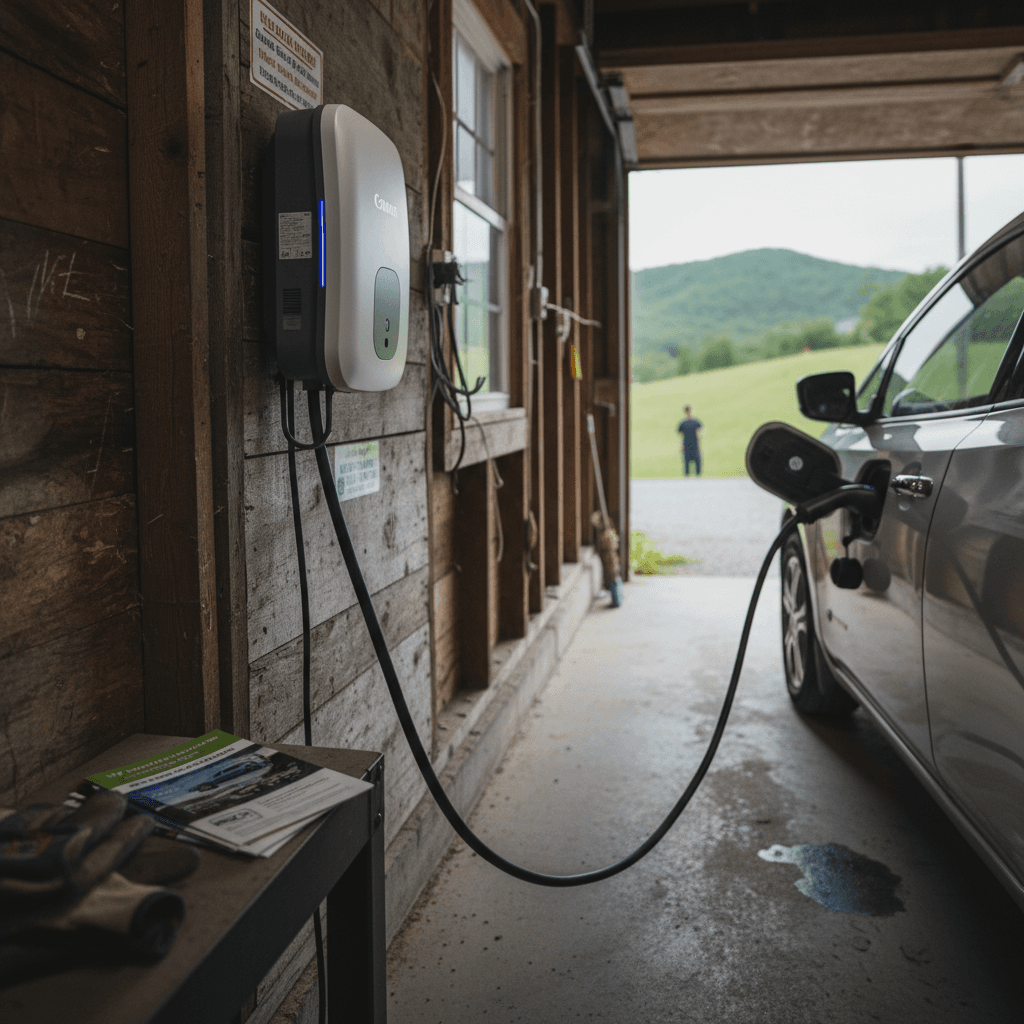
Go Electric Level 2 charger rebate: key details for 2026
What you need to know before you buy a charger and apply for the rebate.
| Item | Details (2026 snapshot) |
|---|---|
| Rebate amount | $300 per qualifying Level 2 charger |
| Who qualifies? | Residential and eligible small-business customers with an active Appalachian Power account in WV |
| Equipment type | Wi‑Fi–enabled Level 2 (240V) EV charger on the approved list |
| Max units | Typically 1 per premise (check the fine print if you own multiple chargers or sites) |
| Deadline | Charger must be purchased and installed while the program is active; receipt and application required |
| Where to apply | Through the TakeChargeWV website under the Go Electric / charger rebate section |
Program rules can change, so confirm the latest details with Appalachian Power before purchasing.
Why a home charger rebate matters more than it sounds
Off-peak EV charging rates: An underrated “hidden” rebate
In addition to the hardware rebate, Appalachian Power offers EV‑friendly rate options for West Virginia customers who charge at home. Think of this as a rebate that arrives every month in the form of a lower bill, not a single lump‑sum check.
How off‑peak EV rates work for WV drivers
Turn flexible charging schedules into permanent savings.
Cheaper overnight energy
Daytime surcharge
Set it and forget it
Realistic savings from off‑peak charging
Federal EV tax credits: What’s left by 2026?
The federal playing field is very different by 2026 than it was in the early Inflation Reduction Act years. Thanks to changes passed in 2025, the headline EV tax credits up to $7,500 for new EVs and $4,000 for used EVs ended for purchases after September 30, 2025. If you bought earlier, you may still be dealing with them on your tax return, but they’re not available for new purchases in 2026.
- If you purchased an eligible EV on or before September 30, 2025 and transferred the credit at the dealership, you’ll still need to report that on your federal return using Form 8936.
- If you bought after that date, the familiar federal Clean Vehicle and Used Clean Vehicle credits are effectively gone under current law.
- Other, smaller federal energy incentives (for home electrical work, solar, etc.) may still exist and can interact with your EV life, but they’re no longer framed as “buy an EV, get a big check.”
Don’t plan a 2026 purchase around a federal EV credit
How used EV buyers in West Virginia can still save
With big federal tax carrots gone, the smart move for a lot of West Virginians is a well‑chosen used EV. By 2026, the used market is full of three‑to‑six‑year‑old cars that have already taken their biggest depreciation hit, exactly the territory where Recharged lives.
Why used EVs fit West Virginia’s incentive reality
Let the first owner pay for the hype. You collect the value.
Lower upfront price, same cheap fuel
Battery health you can actually see
Because there’s no state rebate to lose by going used, you can focus on basics: price, battery health, warranty coverage, and your daily driving needs. In practice, the total cost to own a used EV in WV often undercuts a new compact gas car, especially if you stack it with that $300 charger rebate and an off‑peak rate.
Stacking your savings: A realistic West Virginia example
Let’s say you’re a Morgantown‑area commuter driving 60 miles a day. You’re debating between another used gas sedan and a used EV from Recharged. No Hollywood accounting here, just numbers that would make sense in 2026.
Gas vs. used EV in West Virginia: 5‑year snapshot
Illustrative numbers for a typical WV commuter in 2026. Your exact costs will vary, but the pattern holds.
| Line item | Used gas sedan | Used EV (Recharged) |
|---|---|---|
| Purchase price | $15,000 | $18,000 |
| Fuel/energy over 5 years | ≈$7,800 | ≈$2,800 |
| Oil changes & basic engine service | ≈$1,000 | ≈$200 (tire rotations, cabin filters) |
| Home charger hardware | $0 | $600 (Wi‑Fi Level 2) |
| Charger rebate | N/A | -$300 (Go Electric) |
| Net 5‑year total (approx.) | $23,800 | $21,300 |
Assumes 12,000 miles/year, $3.25/gal gas, 25 mpg gas car, and ~$0.12–0.14/kWh off‑peak home charging.
The catch, and the opportunity
Step-by-step: How to claim the $300 WV charger rebate
Your Go Electric rebate checklist
1. Confirm you’re an Appalachian Power WV customer
Look at your electric bill. You must have an <strong>active Appalachian Power account in West Virginia</strong> to be eligible. If you’re on Mon Power or another utility, this specific rebate won’t apply.
2. Choose an eligible Level 2 charger
Pick a <strong>Wi‑Fi enabled, 240V Level 2 charger</strong> from Appalachian Power’s approved list on the TakeChargeWV site. If in doubt, confirm model numbers before you hit “buy.”
3. Plan your electrical work
Most homes will need a new 240V circuit and possibly panel upgrades. Get quotes from licensed electricians, and ask if they’ve <strong>worked with the Go Electric program</strong> before, they’ll know the drill.
4. Install and keep your paperwork
Have the charger professionally installed. Save <strong>itemized receipts</strong> for both the equipment and the electrician’s labor; you’ll need them for the rebate application.
5. Submit the online rebate application
Go to the TakeChargeWV Go Electric page and fill out the <strong>rebate form</strong>. Upload receipts, provide your Appalachian Power account number, and double‑check your contact info.
6. Watch for confirmation and payment
Processing times vary, but you should receive an email confirmation and then your <strong>$300 rebate</strong>, typically as a check or bill credit depending on program rules at the time.
Make your electrician part of the plan
Common pitfalls West Virginia EV owners run into
- Relying on outdated blogs. Incentive lists age quickly. Anything written before mid‑2025 is suspect for 2026 planning.
- Buying the wrong charger. Not every Level 2 unit qualifies. The Go Electric program wants Wi‑Fi‑enabled chargers that can participate in managed‑charging programs.
- Skipping the home‑wiring reality check. An older WV house with a heavily loaded 100‑amp panel might need an upgrade before adding an EV circuit. That’s not a reason to bail; it’s just something to price out up front.
- Counting on federal money that’s gone. Build your budget assuming no federal EV tax credit. If Congress surprises us later, treat that as upside, not the foundation of the deal.
- Buying a used EV with an unknown battery story. Battery health is the whole ballgame on a used EV. That’s exactly why Recharged bakes a Recharged Score battery report into every car we sell.
FAQ: West Virginia electric car rebates in 2026
Frequently asked questions about WV EV rebates in 2026
So…is an EV still worth it in West Virginia?
If you came looking for a giant “$7,500 West Virginia electric car rebate in 2026,” the answer is no, those days are gone, both at the state and federal level. What West Virginia does offer is quieter but no less real: a $300 push to get a Level 2 charger on your wall, electricity rates that reward charging while you sleep, and a used‑EV market where the first owner already paid for the hype.
When you line up the numbers, purchase price, fuel, maintenance, and that Go Electric rebate, a smartly chosen used EV often undercuts a gas car on total cost of ownership, especially for commuters who log serious miles. That’s where Recharged comes in: a transparent used‑EV marketplace with verified battery health, fair pricing, financing, trade‑in options, and nationwide delivery so you can shop from your driveway in Charleston, Huntington, or Martinsburg.
If you’re ready to run the math on your own situation, start by pricing a used EV with a Recharged Score report, add in Appalachian Power’s $300 charger rebate, and compare that to the gas car you’d otherwise buy. You may find that, even in a coal‑heavy state with modest incentives, the EV quietly wins.