The 2023 Toyota bZ4X arrived with a lot of weight on its slim shoulders. This was Toyota’s long‑awaited first serious modern EV, a compact electric SUV meant to go toe‑to‑toe with the Hyundai Ioniq 5, Kia EV6, Volkswagen ID.4, and Tesla Model Y. On paper, it looks fine: decent range, available all‑wheel drive, Toyota badge. In practice, the bZ4X is a deeply conservative EV, and in the used market, that’s both its biggest flaw and its biggest opportunity.
Big Picture
Overview: What the 2023 Toyota bZ4X Gets Right, and Wrong
Toyota built the 2023 bZ4X as the electrified equivalent of a beige cardigan: inoffensive, competent, and utterly uninterested in going viral. You get a tidy footprint, a roomy cabin, and a ride philosophy set to "/comfort first." What you don’t get is standout range, thrilling acceleration, or Tesla‑rivaling charging speeds. That gap has only widened now that newer versions (renamed simply “bZ”) offer more power, more range, and access to the Tesla Supercharger network, advantages the 2023 model doesn’t fully share.
2023 Toyota bZ4X at a Glance
Where this compact EV hits, and misses, the brief
Positioning
Strengths
Weaknesses
Core 2023 bZ4X Numbers
Key Specs: Range, Power, and Performance
Under the bZ4X’s creased sheetmetal is Toyota’s E‑TNGA EV platform (shared with the Subaru Solterra), running a modest battery and motor combo by today’s standards. The encouraging part: efficiency is solid, and power is adequate for daily driving. The less‑encouraging part: nothing here moves the game forward.
2023 Toyota bZ4X Key Specifications
The essentials for shoppers comparing powertrains and trims.
| Spec | FWD (Single Motor) | AWD (Dual Motor) |
|---|---|---|
| Battery capacity (gross) | ≈63.4 kWh | ≈65.5–72.8 kWh |
| Horsepower | 201 hp | 214 hp |
| Torque | 196 lb‑ft | 248 lb‑ft |
| 0–60 mph (approx.) | 7.0–7.5 seconds | 6.5–6.9 seconds |
| EPA range (XLE) | up to 252 miles | up to 228 miles |
| EPA range (Limited) | ≈242 miles | ≈222 miles |
| Combined efficiency | up to ~119 MPGe | around ~102–104 MPGe |
Figures are approximate U.S. EPA and manufacturer specs for the 2023 model year.
On paper, those range figures are fine, particularly for the lighter FWD XLE on smaller wheels, but real‑world highway driving reveals the limits. Independent testing has seen some AWD bZ4X examples return closer to 160 miles of highway range from a full charge, especially in colder weather or at higher speeds. Around town, the story improves dramatically: the bZ4X can feel thrifty, sipping electrons in stop‑and‑go usage where regeneration is strongest.
Trim Tip
Charging: Where the bZ4X Falls Behind
If the bZ4X has an Achilles’ heel, it’s charging. Toyota quotes **up to 150 kW** DC fast‑charge capability for FWD models and **up to 100 kW** for AWD versions. In reality, charging curves are conservative and taper early. In independent testing, a front‑drive XLE often took close to **50–55 minutes** to go from roughly 25% to 80% on a 150 kW charger, far from Toyota’s optimistic 30‑minute estimate in ideal conditions.
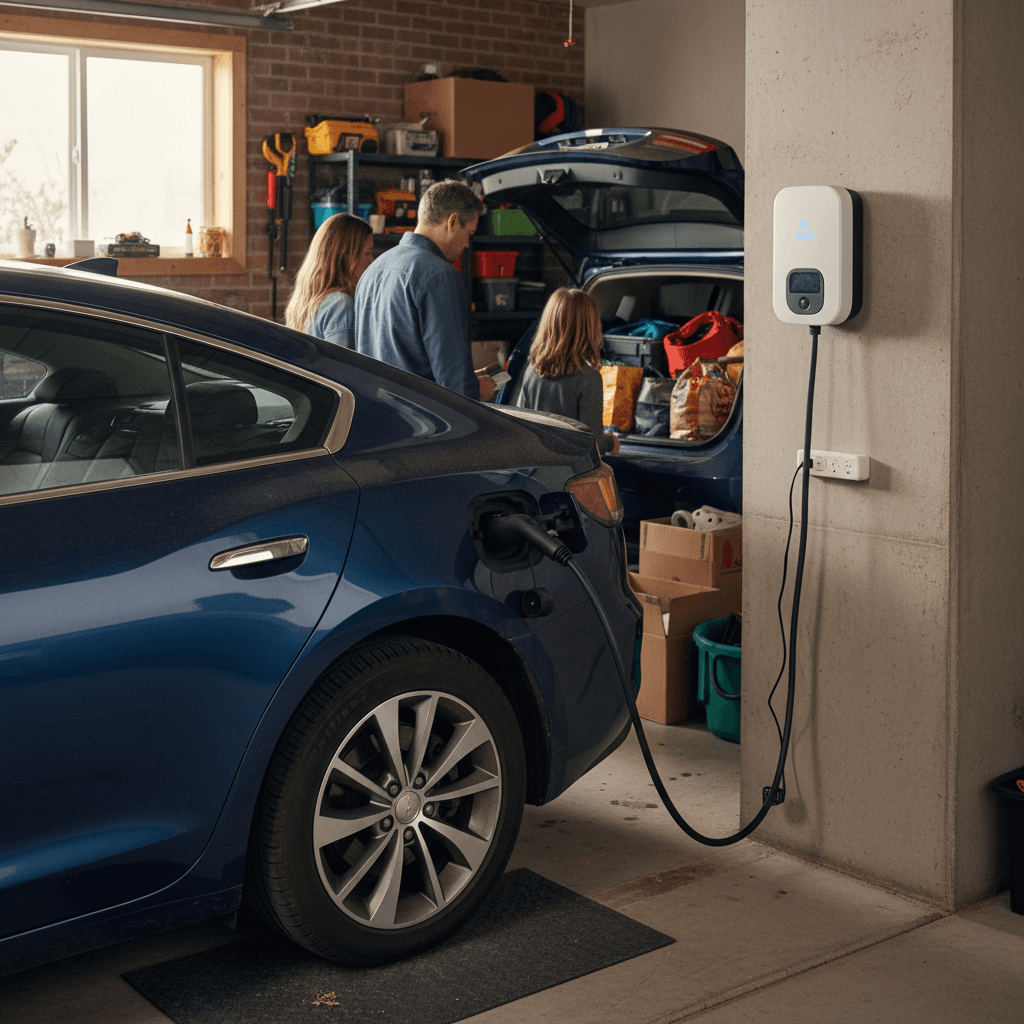
- AC Level 2 charging (240V) is capped by a modest ~6.6 kW onboard charger, meaning a full charge from near empty typically takes around **9–10 hours** at home.
- DC fast charging is conservative, especially on AWD models that top out around 100 kW and can take close to an hour to go from low‑battery warning to 80%.
- Winter performance and battery preconditioning are weaker than the best in class, which can further slow charging and reduce range in cold climates.
Road‑Trip Reality
Interior, Space, and Tech
Inside, the bZ4X is a pleasant surprise. Toyota finally loosened its tie: the dash is low and wide, the steering wheel sits unusually low, and the gauge display is pushed back toward the base of the windshield in a quasi‑head‑up arrangement. Some people love this; others never quite see the instruments comfortably. Materials are more "eco‑sensible" than luxurious, with plenty of textured plastics and fabric‑like trim.
Space & Practicality
- Comfortable seating for four adults, five in a pinch.
- Flat floor and upright roofline give the rear seat decent headroom and legroom.
- Cargo space is competitive for a compact SUV, easily handling strollers, grocery runs, or weekend luggage.
- No front trunk (frunk); Toyota prioritized simplicity over packaging tricks.
Tech & Infotainment
- Available 12.3‑inch touchscreen with Toyota’s newer multimedia system.
- Wireless Apple CarPlay and Android Auto on most trims.
- Standard Toyota Safety Sense suite with adaptive cruise, lane‑keeping, and more.
- Interface is straightforward, but graphics and responsiveness feel a step behind the slickest EV rivals.
Family‑Friendly Cabin
Driving Impressions: Calm, Not Charismatic
On the road, the 2023 bZ4X is the quiet kid in the class: well‑behaved, gentle, but not exactly the life of the party. Steering is light and insulated, body motions are well controlled, and the ride is tuned for comfort rather than corner carving. Acceleration is brisk enough for merging and passing, particularly in the AWD model, but this is not an EV that will shove you back in your seat like a Tesla or Hyundai performance variant.
What the bZ4X Feels Like to Drive
Smooth, Linear Power
The single‑motor FWD bZ4X delivers smooth, predictable acceleration that feels similar to a modern hybrid, just quieter and steadier.
Relaxed Handling
The chassis is tuned for stability, not thrills. It tracks confidently on the highway, but feedback through the wheel is muted.
Comfortable Ride Quality
Soft spring and damper tuning filter out most bumps, making the bZ4X a comfortable commuter or family shuttle.
AWD Traction, Not Performance
The dual‑motor AWD setup adds grip and a bit more shove off the line, but it’s tuned for all‑weather security, not hot‑hatch antics.
If you’re looking for an EV that feels like a normal, well‑mannered Toyota crossover that happens to plug in, the bZ4X absolutely delivers. If you’re chasing drama, look elsewhere.
Reliability, Recalls, and Real-World Ownership
Toyota’s reputation for reliability was supposed to be the bZ4X’s secret weapon. Instead, early headlines focused on a wheel‑hub recall that temporarily halted sales, followed by owner complaints about the 12‑volt auxiliary battery leaving some cars unexpectedly dead. The good news: the wheel‑hub issue was addressed through a stop‑sale and recall campaign. The less‑good news: auxiliary‑battery complaints have persisted into later model years, and Toyota has yet to publicly declare a permanent engineering fix, relying mostly on warranty replacements so far.
- The high‑voltage traction battery itself is engineered conservatively, with Toyota targeting long‑term durability and projecting strong capacity retention over a decade in normal use.
- Software updates and dealer service campaigns have addressed some early teething issues, but you should verify that any used 2023 bZ4X you’re considering has an up‑to‑date service history.
- As with any newer EV, long‑term data is still emerging; Toyota’s hybrid legacy is reassuring, but the bZ4X is a first‑generation product with its own learning curve.
Used‑Buyer Must‑Do
Depreciation and Used Pricing: The Surprise Plot Twist
Here’s where the plot thickens. As a new vehicle, the 2023 bZ4X felt expensive relative to its capabilities. As a used vehicle in 2026, it’s suddenly interesting. Like many early EVs, the bZ4X has endured **heavy depreciation** in its first three years, with multiple valuation guides showing it losing roughly half its original MSRP. Some sources peg typical resale values in the high‑teens to mid‑twenties for average‑mileage 2023 models, depending on trim and condition.
How the 2023 bZ4X’s Value Has Shifted
Depreciation in Context
2023 Toyota bZ4X vs. Key Competitors
Every compact electric SUV today exists in the gravitational field of the Hyundai Ioniq 5, Kia EV6, Volkswagen ID.4, and Tesla Model Y. Against that group, the 2023 bZ4X feels like the quiet, practical cousin.
How the 2023 bZ4X Stacks Up
High‑level comparison versus popular rivals in the used EV market.
| Model | Highlights | Where bZ4X Wins | Where It Loses |
|---|---|---|---|
| Toyota bZ4X | Calm ride, simple cabin, Toyota badge | Comfort, ease of use, conservative battery management | Fast‑charging speed, range vs. newer rivals |
| Hyundai Ioniq 5 | Retro‑futurist design, 800V fast charging, big interior | Often cheaper to insure, feels more "normal" to Toyota loyalists | Charging speed, tech wow‑factor |
| Kia EV6 | Sportier styling, engaging drive, strong charging | More straightforward interior, softer ride | Performance trims, DC charging curve |
| VW ID.4 | Spacious cabin, decent range, improving software | Toyota dealer network familiarity for some buyers | Cargo room, charging infrastructure partnerships |
| Tesla Model Y | Huge Supercharger network, long range, over‑the‑air updates | Traditional controls, build quality consistency in some Toyotas | Charging access, software sophistication, efficiency |
Pros and cons focus on 2023‑era equivalents to keep the comparison fair.
Shop With a Shortlist
Is the 2023 bZ4X a Good Used EV in 2026?
That depends on what you expect from an EV. If you want the cutting edge, ultra‑fast DC charging, 300‑plus‑mile range, and dazzling software, the 2023 bZ4X is already behind the curve, and the updated "bZ" and its rivals are the better fit. But if you’re looking for **a calm, comfortable, reasonably efficient electric crossover at a newly sensible price**, the used bZ4X has moved from wallflower to dark horse.
Who the 2023 bZ4X Makes Sense For
1. Short‑Range Commuters
If your daily driving stays under 80–100 miles and you can charge at home overnight, the bZ4X’s range and charging limitations rarely matter.
2. First‑Time EV Owners
Drivers coming from a Toyota RAV4 or Camry will appreciate the familiar ergonomics, safety tech, and dealership network.
3. Value Hunters
Because early depreciation has done so much of the work already, a clean, low‑mileage 2023 bZ4X can be a smart way to get into an EV without new‑car prices.
4. Conservative Tech Adopters
If you’d rather have a slightly slower, simpler EV from a brand known for long‑term durability than the shiniest new gadget, the bZ4X fits the brief.
Think Twice If…
How Recharged Helps You Shop a Used bZ4X Smarter
Because the 2023 bZ4X is such a textbook case of an early‑generation EV, conservative hardware, fast depreciation, mixed early‑ownership stories, it’s exactly the kind of vehicle that rewards careful, data‑driven shopping. That’s where Recharged comes in.
Why Consider a bZ4X Through Recharged
We de‑risk the parts of EV ownership that matter most.
Verified Battery Health
Fair Market Pricing
End‑to‑End Support
Ready to find your next EV?
Browse VehiclesIf you’re near Virginia, you can even experience a used bZ4X in person at our **Recharged Experience Center in Richmond, VA**. For everyone else, our fully digital process lets you compare options, review Recharged Scores, and line up financing from your couch.
2023 Toyota bZ4X FAQ
Frequently Asked Questions About the 2023 Toyota bZ4X
In its first model year, the 2023 Toyota bZ4X felt like a cautious, almost apologetic entry into the EV space, steady, sensible, but overshadowed by more daring rivals. Three years on, depreciation and perspective have transformed it into something else: a quietly compelling used EV for buyers who value comfort, familiarity, and price more than brag‑worthy specs. If that sounds like you, and you shop with good data on battery health and history, the bZ4X may finally have found its moment.