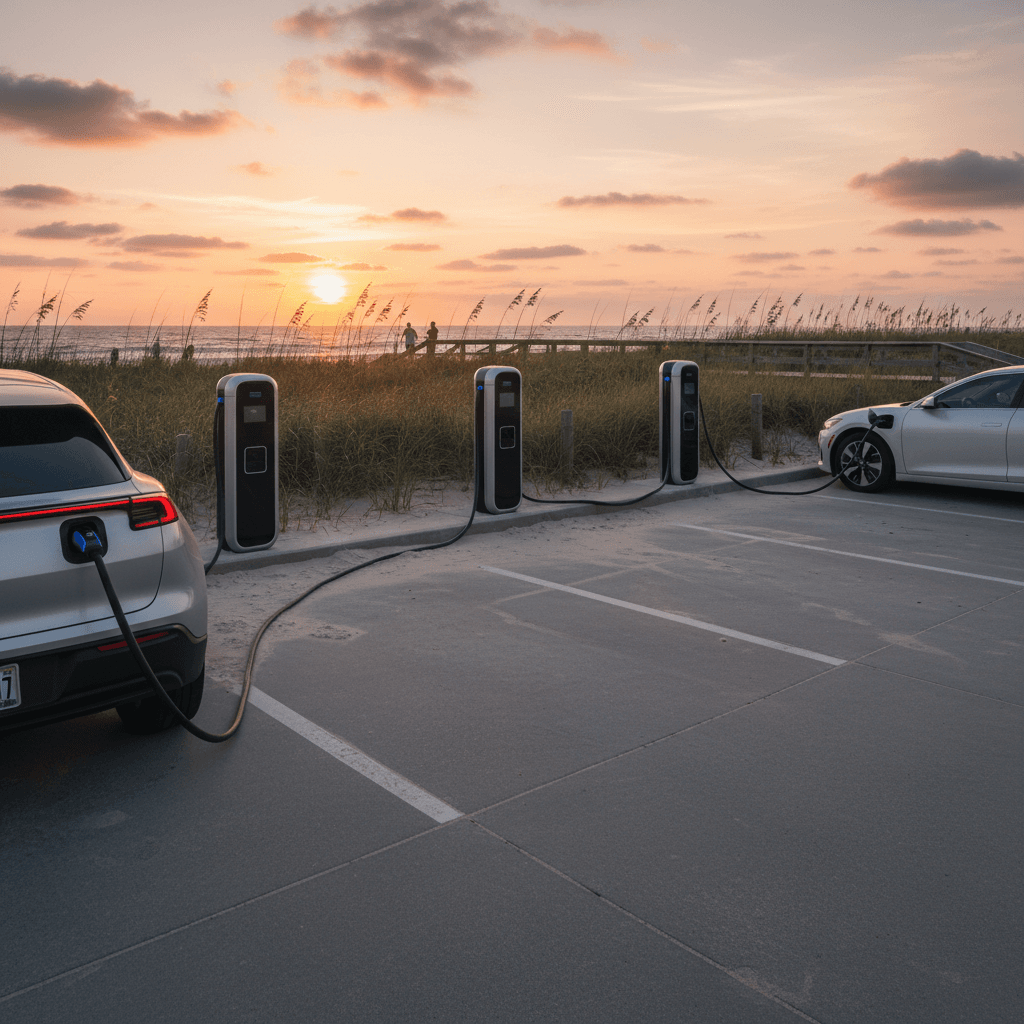
If you drive across West Virginia in a gas car, fuel is an afterthought. In an electric car, the state’s rugged geography and relatively sparse infrastructure make the **West Virginia electric car charging network** feel more like a chessboard. The good news: the board is filling in quickly. The bad news: you still have to play it smart.
Big picture: EV charging in WV
West Virginia’s EV charging network at a glance
West Virginia charging by the numbers
On paper, West Virginia looks surprisingly good: there are **far more charging ports than EVs** per capita, because EV adoption is still modest. In practice, that means plenty of open plugs, but they’re often clustered along interstates and in a handful of metro areas. If you live or travel off the beaten path, you need a plan.
Where the chargers are today in West Virginia
West Virginia’s charging map looks like a set of beads on a few main strings rather than a dense web. Those strings follow the **interstate system and college towns**:
- **I‑64 / I‑77 (West Virginia Turnpike)** – Charleston to Beckley and Princeton sees clustered fast‑charging and Level 2 options near exits.
- **I‑79 corridor** – Morgantown, Fairmont, Clarksburg and Weston generally have at least some public charging, with Morgantown and the WVU area being standouts.
- **I‑70 / I‑470 panhandle** – Wheeling and the Northern Panhandle tap into the Pittsburgh orbit with several public options.
- **Charleston–Huntington metro** – The Kanawha and Ohio river valleys host a growing mix of Level 2 and DC fast chargers tied to travel plazas, dealerships and shopping centers.
- **Resort and gateway towns** – Places like Snowshoe, Lewisburg and Fayetteville increasingly have Level 2 destination charging at hotels, ski resorts and attractions.

Mind the gaps
DC fast charging corridors in West Virginia
DC fast chargers are what make an electric car perform like a long‑legged highway machine instead of a local runabout. In West Virginia, they’re concentrated where traffic and federal money intersect, along **Alternative Fuel Corridors** that are being built out under the NEVI (National Electric Vehicle Infrastructure) program.
Key DC fast charging corridors in West Virginia
Where you can realistically road‑trip an EV today
I‑64 / I‑77 Turnpike spine
This is the state’s de facto EV backbone. You’ll find DC fast chargers around Charleston, Beckley and Princeton, often co‑located with travel plazas or national networks. Southbound toward Virginia and northbound toward Ohio get steadily better each year.
I‑79 North–South artery
From Morgantown down through Fairmont and Clarksburg toward Weston, fast charging exists but is more widely spaced. Planning around the hubs matters, especially in winter or if you’re towing.
Northern Panhandle to Pittsburgh
Wheeling and its surroundings benefit from spillover infrastructure from Pennsylvania. Once you cross into PA, fast charging density increases dramatically, making this a friendly route for cross‑border commuters.
I‑64 east to Virginia
Heading toward Lewisburg and the Virginia line, you’re in classic ‘Appalachian middle distance’ country: manageable with planning, but you can’t assume a DC fast charger in every town yet.
Use apps that show live status
Level 2 “destination” charging: towns, campuses, and workplaces
If DC fast chargers are your highway gas stations, **Level 2 chargers are the hotel parking lots and campus garages where you refuel your life and your car at the same time**. West Virginia’s Level 2 build‑out is quieter but just as important, especially for owners of shorter‑range EVs.
College towns and hospitals
West Virginia University, Marshall and regional medical centers are gradually adding Level 2 charging in garages and staff lots. For example, WVU partnered with Greenspot to install Level 2 chargers in key campus garages, open to visitors via app.
These are ideal if you’re on campus for a game, appointment or class, you can add 20–30 kWh while you go about your day.
Resort towns and tourism hubs
Ski hills, river‑rafting bases and historic inns are discovering that EV chargers are the new free breakfast. You’ll increasingly see 7–11 kW Level 2 units in hotel lots in places like Snowshoe, Fayetteville and the Greenbrier Valley.
When you book a stay, ask specifically about **guest EV charging**, and whether it’s first‑come, first‑served.
Why Level 2 matters in WV
How NEVI funding will reshape West Virginia’s EV corridors
West Virginia’s Department of Transportation is all‑in on the **NEVI Formula Program**, which pays states to build a nationwide fast‑charging spine along designated highway corridors. The state has an official EV Infrastructure Development Plan that it updates annually, and the priority is simple: **finish the interstate skeleton first**.
Priority NEVI corridors in West Virginia
Interstate routes that are the focus of federally funded fast‑charging build‑out.
| Corridor | Primary route | Goal spacing | What it means for you |
|---|---|---|---|
| I‑64 / I‑77 | Huntington – Charleston – Beckley – Princeton | ≤ 50 miles | More reliable north–south and east–west coverage for long‑range EVs and future trucking hubs. |
| I‑79 | Morgantown – Fairmont – Clarksburg – Weston – Flatwoods | ≤ 50 miles | Connects Pittsburgh orbit to central WV, making college commutes and family visits easier. |
| I‑70 / I‑470 | Ohio line – Wheeling – I‑70 east | ≤ 50 miles | Better linkage between Columbus/Pittsburgh fast‑charging networks through the Northern Panhandle. |
| I‑68 (adjacent) | Into Maryland | ≤ 50 miles | Not strictly in WV, but ties Morgantown drivers into a better‑served Maryland network. |
Exact site locations will evolve, but these are the routes most likely to see new 150 kW+ plazas first.
What NEVI requires
Tesla Superchargers in West Virginia and non‑Tesla access
Tesla’s Supercharger network is the Cadillac (or, fine, the Model S) of fast charging, and West Virginia gets a decent slice of that pie. There are **well over a dozen Supercharger sites** sprinkled along key highways, including around Charleston, Morgantown and Beckley, with more coming as Tesla taps federal funds.
If you drive a Tesla
You’re in the best position. The Supercharger map shows multiple sites on I‑79, I‑64 and the Turnpike, letting you drive the state end‑to‑end with little drama. Your in‑car nav plans charging stops for you and accounts for mountains, weather and detours.
If you drive a non‑Tesla
More Superchargers are opening to CCS and NACS‑equipped non‑Tesla EVs. Over the next few years, as Ford, GM, Hyundai and others fully adopt the **NACS connector**, your access to WV Superchargers will expand dramatically. Until then, check each site in the Tesla app, non‑Tesla access is still a patchwork.
Watch the connector alphabet soup
What it’s like to live with an EV in West Virginia
Living with an EV in West Virginia is a bit like owning a pickup in Manhattan: **absolutely workable if you choose the right tool for the job and understand the local constraints**. Here’s how it breaks down by common living situations.
EV ownership scenarios in West Virginia
Which describes you, and what the charging network means
Homeowner with driveway or garage
You’re the ideal candidate. Install a 240‑V Level 2 charger and the public network becomes a backup, not a lifeline. Time‑of‑use rates from utilities like Appalachian Power can make overnight charging particularly cheap.
Apartment or street parker
Here, the thin public network bites. You’re relying on workplace, public Level 2 and DC fast charging. It can work in cities like Morgantown or Charleston, but you’ll want to map your routine stops carefully before you buy.
Rural driver off major corridors
If you live far from interstates and regularly drive long distances with no overnight stays away from home, you’ll want both **solid home Level 2** and a long‑range EV (250+ miles EPA). Sub‑200‑mile EVs demand more planning and patience.
Range and battery health matter more here
Planning an EV road trip through the Mountain State
West Virginia is one of the prettiest states in the country to drive through, if you have the charge to climb out of every postcard valley you descend into. Think of road‑tripping here as a lightly more strategic version of driving in better‑served states like Virginia or Pennsylvania.
Checklist: How to road‑trip an EV in West Virginia
1. Start with a full battery
Leave home or your hotel with a 90–100% charge whenever you’re about to cross a charging desert. The climb out of a gorge always costs more energy than you think.
2. Plan around fast chargers, not just distance
Drop pins on DC fast chargers along your route and build your stops around those, then use Level 2 as backup or top‑offs while you hike or eat.
3. Check recent user check‑ins
On apps like PlugShare, read the last few check‑ins to confirm a station isn’t down, blocked or slow before you rely on it for a critical leg.
4. Leave a bigger buffer than you would in flat states
Instead of arriving with 5–10% state of charge, **aim for 15–20%** in winter or on unfamiliar routes. That margin is your insurance policy against closed stations or surprise detours.
5. Watch weather and elevation
Cold snaps and long climbs up to plateaus or ski resorts bite into range. Your car’s navigation may estimate this, but it’s wise to assume real‑world consumption will be slightly worse.
6. Have a Plan B stop
For every critical charger on your route, identify a secondary option, another DC fast site, a hotel Level 2, even a friendly RV park with a 14‑50 outlet you can use in a pinch.
Buying a used EV in West Virginia: charging questions to ask
If you’re eyeing a used EV in West Virginia, the charging network shouldn’t scare you off, but it should shape your shopping list. You’re buying the **car and its relationship to this landscape**, not just a spec sheet.
Key charging questions for WV buyers
- What’s the verified battery health? Degraded packs hit hardest in winter and in the mountains. Ask for a battery health report, not just the dash estimate.
- How fast can it charge? A car capped at 50 kW DC will feel slow on thin corridors; 100–150 kW capability makes the state feel smaller.
- Does it support CCS, NACS or both? Connector flexibility will matter more as Tesla sites increasingly open to non‑Teslas.
- Where will you actually charge most of the time? Home, work, college, or public lots? Make the car fit your real life, not a hypothetical road trip.
How Recharged can help WV shoppers
Every vehicle on Recharged comes with a Recharged Score Report that includes verified battery health, charging capability and a clear view of real‑world range. Our EV specialists can also help you map your daily routes and favorite getaways against the **current West Virginia charging network** so you don’t buy a car that looks great online but struggles on Corridor H.
If you’re upgrading from a gas car or an older plug‑in, you can also get an instant offer or consign your vehicle, then have your next EV delivered to your driveway, no long‑distance dealer dance required.
Don’t ignore home wiring
FAQ: West Virginia electric car charging network
Frequently asked questions about WV EV charging
The bottom line on West Virginia’s electric car charging network
West Virginia is no longer the charging desert it once was, but it’s not yet Oregon either. Think of the **West Virginia electric car charging network** as a solid skeleton with some missing ribs: the interstate spine is there, the college towns and ski hills are coming along, and federal NEVI money is adding real muscle. What’s still thin is everyday public charging in small towns and far‑flung hollers.
If you match the right EV to your life, a healthy battery, adequate range, and a realistic charging plan, this landscape stops feeling hostile and starts feeling like what it is: one of the best driver’s states in the country, now with torque that starts at zero RPM. And if you’re shopping used, Recharged can help you line up the car, the battery and the **West Virginia charging reality** so they all point in the same direction before you ever hit the Turnpike.