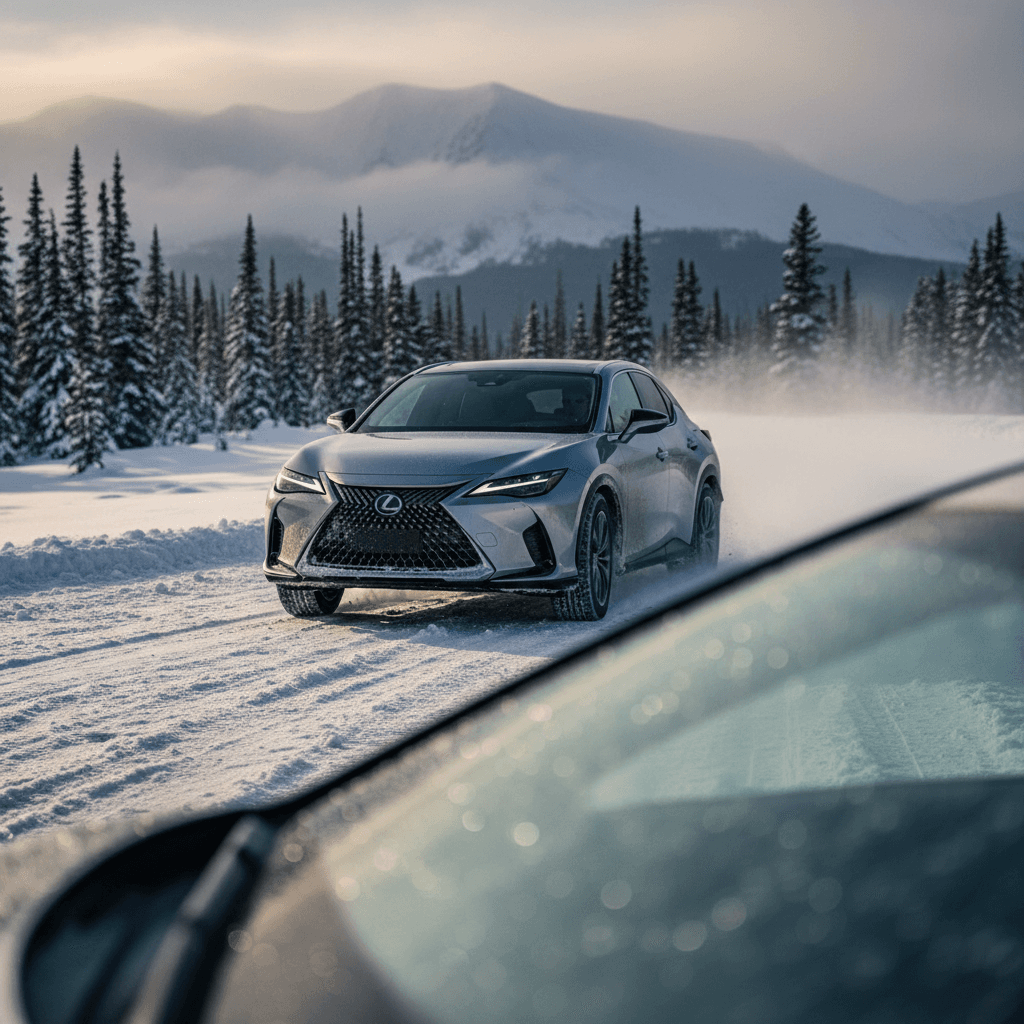
If you live where roads turn white for months at a time, you’re right to ask whether the Lexus RZ 450e is best for snow and ice or if you’d be better off with something else. On paper it has all‑wheel drive, decent ground clearance and Lexus comfort. In practice, winter performance comes down to a handful of details, tires, range, and how you set the car up, more than the badge on the grille.
Short answer
Overview: Is the Lexus RZ 450e good in snow and ice?
Where the RZ 450e shines in winter
- Standard DIRECT4 all‑wheel drive with quick front/rear torque shifts for traction.
- About 7.9 inches of ground clearance, similar to many compact luxury SUVs, which helps in rutted or plowed snow.
- Smooth, predictable power delivery that’s easy to modulate on slick surfaces.
- Excellent cabin comfort and heating, with available heated seats, steering wheel and efficient heat pump on most trims.
- Lexus build quality and stability control tuning that are confidence‑inspiring on packed snow.
Where you need to be realistic
- Range drops in cold weather, typically 20–30% versus mild conditions, sometimes more at highway speeds.
- The big optional 20‑inch wheels trade snow traction for looks; 18‑inch wheels with higher‑profile tires are better for winter.
- No front trunk and only moderate cargo space, so packing snow gear plus charging cables takes some planning.
- Not designed for serious off‑road use; it’s a road‑biased crossover, not an all‑terrain SUV.
Lexus RZ 450e winter strengths and weaknesses
Key specs that matter for snow and ice
- Biggest winter strength: very secure, planted feel on snow when equipped with proper tires, DIRECT4 AWD and Lexus stability tuning work in your favor.
- Biggest winter weakness: range that’s already just “OK” in mild weather becomes short on long, cold‑weather highway trips, especially with 20‑inch wheels and higher speeds.
Drivetrain: DIRECT4 AWD and winter drive modes
Every RZ 450e with the 450e badge uses Lexus’s DIRECT4 all‑wheel drive: an electric motor at each axle, managed by software that can shuffle torque front to rear in milliseconds. In low‑grip situations like packed snow or slush, that quick torque distribution, combined with traction and stability control, helps the car keep its line without the sudden wheelspin you might remember from older gas SUVs.
- In gentle acceleration on snow, the RZ usually starts smoothly, blending front and rear power without drama.
- If a front wheel starts to slip climbing a snowy hill, DIRECT4 can send more torque rearward to keep you moving.
- On icy corners, stability control cuts power and selectively brakes individual wheels to pull the vehicle back into shape.
Use the right drive mode in winter
If you’re coming from a traditional Lexus RX or Highlander with a mechanical AWD system, the RZ’s behavior will feel familiar but even more seamless. There’s no delay for clutches to engage; the rear motor is always ready. Where some EVs can feel abrupt off the line, the RZ’s calibrated throttle makes it easier to feather the power on ice, a real advantage in tight parking lots or on hilly side streets.
Ground clearance, weight and stability in deep snow
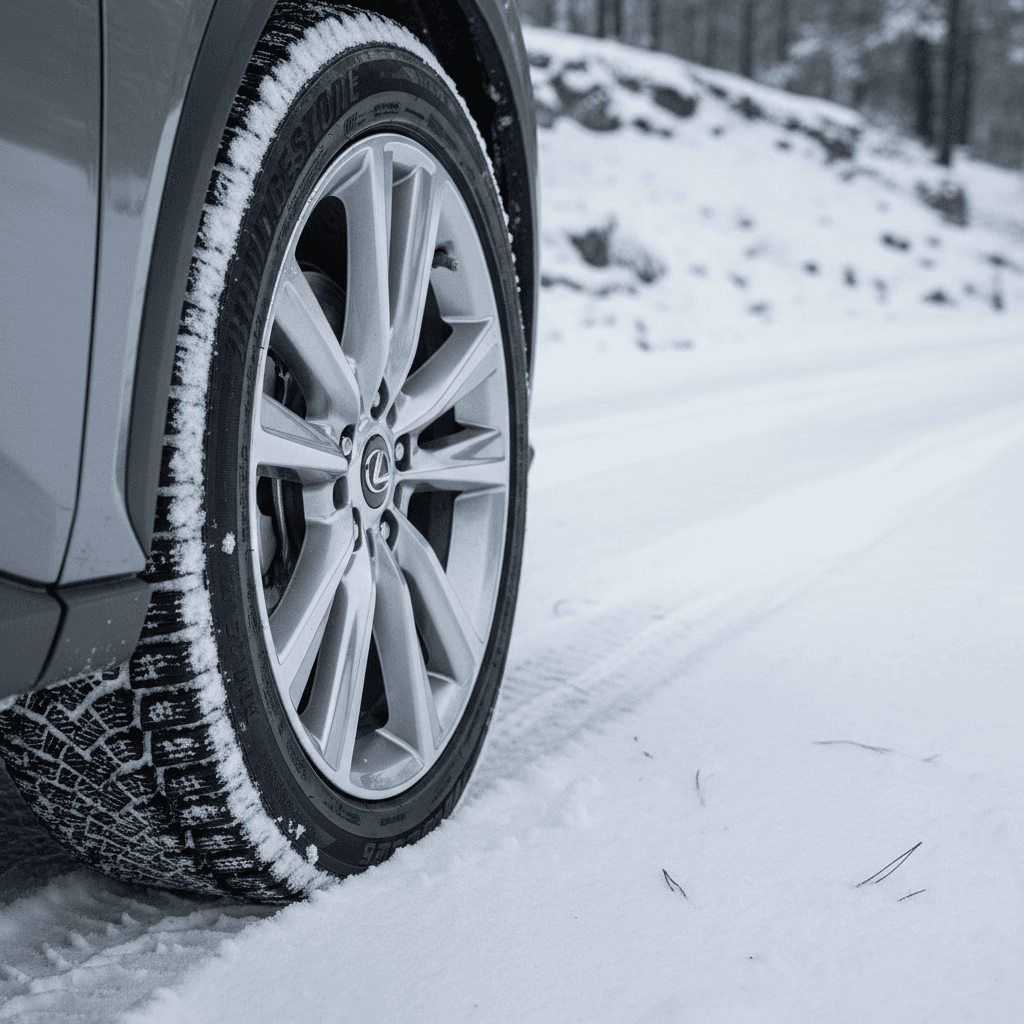
On winter roads, three physical traits really matter: ground clearance, weight distribution and center of gravity. The RZ 450e does well on all three for on‑road winter use.
- Ground clearance: around 7.9 inches from the factory, which is comparable to many compact luxury crossovers. That’s enough for plowed streets, driveways with some accumulation, and the inevitable frozen ruts in parking lots.
- Weight and balance: the battery pack sits low in the chassis, dropping the center of gravity compared with a gas SUV. That helps stability in sudden maneuvers on slick pavement.
- Ride and suspension: Lexus tunes the RZ for comfort more than razor‑sharp handling. In winter that’s a plus; softer suspension lets the tires stay in contact with uneven, packed‑snow surfaces.
Know the limits in deep snow
Tires: the single biggest factor in snow and ice
Ask any winter‑driving instructor: tires matter more than AWD. That’s doubly true with a torquey EV like the RZ. From the factory, the RZ 450e typically ships with all‑season tires on 18‑inch wheels or more performance‑oriented rubber on optional 20‑inch wheels. Those are fine for light snow and cold rain but are a compromise on real ice and deeper snow.
Best tire choices for Lexus RZ 450e winter driving
Pick based on how serious your winters are
1. True winter tires
Best for: Regions with consistent snowpack, ice and temperatures below freezing for weeks at a time.
- Maximum braking and cornering grip on ice and packed snow.
- Softer compounds stay flexible in deep cold.
- Ideal if you regularly drive before roads are fully plowed.
2. All‑weather tires (3PMSF‑rated)
Best for: Mixed conditions, cold rain, slush, occasional snowstorms, with less extreme cold.
- Carry the three‑peak mountain snowflake (3PMSF) severe‑snow symbol.
- Better snow traction than typical all‑season tires.
- Can be left on year‑round in many climates.
3. Standard all‑season tires
Best for: Mild climates with rare snow that melts quickly.
- Acceptable for light, short‑lived snow events.
- Limited grip on real ice and hard‑packed snow.
- Consider upgrading if you see more than a few winter storms each year.
Go smaller for winter wheels
Cold-weather range: what you can realistically expect
Range is where most EVs, including the RZ 450e, get challenged in winter. The RZ’s EPA ratings for 2023–2025 land in the low‑200‑mile ballpark depending on trim and wheel size. In real cold, think below freezing, with the heater running and wet roads, you should assume a 20–30% reduction in usable range, sometimes more if you’re driving fast into a headwind.
Approximate Lexus RZ 450e winter range expectations
These are high‑level planning numbers, not promises. Your actual range will depend on temperature, speed, elevation, wind, tire choice and how you use climate control.
| Condition | Typical highway speed | Outside temp | Heater use | Planning range from a 220‑mile EPA rating |
|---|---|---|---|---|
| Mild winter day | 65 mph | 35°F | Low | ~180 miles |
| Typical cold snap | 65–70 mph | 20°F | Normal | ~150–165 miles |
| Very cold, windy | 70+ mph | 0–10°F | Normal/High | ~130–145 miles |
| City/suburban mix | 30–45 mph | 20–30°F | Normal | ~160–180 miles |
Use these numbers for planning safety margins, not as guarantees.
Why winter cuts EV range
If you regularly drive 120–150 miles a day in winter with limited fast‑charging access, the RZ 450e may feel tight on range. On the other hand, if most of your winter driving is a 40‑ to 80‑mile round‑trip commute with home charging, the car can work very well, as long as you go in with realistic expectations and build a cushion into any longer trips.
Simple ways to improve winter range in your RZ 450e
Pre‑heat while plugged in
Use the app or in‑car scheduler to warm the cabin and battery while the car is still on the charger. You’ll start with a warm pack and spend less driving energy on heating.
Use seat and wheel heaters first
Heated seats and steering wheel sip power compared with blasting the cabin heater. You stay comfortable with less hit to range.
Dial back highway speed
Above about 65 mph, aerodynamic drag and cold air can eat range quickly. Slowing down 5–10 mph on icy highways also improves safety.
Keep tires properly inflated
Cold weather drops tire pressures. Check them regularly; under‑inflated winter tires hurt both safety and efficiency.
Avoid deep discharges in extreme cold
Try not to arrive at chargers with single‑digit state of charge when it’s below zero. Batteries are happiest with a bit of reserve in harsh conditions.
Winter setup checklist for your Lexus RZ 450e
Whether you already own an RZ 450e or you’re considering a used one, take an afternoon before the first storm to get it truly winter‑ready. A couple of simple checks will pay off the first time you hit black ice in the dark.
Step‑by‑step winter prep for your RZ 450e
1. Choose the right tires
If you regularly see snow and ice, install true winter tires or all‑weather tires with the three‑peak mountain snowflake symbol. Make sure the load and speed ratings match or exceed Lexus’s recommendations.
2. Consider downsizing wheels
If you have 20‑inch wheels, talk to a tire shop about 18‑inch winter wheels. The narrower, higher‑profile tire typically bites better in snow and protects rims from potholes.
3. Check wipers and washer fluid
Install winter‑rated wiper blades and use low‑temperature washer fluid. Snow‑caked cameras and sensors can limit driver‑assist features, so keeping the glass clear helps more than visibility alone.
4. Verify charging options at home and work
Before winter hits, confirm your Level 2 home charger is working reliably and look up nearby public fast‑chargers you can reach even with reduced range.
5. Build a winter trunk kit
Pack a compact shovel, ice scraper, gloves, small traction aids (like sand or traction boards) and a portable power bank. You don’t have a fuel can in an EV, so redundancy in other areas matters.
6. Learn the menus for pre‑conditioning
Spend a few minutes with the owner’s manual or an online guide to set departure‑time pre‑conditioning. Once you’ve done it once, it’s easy to repeat all winter.
Buying a used Lexus RZ 450e for winter duty
Used RZ 450e prices have become more attractive as new EV incentives and extra inventory have pushed buyers toward other models. That can make a used RZ a smart, comfortable winter commuter, if you choose carefully. You’re not just shopping for leather and a panoramic roof; you’re buying a battery, a charging history and a set of winter manners.
Key winter questions to ask about a used RZ 450e
These go beyond the usual test‑drive checklist
How has the car been driven and charged?
- Ask how often it’s done long highway trips in winter. Consistently running from 100% to near‑zero on cold interstates isn’t ideal for battery longevity.
- Look for a history of Level 2 home charging with occasional DC fast charging, not fast‑charging every single day.
How did it behave in cold weather for the prior owner?
- Ask specifically about winter range, heater performance, and whether the owner ever struggled to reach chargers.
- Listen for clues about unexplained range drops or recurring charging errors in sub‑freezing temperatures.
What tires and wheels are included?
- Find out if a second set of winter wheels/tires comes with the vehicle; that can save you hundreds of dollars.
- Inspect remaining tread depth, shallow tread and winter grip don’t mix.
Has the battery been health‑checked?
- Request any available service records or battery reports.
- On a test‑drive, note whether the predicted range at 100% seems in line with expectations for that model year and wheel size.
How Recharged can help with a winter‑ready RZ
Ready to find your next EV?
Browse VehiclesIf you’re comparing a used RZ to alternatives like a Tesla Model Y or Hyundai Ioniq 5, remember that you’re balancing winter traction, comfort, charging network access and range. The RZ trades some highway range and fast‑charging speed for Lexus refinement and dealer support. For many winter commuters, that’s a reasonable trade, especially at used prices.
When the Lexus RZ 450e is not the best winter choice
No vehicle is perfect for every driver. There are clear cases where the RZ 450e may not be the smartest winter pick, no matter how much you like the styling or the Lexus badge.
- You regularly drive 150–200 highway miles each way in sub‑freezing temperatures with limited DC fast‑charging options along the route.
- You frequently tackle unplowed gravel roads, steep unmaintained driveways or deep snowpacks where 7.9 inches of ground clearance just isn’t enough.
- You absolutely need to tow heavy loads in winter; the RZ’s modest towing rating and range hit under load make that a tough job.
- You live in a building where reliable home charging isn’t available and winter public chargers are often busy or weather‑affected.
Be honest about your worst‑case day
FAQ: Lexus RZ 450e in snow and ice
Common questions about the Lexus RZ 450e in winter
Bottom line: should you trust an RZ 450e in winter?
If your picture of winter is plowed highways, suburban side streets, weekend ski trips and a driveway that sees a couple of decent storms each year, a Lexus RZ 450e set up correctly can be an excellent snow car. DIRECT4 all‑wheel drive, a calm chassis and Lexus refinement make it feel secure and relaxing when the weather turns ugly, provided you give it the tires and charging support it deserves.
Where the RZ is not “best” for snow and ice is on long, cold highway treks far from chargers or on back roads that become impassable for anything short of a truck‑based SUV. Its winter range is good enough for commuting, not magical. But if you size your expectations to its strengths, invest in proper winter rubber and plan your charging with a little margin, the RZ 450e can carry you through winter with the kind of quiet confidence Lexus owners expect.
If you’re weighing a used RZ 450e against other EVs for winter duty, it’s worth talking with an EV‑savvy team that understands both cold‑weather range and battery health. That’s exactly what Recharged was built for, helping you find a winter‑ready EV with transparent battery diagnostics, fair pricing and support from the first test‑drive to the first snowstorm.