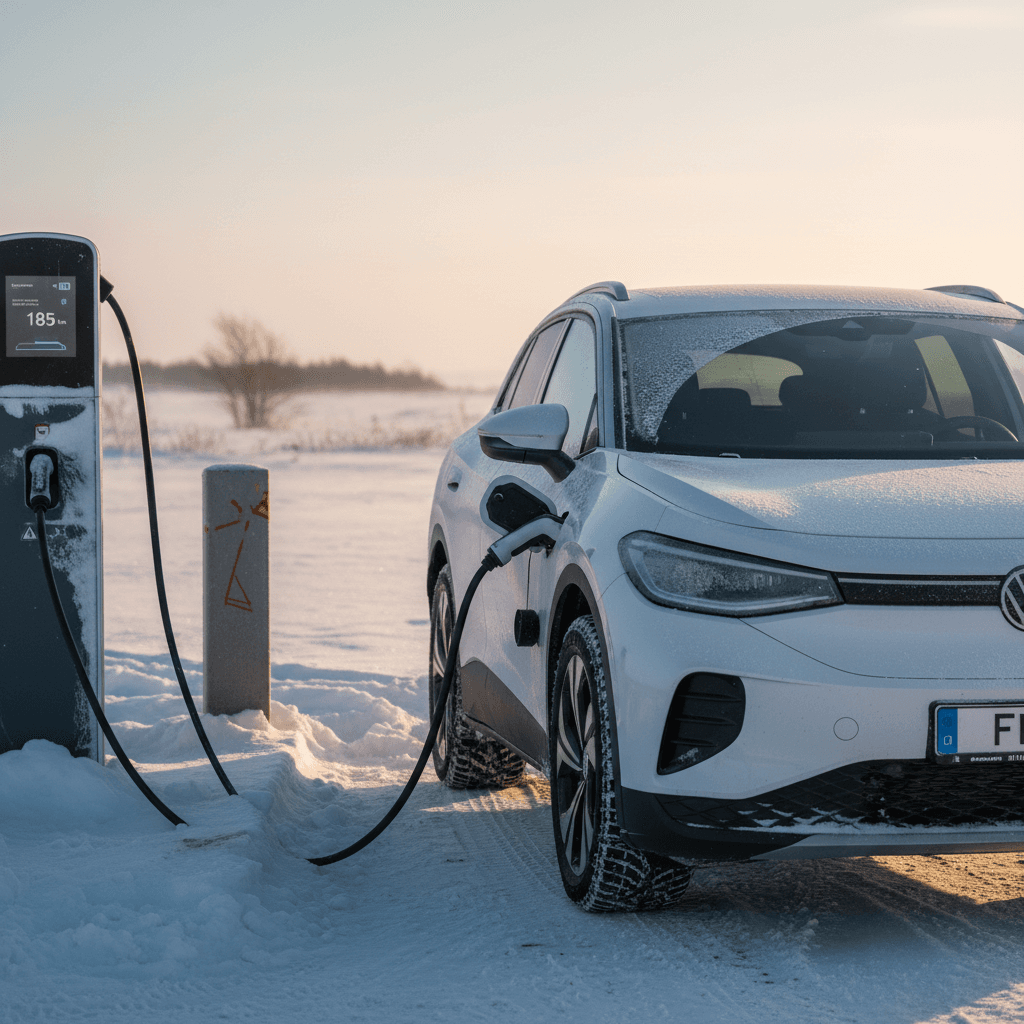
If you bought a VW ID.4 expecting its EPA range every day of the year, your first cold snap probably felt like a broken promise. That big battery suddenly looks a lot smaller when the temperature drops, snow piles up, and you watch the range estimate shrink. The good news: VW ID.4 winter range loss is mostly predictable, often manageable, and rarely a sign your battery is dying, if you know what you’re looking at.
At a glance
Why the VW ID.4 loses range in winter
Every electric vehicle loses range in the cold, and the VW ID.4 is no exception. To make sense of it, it helps to separate the issue into two buckets: what’s happening inside the battery and what’s happening because of how you drive in winter.
Two main causes of VW ID.4 winter range loss
Battery chemistry plus winter driving realities
1. Cold battery chemistry
- Cold slows down the reactions inside the battery cells.
- The ID.4’s battery management system protects the pack by limiting power.
- You get reduced usable energy and softer acceleration when the pack is cold.
2. Winter driving loads
- Cabin heat is electric and energy-hungry.
- Thicker winter tires, snow, and slush add rolling resistance.
- Short trips don’t give the battery time to warm up.
In an ID.4, cabin heat is the big villain. Unlike a gas car that uses waste engine heat, your VW has to make warmth from battery power. Turn the heat up, blast the defroster, and you’re siphoning off the same energy you use for driving.
Don’t blame the gauge too quickly
How much VW ID.4 winter range loss is normal
Numbers are what you care about: how far can you really go? The ID.4’s EPA range figures, typically around 245–291 miles depending on model year and battery, are based on mild-weather testing. In real winter use, you should mentally adjust those numbers before you even unplug.
Typical VW ID.4 winter range loss by conditions
Approximate real-world range compared with EPA rating for a healthy battery, assuming normal driving and proper tire pressures.
| Conditions | Outside Temp | Driving Mix | Typical Loss vs. EPA | Example: 260‑mile EPA ID.4 |
|---|---|---|---|---|
| Cool fall day | 40–50°F | City + suburban | 10–20% | 210–235 mi |
| Normal winter day | 25–35°F | Mixed city/highway | 25–35% | 170–195 mi |
| Cold snap | 10–25°F | Mostly highway at 70 mph | 30–40% | 155–180 mi |
| Deep freeze | Below 10°F | Highway, strong heat use | 40–50% | 130–155 mi |
These are ballpark planning numbers, not guarantees. Terrain, wind, speed, and your right foot will all move the needle.
If you regularly see 30–40% loss around freezing on the highway, you’re not alone. That’s simply the cost of pushing a big, comfortable SUV through cold, dense air while running an electric space heater inside.
A quick sanity check
Heat pump, model years, and trims: why they matter
Not every VW ID.4 handles winter the same way. The single biggest hardware difference is whether your car has a heat pump, a more efficient way to heat the cabin that uses less energy than resistive electric heaters.
How the heat pump helps
- Uses less energy to heat the cabin, especially at mild winter temps.
- Can shave several kWh off your energy use on a long drive.
- Biggest gains show up on trips, not quick errands.
Where it falls short
- At very low temps, efficiency advantage shrinks.
- Short, stop‑and‑go trips still hurt because the car re‑warms repeatedly.
- Don’t expect miracles, it reduces winter range loss, it doesn’t erase it.
Not sure if your ID.4 has a heat pump?
Trim level and wheel choice also matter. Bigger wheels and wider tires look great but add rolling resistance. If you’re shopping used in a cold‑weather state, a heat‑pump-equipped ID.4 on sensible wheels is the combo you want for the best winter range.
Driving habits that quietly kill winter range
Once you understand the hardware, the spotlight turns to you. Two drivers can take the same ID.4 out on the same 25°F day and see completely different results on the trip computer. The difference is usually driving style and how they use the heater.
- High cruising speeds (75+ mph) dramatically increase drag in cold, dense air.
- Short hops of 1–3 miles never let the battery or cabin stabilize, so the car keeps reheating from cold.
- Cranking the cabin to 75–80°F and relying only on feet-and-face vents instead of heated seats.
- Carrying snow on the roof, running on underinflated winter tires, or plowing through heavy slush.
- Remote-starting or pre-heating the car for long periods with no driving afterward.
The worst-case scenario
12 ways to reduce VW ID.4 winter range loss
You can’t fight physics, but you can stack the deck in your favor. Think of it as winterizing your habits, not just your tires. Here are practical changes that make a noticeable dent in VW ID.4 winter range loss without turning every drive into a science project.
Winter range playbook for VW ID.4 owners
1. Precondition while plugged in
Use the app or in‑car timer to warm the cabin and, when available, the battery before you leave, <strong>while the car is still charging</strong>. That way, more stored energy is reserved for driving, not thawing.
2. Rely on heated seats and wheel
Set the cabin a few degrees cooler and lean on the heated seats and steering wheel instead. They use much less energy than trying to warm every cubic foot of cabin air.
3. Plan fewer, longer trips
Combine errands so the car warms up once and stays warm. A single 30‑minute drive will usually be more efficient than three 10‑minute hops on a cold pack.
4. Knock snow and ice off the car
Brush snow off the roof, hood, and wheel arches. You’ll cut drag and reduce friction from packed snow around the tires.
5. Watch your speed on the highway
On a cold day, dropping from 75 mph to 65 mph can be the difference between arriving relaxed and arriving with 2% battery and white knuckles.
6. Use Eco mode when it makes sense
Eco settings gently soften throttle response and cabin heating. They’re not magic, but they do nudge you toward more efficient behavior without thinking about it.
7. Check tire pressure often
Cold air drops tire pressure. Running several psi low adds rolling resistance and hurts both range and tire wear. Check pressures at least once a month in winter.
8. Warm the pack before fast charging
If you need DC fast charging, try to arrive with the battery warm from driving. A cold pack charges slower and can make winter road trips feel longer than necessary.
9. Park indoors or in the sun when possible
A garage or even a sunny driveway can keep the car a little warmer. Every degree helps reduce the energy needed to get comfortable again.
10. Use scheduled departure times
If your ID.4 supports it, set a daily departure time. The car will manage preconditioning to line up with when you unplug, instead of running earlier than needed.
11. Keep an eye on accessories
Roof boxes, bike racks, and knobby winter tires all add load. Use them when you need them, but remember they come with a range tax, especially noticeable in winter.
12. Be conservative on long winter trips
When planning a winter road trip, assume <strong>30–40% less range</strong> than the EPA number and build in extra charging stops. It’s better to arrive early with 20% than late on a tow truck.
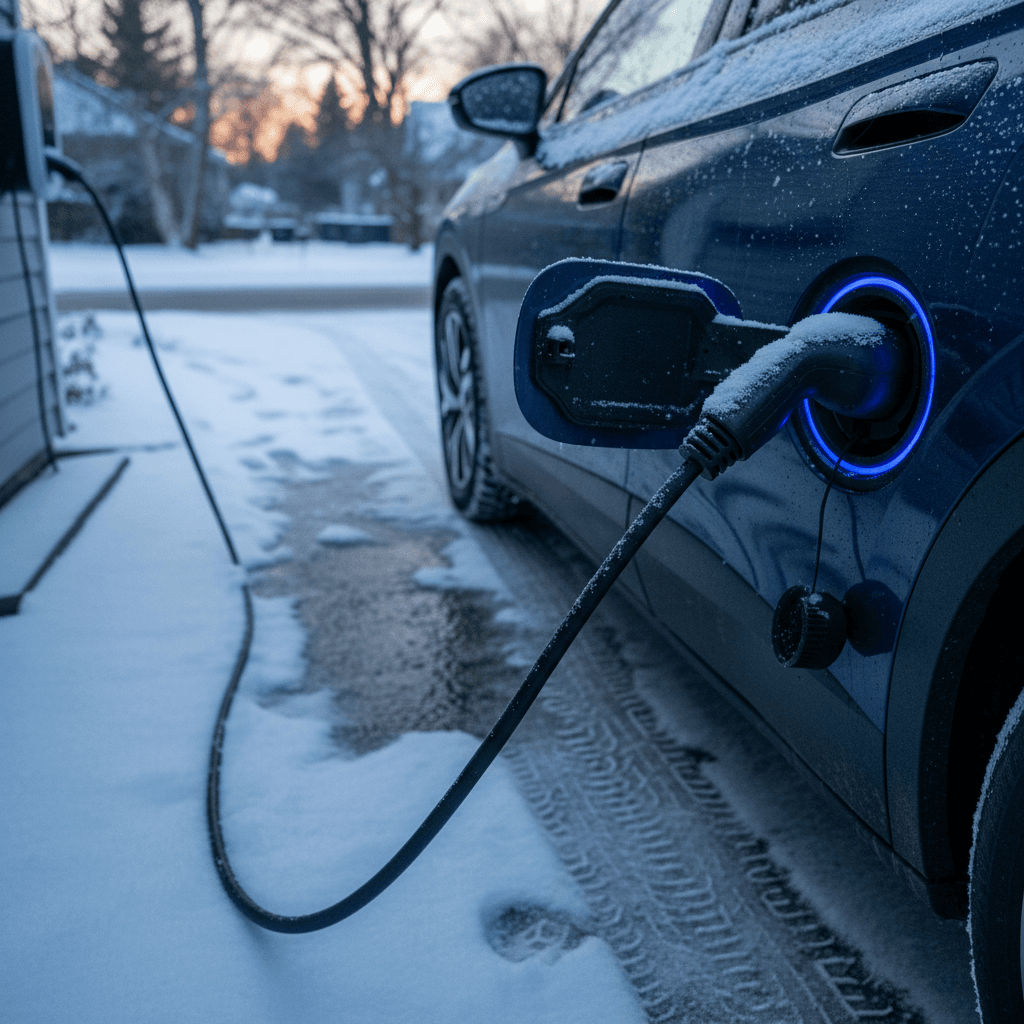
Winter range loss vs. real battery degradation
Here’s where many owners, and used‑car shoppers, get nervous. Winter hits, range drops, and it’s easy to assume the battery has suddenly worn out. In reality, cold-weather range loss and long‑term battery degradation are two different stories.
Winter range loss (temporary)
- Shows up when temperatures drop.
- Goes away or improves in spring and summer.
- Strongly affected by trip length, heater use, and speed.
- Doesn’t necessarily mean the pack is unhealthy.
Battery degradation (permanent)
- Slow, long‑term loss of usable capacity.
- Persists in all seasons once it occurs.
- Impacted by age, mileage, fast‑charging habits, and extreme heat.
- Shows up as lower range year‑round, not just in winter.
What a healthy pattern looks like
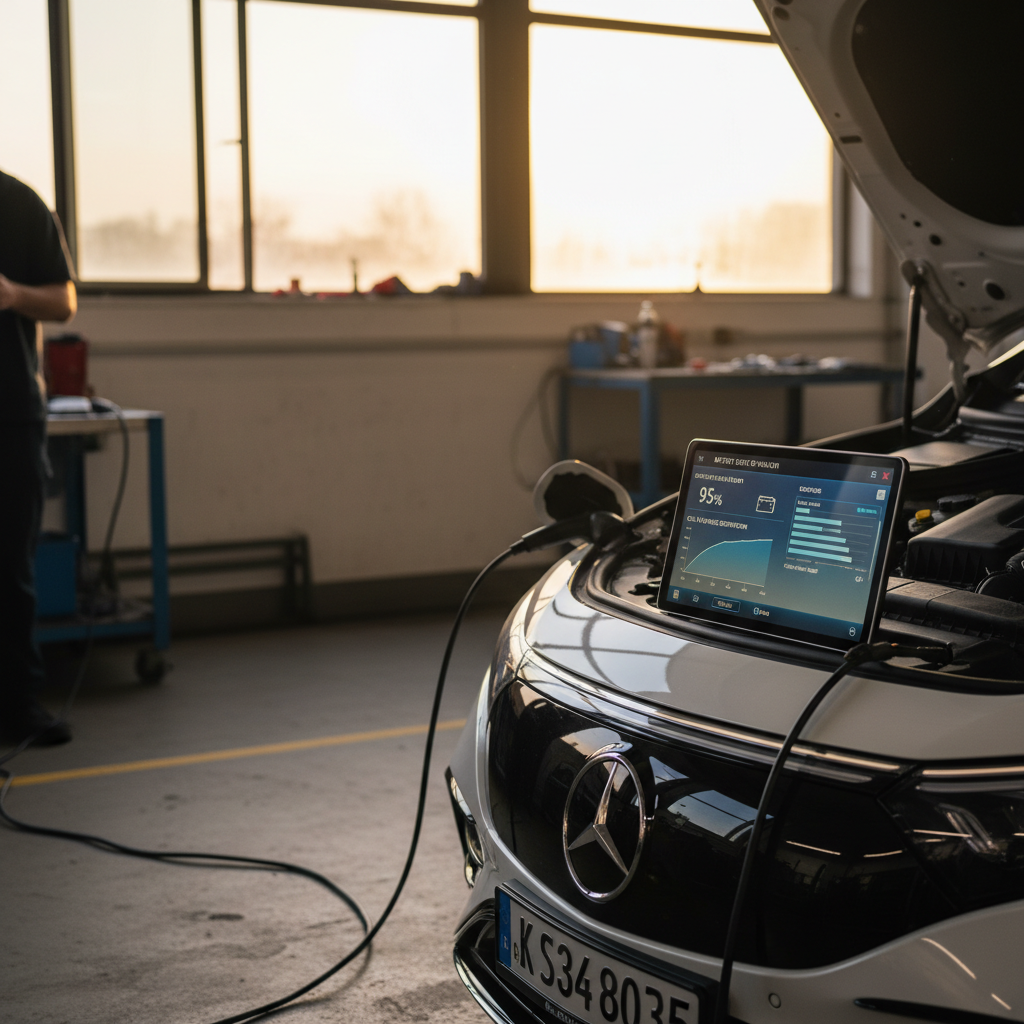
For a used VW ID.4, the key question is: Does the car behave consistently for its age and climate? That’s where tools like a battery health report and long‑drive test data help separate a naturally cold, cranky pack from one that’s genuinely past its prime.
How Recharged helps on used ID.4s
Buying a used VW ID.4? Winter checks that actually matter
If you live where snow is a season, not an event, you should absolutely shop for an ID.4 with winter in mind. The goal isn’t to find a unicorn that never loses range in the cold, that doesn’t exist. It’s to find one that behaves predictably and matches your daily routine.
Cold-climate checklist for a used VW ID.4
Confirm battery health and warranty status
Ask for documentation of battery state of health and verify how much factory battery warranty remains. With Recharged, this is built into the Recharged Score, so you’re not decoding vague range estimates on your own.
Test drive on a chilly day if possible
Take at least a 30–40 minute drive in cold weather. Watch how consumption and the range estimate behave once the car warms up. Wild swings or severe power limits can be a red flag.
Check for a heat pump and winter tires
Confirm whether the car has the heat‑pump option and what tires it’s currently running. A set of dedicated winter tires on separate wheels is a nice bonus in snow country.
Inspect charging habits and history
If the seller has records, look for a balance of home AC charging and occasional DC fast charging, not daily fast‑charge abuse. It’s not a dealbreaker, but it helps paint the picture.
Look for smart charging setup at home
Ask how the previous owner charged: 120V trickle, 240V home station, or public only. A proper Level 2 home charger makes winter preconditioning practical, and that’s a real comfort upgrade.
Match real range to your daily routine
Be honest about your longest regular winter drives. If you routinely need 140 miles round trip at 15°F with limited charging options, make sure the specific ID.4 you’re buying can deliver that with margin.
VW ID.4 winter range loss: FAQ
Frequently asked questions about VW ID.4 winter range loss
Bottom line: Living with an ID.4 through real winters
Winter doesn’t turn the VW ID.4 into a different car, it just exposes how much energy it takes to be warm, safe, and comfortable when the world outside is frozen. Expect your ID.4 to lose a chunk of range in the cold, especially on short trips and fast highway drives, and plan around that from day one.
The payoff is that once you understand what VW ID.4 winter range loss really looks like, it stops being scary math on a dash display and becomes a set of knobs you can turn: preconditioning, speed, heater settings, tire care, and smarter trip planning. If you’re stepping into a used ID.4, a solid battery health report and honest guidance about your local winters matter just as much as color and trim.
That’s exactly the gap Recharged is built to bridge, pairing EV‑specific diagnostics like the Recharged Score with expert support and nationwide delivery. Whether you’re already living with an ID.4 or hunting for the right one, winter doesn’t have to be the season you dread. With the right expectations and a few new habits, it’s just another chapter in electric life.