If you own or are shopping for a Mercedes EQE, battery health is the single most important factor behind real‑world range, reliability, and resale value. The good news: even without factory tools, there are several practical ways to do a Mercedes EQE battery health check and spot problems early, especially on a used EQE sedan or SUV.
What this guide covers
Why Mercedes EQE battery health matters
Unlike a gasoline car where you can swap an engine and move on, your EQE’s high‑voltage battery is the heart of the car and the single most expensive component. It determines how far you can drive between charges, how quickly you can fast‑charge, and how confident you feel on a road trip in January. A healthy pack should lose capacity slowly and predictably, not in sudden steps or accompanied by error messages.
Three ways EQE battery health shows up in daily driving
You’ll feel a tired pack long before it completely fails
Real‑world range
If your EQE can’t come close to its rated range on moderate drives, that’s often the first sign of capacity loss or software limiting.
Fast‑charging behavior
A healthy pack can accept high power at low state of charge. Sudden throttling or inconsistent charging curves can point to thermal or cell‑balance issues.
Reliability & resale
Error messages, limp‑home behavior, or a replaced pack on a young EQE can affect long‑term confidence and what the car will be worth down the road.
Software vs. hardware
EQE battery basics, capacity and warranty
Before you run any Mercedes EQE battery health check, it helps to know what you’re working with. Most EQE sedans and SUVs in the U.S. use a lithium‑ion pack with roughly 90 kWh usable capacity, depending on trim and year. The pack is liquid‑cooled and managed by a fairly conservative battery management system (BMS) aimed at preserving longevity rather than chasing headline range.
Typical Mercedes EQE battery and range specs (U.S.)
Approximate values for common EQE variants so you can sanity‑check your own car’s performance.
| Model | Body style | Usable battery (kWh, approx.) | EPA range when new (mi, approx.) |
|---|---|---|---|
| EQE 350+ RWD | Sedan | 90 | 300 |
| EQE 350 4MATIC | Sedan | 90 | 270 |
| EQE 500 4MATIC | Sedan | 90 | 260 |
| EQE 350+ | SUV | 90 | 280 |
| EQE 350 4MATIC | SUV | 90 | 250 |
Always verify exact EPA range and pack size for your specific model year and trim.
Battery warranty basics
Quick at‑home Mercedes EQE battery health check
You don’t need lab equipment to get a first read on EQE battery health. Start with a simple, repeatable at‑home routine that looks at charge level behavior, displayed range, and obvious warning signs.
5‑step basic EQE battery health check at home
1. Start with a known state of charge
Charge the EQE to an indicated <strong>80% or 90%</strong> on AC (home Level 2) the night before. Avoid DC fast charging for this baseline so you’re seeing the car in a calm, thermal‑stable state.
2. Note displayed range and conditions
With the car fully booted, record the indicated range at that state of charge, outside temperature, and your usual driving profile (Eco vs Comfort, mostly city vs highway). Take a photo of the instrument cluster, this is your reference.
3. Watch for rapid % drops
On a short errand loop (5–15 miles), monitor the battery percentage. A healthy pack shouldn’t drop in big chunks (for example, 10% disappearing after a 3‑mile easy drive) unless you’re climbing steep hills or driving very aggressively.
4. Let the car sleep
Park the EQE for at least 8–12 hours, ideally overnight, without pre‑conditioning or Sentry‑style features turned on. Check how many % points you lose while parked. A couple of points is normal; losses over ~5–7% may point to background loads or software bugs drawing power.
5. Check alerts & service messages
From the driver display and MBUX screen, look for <strong>high‑voltage system</strong>, <strong>battery</strong>, or <strong>drive system</strong> warnings. Intermittent warnings that clear with a restart are red flags worth documenting before your next dealer or third‑party diagnostic visit.
Repeat under similar conditions
Range‑based EQE battery health test (drive method)
One of the most practical ways to estimate EQE battery health is a controlled, real‑world range test. You’re not trying to hit the EPA number; you’re checking whether the car delivers a reasonable fraction of its original range with consistent behavior from full to low state of charge.
Step 1: Plan your loop
Create a 30–60 mile loop that’s mostly steady 45–65 mph driving with minimal stops, think suburban beltway or lightly trafficked highway. Avoid strong headwinds or extreme heat/cold if you can.
If you’re test‑driving a used EQE from a seller or dealer, politely ask to do a longer loop instead of a five‑minute spin around the block.
Step 2: Normalize your starting point
AC‑charge to 90–100% indicated, then drive a few miles to let the BMS “settle.” Reset the trip computer. Note outside temperature, tire size, and drive mode (Eco or Comfort recommended.)
On the loop, aim for smooth driving at or just under the speed limit, with climate control set to something realistic (70–72°F, Auto fan).
- Drive until you’ve used roughly 40–60% of the battery, ideally from ~90% down to ~30–40%.
- At the end of the loop, record miles driven, remaining % and displayed remaining range.
- Calculate implied full‑pack range: (miles driven ÷ % used) × 100.
- Compare that to the EPA rating or the approximate figures in the table above for your trim.
- Repeat another day if conditions were extreme (very cold/hot, heavy rain, strong winds).
What’s a “normal” result?
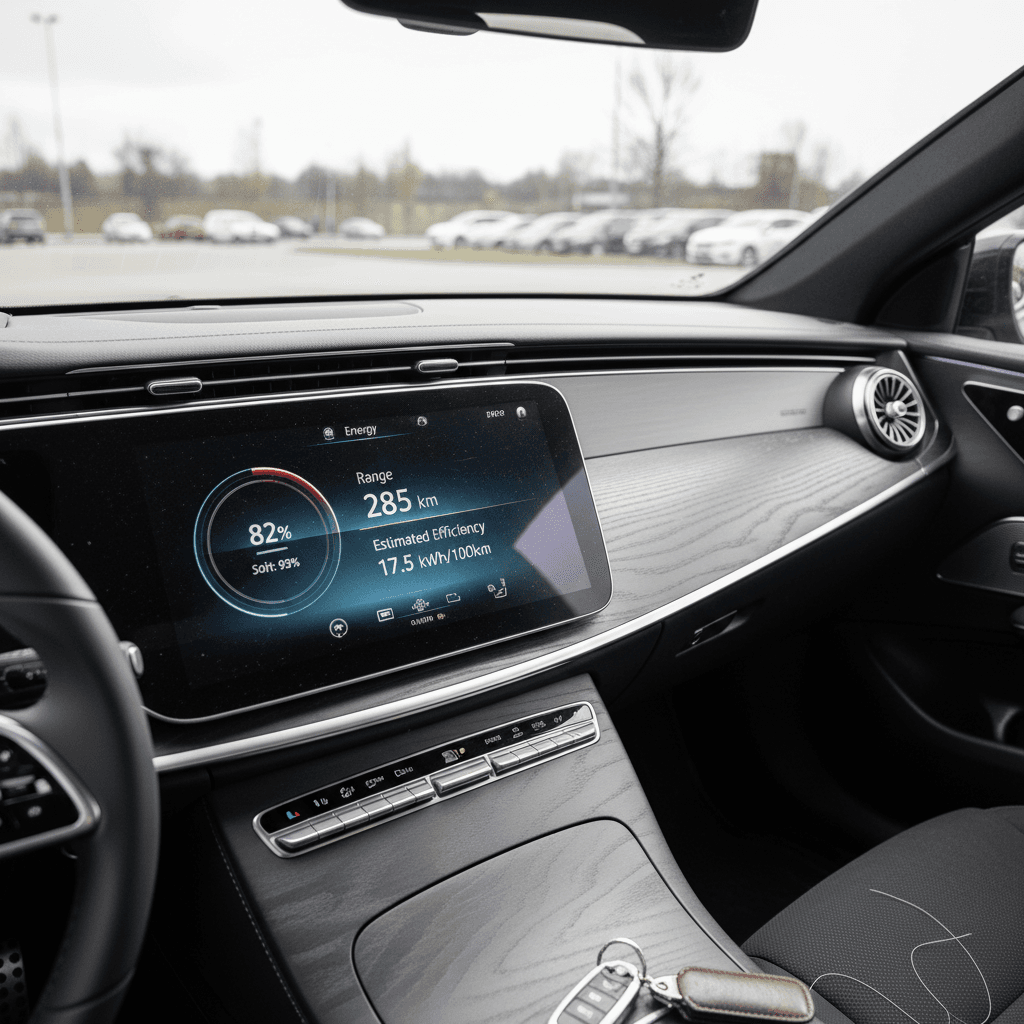
Using Mercedes me to monitor EQE battery condition
The Mercedes me app isn’t a lab‑grade diagnostic tool, and it won’t show a neat “State of Health 93%” readout the way some brands do. But if you use it intentionally, it can still help you monitor battery behavior and spot patterns you might otherwise miss.
Three smart ways to use Mercedes me for EQE battery checks
It’s not perfect, but it’s a useful logbook if you treat it like one
Track charge level over time
Periodically screenshot your state of charge and estimated range after home charges. Over months, you’ll see whether displayed range at, say, 80% is slowly trending down, or if it’s just reacting to recent driving style and weather.
Watch for excessive standby drain
If the app shows your EQE losing big chunks of battery while parked for days, something may be keeping the high‑voltage system awake. That might be software, a failed module, or climate features running when they shouldn’t.
Document warnings & campaigns
Use the app to capture screenshots of battery or high‑voltage system alerts and any open service campaigns. That paper trail is valuable if you later pursue warranty coverage or a goodwill repair.
App glitches are common
Dealer and professional battery health tests
At some point, a DIY Mercedes EQE battery health check runs into the limits of what you can see from the driver’s seat. That’s where dealer‑level diagnostics, or a used‑EV specialist, come in. You’re looking for two things: objective data about pack condition and a clear record for future resale or warranty discussions.
Common professional EQE battery health checks
What you can reasonably expect from a Mercedes dealer vs an independent EV specialist or marketplace like Recharged.
| Test type | Who usually offers it | What it tells you | When to request it |
|---|---|---|---|
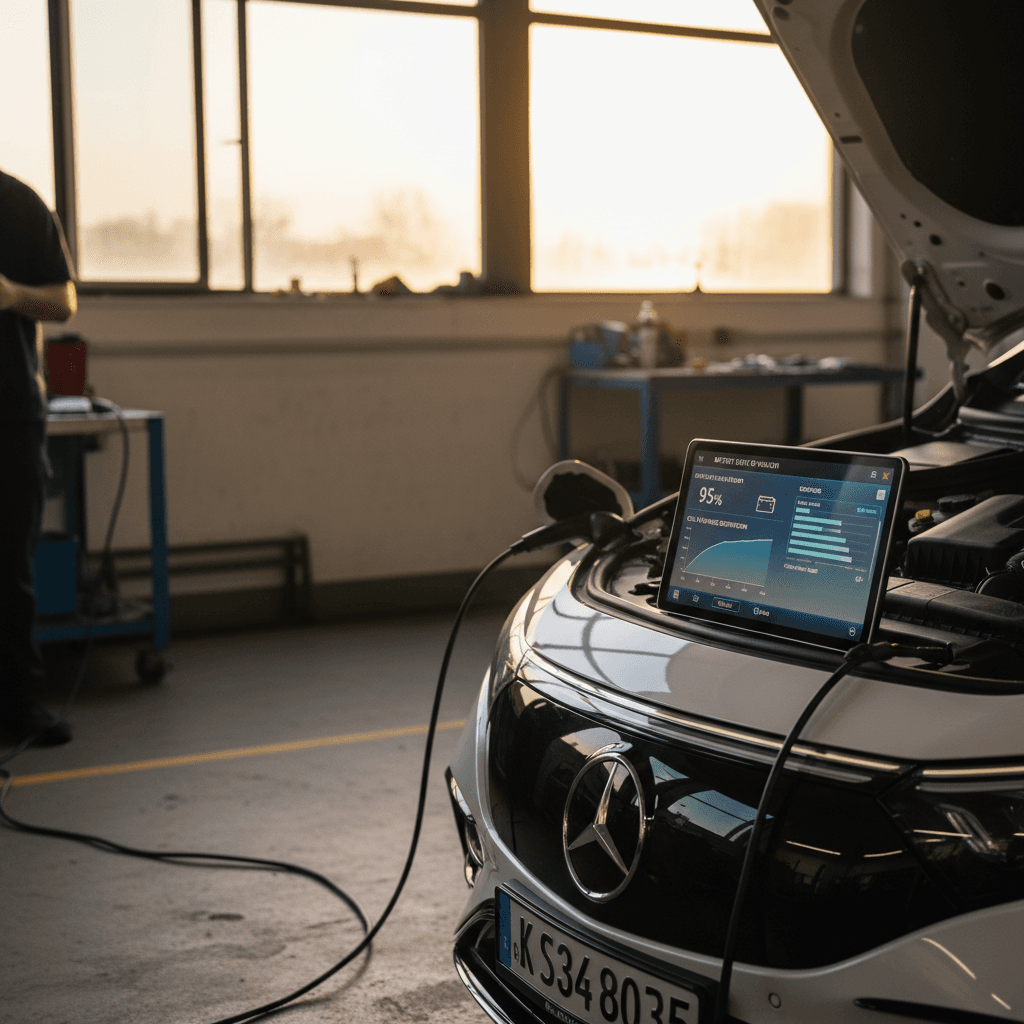
| OBD/BMS diagnostic scan | Dealer or EV specialist | Error codes, cell imbalance flags, thermal events, fast‑charge history snapshots. | Any time you see repeated HV or drive‑system warnings, or before buying a used EQE. |
| Battery health or capacity report | Some dealers, EV specialists, Recharged Score | Estimated remaining capacity vs. new, DC fast‑charge behavior, thermal management notes. | Pre‑purchase on used EQE, end of warranty, or after a major issue. |
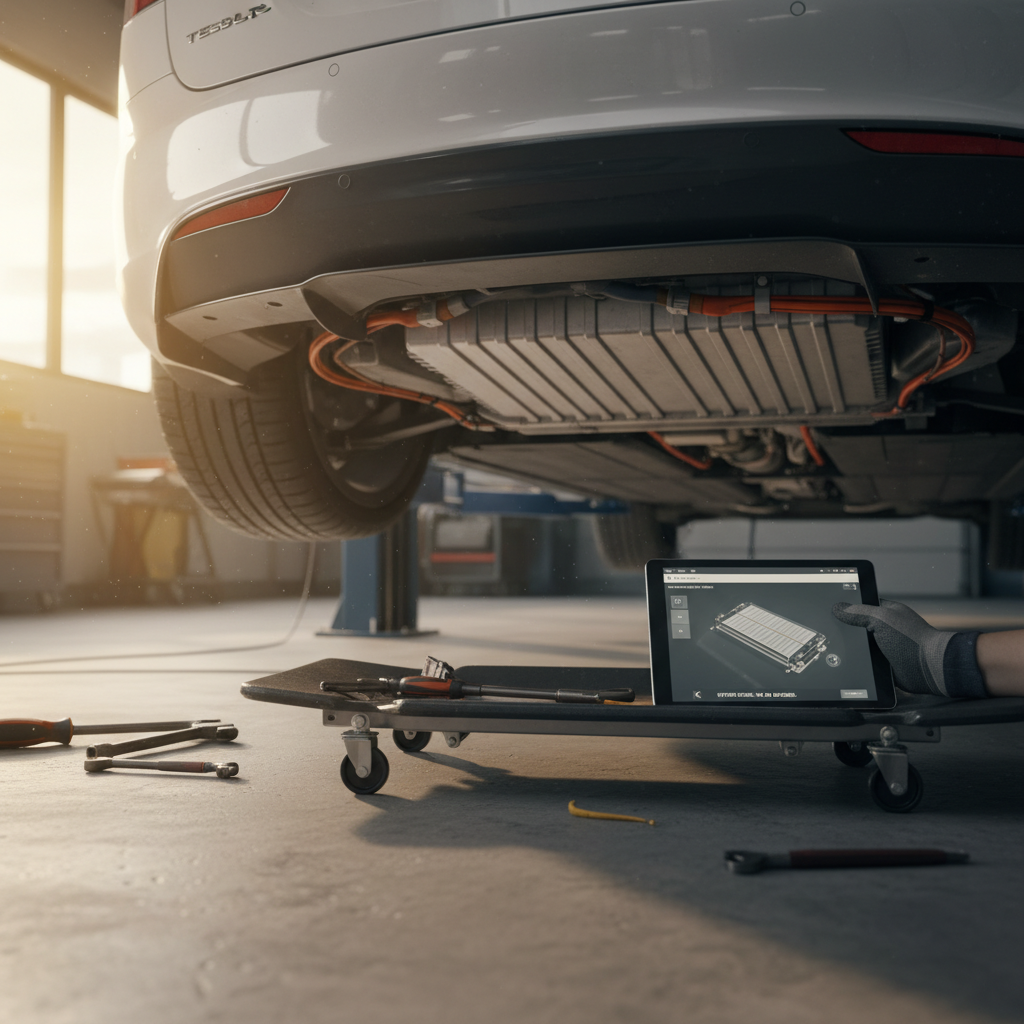
| High‑voltage system inspection | Dealer or trained EV shop | Visual inspection of pack housing, coolant connections, HV cables, and contactors. | After accident damage, curb strikes, or water intrusion around the battery area. |
Availability and pricing vary by region, but the structure of the tests is fairly consistent.
What to ask the service advisor
Warning signs of EQE battery or BMS issues
Not every odd behavior means the pack is dying, but a few patterns are worth taking seriously, especially if they show up on a relatively young Mercedes EQE with modest mileage.
- Repeated “High‑voltage system” or “Stop vehicle” warnings, even if they clear after a restart.
- Sudden loss of drive power or the car shutting down despite the gauge showing plenty of range.
- Strongly reduced DC fast‑charging speeds at low state of charge compared with what other EQE owners report or what you’ve seen before.
- Large, unpredictable drops in indicated range or % remaining in mild weather and gentle driving.
- Persistent, unexplained battery drain while parked for days, not attributable to pre‑conditioning or known features.
- Evidence that the high‑voltage battery was replaced very early in the vehicle’s life without a clear explanation.
Don’t ignore safety‑related warnings
Battery health checklist for used Mercedes EQE buyers
If you’re evaluating a used EQE, whether at a franchise dealer, independent lot, or private seller, a structured battery health check can save you from an expensive surprise. Use the checklist below alongside a broader buying guide like Recharged’s Mercedes EQE buying checklist.
Used EQE battery health checklist
Confirm remaining battery warranty
Ask for a VIN‑based warranty printout or use an official lookup. Note the original in‑service date, mileage cap, and any capacity‑loss coverage language for the high‑voltage battery.
Ask about pack replacements or HV work
Has the high‑voltage battery, BMS, or inverter ever been replaced or opened? If so, request documentation. A properly documented replacement under warranty isn’t necessarily bad, but a vague story should lower your offer or send you elsewhere.
Scan for battery‑related codes
Ideally, have a dealer or EV specialist run a full diagnostic. If that’s not possible, at least ask the selling dealer to show you a clean scan report covering high‑voltage and drive system modules.
Do the range‑based road test
Run the 40–60% SOC loop described earlier. Compare implied full‑pack range with what you’d expect for that trim. Large gaps, especially on low‑mile cars, are red flags.
Check DC fast‑charging behavior (if you can)
If there’s a nearby DC fast charger and the seller agrees, start a brief session from a low state of charge (10–20%) and watch the power curve. It should climb quickly and maintain solid power rather than nose‑diving immediately.
Review charging history & use case
Ask how the car was used. Lots of gentle commuting with mostly AC charging is easier on the battery than constant DC fast‑charging on road‑trip duty. You won’t get perfect data, but even a rough story helps you judge risk.
Use battery health in your negotiation
How Recharged checks Mercedes EQE battery health
Because the EQE is a complex, software‑heavy EV, surface impressions aren’t enough. At Recharged, every Mercedes EQE we list goes through a structured evaluation that feeds into the Recharged Score Report, so you’re not guessing about the pack that’s powering your luxury sedan or SUV.
Inside an EQE battery health check at Recharged
What happens before an EQE earns a Recharged Score Report
Deep diagnostic scan
We pull data from the EQE’s high‑voltage and drive‑system modules: fault histories, cell balance flags, and charging behavior. That uncovers issues you’ll never see on a quick test drive or casual scan.
Capacity & charging behavior review
Our team looks at how the pack accepts charge, how quickly it ramps up on DC fast chargers, and how consistent range behavior is over different state‑of‑charge bands.
Transparent reporting
The results go into your Recharged Score Report, alongside fair‑market pricing and service history. If there’s anything unusual in the EQE’s battery story, you’ll see it before you buy, not after.
Ready to find your next EV?
Browse VehiclesIf you already own an EQE and are thinking about selling or trading out, Recharged can also help you get an instant offer or consignment quote that reflects your car’s verified battery health, not just its badge and odometer.
Mercedes EQE battery health FAQ
Frequently asked questions about Mercedes EQE battery health
Key takeaways on checking EQE battery health
You don’t need factory secrets to get a strong read on Mercedes EQE battery health. A simple at‑home routine, a structured range‑based road test, and smart use of the Mercedes me app will tell you whether your EQE is behaving like a healthy luxury EV or showing early warning signs. Layer in a professional battery report, either from a dealer or from a used‑EV specialist like Recharged, and you’re making decisions based on data, not guesswork.
If you’re considering a used EQE, look for one with transparent battery diagnostics, clear service history, and realistic range behavior. Recharged was built around exactly that kind of transparency: every vehicle includes a Recharged Score Report with verified battery health, fair‑market pricing, and EV‑specialist support from first click to delivery. That way, when you fall for an EQE’s quiet torque and tech, you can be confident the battery underneath has the clean bill of health it deserves.