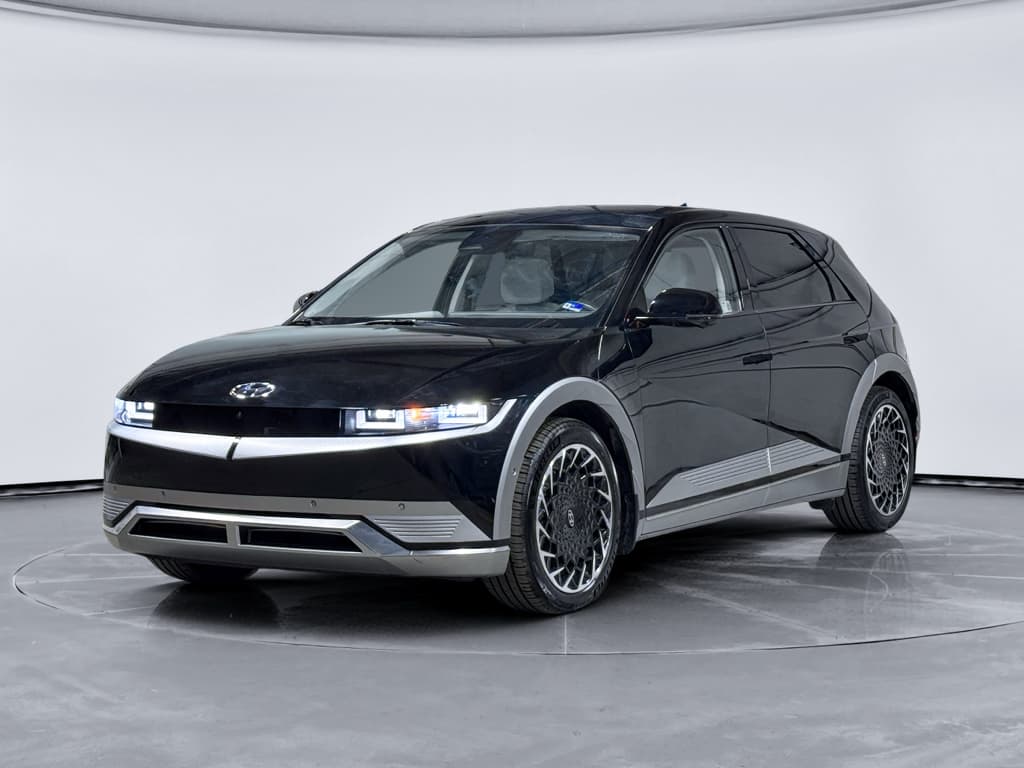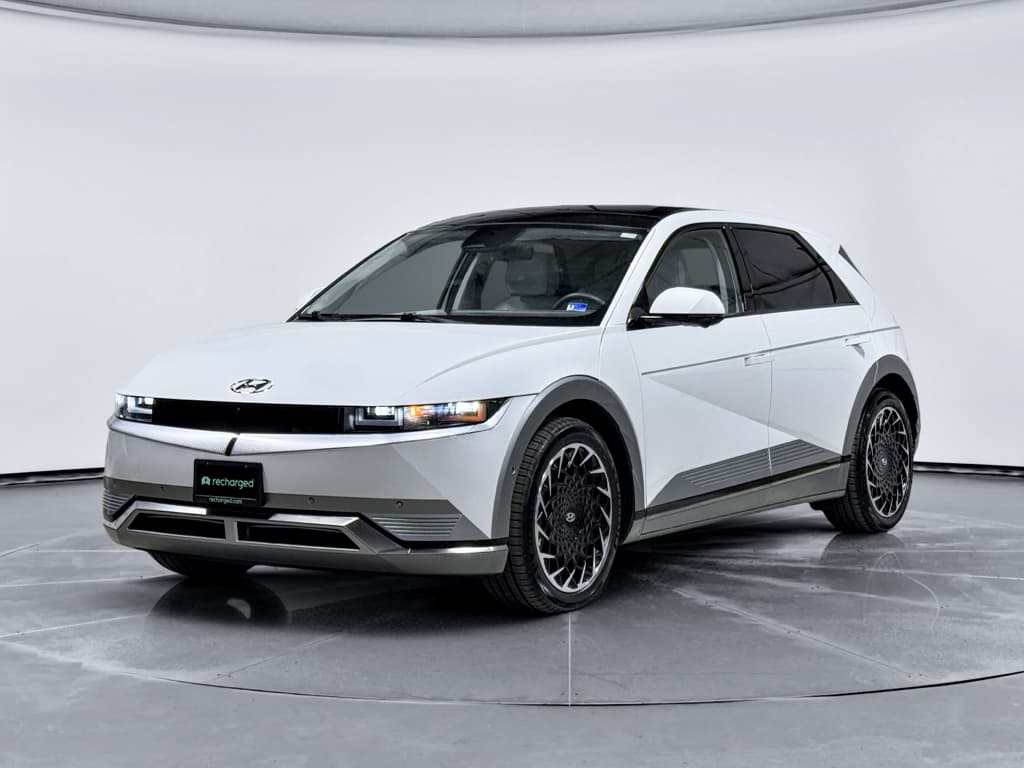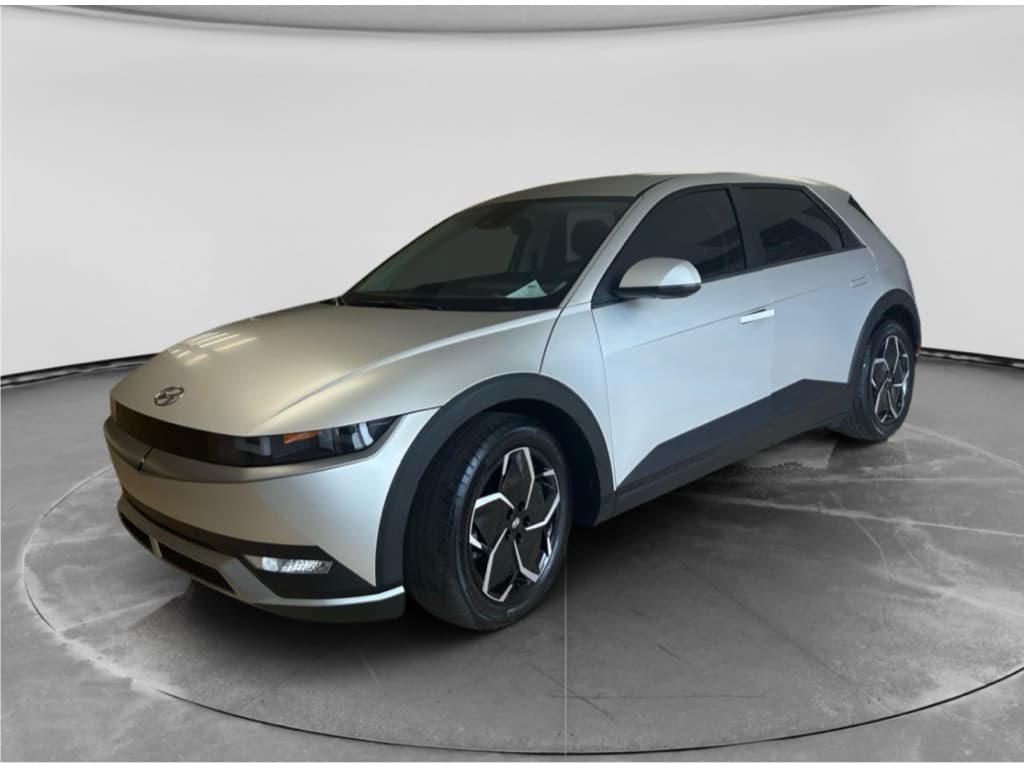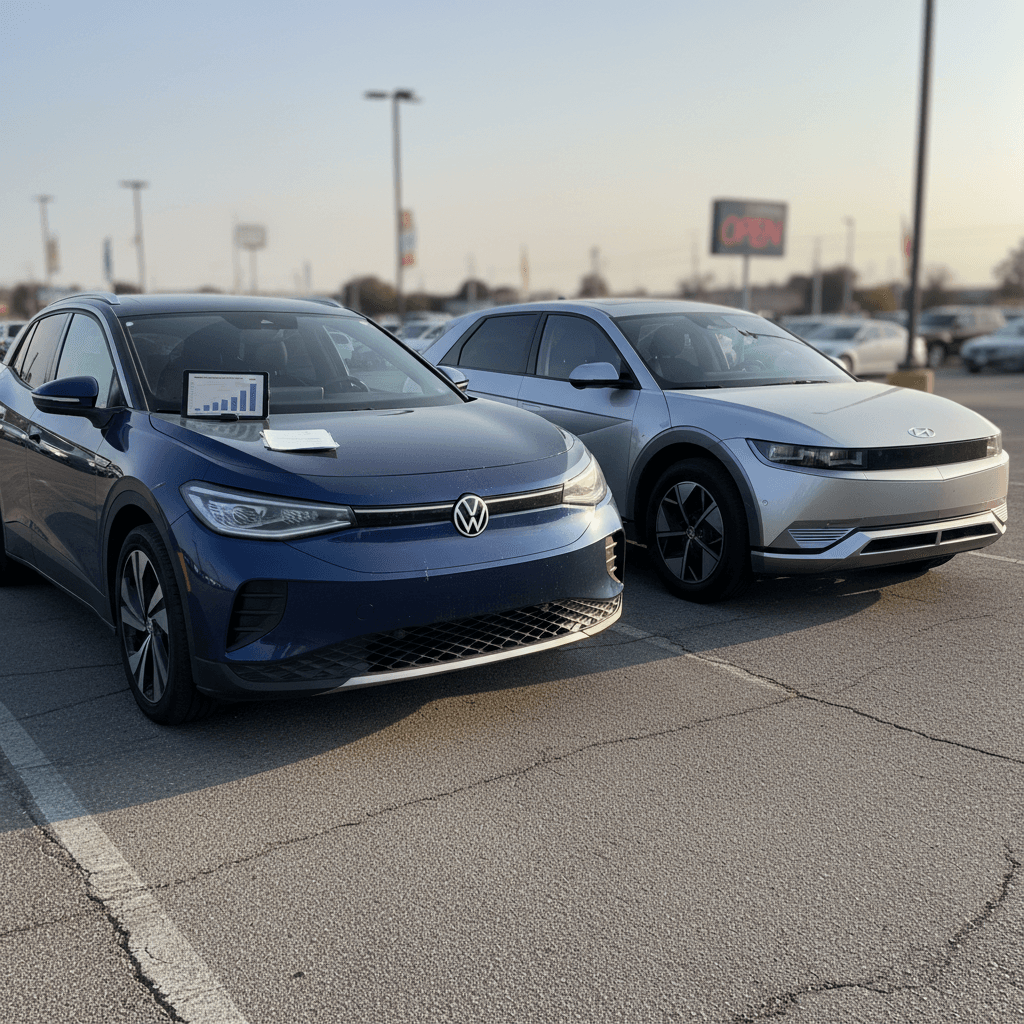
If you’re shopping the used EV market, a VW ID.4 vs Hyundai Ioniq 5 used comparison is probably on your mind. Both are roomy electric crossovers with family-friendly space, solid range, and modern tech, but they take very different approaches, and their used-market stories diverge even more.
Why this comparison matters now
Overview: VW ID.4 vs Hyundai Ioniq 5 as used EVs
Both the Volkswagen ID.4 and Hyundai Ioniq 5 launched in the early 2020s as compact-to-midsize electric SUVs aimed at mainstream buyers. On the used market, you’ll mainly see 2021–2024 model years today, with a mix of rear-wheel drive (RWD) and all-wheel drive (AWD) trims and two main battery sizes in each lineup.
- ID.4 strengths used: usually cheaper, more traditional SUV feel, generally comfortable ride, often bundled with DC fast-charging promos when new (useful if benefits transfer).
- Ioniq 5 strengths used: faster DC charging, more efficient, standout design, very roomy interior, advanced E-GMP platform that’s aged well.
- ID.4 watch-outs: software glitches on early cars, variable DC fast-charging performance, buyback vehicles in some markets, and mixed reliability scores.
- Ioniq 5 watch-outs: higher demand and pricing, fewer base trims on the used market, and wheel/tire choices that can hurt range.
How Recharged can help
Quick specs and where each EV wins
VW ID.4 vs Hyundai Ioniq 5: core used-market specs
Approximate specs for common 2021–2024 U.S. trims you’ll see used. Always verify specifics for the VIN you’re considering.
| Spec | VW ID.4 (common US trims) | Hyundai Ioniq 5 (common US trims) |
|---|---|---|
| Battery sizes (usable/gross, approx.) | 58–62 kWh & 77–82 kWh (varies by year and supplier) | 58 kWh (Standard Range) & 77.4 kWh Long Range |
| EPA range (RWD, long-range battery) | Mid- to high-200s miles, depending on year/wheels | Up to ~303 miles RWD for 77.4 kWh models |
| EPA range (AWD, long-range battery) | Low- to mid-200s miles | Around 260 miles AWD for 77.4 kWh models |
| DC fast-charging peak | Pre-2024 cars often around 125–135 kW; later ones up to ~170 kW with improved curve | 800V platform; can add ~10–80% in ~18 minutes under ideal conditions |
| 0–60 mph ballpark | RWD ~7.5–8.5 sec; AWD ~5.5–6 sec | RWD ~7.4 sec; AWD trims can dip near 5 sec |
| Seating / cargo | 2-row, 5-seat SUV; good cargo room and roof rails on many trims | 2-row, 5-seat; long wheelbase and big rear legroom, generous cargo but no factory roof rails on many US trims |
| On-road character | Comfortable, more traditional SUV feel, calmer steering | More playful, quick responses, but ride can be firmer on big wheels |
| Used price trend | Heavier depreciation; generally cheaper than comparable Ioniq 5 | Holds value better; typically higher asking prices used |
Both SUVs offer competitive range and performance, but the Ioniq 5 pulls ahead on charging speed and efficiency.
Where each EV usually wins on the used market
General tendencies, individual vehicles can buck the trend, especially when battery health is verified.
VW ID.4: typical advantages
- Lower purchase price than a similar Ioniq 5.
- More traditional SUV look that blends in.
- Comfortable, composed ride on most trims.
- Plenty of space for families and gear.
Hyundai Ioniq 5: typical advantages
- Much faster DC fast charging on road trips.
- Higher efficiency and longer range, especially RWD.
- Eye-catching design and airy interior.
- Generally stronger owner-satisfaction and reliability scores so far.
Range, batteries, and real-world degradation
On paper, both SUVs offer competitive range. The differences that matter on the used market are which battery you’re getting, how the previous owner charged it, and what real-world degradation looks like.
VW ID.4 batteries and range
- Early U.S. ID.4s mostly used an ~82 kWh gross pack (often called 77–82 kWh) with RWD or AWD.
- Some trims used a smaller ~62 kWh pack with lower range; check the exact trim for the year.
- Real-world highway range for long-range RWD versions typically falls in the 210–250 mile band depending on wheels, weather, and speed.
- DC charging behavior varies by battery supplier; some cars charge at up to ~170 kW, others closer to 125–135 kW.
Hyundai Ioniq 5 batteries and range
- Most U.S. Ioniq 5s you’ll see used have the 77.4 kWh Long Range battery; base 58 kWh cars exist but are rarer.
- EPA range for 77.4 kWh RWD trims is around 300+ miles; AWD versions are typically around the 260-mile mark.
- The 800V E-GMP platform is efficient; many owners report strong real-world highway range for the battery size.
- Later model years in the U.S. are adopting the NACS (Tesla) charge port, boosting long-term charging flexibility.
Don’t guess at battery health
Real-world range expectations (healthy batteries, mixed conditions)
Charging speed, networks, and road-trip usability
Charging is one of the biggest real-world separators between the VW ID.4 and Hyundai Ioniq 5. On a Level 2 home charger they’re similar. On DC fast charging, especially on road trips, the Ioniq 5 usually has the edge.
Charging comparison: VW ID.4 vs Hyundai Ioniq 5
Both can road-trip, but one makes it easier if you rely heavily on public fast charging.
VW ID.4 charging experience
- Level 2 home charging: roughly 7–9 hours for a full charge on long-range packs with a 240V charger.
- DC fast charging: older packs often top out around 125–135 kW, later cars can hit higher peaks, but the curve may taper earlier.
- Many U.S. ID.4s were sold with Electrify America promos; on the used market, some of those benefits may still be active, some won’t, verify with the seller.
- CCS connector historically; newer model years are transitioning to NACS in North America, which matters for future-proofing.
Hyundai Ioniq 5 charging experience
- Level 2 home charging: roughly 6–8 hours for a full charge with a typical 240V setup, similar to the ID.4.
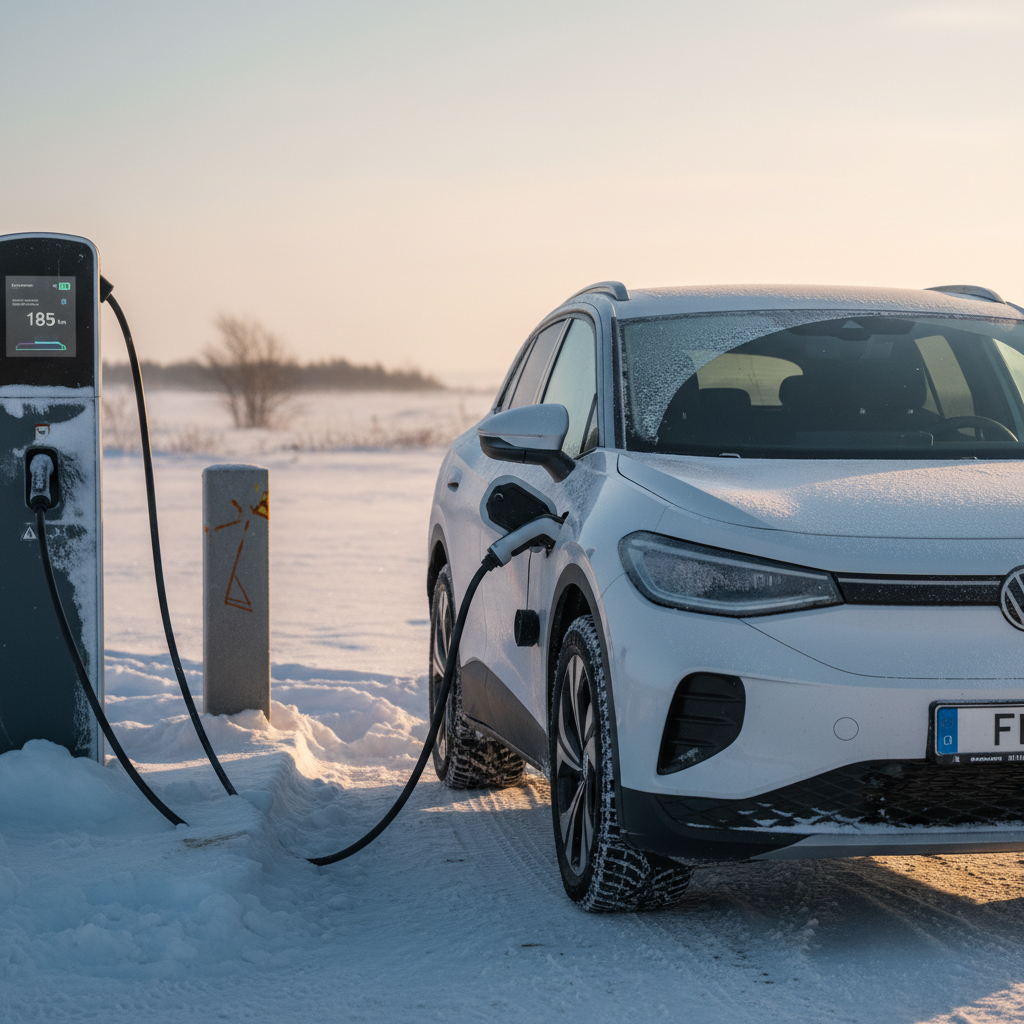
- DC fast charging: thanks to its 800V architecture, the Ioniq 5 can go from about 10–80% in ~18 minutes on a high-power charger, under ideal conditions.
- Very strong charging curve, stays near peak power longer, which you’ll feel on back-to-back fast-charge stops.
- Newer model years add the NACS (Tesla) charge port in the U.S., giving access to Superchargers as the network opens to more brands.
If you road-trip a lot
Space, comfort, and tech: living with each SUV
Both the VW ID.4 and Hyundai Ioniq 5 are practical family EVs. The differences show up in their interiors, how they ride, and how their tech feels after a few years of software updates.
Interior space and comfort
- VW ID.4: More conventional SUV cabin with supportive seats and a soft, comfortable ride. Cargo area is usefully shaped, and many trims have roof rails, which matter if you’re a skier or camper.
- Hyundai Ioniq 5: Long wheelbase and flat floor yield excellent rear legroom. The cabin feels airy and futuristic, with sliding center console on some trims. Ride quality is good overall but can feel firmer with larger wheels and low-profile tires.
Tech and usability
- ID.4: VW’s software and touch-capacitive controls drew criticism early on. Over-the-air updates have improved things, but some used buyers still find the interface less intuitive.
- Ioniq 5: Dual widescreen displays, clear menus, and physical buttons/knobs for many functions make it easy to live with. Many trims support features like vehicle-to-load (V2L) power, which can run tools, camping gear, or appliances.
Daily comfort verdict
Reliability, recalls, and what to watch for used
Reliability should be a central part of any used EV comparison. Both of these models are still relatively new, but owner reports and early reliability data sketch out some patterns.
Reliability snapshots: VW ID.4 vs Hyundai Ioniq 5
Patterns from owner forums, early surveys, and recall activity. Always inspect the specific vehicle in front of you.
VW ID.4: known themes
- Early model years saw a mix of software bugs, infotainment glitches, and occasional charging issues.
- Some North American ID.4s were buybacks due to persistent problems; those can show up on the used market at attractive prices.
- There have been recalls and service campaigns covering things like battery-control software, high-voltage components, and sunroof or door issues, check that they’ve been completed.
- Later-build cars (especially mid-2023 onward) appear to benefit from running changes, but verifying service history is essential.
Hyundai Ioniq 5: known themes
- Overall, the Ioniq 5 has earned strong reviews from owners and press on reliability so far, though it’s not problem-free.
- There have been recalls tied to issues like the integrated charging control unit (ICCU) and software updates for safety systems.
- Some owners report minor rattles or infotainment quirks, but widespread systemic failures are less common than early ID.4 horror stories.
- Hyundai’s generous EV warranties, often 8 years/100,000 miles for the high-voltage battery, help de-risk a used purchase if coverage remains.
Be cautious with former buyback ID.4s
Depreciation and used-market pricing realities
Depreciation is where the VW ID.4 and Hyundai Ioniq 5 diverge sharply. Market conditions change month to month, but several broad patterns have emerged in the U.S. used EV market.
- VW ID.4: Has generally depreciated faster than the Ioniq 5. That’s painful for the first owner, but good news if you’re buying used, you can often find low-mileage examples significantly under original MSRP.
- Hyundai Ioniq 5: Holds value better thanks to strong reviews, standout styling, and high demand. Used prices tend to be firmer, especially for well-equipped long-range AWD trims.
- Both models are affected by broader EV price softening, shifts in federal and state incentives, and competition from newer models. That means you may be able to negotiate more aggressively than you could in 2022–2023.
- Higher trims with big wheels, panoramic roofs, and premium audio often take a larger initial value hit, but can be bargains used if energy consumption and tire costs don’t bother you.
How Recharged benchmarks pricing
Used-buy checklist: ID.4 vs Ioniq 5
When you’re cross-shopping the VW ID.4 and Hyundai Ioniq 5 used, the right inspection list matters more than the badge on the nose. Here’s a focused checklist tailored to the most common issues and decisions for each model.
Essential checklist before you buy a used VW ID.4 or Hyundai Ioniq 5
1. Confirm exact battery and drivetrain
Ask for build sheets or window stickers and confirm whether you’re getting the smaller or larger battery, and RWD or AWD. This single detail dramatically changes range, performance, and value for both the ID.4 and Ioniq 5.
2. Get a real battery-health report
Don’t rely on a simple range estimate. Use a Recharged Score Report or similar diagnostic to see <strong>state of health</strong>, DC fast-charging history, and whether there are any warning signs of abnormal degradation.
3. Review recall and campaign history
Run the VIN through manufacturer and government recall tools. For ID.4s, pay close attention to software and high-voltage system recalls. For Ioniq 5s, look at ICCU, charging-system, and safety-system updates.
4. Inspect for previous buyback or lemon history
On ID.4 especially, check for branded titles, disclosures of buyback or lemon-law status, and supporting paperwork. Deeply discounted units deserve extra scrutiny and an independent inspection.
5. Test fast-charging behavior
If possible, do a DC fast-charging session from a low state of charge. Watch whether the car hits expected peak rates and maintains a healthy charging curve. Strange behavior here can hint at software issues or battery stress.
6. Evaluate interior wear and tech
Check all infotainment functions, physical controls, and driver-assistance features. Confirm things like adaptive cruise, lane centering, and parking aids work consistently, and look for water leaks or unusual rattles.
Who should buy which? Recommendations by driver type
Both the VW ID.4 and Hyundai Ioniq 5 can be excellent used EVs, but they suit different priorities. Instead of asking which is "better," frame it as which one is better for how you drive and what you’re willing to spend.
VW ID.4 vs Hyundai Ioniq 5: best fit by use case
Use your own driving pattern and budget as the tie-breaker.
Urban and suburban commuters
Best bet: Either, with an edge to ID.4 on price.
- If you drive mostly under 60–80 miles a day and charge at home, both models work great.
- ID.4: Usually cheaper, comfy ride, easy to park.
- Ioniq 5: Nicer tech and interior, but you’ll pay more for it.
Frequent road-trippers
Best bet: Hyundai Ioniq 5.
- Faster, flatter DC fast-charging curve makes back-to-back stops less painful.
- Good efficiency and strong highway range with the long-range battery.
- If you’re planning to rely on Tesla Superchargers as NACS rolls out, newer Ioniq 5s with the native port are especially compelling.
Families and value-focused buyers
Best bet: VW ID.4 for budget, Ioniq 5 if you can stretch.
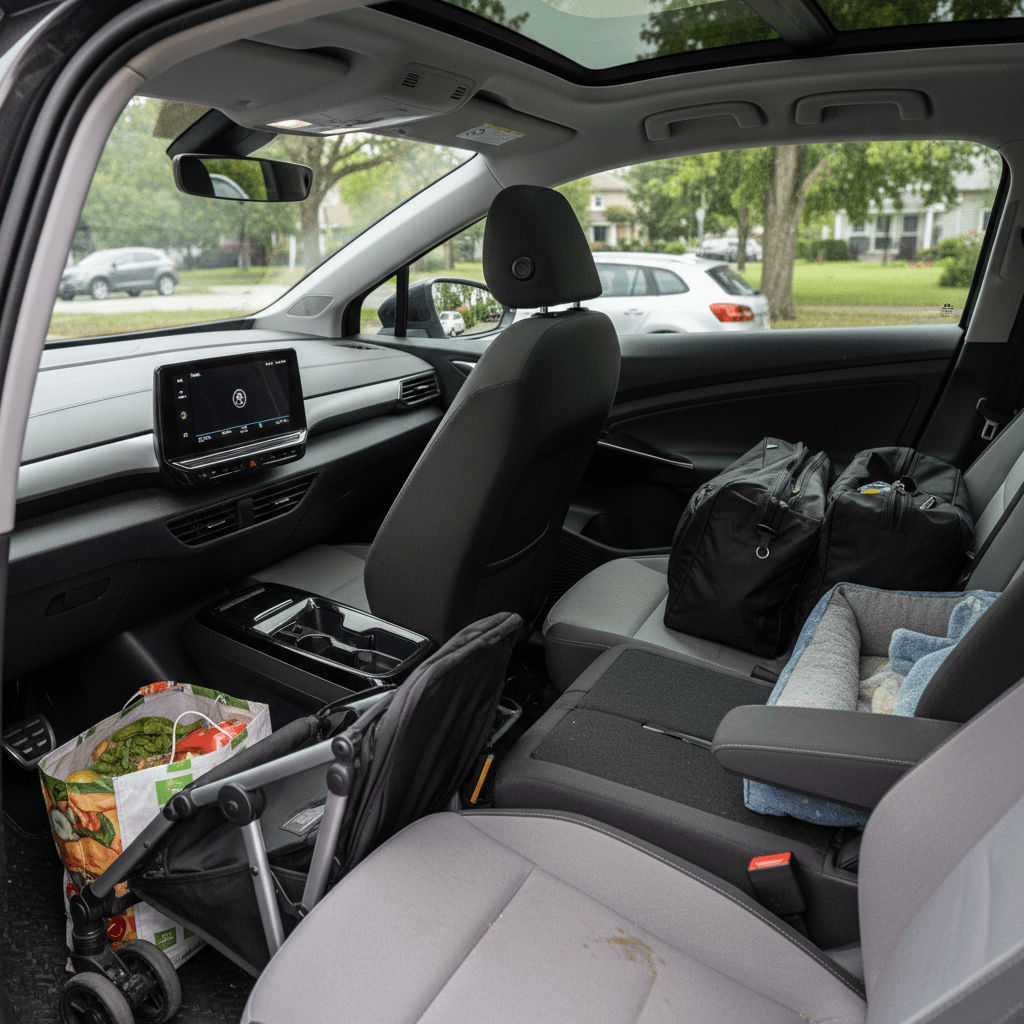
- ID.4: Often the better value per dollar on the used market, with plenty of space for strollers, sports gear, and pets.
- Ioniq 5: Superb rear legroom, easy-to-use tech, and strong reliability make it a great long-term family EV if the budget allows.
When you’re buying used, the specific vehicle in front of you, the battery health, software history, and prior use, matters more than the logo on the grille.
FAQ: VW ID.4 vs Hyundai Ioniq 5 on the used market
Frequently asked questions about VW ID.4 vs Hyundai Ioniq 5 used
When you line up the VW ID.4 vs Hyundai Ioniq 5 on the used market, the Ioniq 5 usually wins on charging speed, efficiency, and polish, while the ID.4 fights back hard with lower prices and a comfortable, familiar SUV feel. The smart move is to treat each candidate as a one-off: verify the exact battery and trim, dig into software and recall history, and insist on a transparent battery-health report. If you’d rather not do that homework alone, browsing ID.4 and Ioniq 5 listings on Recharged gives you access to Recharged Score Reports, expert EV guidance, and nationwide delivery, so you can pick the used electric SUV that fits your life today and still makes sense years from now.