If you’re looking at a Volkswagen ID.4 and wondering whether it can double as a light-duty tow vehicle, you’re not alone. The big questions are always the same: what is the VW ID.4 towing capacity, and how much range will I lose when towing? This guide pulls together factory specs and real-world experience so you know exactly what to expect before you hitch up a trailer.
Quick answer
VW ID.4 towing basics: what it’s rated for
Volkswagen does rate the ID.4 for towing in many markets, but the exact number depends on model year, drivetrain, and where the car was originally sold. For U.S. shoppers, these are the key figures to keep in mind:
VW ID.4 towing capacity by configuration (U.S.-focused)
Approximate maximum trailer weights for common ID.4 versions when equipped with a factory tow hitch. Always confirm the rating on your specific vehicle’s door jamb label and owner’s manual.
| Model / Drivetrain | Typical Model Years | Max braked trailer (lbs) | Max unbraked trailer (lbs) | Notes |
|---|---|---|---|---|
| RWD, early First Edition (with factory hitch) | 2021 | 1,500 | ~1,000 | Limited run; hitch was optional and rare in U.S. |
| RWD, later U.S. models (no factory hitch option) | 2022–2026 | Not rated in U.S. | Not rated | VW USA generally does not offer a factory hitch; many dealers recommend towing only with AWD. |
| AWD ID.4 (factory hitch) | 2023–2026 | 2,200–2,700 | 1,650–2,000 | Most U.S. dealer literature quotes 2,200–2,700 lbs when properly equipped. |
| European-spec RWD (with tow package) | Varies | Up to 2,645 | 1,650 | Shown here for reference; Euro ratings don’t always apply to U.S. cars. |
Towing capacity assumes a properly equipped vehicle, braked trailer, and within tongue-weight limits.
Always verify your specific car
- Typical U.S. all-wheel-drive ID.4s equipped with a factory hitch are advertised by dealers with towing capacities around 2,200–2,700 lbs braked.
- Volkswagen’s own European technical info lists up to 1,200–1,400 kg (2,645–3,086 lbs) depending on drivetrain, but those higher ratings may not apply to U.S.-market cars.
- Many U.S. rear‑wheel‑drive ID.4s were sold without an official towing package; several VW dealers explicitly recommend towing only with factory‑equipped AWD models.
In practical terms, if you’re shopping the U.S. market and want to tow, you’ll usually be looking for an AWD ID.4 with a factory tow hitch and a realistic trailer weight target of under 2,000–2,200 lbs loaded to preserve a comfortable safety margin.
VW ID.4 range with and without a trailer
To understand how towing affects range, you first need a baseline. Recent long‑range ID.4 models with the larger battery (around 77–82 kWh usable) have EPA ratings in the ballpark of 260–290 miles on a full charge, depending on drivetrain and trim. In independent testing, rear‑wheel‑drive models have gone just under 300 miles in mild weather, while all‑wheel‑drive versions are closer to the mid‑200‑mile range at highway speeds.
Typical non‑towing range for newer ID.4 models
Once you add a trailer, aerodynamic drag and weight start to eat into that range quickly. Owners who tow small campers or utility trailers with an ID.4 commonly report 30–50% range loss depending on the trailer’s profile and speed. A low, narrow utility trailer will hurt less than a tall boxy camper.
Light utility trailer or small teardrop
- Trailer weight: ~1,000–1,500 lbs loaded
- Highway speed: 60–65 mph
- Expected range hit: ~30–35%
- If your ID.4 normally does ~240 miles on the highway, plan on 150–170 miles between charges.
Taller camper or enclosed trailer
- Trailer weight: ~1,800–2,200 lbs loaded
- Highway speed: 65–70 mph
- Expected range hit: ~40–50%+
- The same ID.4 that can do ~240 miles solo might manage 110–150 miles per charge when towing in these conditions.
Think in hours, not just miles
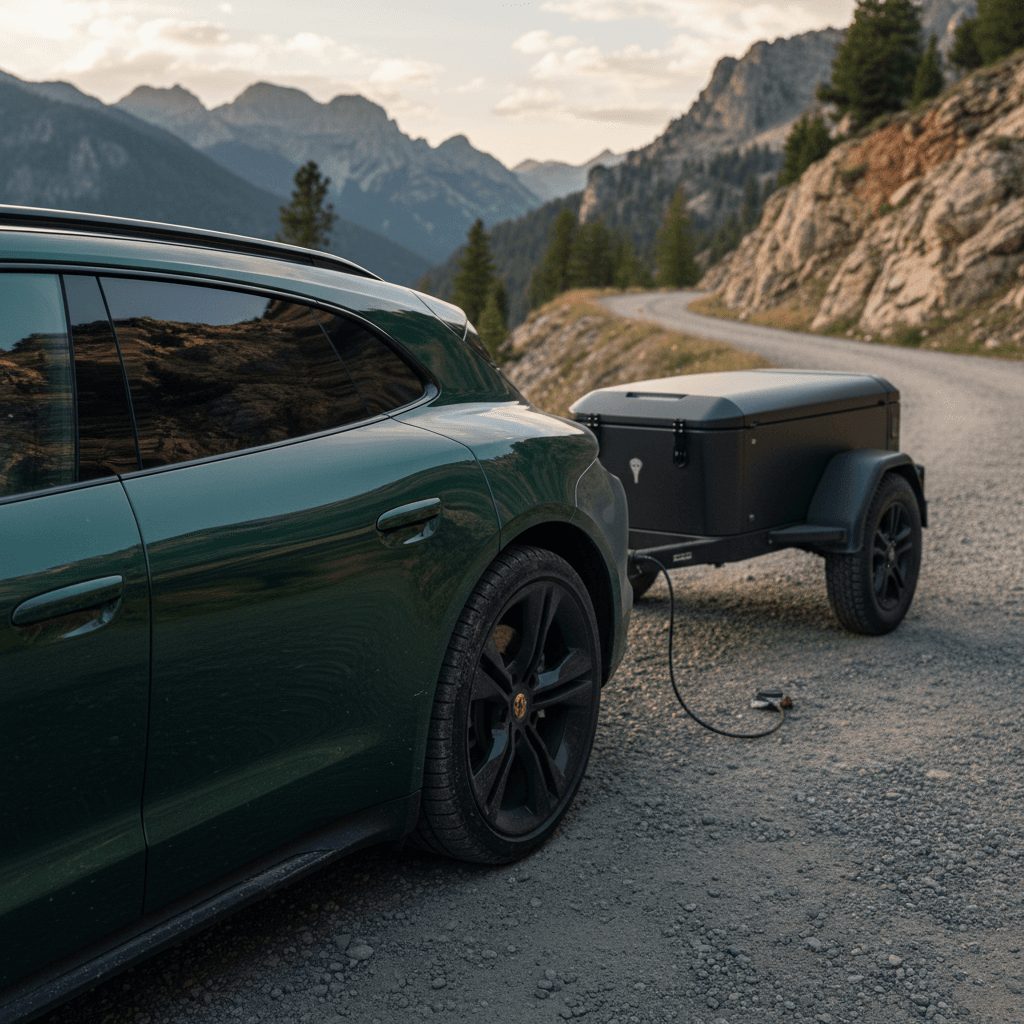
Which ID.4 models are best for towing?
Not every ID.4 is created equal when it comes to towing. Battery size, drivetrain, and how the vehicle was originally equipped all play a role. Here’s how to narrow your search:
Good, better, best: ID.4 trims for towing duty
How different configurations stack up if towing is part of your plan.
Good: Early RWD with factory hitch
Some 2021 First Edition RWD ID.4s in the U.S. were delivered with a factory tow prep and a modest rating around 1,500 lbs.
- OK for small cargo trailers and bike racks.
- Limited availability; verify hitch and rating on the specific car.
Better: Newer RWD with big battery
Later rear‑drive Pro and S trims give you the best efficiency and range, which is helpful when towing.
- In Europe many are tow‑rated; in the U.S. you may need to add an aftermarket hitch for racks or non‑rated light towing at your own risk.
- Great choice if you only occasionally tow light loads and care more about daily efficiency.
Best: AWD ID.4 with factory tow package
In the U.S. this is the configuration most dealers advertise as being able to tow roughly 2,200–2,700 lbs when properly equipped.
- More traction when launching on wet boat ramps or gravel.
- Officially supported in VW’s towing literature in many markets.
Aftermarket hitches on non‑rated cars
What can you actually tow with an ID.4?
Tow ratings by themselves don’t tell the whole story. You also need to account for passengers, gear, tongue weight, and the shape of the trailer. Here are common real‑world setups that pair well with an ID.4:
Typical trailer setups that work with a VW ID.4
Examples assume an AWD ID.4 with a ~2,200–2,700 lb braked‑trailer rating. Always confirm your vehicle’s actual rating and weigh your fully loaded trailer.
| Use case | Example trailer | Estimated loaded weight | Works with ID.4? | Comments |
|---|---|---|---|---|
| Weekend gear runs | 4x8 open utility trailer with bikes or yard waste | 800–1,200 lbs | Yes, easy | Low aerodynamic drag and light weight make this an ideal match. |
| Family camping (light) | Teardrop camper or small fiberglass pod | 1,400–1,900 lbs | Yes, with planning | Watch tongue weight and cargo; expect ~35–40% range loss. |
| Small boat | Aluminum fishing boat on single‑axle trailer | 1,500–2,000 lbs | Usually | Fine for short trips to local lakes. Be cautious on steep, slippery ramps. |
| Enclosed moto/ATV trailer | Single‑axle enclosed trailer with one ATV or bikes | 1,800–2,200+ lbs | Borderline | Weight is near the top of the rating and the tall profile can cut range in half. |
| Full‑size travel trailer | 20–25 ft camper | 3,500–5,000+ lbs | No | Too heavy and too tall for the ID.4’s tow rating and braking capacity. |
These are examples, not guarantees. Weigh your rig and stay below both gross trailer weight and tongue‑weight limits.
Stay well below the spec sheet
Trip planning & range tips when towing
Towing with an EV isn’t just about whether it can move the weight. The real art is in planning your charging stops and driving style so the trip feels smooth instead of stressful. Here’s how to set yourself up for success in an ID.4.
Key steps for a smooth towing trip in your ID.4
1. Start with conservative range assumptions
If you normally see 240 miles of highway range, plan around <strong>120–150 miles between chargers</strong> when towing. If you arrive with more in the battery, that’s a pleasant surprise.
2. Use fast chargers you can easily reach with a trailer
Favor DC fast‑charging sites that have pull‑through spots or room to park with a trailer attached. In a pinch, you may need to briefly unhook the trailer, so practice doing that efficiently at home.
3. Slow down a little
Dropping from 70 mph to 60–65 mph can make a dramatic difference in consumption with a trailer. On longer legs, this often saves more time in reduced charging than it costs in driving speed.
4. Pre‑condition and charge smart
When possible, pre‑condition the cabin while plugged in and use the car’s route planning to arrive at DC fast chargers with a lower state of charge, where charging is fastest.
5. Pack light and balance the load
Every extra pound hurts efficiency. Keep heavy items low and near the trailer axle, and make sure tongue weight stays within the limits printed in your owner’s manual.
6. Have a backup charging plan
Especially in rural areas, it’s wise to identify a backup charger near your planned stop. Apps from major networks and tools like PlugShare can help you map out alternatives.
Weather matters more when you’re towing
How towing affects battery health and resale value
One concern many EV shoppers have is whether towing will accelerate battery degradation. The ID.4’s pack is liquid‑cooled and designed to handle fast‑charging and heavy use, but towing does push it harder than solo commuting.
- Towing typically means higher sustained power draw, which warms the battery and can increase degradation if the pack runs hot for long periods.
- Frequent DC fast‑charging from very low to very high state of charge (SOC) is more stressful than shallow charges at home. That’s true with or without a trailer attached.
- That said, occasional towing trips a few times a year are unlikely to materially shorten battery life, especially if you avoid routinely charging to 100% and letting the pack sit full in hot weather.
Battery‑friendly towing habits
On the resale side, the important thing is transparency. A well‑maintained ID.4 that has done some modest towing but still shows strong battery health can be just as desirable, sometimes more so, to the next owner who also wants a multi‑purpose EV. That’s where objective battery data becomes your friend.
How Recharged helps on the battery side
Buying a used ID.4 as a tow vehicle
If you’re shopping the used market and want an ID.4 that can tow, you need to look beyond the generic trim name. Two seemingly identical Pro S models can have very different towing stories behind them.
Used ID.4 towing checklist
Confirm factory tow rating and equipment
Check the owner’s manual, door‑jamb sticker, and under‑body structure for evidence of a factory‑installed hitch. Ask for the original window sticker if available; it will often list the tow package.
Inspect the hitch and wiring
Look for rust, bent components, or homemade wiring jobs. A clean, factory‑style hitch and harness is a good sign; sloppy aftermarket wiring can be a red flag.
Ask how it was used
There’s a big difference between hauling bikes a few weekends a year and towing a fully loaded camper across the Rockies every month. An honest seller should be able to describe typical towing loads and trips.
Review charging history and habits
If possible, ask how often the car fast‑charged, and at what SOC range. A car that mostly did overnight Level 2 charging and only fast‑charged on trips is ideal.
Get independent battery health data
Use services like the <strong>Recharged Score battery health diagnostics</strong> to verify remaining capacity. This matters even more if the vehicle has seen regular towing or heavy DC fast‑charging.
Look at tires and brakes
Heavy towing can show up as uneven tire wear or heat‑stressed brake components. A professional inspection can catch subtle signs of overloading or poor maintenance.
Why consider a used ID.4 from Recharged
Ready to find your next EV?
Browse VehiclesVW ID.4 towing & range FAQ
Frequently asked questions about VW ID.4 towing capacity and range
The bottom line is that the VW ID.4 can absolutely tow, within reason. Think of it as a versatile compact electric SUV that’s happiest pulling small campers, boats, and utility trailers, not full‑size travel trailers. If you’re honest about your trailer weight, plan your charging stops with a healthy margin, and choose the right ID.4 configuration, it can handle weekend adventures and household chores without drama. And if you’d like help finding a used ID.4 whose battery, history, and pricing all make sense for towing duty, Recharged’s expert EV advisors and detailed battery health reports are there to make the process simpler and more transparent.