If you own a Hyundai Kona Electric or you’re shopping the used market, resale value is more than an abstract number, it’s real money you either keep or leave on the table. With EV prices in flux and Hyundai pausing the Kona Electric for the 2026 model year, understanding the Hyundai Kona Electric resale value forecast over the next few years has never been more important.
Snapshot: Kona Electric resale at a glance
Why Hyundai Kona Electric resale value matters now
Resale value is just depreciation seen from the other side of the deal. The Kona Electric sits at the intersection of three forces that make forecasting especially critical right now: big EV price corrections, a crowded compact EV segment, and Hyundai’s decision to skip the 2026 model year before bringing the Kona Electric back as a 2027.
- EV prices have reset after the 2021–2023 run‑up, pushing used values down across the board.
- New compact EVs, including the latest Leaf, Equinox EV, and the returning Bolt, are putting pricing pressure on the Kona Electric.
- Hyundai will pause Kona Electric production for the 2026 model year, then relaunch it as a 2027, which can temporarily distort both new and used pricing.
Resale value cuts both ways
Where Hyundai Kona Electric values stand today
Current Hyundai Kona Electric value snapshot (early 2026)
Online pricing guides and dealer retail data suggest that early 2019–2022 Kona Electrics commonly list between the mid‑teens and low‑twenties depending on miles, spec, and condition. By contrast, 2024 Kona Electrics that carried MSRPs in the mid‑$30,000s to low‑$40,000s are already trading in the low‑$20,000s on the used market. In plain English: depreciation has been steep and front‑loaded.
Don’t fixate on a single number
How the Kona Electric compares to other used EVs
Compared with its direct peers, the Hyundai Kona Electric sits in the middle of the pack for resale strength, not the worst, not the best. That’s actually good news for shoppers who want value rather than bragging rights.
Kona Electric vs. similar used EVs
High‑level look at how Kona Electric depreciation stacks up against popular rivals sold in similar years.
| Model | Market Position (2019–2022 era) | Typical Depreciation Snapshot | Resale Story |
|---|---|---|---|
| Hyundai Kona Electric | Subcompact EV crossover, FWD, 258‑mi EPA range (early years) | Roughly mid‑40% to high‑40% value lost in a few years | Solid efficiency, modest performance, aggressive used discounts. |
| Chevy Bolt EV/EUV | Compact hatch / tall wagon, value leader | Large drops from early MSRPs, but cheap new pricing narrows the gap | Very affordable used, but recall history and tax‑credit eligibility affect values. |
| Nissan Leaf | Compact hatch, shorter range in many trims | Deep depreciation, especially older CHAdeMO cars | Often the cheapest used EVs; limited fast‑charge standard holds values down. |
| Kia Niro EV | Slightly larger crossover cousin to Kona Electric | Similar or slightly stronger resale than Kona Electric | Practical packaging, similar powertrain, brand perception helps. |
Depreciation estimates are directional, not guarantees; local market conditions vary.
Where Kona Electric sits in the pack
Key factors that drive Kona Electric resale value
What’s really moving Kona Electric values
Six forces that matter more than the sticker on the window
Charging & range
Battery health & warranty
New EV pricing pressure
Regional demand
Performance & driving feel
Brand & reliability perception
How your individual car breaks the mold
Three‑year Hyundai Kona Electric resale value forecast (2026–2028)
Forecasting resale value is never exact, but we can sketch reasonable expectations for the Kona Electric based on how it has depreciated so far, how competing EVs are priced, and what’s happening to new‑EV supply. Think of the following as directional guidance, the actual path for any specific car will depend heavily on mileage, condition, and battery health.
Short‑term: 2026–2027
Over the next 12–24 months, used Kona Electric prices are likely to drift down modestly, not collapse. Much of the early hit has already been taken by 2019–2022 models. Expect:
- Early cars (2019–2020) to settle into the low‑ to mid‑teens for average miles.
- 2021–2022 models generally transacting in the mid‑teens to low‑twenties.
- 2023–2024 models continuing to slide from the low‑$20,000s into the high‑teens as more off‑lease inventory appears.
Upside risk: if new‑EV incentives tighten further or supply of affordable new EVs stays constrained, late‑model Kona Electric prices could stabilize sooner.
Medium‑term: 2027–2028
By 2028, the oldest Kona Electrics will be approaching a decade on the road. At that point, we expect depreciation to slow as the model finds its natural price floor as an efficient commuter crossover.
- Pre‑facelift cars (2019–2021) likely behave like “used‑car appliances,” often in the low‑teens or below depending on miles and battery confidence.
- Later cars (2022–2024) and the upcoming 2027 refresh should command stronger money, particularly if they show healthy range and updated infotainment.
- Kona Electrics with neglected maintenance or visible battery degradation will diverge sharply to the downside.
Remember: battery health isn’t linear. A well‑cared‑for Kona that still delivers near‑original range can remain highly attractive even as it ages.
About that 2026 model‑year pause
Kona Electric years and trims to target (and to be cautious with)
Not every Kona Electric sits in the same resale sweet spot. Some years and trim combinations offer better long‑term value, while others may be inexpensive up front but harder to sell later.
Model‑year guidance for resale‑savvy shoppers
Where value and future desirability tend to line up
Good value picks: 2019–2021
Sweet spot: 2022–2024
Wildcard future: 2027+
When to slow down and dig deeper
How battery health impacts your Kona Electric’s value
For a Kona Electric, battery health is the ballgame. Range and charging behavior are the two things used‑EV shoppers care about most after price, and they’re directly tied to the condition of the high‑voltage pack.
- A Kona Electric that still delivers close to its original rated range will command a clear premium.
- Noticeable range loss, especially in cars driven in very hot climates or fast‑charged constantly, will show up in lower offers.
- Hyundai’s long battery warranty is a safety net, but shoppers still pay more for cars that don’t look like warranty claims waiting to happen.
Battery‑health checks that protect resale value
Ask for recent full‑charge range data
Have the seller provide a photo of the dash or app at 100% charge showing estimated range. Compare that with the original EPA figure for the trim.
Review fast‑charging behavior
If possible, observe a DC fast‑charge session. A healthy Kona Electric should ramp up close to its expected peak and hold reasonable power until mid‑state of charge before tapering.
Verify warranty status
Confirm remaining years and miles on the high‑voltage battery warranty and ask about any prior high‑voltage repairs or recalls.
Get a third‑party battery health report
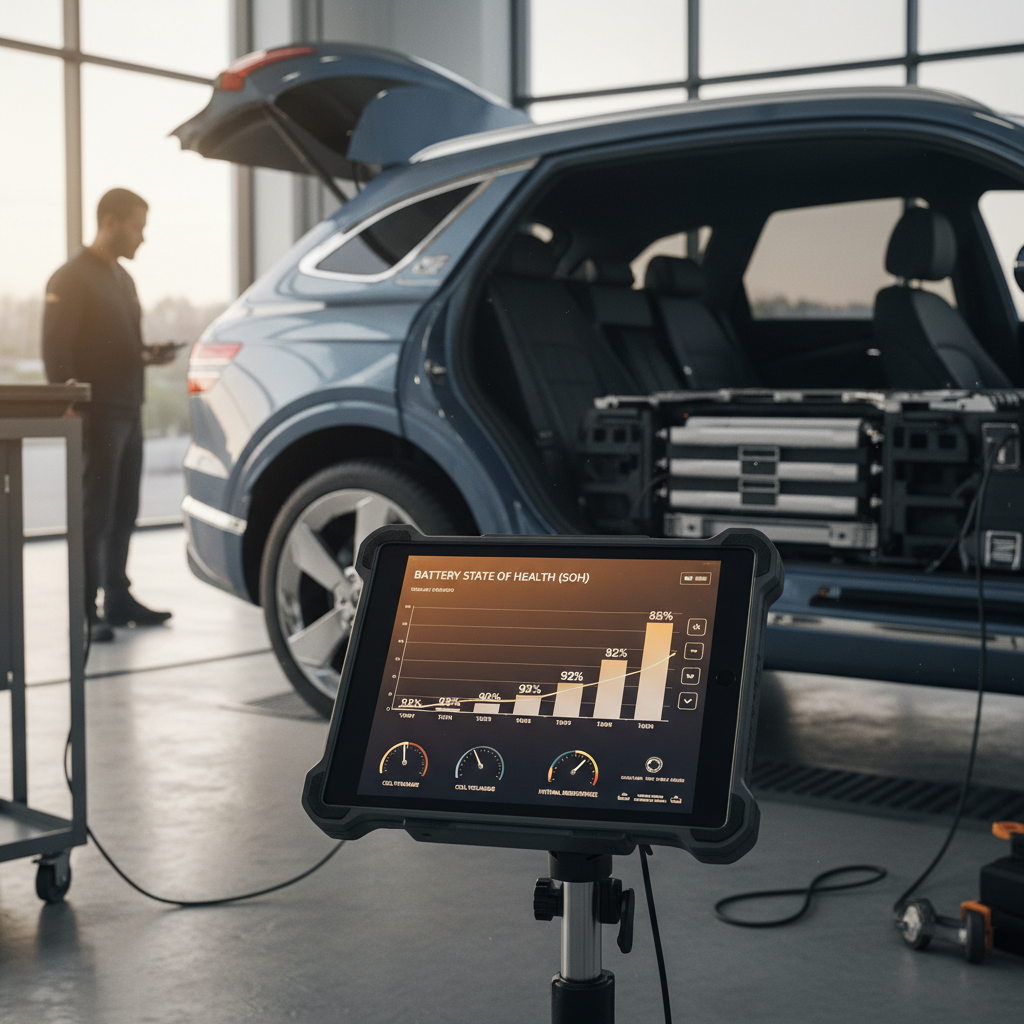
Tools and services are emerging that can read battery state‑of‑health (SoH). A documented SoH report can be a strong selling point later on.
How Recharged helps here
Ready to find your next EV?
Browse VehiclesTips to maximize your Kona Electric resale value
You can’t control the entire market, but you can absolutely influence where your Kona Electric lands within the range of possible prices. Think in terms of two goals: protecting the asset while you own it and presenting it well when it’s time to sell.
Practical steps to protect your Kona Electric’s value
Keep charging habits battery‑friendly
Avoid living at 100% or repeatedly charging from near‑zero to full on DC fast chargers. For daily use, 20–80% is a healthier window.
Stay on top of software updates
Hyundai releases updates that can improve efficiency, charging behavior, or infotainment. A fully updated car feels newer to a buyer.
Document every service visit
Maintain a folder or digital record of tire rotations, brake service, battery checks, and recall work. Organized records reassure buyers and support stronger offers.
Fix cosmetic issues early
Touch up scratches, repair curb‑rashed wheels, and address windshield chips before they spread. Small flaws add up quickly in a buyer’s mind.
Include both charging cables & accessories
Original Level 1 cable, any Level 2 EVSE you’re including, and portable adapters all add value. Replacing missing items is more expensive than you might think.
Get a pre‑sale inspection or Recharged Score
A third‑party inspection or a detailed Recharged Score Report can help justify your asking price and speed up the sale by addressing buyer fears upfront.
Timing your sale
Is a used Hyundai Kona Electric a good buy right now?
From a pure value standpoint, the answer is often yes. The Kona Electric’s combination of strong efficiency, practical crossover packaging, and aggressive used‑market pricing makes it one of the smarter ways to get into an EV without paying new‑car money. The key is buying the right individual car at the right price.
Why the Kona Electric is compelling used
- Steep early depreciation means you’re not overpaying for the first owner’s excitement.
- Compact size and strong efficiency make it an excellent city and commuter EV.
- Hyundai’s long battery warranty offers peace of mind on newer examples.
- Plenty of standard safety and convenience tech for the money.
Where to be cautious
- Average DC fast‑charging speed may be limiting if you road‑trip often.
- Local charging infrastructure and weather can significantly affect your experience and future resale value.
- Battery abuse or poor maintenance on a specific car can erase the value proposition.
- Rapid advances in new‑EV tech could pressure values if ultra‑affordable long‑range models hit the market faster than expected.
How Recharged fits into your decision
FAQ: Hyundai Kona Electric resale value
Frequently asked questions about Kona Electric resale value
The Hyundai Kona Electric may not be the flashiest EV on the road, but that’s exactly why it can be such a smart play in the used market. Depreciation has already done much of its work on earlier model years, and with a careful eye on battery health and local pricing, you can either protect your Kona’s value as an owner or step into one as a buyer without overpaying. If you’d like help comparing individual cars, understanding battery reports, or exploring trade‑in options, Recharged is built to make that process simple, transparent, and firmly in your favor.