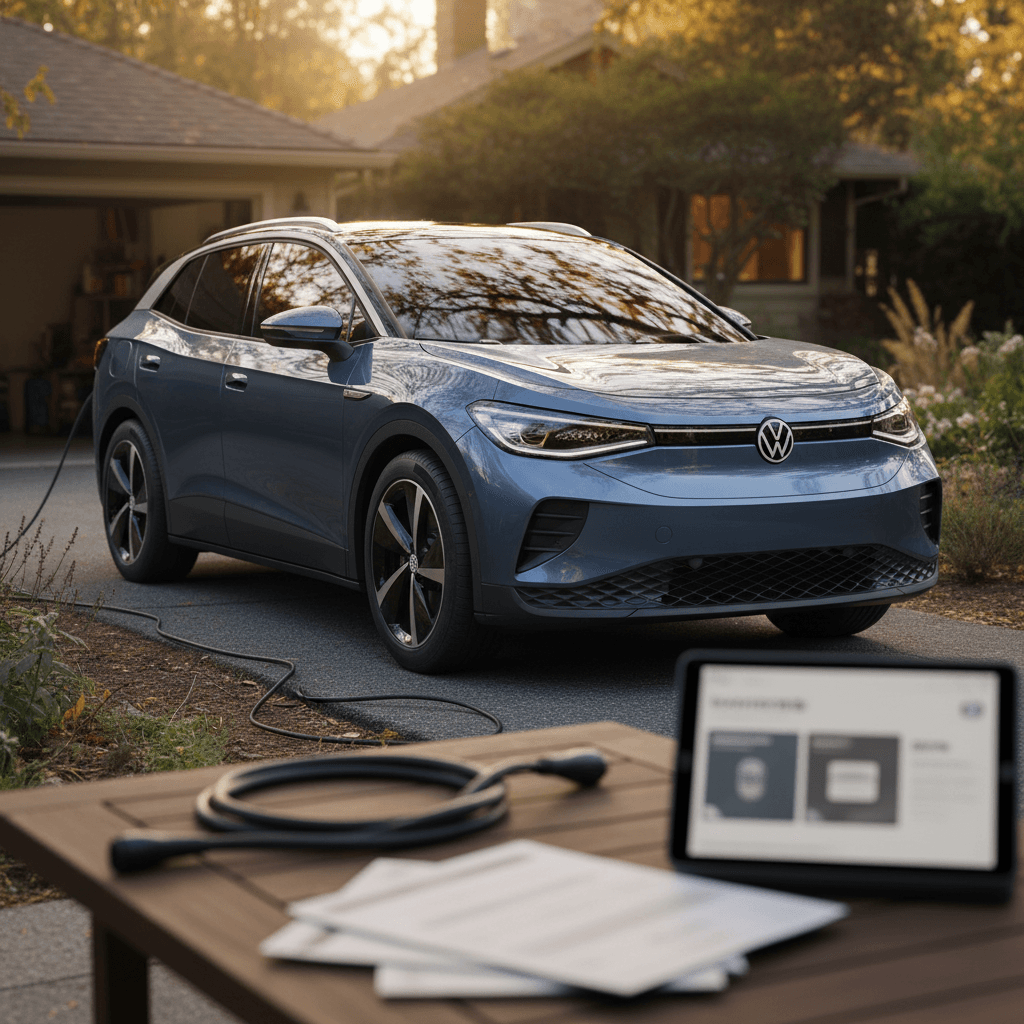
If you own a Volkswagen ID.4, or you’re eyeing one on the used market, you’re probably wondering how its value will hold up next to a Tesla Model Y or Hyundai Ioniq 5. The VW ID.4 resale value forecast is mixed: it’s not a resale superstar, but smart shoppers and owners can absolutely make it work in their favor.
Quick Take
Overview: What to Know About VW ID.4 Resale Value
- The ID.4 has seen steeper early depreciation than many gas SUVs, similar to other mass‑market EVs.
- Current used prices sit well below original MSRPs, especially for 2021–2023 models.
- New‑car price hikes for 2025–2026 ID.4s create a floor that should help stabilize used values.
- Battery health and warranty status matter more to ID.4 buyers than leather seats or sunroofs.
- If you buy a 3–4‑year‑old ID.4 with a healthy pack, you’re skipping the worst of the depreciation curve.
VW ID.4 Used Market at a Glance (Early 2026)
Where VW ID.4 Prices Sit Today
Let’s start with what the market is actually paying. Recent pricing indexes show the average used VW ID.4 selling in the low $20,000s, with model‑year averages clustering around:
Approximate Early‑2026 VW ID.4 Used Pricing
These are ballpark retail asking prices based on current national listing data and price‑trend tools. Local prices will vary.
| Model year | Original MSRP range | Typical used asking price* | YoY change |
|---|---|---|---|
| 2021 ID.4 | $39,000–$49,000 | ≈$18,000 | ≈‑19% vs. 2025 |
| 2022 ID.4 | $40,000–$50,000 | ≈$21,000 | ≈‑19% vs. 2025 |
| 2023 ID.4 | $39,000–$55,000 | ≈$22,000–$24,000 | ≈‑20% vs. 2025 |
| 2024 ID.4 | Low‑$40,000s–mid‑$50,000s | ≈$24,000 | Flat to slightly down |
| 2025 ID.4 | Starts around $45,000 | Too new for strong data | , |
Use this as a directional guide, not a quote, condition, mileage, and options matter.
A Note on Price Ranges
Compared with the overall used‑car market, the ID.4’s drop of roughly 14–20% year‑over‑year is steeper than average. That can feel painful if you bought new at full price, but for used shoppers, it’s exactly what makes the ID.4 an intriguing value play.
5‑Year VW ID.4 Depreciation Outlook
We don’t yet have a full 5‑year data set on the ID.4, but we can make educated forecasts by looking at comparable electric SUVs. Data from independent analysts suggests many mainstream EVs lose around 60% of their value in five years, retaining roughly 40%.
Projected 5‑Year Value Retention
How a new VW ID.4 bought today is likely to age, assuming normal mileage and a healthy battery.
Year 1–2: Steep drop
Like most new EVs, expect the ID.4 to lose 25–30% of its value in the first two years, especially if incentives or discounts appear on new models.
Year 3–5: Leveling out
From years 3–5, depreciation typically slows to ~7–10% per year as long as battery health stays 80%+ and warranty coverage remains in effect.
Year 6–8: Condition‑driven
After the basic warranty window, resale hinges on battery diagnostics, maintenance records, and cosmetic condition more than model‑year bragging rights.
Putting numbers to it, a $45,000 new ID.4 Pro purchased in 2026 might reasonably be worth:
- ≈$32,000 after 2 years (2028)
- ≈$24,000 after 5 years (2031)
- ≈$18,000 after 7 years (2033)
Why Buying Used Makes Sense
How VW ID.4 Resale Compares to Rival EVs
Against Tesla Model Y
- Model Y has historically been stronger on brand pull and demand, but recent price cuts have hammered its used values, with many data sets showing ~60% depreciation in five years.
- ID.4 starts cheaper than many Model Y trims new, but doesn’t command the same resale premium. Expect ID.4 to trail Tesla slightly in long‑term value retention, though the gap has narrowed.
Against Hyundai Ioniq 5 & Ford Mustang Mach‑E
- Hyundai and Ford have slashed new‑car pricing and offered aggressive leases, which pull used values down across the segment.
- The ID.4 generally sits in the same ballpark as these rivals for resale, sometimes a touch lower due to brand perception and earlier reliability hiccups.
Good News for Used Buyers
The Big Factors That Move VW ID.4 Resale Value
Four Levers That Shape ID.4 Resale Value
You can’t control the market, but you can control how your car fits into it.
Battery health
State of health (SOH) is the single most important metric a used EV buyer will look for. Healthy packs mean confident pricing.
Mileage & use
EVs don’t fear mileage quite like gas cars, but a 90,000‑mile ID.4 with lots of DC fast‑charging will be valued differently than a 30,000‑mile commuter.
Warranty status
Volkswagen’s battery warranty (typically 8 years/100k miles) is a big safety net. Remaining warranty time supports stronger resale.
Updates & reputation
OTA software updates, feature changes, and any headlines (good or bad) about ID.4 reliability can nudge prices up or down.
On top of that, macro‑level EV factors matter: federal tax credit rules, the number of new competitors entering the $40,000–$50,000 EV SUV segment, and whether brands are discounting new inventory or jacking up MSRPs as we’ve seen with recent ID.4 model‑year updates.
Battery Health: The Make‑or‑Break Metric
For gas cars, you can eyeball condition and skim service records. For EVs like the ID.4, you also need a clear picture of battery state of health (SOH). Industry‑wide data from 2024–2025 pegs average EV degradation at around 1.5–2% per year, with anything at or above 80% SOH considered healthy in a used car.
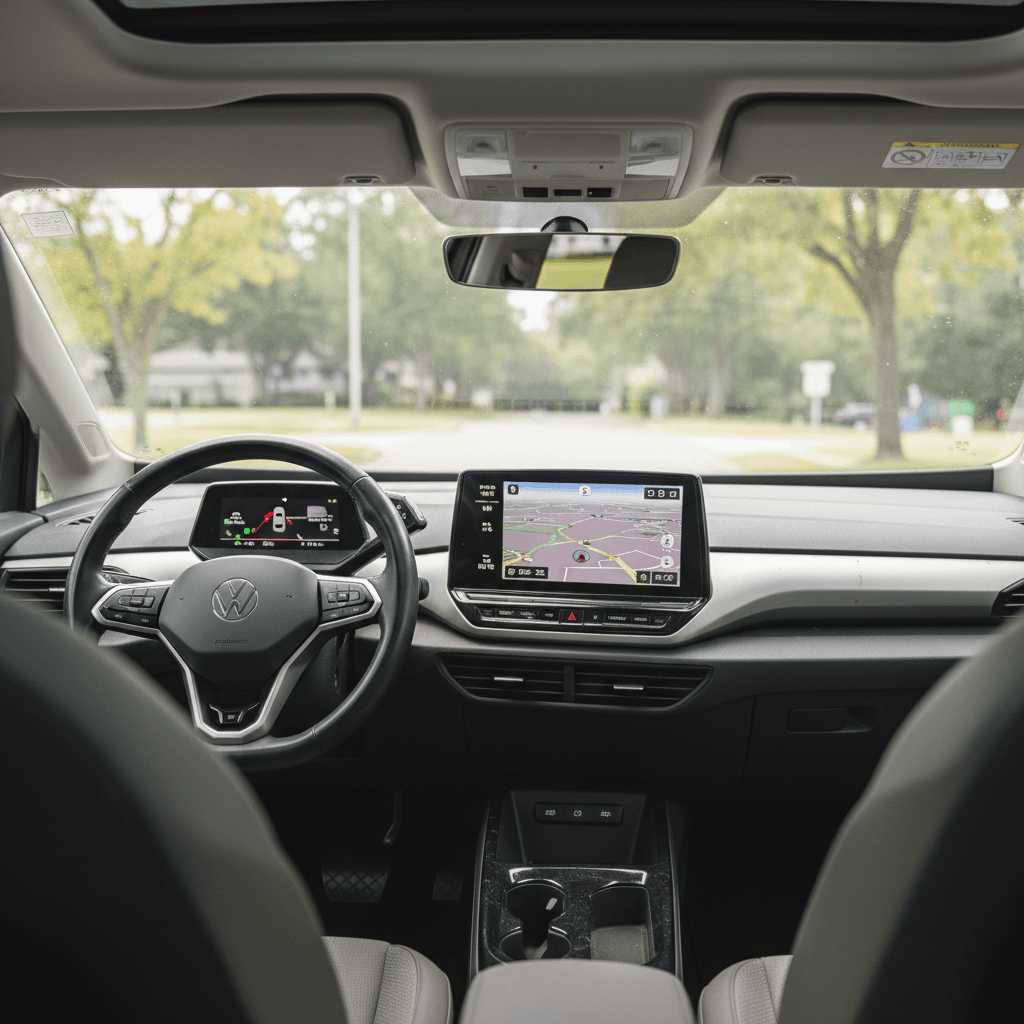
Non‑Negotiable for Used EVs
At Recharged, every vehicle comes with a Recharged Score Report that includes battery diagnostics, so you can see how an ID.4’s real‑world capacity compares to when it was new. That clarity feeds directly into fair pricing today and resale power later.
Resale Forecast by Model Year (2021–2026)
The VW ID.4 story changes depending on which model year you’re looking at. Early builds had some quality hiccups and shorter range, while 2024+ models benefit from updates and, in many trims, larger packs.
VW ID.4 Resale Outlook by Model Year
High‑level look at risk and opportunity for each generation of ID.4 if you’re buying or selling in the next few years.
| Model year | Today’s market position | 3–5 year outlook | Who it suits best |
|---|---|---|---|
| 2021 | Cheapest ID.4s on the market; highest initial depreciation already baked in. | Likely to stabilize; values driven almost entirely by battery health and warranty time left. | Budget‑minded buyers who prioritize value over the latest tech. |
| 2022 | Good balance of price and features; still under battery warranty for several years. | Moderate depreciation ahead, but major drops are behind it. | Smart used shoppers focused on cost‑per‑mile and verified SOH. |
| 2023 | Plentiful in the used market; many off‑lease returns. | Depreciation will continue but should slow as market absorbs supply. | Shoppers wanting newer styling without paying new‑car pricing. |
| 2024 | Still relatively close to MSRP; less price history. | More downside risk as these roll into their 3–5 year window. | Owners should focus on maintenance & records to protect value. |
| 2025–2026 | Higher starting prices, longer range trims dominate; still mostly new. | Steepest depreciation years are still ahead, especially if new EV competition intensifies. | New‑car buyers planning to keep the ID.4 at least 6–8 years. |
Assumes average mileage and a battery SOH of at least 80%.
Watch the 8‑Year Mark
Practical Tips to Protect Your ID.4’s Value
Six Ways to Keep Your VW ID.4 Desirable on the Used Market
1. Baby the battery (within reason)
Avoid living on DC fast‑charging. Use home Level 2 most of the time, and try not to sit at 100% or near 0% for long stretches. This helps keep SOH numbers strong.
2. Keep software up to date
Apply VW’s software updates promptly. They can improve range, charging behavior, and infotainment, little things that make your ID.4 feel newer on a test drive.
3. Document everything
Save service receipts, tire invoices, and charger repair records. A neat folder of proof makes buyers confident and supports firmer pricing.
4. Stay ahead on cosmetic fixes
Handle curb rash, windshield chips, and interior stains as they happen. Small reconditioning now saves you from a big hit at trade‑in time.
5. Time your sale around incentives
If new‑car incentives on the ID.4 spike, used prices can sag. If you can, sell or trade when new inventory is tighter and discounts are modest.
6. Get a pre‑sale battery health report
Before you list or trade, run a fresh battery diagnostic. A strong report is your best marketing asset, and it helps you push back on lowball offers.
Pro Move for ID.4 Owners
Using Recharged When You Sell or Trade Your ID.4
When it’s time to move on from your VW ID.4, how you sell matters almost as much as when you sell. That’s where Recharged comes in.
How Recharged Helps You Maximize Your ID.4’s Value
Different paths, same goal: a clean, transparent deal on your used EV.
Instant offer or trade‑in
Share your ID.4’s details and get a data‑driven offer that factors in battery health, options, and real market trends. Use it as a trade‑in toward another EV or sell outright.
Consignment marketplace
Let Recharged handle listings, buyer questions, and paperwork while you keep ownership until it sells. Great if you want top dollar without turning into your own salesperson.
Nationwide reach, local ease
Recharged can arrange nationwide delivery and supports a fully digital process, or you can visit the Experience Center in Richmond, VA if you prefer an in‑person handoff.
Ready to find your next EV?
Browse VehiclesEvery ID.4 sold through Recharged includes a Recharged Score battery health report, transparent pricing, and guidance from EV specialists who live and breathe this market. That kind of transparency tends to shorten time‑to‑sale and firm up resale numbers.
VW ID.4 Resale Value FAQ
Frequently Asked Questions About VW ID.4 Resale Value
Bottom Line: Is the VW ID.4 a Safe Bet?
The VW ID.4 isn’t the resale king of the EV world, but that’s not the same as being a bad bet. Its early depreciation looks a lot like the broader EV market: sharp in the first few years, then calmer once the car settles into its second life. For shoppers, that means you can often buy a gently used ID.4 for far less than its original MSRP. For owners, it means resale value is something you actively manage with battery care, documentation, and smart timing, not something that just happens to you.
If you’re considering an ID.4, focus less on the sticker shock of early depreciation and more on cost per mile, battery health, and how long you’ll keep it. And when you’re ready to move on, partnering with a used‑EV specialist like Recharged, with battery‑verified Recharged Score reports, financing, trade‑ins, and nationwide delivery, can turn a complicated resale equation into a straightforward, transparent deal.