If you’re shopping for a used VW ID.4, or deciding whether to keep, trade, or sell yours, the VW ID.4 depreciation rate is one of the biggest numbers that matters. Depreciation is where most of the real cost of ownership lives, and the ID.4 behaves a little differently from both gas SUVs and some headline-grabbing EVs.
Bottom line up front
VW ID.4 depreciation at a glance
Key VW ID.4 depreciation numbers
Those headline numbers are aggregates pulled from multiple data sources, real-world price indices, cost‑to‑own tools, and model‑specific depreciation tables. They’ll vary based on trim, mileage, incentives, and even your ZIP code, but they frame where the ID.4 sits in today’s used‑EV market.
How fast does a VW ID.4 depreciate?
Let’s start with what we can see in the market right now. A focused 2025 update on VW ID.4 depreciation looked at Pro trim MSRP vs. average used prices for recent model years:
Observed VW ID.4 depreciation by model year (Pro trim)
Approximate depreciation from original MSRP to average used price by 2025, based on widely quoted market data for the Pro trim.
| Model year | Original MSRP (Pro) | Avg used price (2025) | Dollar depreciation | % depreciation |
|---|---|---|---|---|
| 2021 | $41,190 | $21,773 | $19,417 | 47.1% |
| 2022 | $42,525 | $24,095 | $18,430 | 43.3% |
| 2023 | $43,995 | $26,856 | $17,139 | 38.9% |
| 2024 | $43,995 | $30,000 (est.) | $13,995 | 31.8% (1–2 yrs) |
These are ballpark averages; actual values vary by condition, options, and mileage.
Why your numbers may look different
For a brand‑new 2024 ID.4, real‑time valuation tools show that it can lose roughly a third of its MSRP in the first 1–2 years, and mid‑cycle models from 2021–2022 are now hovering around the 45–50% loss range. That’s not out of line with other mainstream EV crossovers, but it’s steeper than the average new car across all fuel types.
5‑year VW ID.4 depreciation forecast
Most buyers care less about year‑by‑year wiggles and more about the big picture: what happens across a full 5‑year ownership window. Pulling together cost‑to‑own projections and ID.4 resale studies gives us a workable forecast.
Typical VW ID.4 value curve over 5 years
Assuming average mileage and condition, and ignoring short‑term market shocks.
Year 1
Expect the sharpest drop here.
- Roughly 20–25% depreciation vs. MSRP.
- Demo cars and discounted leases can muddy the numbers, but the curve is steep either way.
Years 2–3
Depreciation stays brisk but steadier.
- By year 3, many ID.4s sit around 35–45% below MSRP.
- Software updates and battery health help soften the blow.
Years 4–5
The curve flattens.
- Total 5‑year depreciation typically lands around 60–62%.
- This puts the ID.4 close to the average compact EV SUV.
Why 3–4 years is the sweet spot for buyers
VW ID.4 vs Tesla Model Y and other EVs
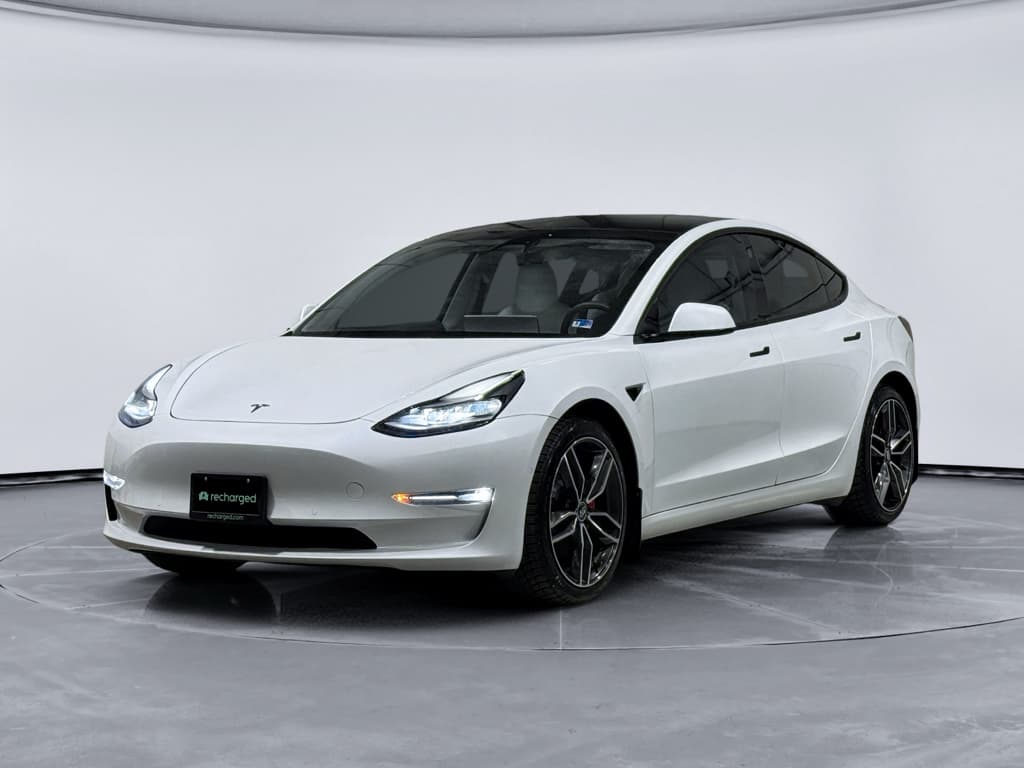
To understand whether the VW ID.4’s depreciation rate is “good” or “bad,” you have to stack it against its peers. Independent comparison tools that track 5‑year residual values show the ID.4 losing about 62% of its value in 5 years, while a Tesla Model Y is estimated to lose around 60.8% over the same period. In other words: the Model Y keeps just a hair more of its value, but these two are broadly in the same neighborhood.
ID.4 vs Tesla Model Y
- Resale value: Model Y has a slight edge, retaining about 1–2 percentage points more after 5 years.
- Brand pull: Tesla’s charging network and name recognition still buoy used prices, even as recent Tesla values have softened.
- Price of entry: A used ID.4 usually costs less than a comparable Model Y, which helps close the total‑cost‑of‑ownership gap.
ID.4 vs other compact EV SUVs
- Class average: Compact electric SUVs often lose ~59–60% over 5 years.
- Fast depreciators: Some rivals, like early Ford Mustang Mach‑E trims, have been pegged near or above 65% depreciation over 5 years.
- Takeaway: The ID.4 sits close to the class average, not an outlier bargain, but not a resale disaster either.
Remember total cost of ownership
What actually drives VW ID.4 depreciation?
The ID.4 doesn’t live in a vacuum. Its depreciation is a stew of EV‑specific forces and old‑fashioned car‑market behavior. If you understand those levers, you can predict where your particular car will land on the curve.
Key forces behind VW ID.4 depreciation
1. Federal and state incentives
When a brand‑new ID.4 is effectively thousands of dollars cheaper after tax credits and incentives, used buyers price that in. Generous incentives on new EVs usually push used prices down faster.
2. Rapid EV tech improvements
Range, charging speed, and driver‑assist tech improve quickly. A 2021 ID.4 looks more outdated in 2026 than a 2021 gas Tiguan does, because the bar for EVs keeps moving.
3. Battery health and warranty
An ID.4 with a strong battery‑health report and plenty of remaining warranty is worth significantly more than one with signs of heavy degradation or lots of DC fast‑charging.
4. Charging ecosystem and standards
As more automakers switch to Tesla’s NACS connector and public charging improves, early‑standard vehicles or patchy charging experiences can weigh on value, though software updates can help.
5. Brand perception and reliability
Volkswagen’s evolving EV reputation, early‑build teething issues, and long‑term reliability data all feed into what shoppers are willing to pay for a used ID.4.
6. Supply, demand, and fleet sales
If a lot of ID.4s come off lease at once, or major fleets dump inventory, that extra supply can temporarily push prices down, even when the vehicles themselves are solid.
Real‑world used VW ID.4 prices in 2026
So what are people actually paying? Nationwide listing data shows the average used VW ID.4 price sitting just over $21,000 across model years, with newer examples clustering higher and older, higher‑mileage cars anchoring the low end.
- 2021 ID.4: typically high‑teens to low‑$20,000s for average mileage examples.
- 2022 ID.4: often around the low‑$20,000s, edging up with nicer specs and lower miles.
- 2023 ID.4: hovering in the low‑ to mid‑$20,000s, depending on trim and options.
- 2024 ID.4: still relatively new; asking prices often in the mid‑ to high‑$20,000s or more.
Sticker price vs. transaction price
At Recharged, we lean on live market data and our Recharged Score, which includes verified battery diagnostics, to anchor pricing. That tends to strip out some of the wishful thinking and show you where an ID.4 is realistically trading today.
How battery health impacts ID.4 value
For any EV, battery State of Health (SOH) is where the rubber really meets the road on depreciation. Industry‑wide, modern EVs usually lose around 1.5–2% of battery capacity per year under normal use, with some doing better. Once SOH drops below about 80%, both range and resale value take a noticeable hit.
Healthy ID.4 battery
- SOH around 88–95% after 3–4 years is common for well‑cared‑for ID.4s.
- Real‑world range remains close to original EPA numbers in moderate climates.
- Buyers see this as "normal" wear and are comfortable paying closer to market averages.
Stressed or degraded battery
- SOH dipping toward 80% or below triggers bigger discounts.
- Lots of DC fast‑charging, consistent high‑speed highway driving, or extreme heat can accelerate decline.
- Shoppers will either walk or expect a much lower price to offset future range loss.
Where Recharged fits in
Ready to find your next EV?
Browse Vehicles7 ways to reduce VW ID.4 depreciation
You can’t stop depreciation, but you can absolutely influence whether your ID.4 behaves better or worse than the averages. Think of it as stacking the deck in your favor for the person who buys the car after you, which, in turn, is really future‑you getting a better check when you sell or trade.
Practical steps to protect your ID.4’s value
1. Keep mileage in check
EV shoppers are especially sensitive to miles. Staying near or below 12,000 miles per year can keep your ID.4 nearer the top of the value range for its model year.
2. Baby the battery
Avoid frequent 0–100% charge swings and limit DC fast‑charging to road‑trip duty. Daily charging in the 20–80% band, when possible, supports healthier long‑term SOH.
3. Stay on top of software updates
VW’s over‑the‑air and dealer updates can improve charging behavior, infotainment stability, and even efficiency. A car that feels up‑to‑date is easier to sell and worth more.
4. Document maintenance and repairs
Even though EVs need less service than gas cars, records matter. Keep receipts for tire rotations, cabin filters, brake service, and any warranty work.
5. Protect the interior and exterior
Curb rash, torn upholstery, and neglected paint knock you into the discount bin. Simple things, seat covers, regular washes, and parking away from chaos, help a lot.
6. Choose the right time to sell
Seasonality, new‑model launches, and incentive changes can swing EV values. Selling before a major refresh or incentive shift can keep you ahead of sudden drops.
7. Get a battery health report before listing
If you’re selling privately, a third‑party battery report is a powerful trust builder. If you’re working with Recharged, it’s already baked into your <strong>Recharged Score</strong> and pricing.
Is a used VW ID.4 a good buy?
Here’s the twist: A model that depreciates faster than average can be bad news for the first owner, but a real opportunity if you’re buying used. The VW ID.4 falls squarely into that category.
Pros and cons of buying a used ID.4 from a depreciation standpoint
Looking purely through the lens of cost and resale value.
Why depreciation is your friend as a buyer
- You can often pick up a 3–4‑year‑old ID.4 for roughly half of its original MSRP.
- Biggest depreciation hit is already taken; your curve is flatter going forward.
- Ongoing EV tech improvements mean you get a lot of capability for the money.
What to watch out for
- Some early‑build ID.4s had software quirks that may matter to you on a test drive.
- Battery health varies widely based on how previous owners treated the car.
- If new EV incentives spike again, older used prices can soften further.
Leasing vs. buying a used ID.4
If your goal is to spend the least per mile while still driving a modern, family‑friendly EV, a used VW ID.4 with verified battery health is a compelling play. Depreciation has already done the heavy lifting for you. The key is choosing the right car at the right price, and using tools like the Recharged Score Report, expert guidance, and real‑time market data to make sure you’re capturing the upside, not inheriting someone else’s mistakes.