If you’re considering a VW ID.4, cargo space is probably near the top of your list. You want an electric SUV that can handle grocery runs, strollers, bikes, and road-trip luggage without feeling cramped. This guide breaks down VW ID.4 cargo space dimensions in plain English, shows what actually fits, and compares the ID.4 to other popular EV SUVs so you can decide if it matches your life.
Key takeaway
VW ID.4 cargo space overview
The VW ID.4 is a compact electric SUV, but it’s on the larger end of that class. Its battery is packaged under the floor, so you don’t lose interior room to a driveshaft tunnel or transmission hump. That gives the ID.4 a remarkably flat load floor and upright roofline, both of which help maximize usable cargo volume, not just a big number on a spec sheet.
VW ID.4 cargo highlights (approximate, may vary by model year)
How to read cargo specs
VW ID.4 cargo space dimensions by configuration
Exact cargo numbers can vary slightly by model year and trim, but late-model VW ID.4s are broadly similar. Use these figures as a practical guide when you’re comparing to other vehicles or thinking about your own gear.
VW ID.4 cargo space dimensions (typical recent models)
Approximate cargo specs for the VW ID.4. Always confirm exact figures for a specific model year if you need absolute precision.
| Configuration | Cargo Volume (cu ft) | Notes |
|---|---|---|
| Behind 2nd row (all seats up) | ~30–31 | Everyday trunk; varies slightly by year/trim |
| Behind 1st row (2nd row folded) | ~63–64 | Maximum cargo volume to roofline |
| Underfloor storage | Small bin | Good for charge cable and small items |
| Liftgate opening width | ~40+ in | Wide enough for most strollers and large boxes |
| Load floor height | Low | Easier to lift heavy items vs many SUVs |
Measurements are approximate and based on commonly published manufacturer and testing data.
No front trunk (frunk)
VW ID.4 cargo space vs competing EV SUVs
Numbers only tell part of the story, but they’re useful when you’re cross-shopping electric SUVs. Here’s how the ID.4’s cargo room stacks up against a few popular alternatives in the compact-to-midsize EV class.
Cargo comparison: VW ID.4 vs key EV SUV rivals
Approximate manufacturer and testing figures for cargo space behind the second row and with seats folded, for context when cross-shopping.
| Model | Behind 2nd Row | Max Cargo (Seats Folded) | Notes |
|---|---|---|---|
| VW ID.4 | ~30–31 cu ft | ~63–64 cu ft | Strong, square space with low floor |
| Tesla Model Y | Low–mid 30s cu ft | ~70+ cu ft | More total volume; fastback shape |
| Hyundai Ioniq 5 | High 20s cu ft | Low 60s cu ft | Similar real-world utility to ID.4 |
| Kia EV6 | Mid 20s cu ft | Mid 50s cu ft | Sportier, less upright cargo area |
| Ford Mustang Mach-E | Mid 20s cu ft | Mid 50s cu ft | Has a small frunk; rear space tighter |
Cargo figures are rounded and may vary slightly by model year and test methodology.
Where the ID.4 wins
- Square shape: The tall roof and vertical tailgate make the space easier to load than more coupe-like EVs.
- Low load floor: Easier on your back when loading heavy items like coolers or dog crates.
- Competitive volume: Even if it doesn’t always top the spec sheet, it feels big and usable in day-to-day life.
Where rivals do better
- Tesla Model Y: Offers more cubic feet overall plus a front trunk, if you truly max out space often.
- Ioniq 5/EV6: Slightly more flexible second-row movement and sliding seats in some trims.
- Frunks elsewhere: Certain competitors give you a small front trunk for cables or dirty gear.
Real-world: what actually fits in a VW ID.4
Specs are useful, but you probably care more about whether the ID.4 can handle your family’s actual gear. Here’s how to think about the space in concrete terms.
Everyday cargo scenarios in the VW ID.4
From school runs to road trips, here’s what the numbers mean day to day.
Grocery and Costco runs
With all seats up, the ID.4’s ~30+ cubic feet behind the second row easily swallows:
- 10–12 standard grocery bags
- Several bulk-item boxes
- Plus a folded stroller or pet carrier if you pack carefully
Young family duty
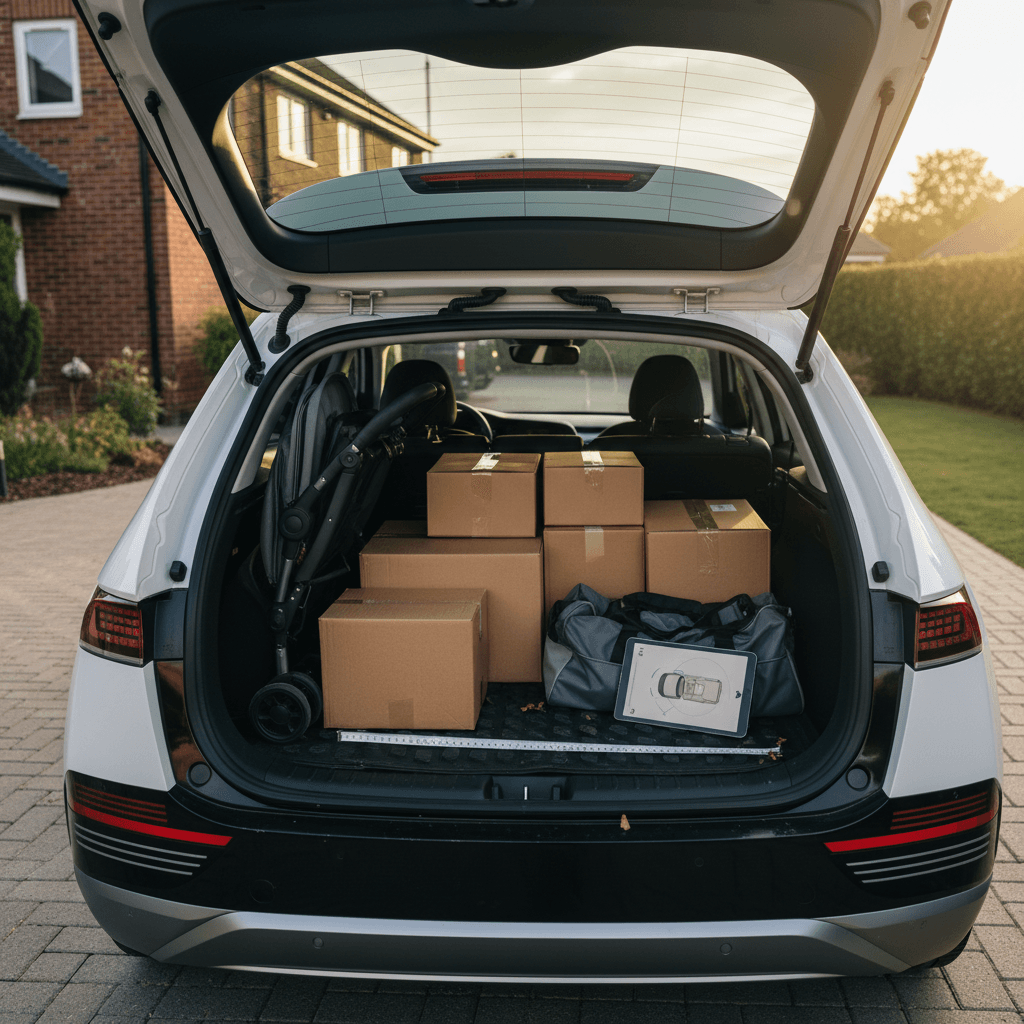
A rear-facing or front-facing child seat plus a full-size stroller typically fits without drama:
- Stroller and diaper bag behind the seats
- Pack-and-play fits when loaded vertically
- Underfloor bin for wipes, toys, or emergency supplies
Weekend or road-trip luggage
With four passengers on board and the rear seats up, expect space for:
- 2–3 large checked bags (26–28")
- 2–3 carry-on roller bags
- Soft duffel bags packed on top if you load to the window line
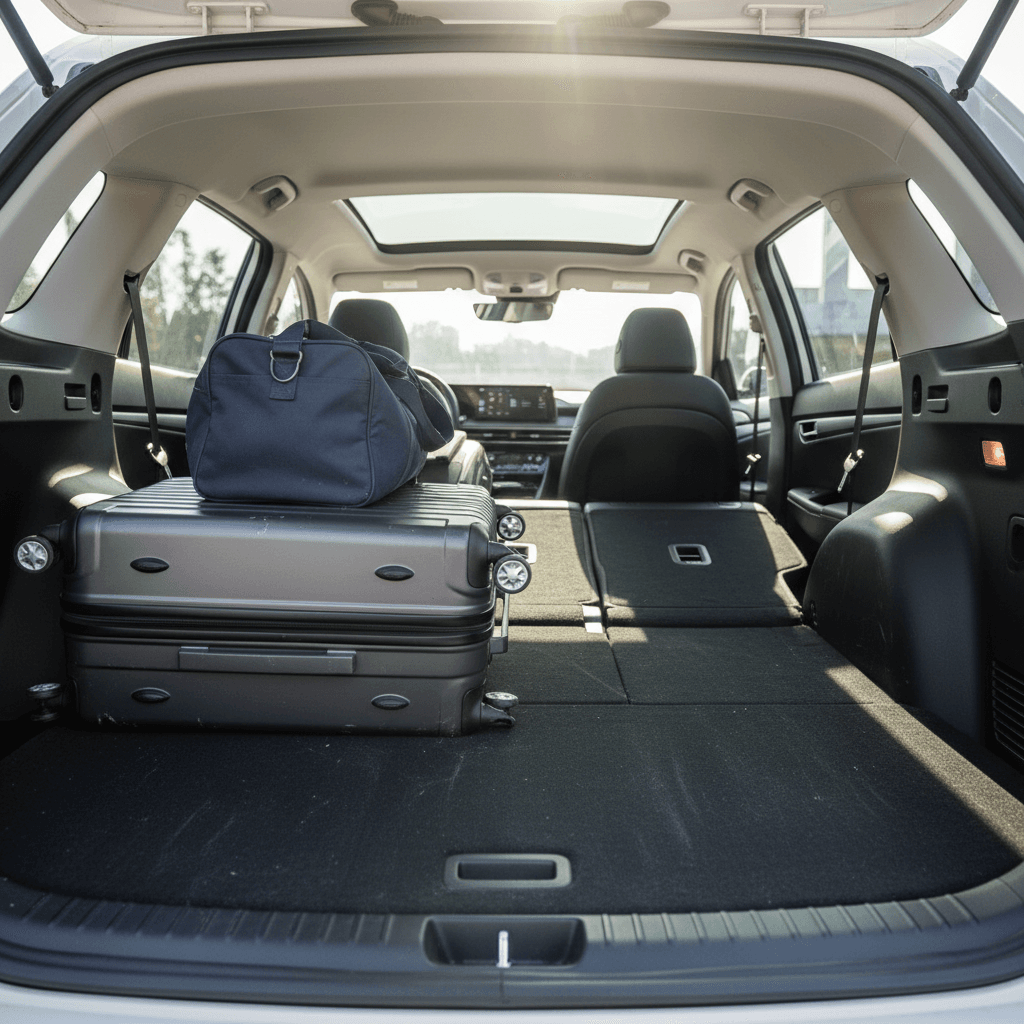
- With the second row folded, you can slide in flat-pack furniture boxes and large TVs (check height for 60"+ sets).
- A medium-size dog crate fits comfortably sideways behind the rear seats; two can work if you fold half the rear seat.
- Bikes typically require front wheel removal, but two adult bikes fit with the rear seats folded and careful packing.
Good news for apartment and city drivers
Interior flexibility and seat-folding features
The VW ID.4 doesn’t just offer a big rectangular box; it also gives you flexibility in how you divide people and cargo. How you configure the seats makes a big difference in what you can carry.
Key VW ID.4 cargo-friendly features
These design details matter more than one or two cubic feet on paper.
60/40 split-folding rear seat
You can fold the left or right portion of the rear seat independently:
- Carry long items (skis, boards, lumber) while keeping one or two rear passengers.
- Fold both sides for maximum volume on Home Depot runs.
Fold-flat load floor
Most ID.4 models have a relatively flat floor when you fold the rear seats:
- Reduces awkward "step" between seatbacks and trunk.
- Makes sliding heavy boxes in and out far easier.
How to quickly maximize ID.4 cargo space
1. Remove or lower the cargo cover
The retractable cargo shade is great for privacy, but it limits vertical stacking. Pop it out or retract it before loading bulky items.
2. Use the underfloor bin wisely
Store your mobile charge cable, emergency kit, and smaller odds and ends under the floor so they don’t roll around, and so you keep the main space clear.
3. Fold just the section you need
If you regularly carry skis, boards, or long tools, experiment with folding only one side of the rear seat. Mark where longer items sit comfortably without blocking your view.
4. Protect the seatbacks and sill
If you’re hauling dirty or heavy gear, a simple rubber mat or blanket over the folded seatbacks and bumper lip will keep the ID.4’s interior looking newer for longer.
Watch overall weight, not just volume
Cargo and range: how loading affects efficiency
In an EV, extra weight and poor aerodynamics can cut into your range. The VW ID.4’s battery pack and low center of gravity help it stay composed when fully loaded, but you’ll still notice some impact on how far you can go per charge.
How weight affects range
- Heavy cargo (tools, equipment, multiple large suitcases) makes the car work harder, especially in stop-and-go driving.
- On highway trips, aerodynamics matter more; a full trunk inside the car is better than a roof box on top.
- If you’re towing a small trailer with the ID.4 (where equipped), expect a more dramatic range hit than from cargo alone.
Smart packing tips for range
- Pack heavy items low and as close to the rear seats as possible to avoid unsettling the ride.
- Avoid overfilling the cargo area above the window line, which can block rear visibility.
- Plan a bit more charging time when you’re fully loaded, especially in cold weather.
Quick planning rule of thumb
Used VW ID.4: cargo inspection checklist
If you’re shopping for a used VW ID.4, the cargo area can tell you a lot about how the vehicle was treated. Because many ID.4s have served as family haulers or utility vehicles, it’s worth taking a close look before you buy.
Cargo-area checks before buying a used ID.4
1. Inspect the load floor and seatbacks
Look for deep scratches, tears, or dents in the plastic and fabric. Heavy wear here can signal frequent overloading or rough use.
2. Check the underfloor compartment
Make sure the floor lifts easily, the hinges are intact, and the space is dry. Water intrusion or moisture can hint at prior leaks or a cracked rear seal.
3. Verify the cargo cover and hooks
Confirm that the retractable cover (if equipped) extends and retracts smoothly, and that side hooks or tie-down loops aren’t broken.
4. Fold and unfold the rear seats
Seats should fold flat without resistance and lock firmly back into place. Any binding, uneven gaps, or strange noises are worth noting.
5. Smell and stain check
Open the hatch and take a deep breath. Persistent odors, pet hair, or stained upholstery might not be dealbreakers, but they should factor into price and cleaning plans.
6. Look for misaligned gaps or repainting
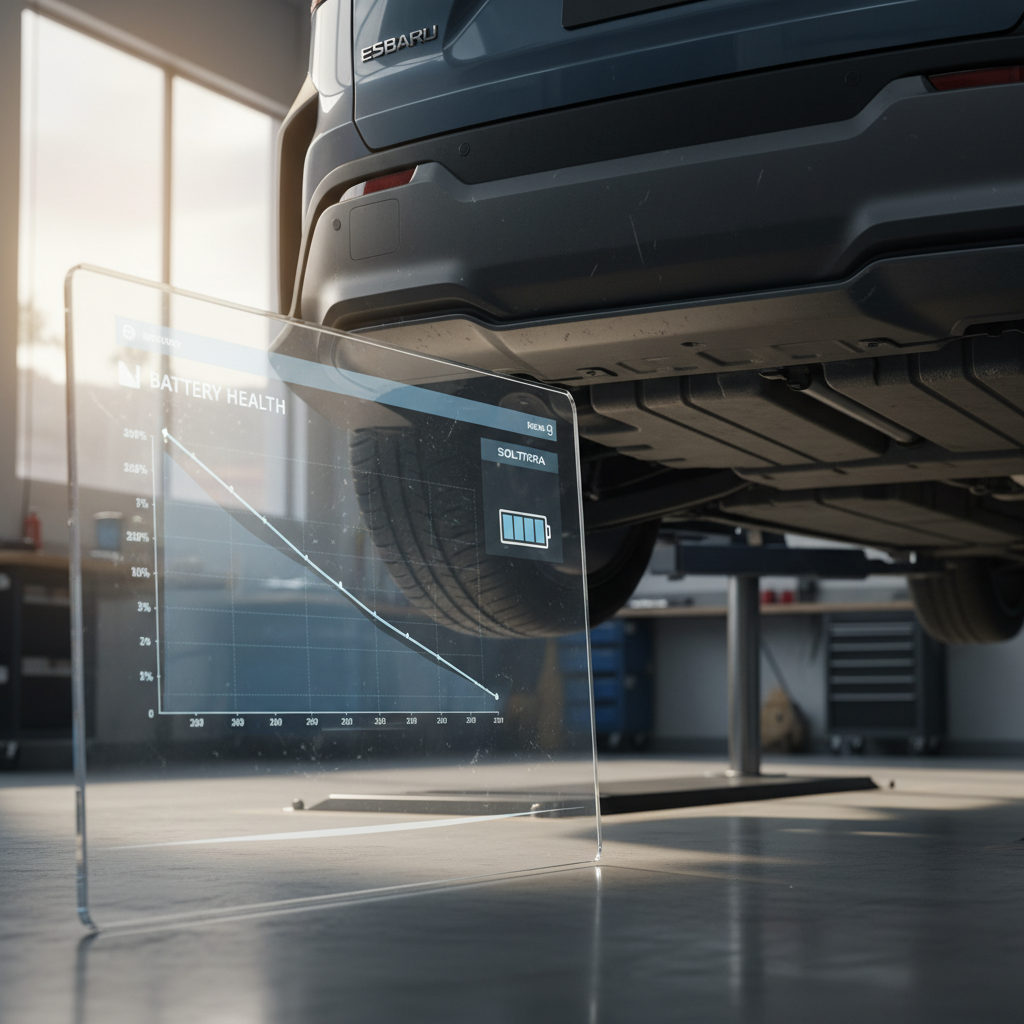
Uneven gaps around the tailgate, mismatched paint, or damaged weatherstripping can suggest a prior rear-end collision or repair. That’s where a professional inspection or a <strong>Recharged Score Report</strong> adds peace of mind.
How Recharged helps with used ID.4s
VW ID.4 cargo space FAQ
Frequently asked questions about VW ID.4 cargo space
Is the VW ID.4 cargo space right for you?
If you want an electric SUV that behaves like a traditional compact crossover, but with EV refinement, the VW ID.4’s cargo space hits a practical sweet spot. Its boxy shape, low load floor, and flexible folding seats make it easy to live with whether you’re juggling kids, pets, or weekend projects.
If you routinely haul maximum loads or need every last cubic foot, a Model Y or larger three-row SUV might serve you better. But for most households, the ID.4 offers more than enough real-world room to replace a gas crossover without feeling like a downgrade.
Thinking about a used VW ID.4? With Recharged, you can shop online, get a Recharged Score Report that shows verified battery health and vehicle condition (including the cargo area), explore financing, and arrange nationwide delivery, or visit our Experience Center in Richmond, VA. That way, the storage space you see on paper is matched by a vehicle you can trust in your driveway.