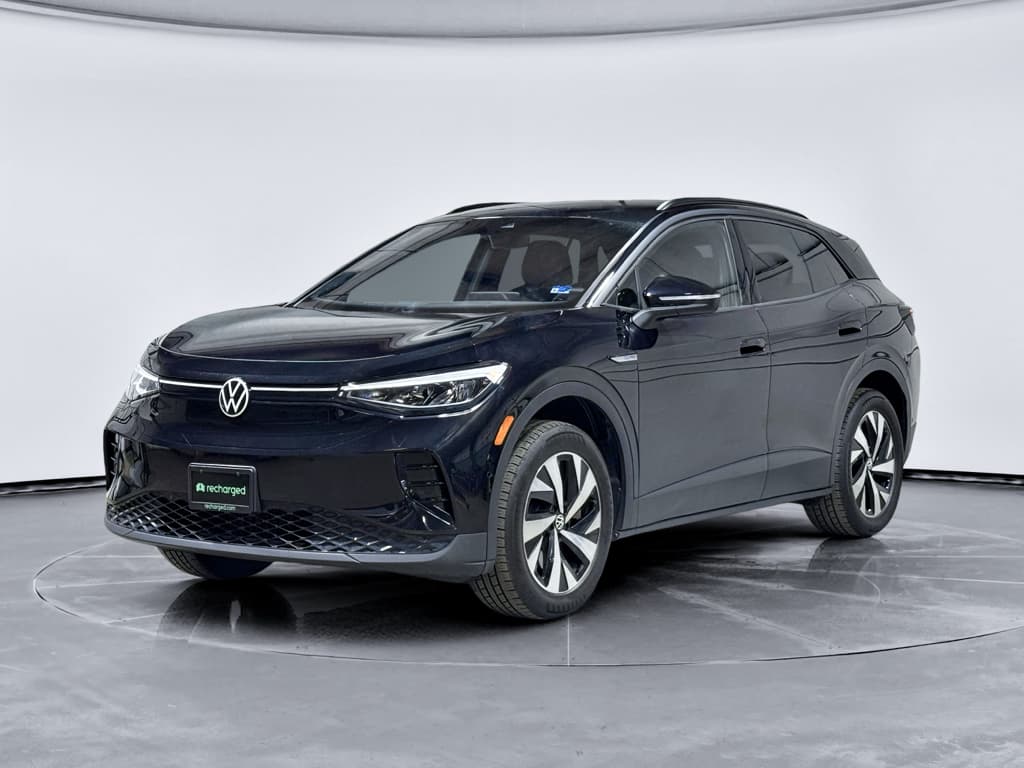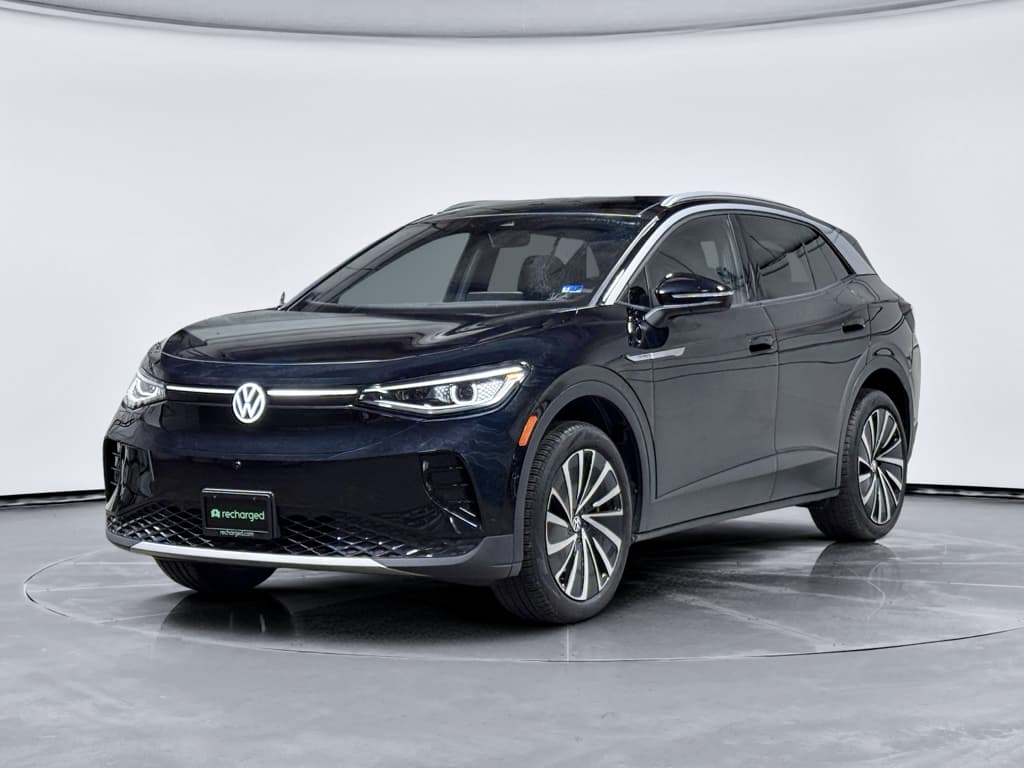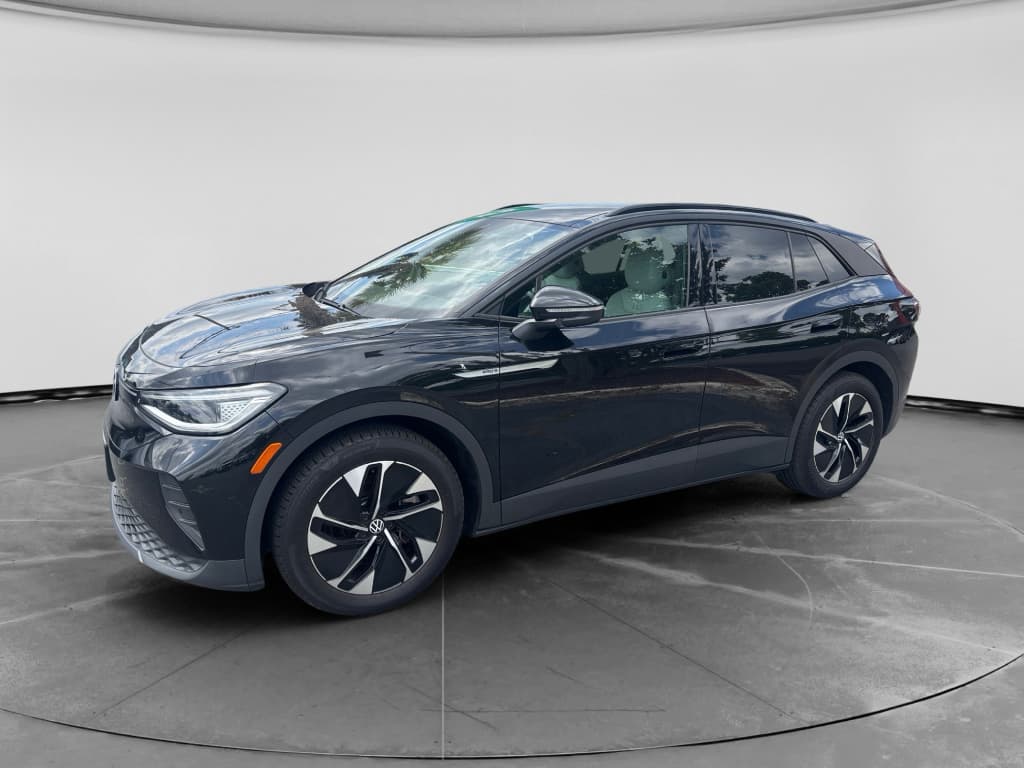
If you’re cross-shopping electric SUVs or looking at a used model, VW ID.4 battery degradation data is one of the most important things to understand. Range sells EVs, but it’s long‑term battery health that determines whether that range (and resale value) is still there in years five, eight, or twelve.
Quick takeaway
Why VW ID.4 battery degradation data matters
Every lithium‑ion battery loses capacity over time. In an EV, that shows up as less range from the same state of charge, or more frequent charging to cover the same drives. With the VW ID.4, the pack is large enough that you usually have a healthy buffer, but if you’re buying used, that buffer is also a big part of what you’re paying for.
- Battery degradation directly affects real‑world range and how flexible the car feels on road trips.
- It’s one of the biggest long‑term value drivers for a used ID.4, two otherwise identical cars can be worth thousands less if one has a significantly weaker pack.
- Volkswagen’s warranty promises protection below about 70% capacity, but normal degradation below that line is your responsibility, not VW’s.
- Unlike an engine or transmission, the high‑voltage battery is expensive to replace, so understanding degradation risk is essential.
Used‑EV shopping tip
VW ID.4 battery basics: chemistry and pack sizes
To make sense of VW ID.4 battery degradation data, it helps to understand what’s actually under the floor. The ID.4 rides on Volkswagen’s MEB platform, which uses liquid‑cooled pouch cells and an active thermal management system to keep temperatures in a sweet spot most of the time.
VW ID.4 battery variants and typical capacities
Approximate usable capacities for common ID.4 packs. Exact figures can vary slightly by market and model year.
| Model / Pack | Chemistry (simplified) | Total capacity (kWh) | Usable capacity (kWh) | EPA rated range (approx.) |
|---|---|---|---|---|
| ID.4 Standard / Pure (52 kWh class) | NMC | 55 | 52 | 200–220 miles |
| ID.4 Pro / Pro S (77 kWh class) | NMC | 82 | 77 | 245–291 miles (trim‑dependent) |
| ID.4 Pro AWD (77 kWh class) | NMC | 82 | 77 | 235–275 miles (trim‑dependent) |
Knowing which pack you have is the first step to understanding any battery degradation discussion.
All of these packs use nickel‑manganese‑cobalt (NMC) chemistry, which is fairly standard for long‑range EVs. NMC doesn’t love being kept at 100% or baked in extreme heat, but with sensible use it can deliver hundreds of thousands of miles before capacity becomes a real constraint.
What Volkswagen actually promises: 70% at 8 years
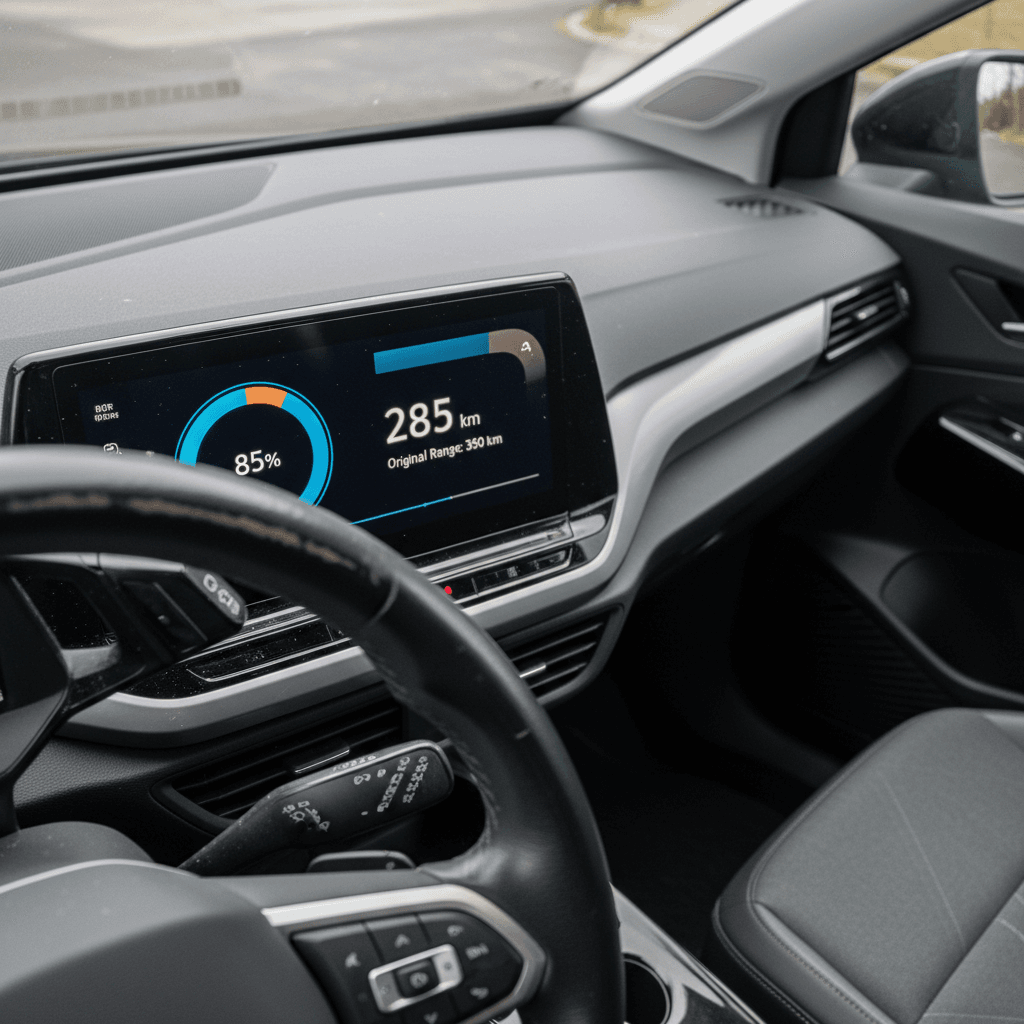
In the U.S. and Canada, VW backs the ID.4’s high‑voltage battery with an 8‑year / 100,000‑mile warranty (160,000 km in Canada) against defects and “excessive” capacity loss, usually defined as the pack falling below about 70% of its original usable capacity during that period.
- If your 77 kWh usable pack were to fall below roughly 54 kWh of usable capacity within 8 years/100,000 miles, VW may repair or replace the pack under warranty.
- Normal, gradual degradation that still leaves you above ~70% is considered wear and tear, not a defect.
- The warranty can be denied if the pack was abused, think accident damage, unauthorized modifications, or ignoring critical warnings.
- Software quirks, BMS miscalibrations, and range‑estimate oddities typically aren’t warranty events on their own; VW looks at measured pack capacity.
Don’t misread the 70% promise
Real-world VW ID.4 battery degradation data
We don’t yet have a 15‑year longitudinal study of VW ID.4 packs, the model only launched in 2020, but we do have several useful data sources: owner‑reported capacity tests, independent battery‑health tools, dealer diagnostics, and broader research on Volkswagen’s MEB battery family (including the ID.3, which shares pack design and chemistry). Put together, a picture is starting to emerge.
Early‑life VW ID.4 battery degradation snapshot
Real‑world reports from higher‑mileage ID.4s, especially 2021–2022 Pro and Pro S models with the 77 kWh LG pack, cluster around roughly 5–10% capacity loss by year four to five for cars with 50,000–80,000 miles, assuming mostly AC charging and moderate climates. That’s broadly in line with what we see from other well‑managed NMC packs of similar size.
What about scary anecdotes?
How ID.4 degradation compares to other EVs
Putting ID.4 in context is important. Some shoppers assume Volkswagen’s first mass‑market EV must age worse than Tesla or Hyundai/Kia rivals. The actual picture is more nuanced.
Tesla Model Y / Model 3
- Similar or slightly better early‑life degradation in many studies, thanks to mature thermal management and large fleets.
- Plenty of data showing roughly 5–10% loss by 100,000 miles in normal use.
- Tesla exposes more detailed battery data, so issues are easier to quantify, but the basic physics are similar.
Hyundai/Kia E‑GMP, other crossovers
- Large 70–80+ kWh packs with strong cooling and conservative buffers, like the ID.4.
- Real‑world results again cluster around single‑digit percentage loss over the first 5–7 years when used and charged reasonably.
- Some outliers exist everywhere; none of these brands are truly immune.
Big picture, the VW ID.4 so far looks competitive with peers: not class‑leading, but well within the band of what we’d consider normal degradation for a modern, liquid‑cooled NMC pack. If long‑term battery life is your top priority, pack size and how you use the car matter at least as much as which badge is on the hood.
Factors that speed up or slow down ID.4 degradation
ID.4 degradation isn’t random. The same electrochemistry that governs Tesla, Hyundai, or GM packs applies here too. The difference is in how hard you push the cells and how well the car’s thermal management can keep up.
Key drivers of VW ID.4 battery degradation
Most owners have more control here than they realize.
Heat exposure
High temperatures are public enemy #1 for NMC cells. Regularly parking in direct sun in hot climates, baking the pack above ~95°F, or fast charging back‑to‑back on summer road trips accelerates chemical wear.
High state of charge
Living at 90–100% charge is hard on the pack. The ID.4 lets you set a daily charge target (often 70–80%). Saving 100% for trips is one of the easiest ways to slow degradation.
DC fast charging habits
Occasional DC fast charging is fine, but using DCFC as your primary fuel, especially on hot days and charging to high SOC, will age the battery faster than slow overnight AC charging.
Usage patterns that help or hurt
Think in terms of stress, not just mileage.
Gentle use (good)
- Mostly Level 2 home charging to 70–80%.
- Garage parking or shaded spots.
- Regular driving that cycles the pack between ~20–80% most days.
Owners with these habits tend to see slower, smoother degradation curves.
Harsh use (risky)
- Frequent 100% charges and long periods sitting full.
- Hot‑climate parking outdoors, especially on blacktop.
- Heavy DC fast charging, e.g., rideshare or towing in heat.
Not guaranteed to kill a pack, but the odds of faster‑than‑average loss go up.
Watch for heat + high SOC together
How to check VW ID.4 battery health (especially used)
Because the ID.4 doesn’t expose a simple “battery health” percentage on its screen, you need to be a bit more intentional if you want solid VW ID.4 battery degradation data for a specific car. This matters most when you’re looking at a used ID.4 or considering a warranty claim.
Practical VW ID.4 battery health check steps
1. Verify which pack you have
Confirm whether you’re looking at a 52 kWh or 77 kWh usable pack and whether it’s RWD or AWD. That determines the baseline range and the capacity number VW will compare against if there’s a warranty claim.
2. Start with a controlled range test
On a known route in mild weather, charge to a repeatable state (for example 90%), reset trip data, drive down to around 10–20%, and note mileage and efficiency (mi/kWh). That gives you a rough implied usable capacity.
3. Use a proper diagnostic or battery‑health tool
Some third‑party tools can read the ID.4’s BMS data through the OBD port to estimate usable kWh. For a warranty‑grade number, you’ll ultimately need a <strong>dealer or specialist</strong> to run an official battery capacity test with factory tools.
4. Repeat tests over time
Individual tests are noisy. What you care about is trend. Doing the same drive under similar conditions twice a year reveals whether you’re seeing natural seasonal swings or real, structural capacity loss.
5. Interpret numbers in context
A roughly 5–10% drop after several years and tens of thousands of miles is normal. A 20%+ loss in just a few years, especially with gentle use, deserves closer scrutiny and potentially a conversation with VW.
6. Get documentation if you’re buying or selling
If you’re selling your ID.4, a clean capacity report helps justify a stronger price. If you’re buying, ask to see any battery test results, or insist on an independent check before committing.
How Recharged handles ID.4 battery health
Ready to find your next EV?
Browse VehiclesWhat VW ID.4 degradation data means when buying used
If you’re shopping used, you’re not just buying leather, paint, and a panoramic roof, you’re buying however many kilowatt‑hours of usable battery the previous owner left you. The good news is that most ID.4 packs appear to be holding up well. The challenge is separating those solid packs from the handful of cars that have lived harder lives.
Used VW ID.4 battery health signals to watch
How different degradation levels typically show up in the real world, and what they might mean for value.
| Observed condition | Likely degradation | What it means for a buyer |
|---|---|---|
| Range still close to original EPA figure on familiar routes | 0–7% | Excellent outcome; you’re mostly seeing normal aging and seasonal variation. |
| Noticeable but manageable range loss (e.g., ~10–15% less on same commute) | 8–15% | Still within normal expectations after several years; may justify a small price discount. |
| Frequent fast charging, hot‑climate history, and big range drop in a short period | 15–25% | Worth a deep dive; could be acceptable at a significant discount, but check warranty window and capacity test results. |
| Dealer or diagnostic report shows capacity near or below VW’s 70% warranty floor | 30%+ | Investigate warranty eligibility. If still under 8 yrs/100k mi, VW may be on the hook to repair or replace. If not, price should reflect looming battery work. |
Use these as rough guideposts, not rigid rules, when evaluating a used ID.4.
Valuing a used ID.4
FAQ: VW ID.4 battery degradation & warranty
Frequently asked questions about VW ID.4 battery degradation
Bottom line: Is VW ID.4 battery degradation a dealbreaker?
Based on the VW ID.4 battery degradation data we have today, there’s little evidence that the ID.4’s pack is a ticking time bomb. Most owners who charge sanely and avoid abuse are seeing single‑digit percentage capacity loss over the first several years, well inside Volkswagen’s 70% warranty promise and in the same league as other mainstream EV crossovers.
Where things get interesting is the used market. Two ID.4s that look identical in photos can have very different remaining battery life, and therefore very different real‑world value. That’s why a proper battery‑health check, and ideally a transparent report like the Recharged Score, is so much more important than floor mats, wheel size, or even trim level.
If you’re considering a VW ID.4, new or used, let the degradation data guide your expectations, not scare you away. Focus on pack size, charging habits, climate, and verified health. Do that, and the ID.4’s battery should be an asset, not an anxiety source, for many years and miles to come.