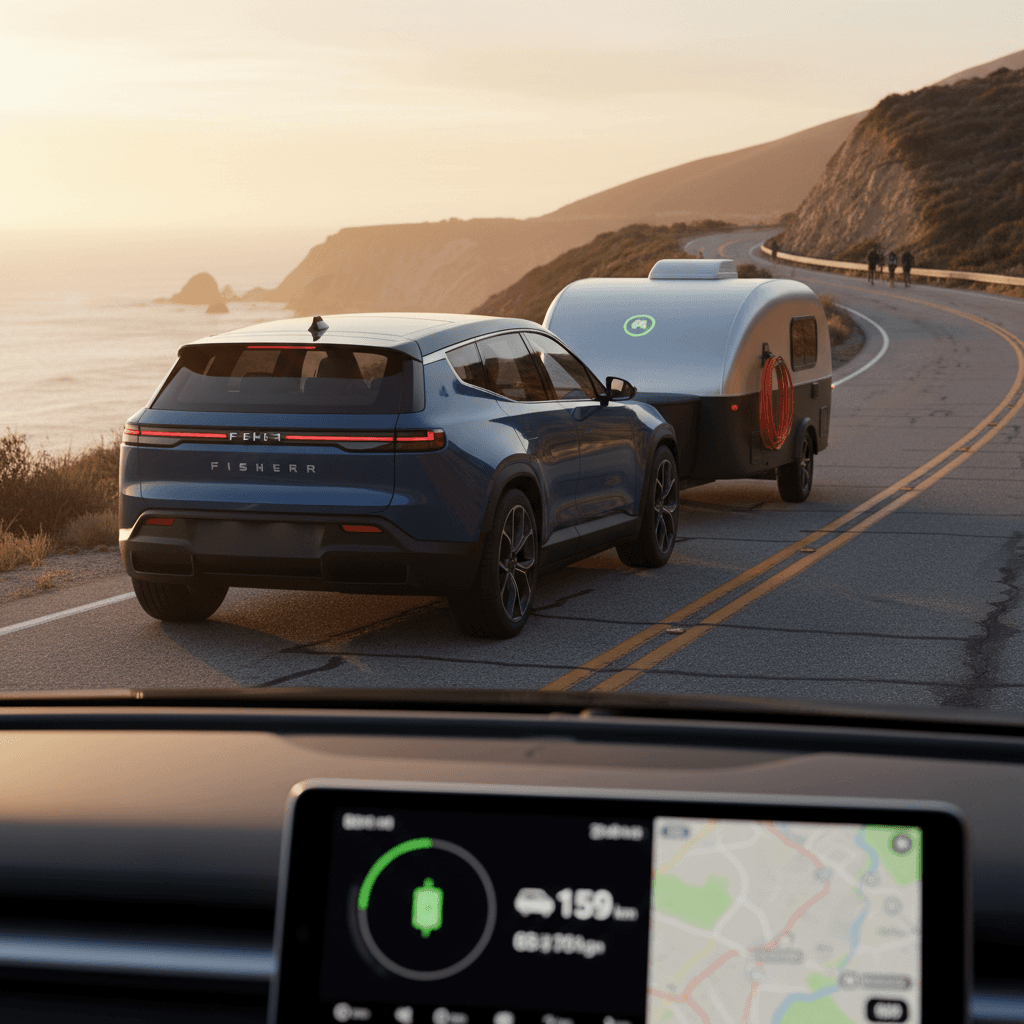
If you own, or are eyeing, a used Fisker Ocean, towing capacity and range are probably near the top of your list. On paper, the Ocean is a capable electric SUV that can tow up to 4,000 pounds and deliver over 350 miles of EPA‑rated range in higher trims. In practice, especially now that Fisker is gone and the Ocean is an orphaned EV, you need to be a lot more thoughtful before you hitch up a trailer and head out.
Context: Fisker is gone, Oceans are not
Fisker Ocean towing and range: quick overview
Key Fisker Ocean towing & range specs
The headline: a Fisker Ocean with the factory tow package can tow up to 4,000 pounds, which is competitive with other compact electric SUVs. Range is trim‑dependent, with the all‑wheel‑drive Extreme and One trims rated around 360 miles EPA and the front‑wheel‑drive Sport closer to 230 miles. But like any EV, adding a trailer can cut usable range dramatically, often by a third or more, depending on weight, speed, and terrain.
Paper specs vs. reality
Official Fisker Ocean towing capacity by trim
Fisker only sold the Ocean with an available factory Tow Package in North America. That package added the hitch hardware and wiring, plus the software calibration needed for trailer lights and stability logic. When properly equipped, the Ocean’s published towing capacity is straightforward:
Fisker Ocean towing capacity (factory ratings)
Factory‑published tow rating assumes the OEM Tow Package is installed and that you stay within tongue‑weight and payload limits.
| Trim | Drivetrain | Factory Tow Rating | Notes |
|---|---|---|---|
| Sport | FWD | Up to 4,000 lb* | Lower‑range, single‑motor trim; Tow Package availability varied by market |
| Ultra | AWD | Up to 4,000 lb* | Dual‑motor; similar hardware to Extreme |
| Extreme | AWD | Up to 4,000 lb* | Top trim; most common Ocean used for towing |
| One | AWD | Up to 4,000 lb* | Launch edition based on Extreme hardware |
If your Ocean doesn’t have the factory Tow Package, you should treat it as a non‑towing vehicle unless a qualified EV shop tells you otherwise.
The asterisk that matters
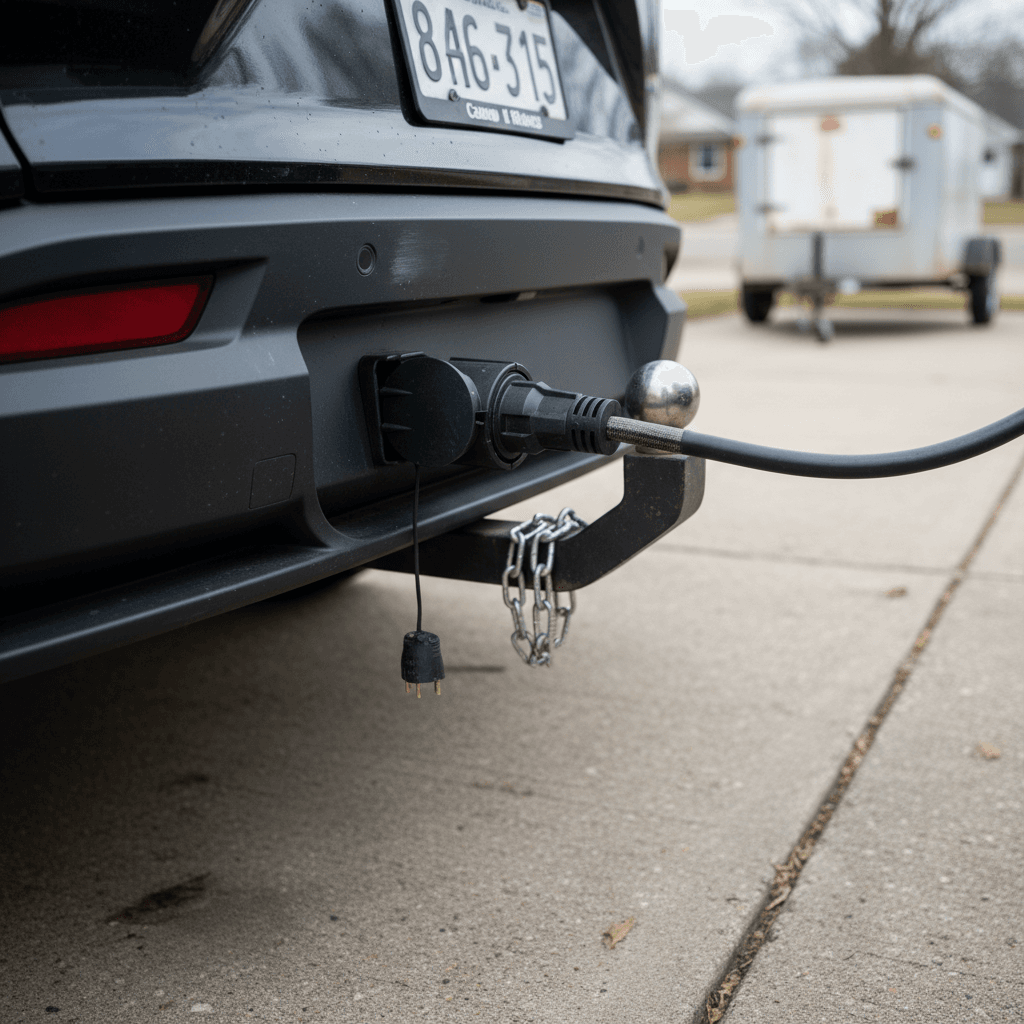
If you’re looking at a used Ocean, ask the seller for a clear photo of the rear under‑bumper area and the build sheet or original window sticker. If the Tow Package isn’t clearly documented and the hitch looks aftermarket or improvised, get it inspected by a shop with EV experience before you use it.
Fisker Ocean range ratings and real‑world results
On the range front, the Fisker Ocean looked competitive when new. EPA‑style range estimates vary by trim and battery pack. Published figures for U.S. models include:
- Ocean Extreme & One (AWD): around 360 miles EPA‑estimated range in ideal conditions, thanks to the larger nickel‑manganese‑cobalt (NMC) battery pack.
- Ocean Ultra (AWD): roughly 350 miles EPA‑estimated range, with a slightly detuned power output but similar pack chemistry.
- Ocean Sport (FWD): about 230 miles EPA‑estimated range with a smaller lithium‑iron‑phosphate (LFP) battery.
NMC vs. LFP matters for range
Real‑world range for any Ocean is sensitive to speed, temperature, wind, and especially software behavior. Owners have reported variability in energy‑use readings as Fisker pushed over‑the‑air updates before bankruptcy. As these SUVs age without official factory support, you should assume some degradation, both in usable capacity and in the accuracy of what the car reports on its screen.
How towing changes Fisker Ocean range in the real world
Every EV loses range when towing. The Fisker Ocean is no exception, and because it’s no longer supported by a live factory engineering team, you should plan your towing even more conservatively than you would with, say, a Tesla Model Y or Hyundai Ioniq 5.
Typical range impact when towing with an EV like the Ocean
These aren’t Fisker‑specific lab numbers, but they reflect what many EV owners see when towing similar trailer sizes.
Small utility trailer (1,000–1,500 lb)
Think single‑axle utility trailer, light motorcycles, lawn equipment, or a small cargo box.
- Range hit: ~20–30% at 60–65 mph
- Works best with: Ocean Extreme/Ultra/One
Light camper or boat (2,000–3,000 lb)
Pop‑up camper, small fiberglass camper, or modest fishing boat.
- Range hit: ~30–40% at highway speeds
- Requires careful charging planning
Near max rating (3,500–4,000 lb)
Heavier campers or dual‑axle trailers approaching the Ocean’s limit.
- Range hit: 40–50% or more
- Plan on short hops between chargers
Don’t tow on assumptions
A conservative rule of thumb for an Ocean Extreme or One is to assume you’ll have about half your normal highway range when towing a taller, less‑aerodynamic trailer near the top of the 4,000‑lb rating. That means planning legs of 100–130 miles between fast‑charging stops, even if the dash says 260 or 280 miles when you leave a charger.
Payload, hitches, and hardware you still need to think about
Tow rating is only one piece of the puzzle. With a used Fisker Ocean, you have to think about payload, hitch quality, and wiring, and you no longer have a franchised dealer network to fall back on if something fails.
Pre‑towing checklist for a used Fisker Ocean
1. Verify the Tow Package
Confirm your Ocean left the factory with the Tow Package: look for a clean, integrated hitch receiver behind the bumper trim, a 7‑pin or 4‑pin trailer connector, and documentation on the original window sticker or build sheet.
2. Inspect the rear structure
Check for rust, accident damage, or questionable welds around the hitch attachment points. Oceans have already seen some rough treatment in the real world; hidden damage can turn towing into a structural risk.
3. Confirm wiring and lights
Hook up a trailer and test all lights, including brakes and turn signals. Many Oceans have had aftermarket work done under time pressure, don’t assume wiring is correct or weather‑sealed.
4. Calculate tongue weight
Aim for 10–15% of trailer weight on the tongue, and keep that within the Ocean’s tongue‑weight spec. Too little tongue weight can cause sway; too much overloads the rear axle and suspension.
5. Mind payload and passengers
Your payload is everything inside the SUV, people, cargo, and tongue weight. Overloading stresses the suspension and brakes and can worsen already‑reported quality issues.
6. Check tires and pressures
Make sure all four tires and the trailer tires are in good shape and inflated to proper pressures. Under‑inflated tires are range killers and a major safety concern when towing.
Start with a shakedown run
Orphaned EV reality: towing a Fisker Ocean in 2026
On a spec sheet, the Fisker Ocean looks like a legitimate alternative to a Tesla Model Y or Hyundai Ioniq 5 for light‑to‑medium towing. In 2026, though, you’re not just buying an EV, you’re buying into the risks of an orphaned brand that struggled with software glitches, hardware recalls, and parts availability even before the bankruptcy proceedings wrapped up.
Where the Ocean still makes sense
- Short, predictable towing trips near home where you control charging and can bail out if the car misbehaves.
- You already own an Ocean, like how it drives, and just want to tow a very light trailer occasionally.
- You’re mechanically savvy, comfortable working with independent EV shops, and plugged into owner communities for parts and support.
Where it’s a risky tow vehicle
- Cross‑country towing where a failed module or sensor can strand you far from a charger or a shop willing to work on an orphaned EV.
- Commercial use, rideshare, or fleet duty that demands guaranteed uptime.
- Owners in regions with few non‑Tesla DC fast‑chargers, where detours are painful even without a trailer.
Support is community‑driven now
If you’re already in an Ocean, the question isn’t “Can it tow?”, we know the hardware was engineered for up to 4,000 pounds. The smarter question is, “How much risk am I comfortable taking on for the kind of towing I want to do?” For some owners, a separate gasoline tow rig or a different used EV SUV with stronger manufacturer backing is the lower‑stress play.
Trip planning and charging strategy when towing
Assuming you’ve checked the hardware and you’re comfortable with the orphaned‑EV reality, the next step is planning your charging. With towing, the Fisker Ocean goes from “long‑legged” to “range‑sensitive” very quickly.
Planning a towing trip in a Fisker Ocean
Think shorter legs, slower speeds, and more backup plans than you would with a gas SUV.
Aim for 100–130‑mile legs
Even if your Ocean claims 260+ miles on a full charge, plan charging stops every 100–130 miles when towing a medium camper. This leaves a safety buffer for headwinds, hills, or malfunctioning chargers.
Favor sites with amenities
Look for DC fast‑chargers near food, restrooms, and open parking lots. Maneuvering a trailer into tight urban charging stalls is stressful, and you may have to briefly drop the trailer to reach a plug.
Slow down to save range
Dropping from 75 to 60–65 mph can save an enormous amount of energy with a trailer. On an Ocean, that may be the difference between making your planned charger and sweating the last 15 miles.
Test charging behavior before the big trip
Because the Ocean relies on CCS fast‑charging in North America, your experience will depend heavily on regional network quality. Along major interstates with strong CCS coverage, frequent 20–30‑minute fast‑charges with a trailer are realistic. In rural areas, you may find that your practical tow‑and‑charge loop looks more like a cloverleaf centered on your home base.
Should you buy a used Fisker Ocean for towing?
Used Fisker Oceans have fallen sharply in price after bankruptcy and the flood of distressed inventory. On the surface, snagging a heavily discounted electric SUV with a 4,000‑lb tow rating and 300‑plus miles of range looks tempting, especially if you’re shopping it against a more expensive Tesla Model Y or Hyundai Ioniq 5.
Reasons a used Ocean might tempt you
- Aggressive pricing versus other electric SUVs with similar specs.
- Decent tow rating on paper for small campers, boats, or utility trailers.
- Unique design and features that some owners still love.
Reasons to think twice for towing
- No factory warranty safety net on power electronics or hitch‑related hardware failures.
- Patchwork parts and software support, driven largely by enthusiast groups and independent shops.
- Documented history of software glitches and mechanical issues unrelated to towing that could end a trip early.
How Recharged can help if you’re EV‑curious
Ready to find your next EV?
Browse VehiclesFor most shoppers who haven’t already committed to an Ocean, a used EV with an active manufacturer, clear service pathways, and well‑documented towing behavior is the safer bet. If you still decide an Ocean fits your risk tolerance, make a pre‑purchase inspection and a deep dive into owner communities non‑negotiable.
Fisker Ocean towing & range: FAQ
Frequently asked questions about Fisker Ocean towing capacity and range
The Fisker Ocean’s towing capacity and range numbers tell one story; the reality of owning and towing with an unsupported EV tells another. Yes, the Ocean was engineered to pull up to 4,000 pounds and, in its higher trims, deliver impressive range in daily driving. But if you plan to tow, you need to layer in extra caution around hardware condition, range planning, and long‑term serviceability. For current owners, that means treating towing as an occasional, well‑planned tool. For used‑EV shoppers, it’s a reminder that sometimes the right move is finding a different electric SUV, ideally one with a healthy parts pipeline and a clear support path, that can handle your trailer without adding brand‑risk to the equation. When you’re ready to compare those options, Recharged can help you match real‑world range, towing needs, and budget across today’s used EV market.