The VW ID. Buzz maintenance schedule looks very different from the old Microbus your parents might remember. There’s no engine oil to change, no timing belt to replace, and far fewer moving parts overall. But that doesn’t mean you can skip maintenance altogether, especially if you’re eyeing a used ID. Buzz and want it to go the distance.
Quick context
Why the VW ID. Buzz maintenance schedule matters
Electric vans like the ID. Buzz are built for long life and low running costs, but they’re also heavier and packed with advanced electronics. That combination makes preventive maintenance more important than ever. Staying on the VW ID. Buzz maintenance schedule helps you:
- Protect the high-voltage battery and cooling system so you keep strong range for years
- Catch suspension, tire, or brake wear early, especially on a fully loaded family or shuttle van
- Maintain warranty coverage by documenting required inspections and services
- Avoid small issues that can become expensive repairs if ignored
Warranty reminder
VW ID. Buzz maintenance basics: what’s different from a gas van
The first surprise for many new owners is how short the VW ID. Buzz maintenance list is compared with a gas-powered minivan or commercial van. Here’s what you don’t have to worry about:
What the ID. Buzz doesn’t need
Fewer fluids and moving parts mean fewer surprises
No engine oil changes
No traditional transmission
Fewer exhaust components
Instead, most of the VW ID. Buzz maintenance schedule focuses on inspection and replacement of wear items you still have:
- Cabin air filter and, in dusty climates, more frequent replacements
- Brake fluid changes on a multi-year cycle
- Tires, alignment, and suspension components that work harder on a heavy EV
- Coolant for the battery, power electronics, and cabin heat pump
- Software updates for safety, charging, and driver-assistance systems
Think in years, not just miles
Official VW ID. Buzz maintenance schedule: overview
Volkswagen’s service plan for the ID. Buzz is built around regular inspection services every 2 years, with additional items layered on at higher mileage. Exact mileages may vary slightly by market and model year, but for planning purposes in North America you can think in simple steps:
High-level VW ID. Buzz maintenance rhythm
Initial inspection
Your first comprehensive inspection typically comes around 2 years or 20,000 miles. This includes a visual check of the high-voltage components, tires, brakes, and fluids.
Recurring 2-year inspections
Every 2 years after that (around 40k, 60k, 80k miles, depending on how you drive) the van gets another full inspection and software checks.
Brake fluid every 2–3 years
Brake fluid is hygroscopic, it absorbs moisture over time. Expect a flush roughly every 2–3 years regardless of mileage.
Cabin filter replacement
Typically every 2 years, sooner if you drive in dusty or urban environments where the filter loads up quickly.
Coolant system checks
Technicians inspect coolant levels and condition for the battery and power electronics at inspection intervals. Replacement is on a much longer timeline, often 8–10 years.
Occasional hardware updates
From door latches to charging ports, VW may issue service campaigns or recalls that dealers perform during scheduled visits, another reason not to skip inspections.
VW ID. Buzz service intervals by mileage and time
Use this simplified VW ID. Buzz maintenance schedule as a planning tool. Always confirm the exact requirements in your owner’s manual or with a VW dealer for your specific model year.
VW ID. Buzz maintenance schedule (typical intervals)
Approximate intervals for common VW ID. Buzz service items. Follow “whichever comes first” between time and mileage.
| Interval | Time / Miles (approx.) | Key items | Notes |
|---|---|---|---|
| Service 1 | 2 years or 20,000 miles | Full inspection, cabin air filter, tire rotation, brake system inspection, software checks | Establishes baseline; many items are inspections only |
| Service 2 | 4 years or 40,000 miles | Repeat Service 1 items, brake fluid replacement, detailed suspension and steering check | Good time to assess tire wear and alignment |
| Service 3 | 6 years or 60,000 miles | Repeat full inspection, cabin filter, HVAC check, tire rotation | Battery and charging behavior review if range changes noted |
| Service 4 | 8 years or 80,000 miles | Repeat Service 2 items; evaluate coolant service interval, high-voltage cable inspections | Often lines up with battery warranty milestones |
| Annual/12 months | Every 12 months (optional but recommended) | Tire rotation, quick safety check, wiper blades, washer fluid | Helpful for high-mileage, commercial, or family-duty vans |
This table is a planning guide, not a substitute for your official maintenance booklet.
Don’t guess, verify your schedule
High-voltage battery, brakes, and cooling system
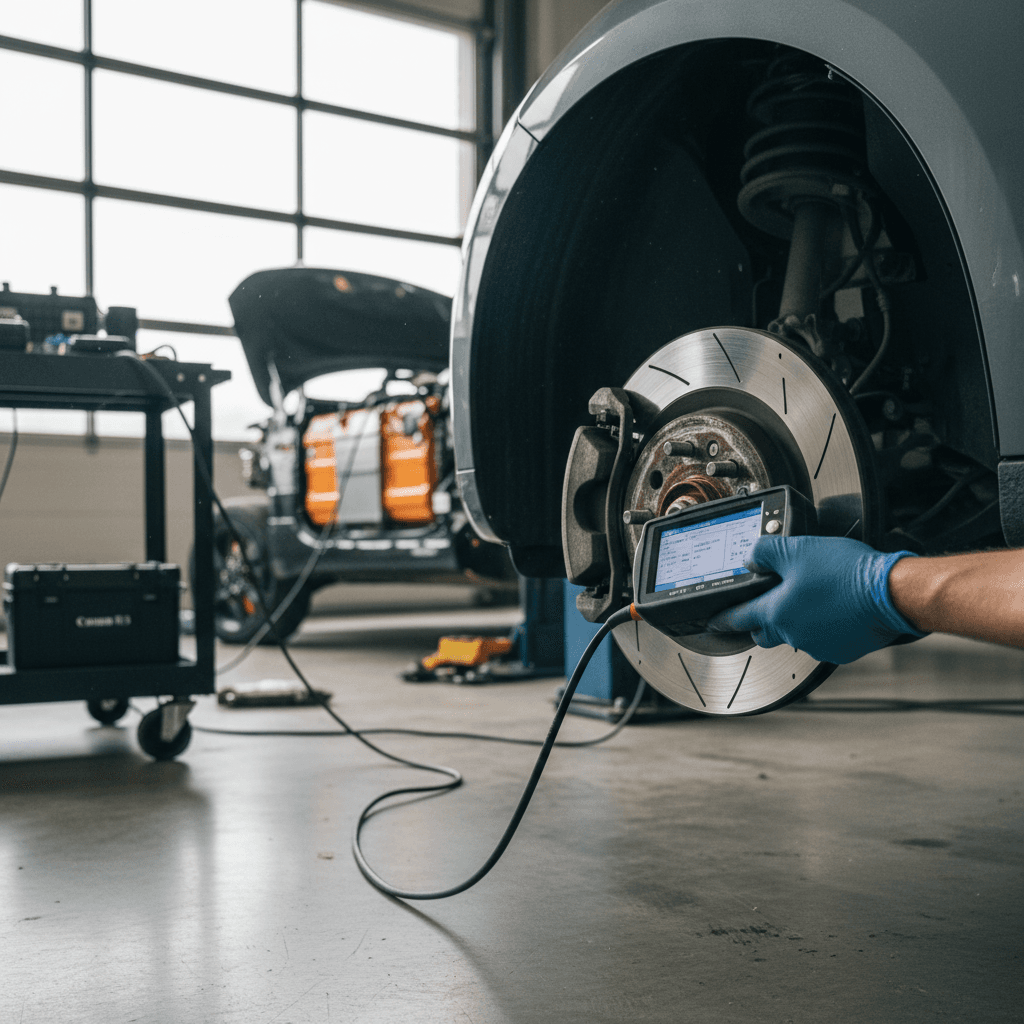
The heart of the ID. Buzz is its high-voltage battery pack and electric drive unit. While you don’t “service” the battery in the same way you would an engine, the VW ID. Buzz maintenance schedule does include checks designed to protect battery health and braking performance.
High-voltage battery & cooling
- Technicians inspect high-voltage cables and connectors for damage or corrosion.
- They check coolant levels and look for leaks in the battery and power electronics cooling circuits.
- Range complaints or charging issues may trigger more in-depth diagnostics.
In normal use, you shouldn’t expect coolant replacement for many years, but inspection is critical if you live in extreme climates or fast-charge frequently.
Regenerative & friction brakes
- Regen braking means pads and rotors wear more slowly than in a gas van.
- Paradoxically, the brakes can corrode sooner if they’re rarely used hard.
- Brake fluid absorbs moisture over time and must be changed on a multi‑year schedule.
A good dealer or EV‑savvy shop will inspect pads, rotors, hoses, and the parking brake mechanism at each two-year service.
Use the brakes occasionally
Tires, suspension, and alignment on the ID. Buzz
The ID. Buzz is a big, heavy electric van with instant torque. That’s a recipe for accelerated tire and suspension wear if you ignore the basics. In practice, good habits and regular checks will keep things civilized.
Why tire and suspension checks matter on an EV van
- Rotate tires every 5,000–7,500 miles, or at least at each 2‑year service visit.
- Check pressures monthly and before road trips; follow the sticker in the driver’s door jamb, not just the sidewall.
- Ask for a four-wheel alignment check if you notice the van pulling, tire noise, or uneven tread wear.
- Listen for clunks or rattles over bumps, early signs of bushing or shock issues.
Load matters
Software updates and other recurring checks
Your VW ID. Buzz is essentially a rolling computer. Some of its most important “maintenance” comes in the form of software updates and quick checks that keep driver‑assistance and charging systems working as designed.
Non-mechanical items in the VW ID. Buzz maintenance schedule
Small checks that have a big impact on everyday usability
Software & updates
ADAS calibration
Charging hardware
Keep records, even for software
VW ID. Buzz maintenance costs: new vs used
On a new or nearly new ID. Buzz, your first several years of maintenance will mostly be inspections, tire rotations, and a brake fluid change. Compared with a gas van, annual maintenance costs are typically lower, especially when you factor in no oil changes and fewer drivetrain repairs.
What to expect on a newer ID. Buzz
- Low routine costs: inspections, cabin filter, wiper blades, brake fluid.
- Tires may be your single biggest predictable expense, especially if you drive hard or fully loaded.
- Software campaigns and recalls are generally covered by VW.
If you stay on schedule, surprise repairs should be rare in the first 5–6 years.
What’s different on a used ID. Buzz
- Deferred maintenance: previous owners might have skipped inspections or fluid changes.
- Higher chance of needing tires, brakes, or suspension work right away.
- Out‑of‑warranty software or hardware fixes may fall on you.
This is where a structured inspection and verified battery health report, like the Recharged Score, can save you from expensive surprises.
How Recharged fits in
Ready to find your next EV?
Browse VehiclesMaintenance checklist when buying a used VW ID. Buzz
If you’re considering a used ID. Buzz, whether from a private seller, dealer, or marketplace, use this maintenance-focused checklist to separate well‑cared‑for vans from rolling science experiments.
Used VW ID. Buzz maintenance checklist
1. Confirm service history
Ask for digital or stamped records showing the 2‑year inspections, brake fluid changes, and any recall or service campaign work. Gaps in the record aren’t an automatic deal‑breaker but should lower the price.
2. Inspect tires and alignment
Uneven wear on the inside or outside edges can signal alignment issues or worn suspension parts. Budget for a fresh set of tires if tread is low or wear is patchy.
3. Check brake condition
Have a shop measure pad thickness and inspect rotors for heavy rust, grooves, or lip buildup. Light surface rust from sitting is normal; deep pitting is not.
4. Ask about charging behavior
Has the owner noticed slower fast‑charging, sudden range drops, or charge port glitches? These don’t automatically mean a bad battery, but they’re worth a closer look.
5. Scan for software and warning lights
Turn the van on and look for persistent warnings related to the battery, charging system, or driver‑assistance tech. Ask for documentation of any past software updates.
6. Get an independent EV‑savvy inspection
Even if you trust the seller, a third‑party inspection, and a battery health report like the Recharged Score, gives you the kind of insight you’d never get from a quick test drive.
FAQ: VW ID. Buzz maintenance schedule questions
Frequently asked questions about VW ID. Buzz maintenance
Key takeaways and how Recharged can help
The VW ID. Buzz maintenance schedule is refreshingly simple compared with a gas-powered van. Most of your attention goes to inspections, tires, brake fluid, and software, not to engine oil or complex transmission work. Stay on a 2‑year inspection rhythm, keep an eye on tires and brakes, and your ID. Buzz should be a low‑drama companion for years.
If you’re considering a used VW ID. Buzz, the key is knowing what’s already been done and what’s coming due. That’s exactly what the Recharged Score Report is built to show, verified battery health, fair market pricing, and a clear picture of wear items so you can budget for maintenance with no guesswork. Combine that with Recharged’s EV‑specialist support, financing options, trade‑in offers, and nationwide delivery, and you’ve got a much easier way to get into the electric van that actually fits your life and your budget.