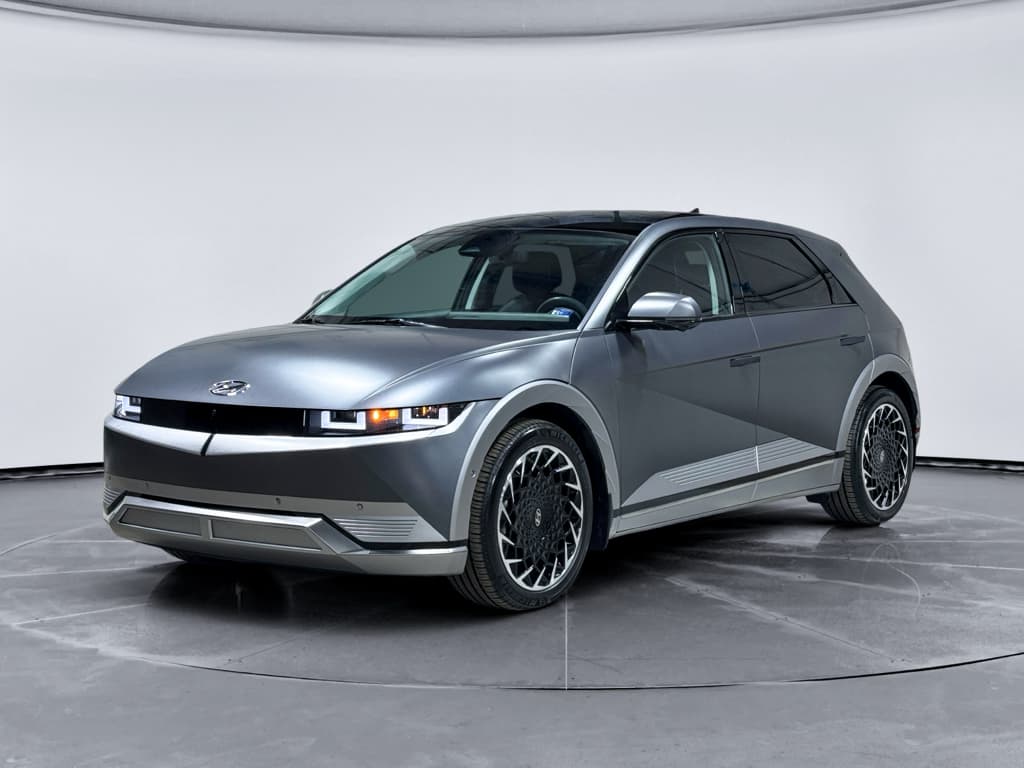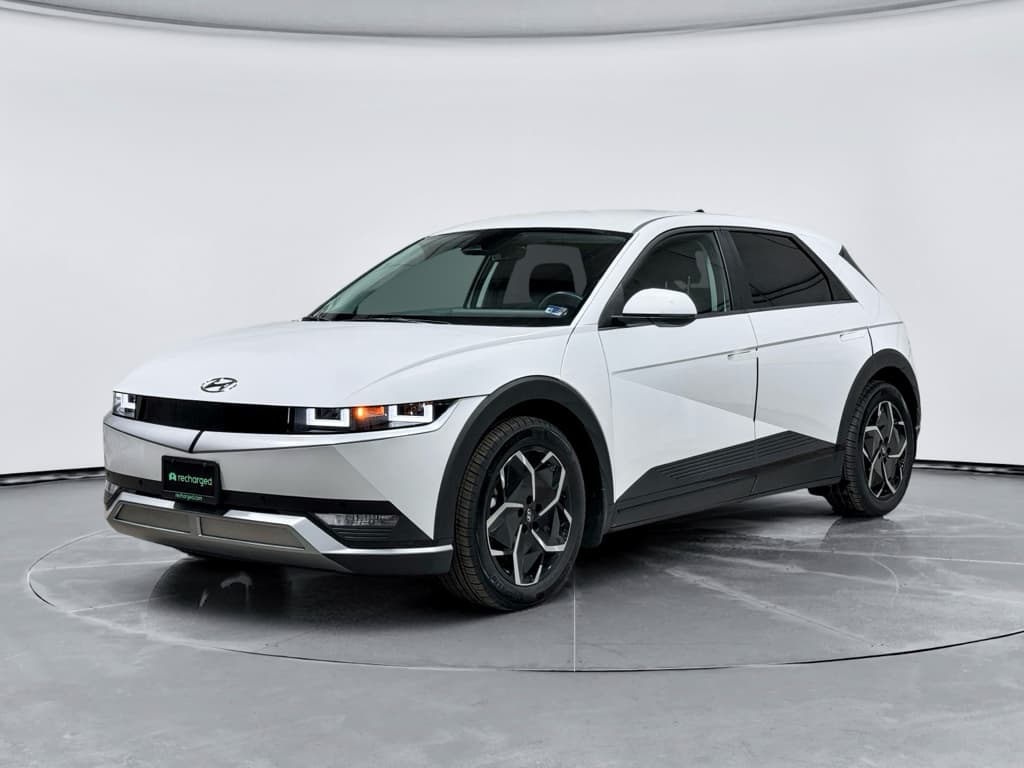
You’re shopping for an electric SUV and keep coming back to the same two names: the Hyundai IONIQ 5 and the Nissan Ariya. On paper they’re similar, compact crossovers with family-friendly space, solid range, and sharp styling, but they deliver very different ownership experiences. This guide puts Hyundai IONIQ 5 vs Nissan Ariya head-to-head so you can decide which one actually fits your life, especially if you’re considering a used example.
Model years covered
Hyundai IONIQ 5 vs Nissan Ariya: quick overview
Where each EV SUV shines
A snapshot before we dive into the details
Hyundai IONIQ 5: strengths
- Ultra-fast DC charging on an 800V platform (10–80% in ~18–20 minutes on 350 kW hardware).
- EPA range up to the low 300-mile bracket on long-range RWD trims.
- Standard NACS port on newer models for easy Tesla Supercharger access.
- Open, lounge-like cabin with lots of clever storage.
- Generally stronger value and efficiency for road trippers.
Nissan Ariya: strengths
- Quieter, more upscale-feeling interior in many trims.
- Available dual-motor performance with strong acceleration.
- Comfortable ride and refined manners; great commuter car.
- EPA range up to about 289 miles depending on trim.
- Flat, predictable charging curve that’s easy on the battery.
Big-picture verdict
Battery, range, and charging: IONIQ 5 vs Ariya
Battery size, range, and how quickly you can refill those miles are where the Hyundai IONIQ 5 vs Nissan Ariya comparison really starts to separate. Both are capable, but Hyundai leans into charging speed and efficiency while Nissan emphasizes comfort and predictability.
Headline range and charging numbers
Battery sizes and real-world range
Hyundai IONIQ 5 vs Nissan Ariya: battery and range basics
Approximate EPA-rated ranges for popular U.S. trims. Always check the window sticker for the specific vehicle you’re considering.
| Model | Battery options (usable approx.) | Drivetrain | Max EPA range (mi) | Typical real-world highway range* |
|---|---|---|---|---|
| Hyundai IONIQ 5 | ~63 kWh / ~84 kWh | RWD or AWD | Up to ~318 | Roughly 250–280 |
| Nissan Ariya | ~63 kWh / ~87 kWh | FWD or AWD | Up to ~289 | Roughly 230–260 |
Long-range single-motor trims in both lineups deliver the best range; AWD and performance versions trade some distance for power.
About real-world range
Charging speed and connector types
Hyundai IONIQ 5 charging
- Architecture: 800V system allows very high DC fast-charge rates.
- DC fast charging: On 350 kW hardware, 10–80% typically takes about 18–20 minutes with a healthy battery.
- Level 2 home/public: Around 5.5–7.5 hours for a full charge depending on battery size and onboard charger.
- Connector: Earlier models use CCS; newer U.S. IONIQ 5s are rolling out with the NACS (Tesla-style) port, giving direct Supercharger access without an adapter.
- Extra trick: Built-in Vehicle-to-Load (V2L) lets you power tools, camping gear, or even another EV in a pinch.
Nissan Ariya charging
- Architecture: 400V system with a focus on a stable, flat charging curve rather than headline peak numbers.
- DC fast charging: Peak around 130 kW; Nissan quotes about 35–40 minutes for 10–80% depending on battery size.
- Level 2 home/public: Roughly 10.5 hours for the smaller pack and 14 hours for the larger pack on a typical Level 2 home charger.
- Connector: CCS in North America; some trims can use a NACS adapter to plug into Tesla Superchargers.
- Charging character: Not as fast as IONIQ 5 at peak, but the predictability makes trip planning easy.
Don’t shop by peak kW alone
Performance and driving feel
Spec sheets tell you horsepower; they don’t tell you how these EVs make you feel in the seat. The Hyundai IONIQ 5 vs Nissan Ariya driving experience comes down to personality: the Hyundai feels light on its feet and a bit playful, while the Nissan leans into calm and composed.
Speed, power, and character
Not just 0–60 times, how they behave day to day
Hyundai IONIQ 5
- Single-motor RWD trims are plenty quick for daily use.
- Dual-motor AWD models deliver genuinely brisk acceleration.
- Light, responsive steering; a little more fun to hustle down a back road.
- Ride skews firm but comfortable, especially on smaller wheels.
Nissan Ariya
- FWD trims feel smooth and relaxed rather than sporty.
- Dual-motor and performance-oriented trims are strong off the line.
- Steering is calm and predictable; a very easy car to drive in traffic.
- Ride quality is soft and refined, prioritizing quiet comfort.
Noise & refinement
- Both are significantly quieter than comparable gas SUVs.
- IONIQ 5 can transmit a bit more road noise on coarse pavement.
- Ariya’s cabin insulation and suspension tuning feel slightly more premium, especially on long highway slogs.
Power isn’t the problem
Interior space, comfort, and practicality
Both crossovers are right-sized for small families or empty nesters who want easy parking and plenty of room. Their approaches, though, are different: the IONIQ 5 is a bit like a modern loft apartment, while the Ariya feels more like a well-upholstered den.
Hyundai IONIQ 5 cabin
- Design: Bright, airy, and futuristic with slim pillars and lots of glass.
- Space: Very generous legroom front and rear; the flat floor and sliding console make the cabin feel bigger than it looks.
- Cargo: Competitive cargo hold with easy load-in; front trunk is small but handy for cables.
- Family factor: Wide-opening rear doors and a high roofline make it easy to install child seats.
- Quirk bonus: Available reclining front seats with leg rests turn charging stops into power-nap opportunities.
Nissan Ariya cabin
- Design: Warm, minimalist, and more upscale in tone, with tasteful ambient lighting.
- Space: Slightly tighter-feeling than the IONIQ 5 but still roomy for four adults.
- Cargo: Similar overall capacity, though some trims lose underfloor storage to AWD hardware.
- Family factor: Comfortable back seat and easy entry height; less “open” feeling than Hyundai but very relaxing.
- Quietness: Excellent sound insulation; the Ariya can feel more premium on long drives.
Car-seat tip
Tech, safety, and driver assistance
Hyundai and Nissan both treat these EVs as tech showcases. You’ll find big screens, phone integration, and modern driver assistance in either one, but the way you interact with that tech can make or break your daily experience.
Infotainment and safety at a glance
Both are advanced; one is a little easier to live with
Screens & controls
- IONIQ 5 uses twin widescreens with a clean interface and a healthy dose of physical buttons and knobs for climate and key functions.
- Ariya’s haptic touch buttons blend into the dash; they look cool but can be harder to use by feel.
Smartphone & apps
- IONIQ 5 supports Apple CarPlay and Android Auto, including wireless connectivity on many trims.
- Ariya also supports CarPlay/Android Auto, though the interface and response time can feel a bit more traditional.
- Both have companion apps for checking charge status and preconditioning.
Driver assistance
- Hyundai’s Highway Driving Assist blends adaptive cruise and lane centering for relaxed highway miles.
- Nissan’s ProPILOT Assist and ProPILOT Assist 2.0 offer confident lane-keeping and adaptive cruise; higher trims can feel genuinely semi-autonomous on well-marked roads.
- Automatic emergency braking, blind-spot monitoring, and rear cross-traffic alert are widely available on both models.
What matters more than any spec sheet is whether you actually like living with the tech. Knobs you can grab without looking still matter, even in an EV.
Pricing, value, and incentives
MSRP stories change quickly in today’s EV market, but a few themes stand out when you compare Hyundai IONIQ 5 vs Nissan Ariya on value, especially once you factor in discounts and the healthy used market that’s emerging for both.
Typical U.S. pricing patterns (new)
Ballpark observations based on recent model-years. Always verify current pricing in your area.
| Model | Typical new MSRP band (recent years) | Notes |
|---|---|---|
| Hyundai IONIQ 5 | Upper $30,000s–$50,000s before incentives | Hyundai has cut prices on newer model years and often stacks cash or finance incentives. |
| Nissan Ariya | Low $40,000s–$60,000s depending on trim | Ariya launched slightly higher; discounts and lease deals vary a lot by region. |
Hyundai has been especially aggressive with price cuts and incentives, while Nissan often counters with finance deals and lease offers.
About tax credits
Hyundai IONIQ 5 vs Nissan Ariya as used EVs
If you’re shopping used, the Hyundai IONIQ 5 vs Nissan Ariya decision becomes less about MSRP and more about battery health, charging equipment, and how the previous owner treated the car. This is exactly where Recharged focuses its energy.
Used IONIQ 5 vs used Ariya: what really matters
Key questions to ask before you fall for a pretty spec sheet
Battery health & range
- Ask for a battery health report or capacity test, not just a guess based on the range display.
- For the IONIQ 5, confirm DC fast-charging history if possible; heavy use isn’t a deal-breaker, but it’s useful context.
- For the Ariya, look for cars that were regularly charged on Level 2 rather than living exclusively on DC fast chargers.
Charging hardware & connectors
- Confirm which connector standard your specific IONIQ 5 or Ariya uses (CCS vs NACS) and whether an adapter is included.
- Check that the original Level 1/Level 2 portable charger is present and working; replacements aren’t cheap.
- Inspect the charge port door and pins for damage or corrosion.
How Recharged helps on the used side
Ready to find your next EV?
Browse VehiclesWhich EV SUV is right for you?
There’s no one-size-fits-all winner in the Hyundai IONIQ 5 vs Nissan Ariya debate. Instead, think about how you actually drive, where you charge, and what kind of cabin you want to spend hours in.
Match your lifestyle to the right EV
You do frequent road trips
Prioritize fast DC charging and solid highway efficiency.
Hyundai IONIQ 5’s 800V architecture and stronger efficiency make it the better bet for long-distance driving.
Look for long-range RWD trims if you want maximum miles between stops.
You mostly commute and run errands
Daily round-trips under 80 miles? Either SUV will feel easy.
Nissan Ariya’s quiet, plush cabin shines in stop-and-go traffic and suburban use.
Focus on comfort features, heated seats, good audio, and driver assistance that you like.
You value style and interior vibe
IONIQ 5 has a bolder, retro-futuristic exterior and a lounge-like interior.
Ariya aims for a calmer, more upscale look and feel.
Sit in both if you can; your reaction to the seating position and visibility may decide it for you.
You want the best long-term value
Shop lightly used 1–3-year-old examples where depreciation has already done its work.
IONIQ 5’s charging speed and efficiency give it a slight edge as networks and standards evolve.
Buy with a trusted battery health report, Recharged can provide that for both models.
Shopping checklist: choosing between IONIQ 5 and Ariya
Checklist for test drives and listings
1. Confirm battery size and EPA range
Make sure you know which battery pack the car has and what the original EPA range was. Two IONIQ 5s, or two Ariyas, can have very different range depending on trim.
2. Ask for a battery health report
A Recharged Score Report or equivalent diagnostic is worth far more than a casual “the range seems fine” from a seller.
3. Verify charging standard and accessories
Is it CCS or NACS? Does it include a portable Level 1/2 charger, wall-mount hardware, or a Tesla adapter? Those details change real-world convenience and cost.
4. Test DC fast charging if possible
On a test drive near a fast charger, a quick 10–60% session can reveal charging-speed anomalies you won’t see in a driveway.
5. Live with the infotainment for 10 minutes
Pair your phone, run navigation, adjust climate, and use the driver-assist features. If a system annoys you on day one, it won’t improve in year three.
6. Think about your driveway, not your dream road trip
Where will the car sleep? Can you install a Level 2 charger? Those answers matter far more than once-a-year cross-country fantasies.
Hyundai IONIQ 5 vs Nissan Ariya FAQ
Frequently asked questions
When you strip away the marketing gloss, the Hyundai IONIQ 5 vs Nissan Ariya choice is really about how you live. If your calendar is full of weekend getaways and long highway hauls, the IONIQ 5’s charging speed and efficiency make your life easier. If your days revolve around commutes, carpools, and the occasional road trip, the Ariya’s calm, upscale cabin might win you over every time you close the door. Either way, going electric turns every stop at a gas station into a distant memory, and with a verified battery health report from Recharged in your corner, you can choose the EV SUV that fits your life today and still makes sense years from now.