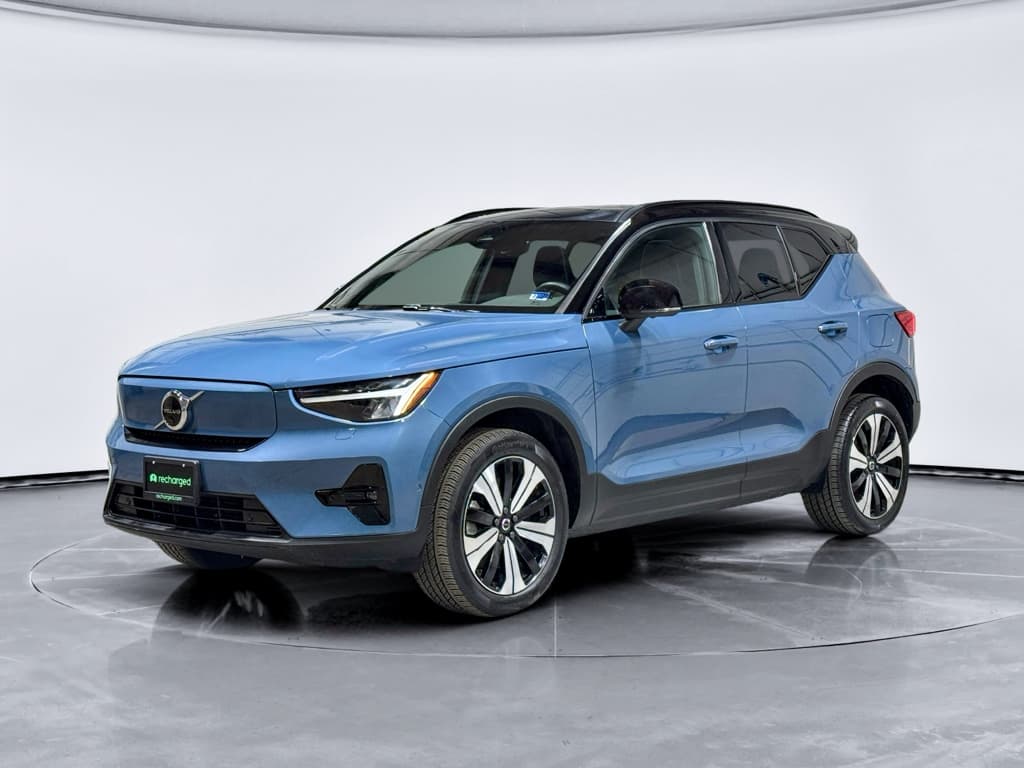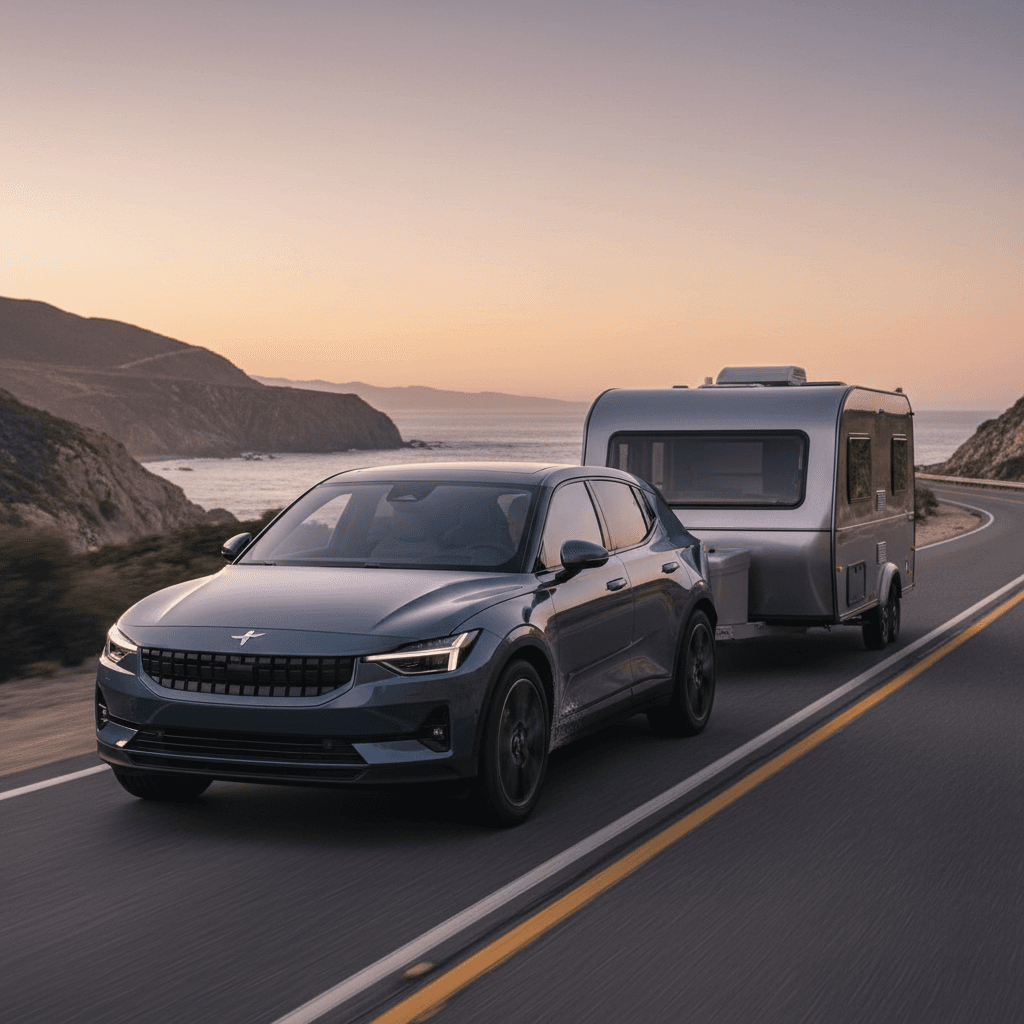
If you’re looking at a Volvo XC40 Recharge (now sold new as the EX40 in the U.S.) and you own a small camper, utility trailer, or a pair of jet skis, two questions rise to the top: How much can it tow, and what will it do to my range? This guide breaks down official towing capacity, real-world range, and how to plan trips so the XC40 Recharge’s battery and brakes aren’t the ones having a bad day.
Name change: XC40 Recharge → EX40
Overview: XC40 Recharge towing capacity and range at a glance
Volvo XC40 Recharge quick specs for towing
On paper, the XC40 Recharge looks like an urban runabout with a secret life as a light-duty tow vehicle: 2,000 pounds of towing capacity, healthy torque from its electric motors, and up to roughly 293 miles of EPA range in later rear‑drive versions. The catch is that physics always gets a vote; once you hang a trailer on the back, your realistic range can shrink by a third or more.
Official Volvo XC40 Recharge towing capacity
Volvo rates the XC40 Recharge (and early EX40s built off the same platform) for up to 2,000 pounds of towing capacity when properly equipped with the factory towing package. That number doesn’t spike if you choose the more powerful Twin Motor drivetrain; it stays capped at 2,000 pounds.
Volvo XC40 Recharge / EX40 official towing specs
Approximate U.S. factory ratings. Always confirm in the owner’s manual and on the doorjamb of the specific vehicle you’re buying.
| Model / drivetrain | Model years (approx.) | Max towing capacity (braked) | Max tongue weight | Notes |
|---|---|---|---|---|
| XC40 Recharge Twin Motor AWD | 2021–2024 | 2,000 lbs | ~200 lbs | Standard dual‑motor "Twin" setup with AWD and stronger acceleration. |
| XC40 Recharge / EX40 Single Motor RWD (Extended Range) | 2024–2025+ | 2,000 lbs | ~200 lbs | Rear‑drive single‑motor versions with larger battery and more range. |
| XC40 gas (B5) AWD (for comparison) | Non‑EV | 3,500 lbs | Typically ~10% of trailer weight | Gas XC40 can tow more weight but burns fuel, not electrons. |
Towing capacity doesn’t change much between drivetrains, the XC40 Recharge is built for light-duty towing, not Airstream fantasies.
Check for the factory hitch, not just wiring
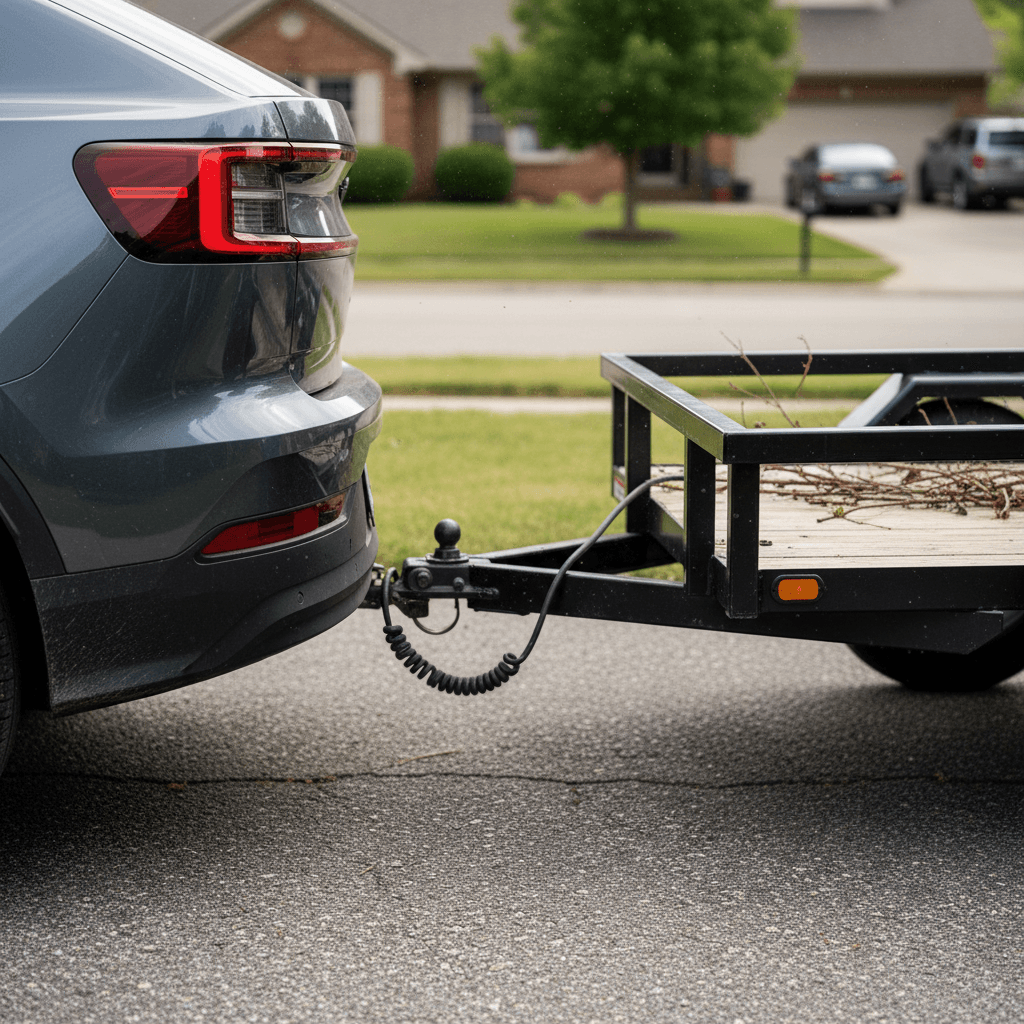
Volvo also places a limit on tongue weight, the downward force of the trailer on the hitch, typically around 10% of the total trailer weight for this class of vehicle. That means if you’re right at the 2,000‑pound limit, you don’t want more than roughly 200 pounds pressing on the hitch. Load your trailer so the heavy stuff sits low and between the axles, not stacked on the tongue.
XC40 Recharge range by year and drivetrain
The XC40 Recharge’s range story is a tale of two priorities: earlier models led with performance, later ones leaned into efficiency. Volvo quietly reshuffled motors and batteries over the years, so it matters which version you’re shopping.
Typical EPA range figures for XC40 Recharge / EX40
Ballpark numbers to frame your expectations before you add a trailer.
Twin Motor AWD (performance-focused)
Model years: 2021–2024 XC40 Recharge, early EX40 Twin Motor.
- Dual motors, all‑wheel drive.
- EPA range typically in the 245–260 mile neighborhood depending on year and wheels.
- Big punch off the line; not the efficiency champ.
Single Motor Extended Range RWD
Model years: 2024 XC40 Recharge and onward EX40 Single Motor trims.
- Rear‑wheel drive, single motor.
- EPA range up to roughly 290–295 miles on a full charge.
- Less power, more miles, better pick if you tow occasionally and road‑trip often.
Real‑world testers commonly see slightly less than the EPA number on the highway even without a trailer, especially at 70–75 mph or in cold weather. It’s smart to treat those official figures as the best case, then add your own safety margin, more on that when we talk towing penalties.
How towing affects range in the XC40 Recharge
Towing with any EV is a bit like driving into a headwind that never quits. The trailer adds weight, but the real killer is aerodynamic drag: you’re punching a bigger hole in the air, and that extra effort shows up as energy pulled from the battery.
- At 55–60 mph with a small, low trailer, many EVs see around 30–40% range loss.
- At 65–70 mph, especially with a tall box trailer or camper, range loss can climb toward 40–50%.
- Hills, headwinds, cold temperatures, and bigger wheels can all nibble further at your remaining miles.
A simple rule of thumb
Why weight matters less than you think
EVs are very good at recovering energy while slowing down, thanks to regenerative braking. Extra weight hurts efficiency when you’re climbing hills, but on flat ground the car regains some of that energy when you lift off the throttle or brake.
That’s why a lightly loaded, aero-clean trailer can sometimes be easier on range than a tall, square camper weighing the same.
Why aero matters more than you expect
Drag increases with the square of speed. Go a little faster and your XC40 has to shove a lot more air out of the way, plus the wake turbulence behind that boxy trailer.
That’s why slowing from 70 to 60 mph can claw back a surprising chunk of range when you’re towing.
What you can realistically tow with an XC40 Recharge
Within its 2,000‑pound rating, the XC40 Recharge is best thought of as an "adventure gear" hauler, not a full‑time tow rig. It’s terrific for toys and chores; it’s not the right tool for a 23‑foot camper you plan to drag across three states.
Good, borderline, and bad trailer pairings
Use these examples as a sanity check before you sign for that camper.
Ideal matches
- Single‑axle utility trailer with yard equipment.
- Small aluminum boat on a lightweight trailer.
- Two motorcycles or a pair of jet skis.
- Compact teardrop or ultra‑light camper under ~1,500 lbs loaded.
Borderline (requires discipline)
- Boxy camping trailer close to 2,000 lbs loaded.
- Enclosed cargo trailer with a lot of frontal area.
- Heavier gear without trailer brakes.
These can push range loss toward 50%+ and stress the brakes on long descents if not equipped with trailer brakes.
What to avoid
- Anything over the 2,000‑lb rating.
- Multi‑axle campers with big, square faces.
- Car trailers, even with a small car on them.
- Regularly towing long distances at highway speeds.
At that point, you’re asking the wrong vehicle to do the job.
Never exceed the rated limit
Charging and route planning when towing
The good news: the XC40 Recharge supports DC fast charging, and newer Single Motor versions can add a big chunk of range in around half an hour on a strong charger. The challenge: not every public fast charger is laid out with trailers in mind, and you don’t want to block three stalls playing charging Jenga.
Planning a tow trip in your XC40 Recharge
1. Halve your expected range
If your EPA rating is ~260–290 miles, plan legs of 120–140 miles when towing. That gives you headroom for weather, hills, and detours.
2. Prioritize pull-through-friendly stations
Use satellite view in your mapping app to scout chargers with easy in‑and‑out access. Some sites have drive‑through spots or enough open pavement to leave the trailer attached.
3. Precondition the battery before fast charging
Make sure the car’s route guidance knows you’re heading to a fast charger so it can warm or cool the battery for faster charging, especially important on cold days.
4. Factor in slower charging with a full trailer
When the pack is hot from towing, charging may slow down near the top of the state of charge. Aim to charge from about 10–70% instead of 5–100% on each stop.
5. Know your plan B
On long trips, identify a backup charger along each leg. If your preferred station is busy or offline, you don’t want to discover that at 9% with a crosswind.
Where Recharged fits in
Ready to find your next EV?
Browse VehiclesBuying used: what to check on an XC40 Recharge before you tow
With a used XC40 Recharge, you’re not just buying a crossover; you’re inheriting someone else’s charging and towing habits. Before you ask the car to pull its weight, and a trailer’s, do some due diligence.
- Battery health: An EV’s “gas tank” shrinks slowly over time. A healthy XC40 Recharge battery should still support practical towing distances; excessive degradation will make every trailer trip a game of chicken with the state‑of‑charge gauge.
- Brake condition: Regenerative braking does some of the work, but the physical brakes still have to manage heat on long downhill grades, especially with a loaded trailer.
- Tires and load rating: Ensure all four tires match in size and load index and are rated for the vehicle’s gross weight plus tongue load.
- Hitch installation quality: A clean, rust‑free factory hitch is ideal. Aftermarket hitches should be properly mounted to structural points, not just sheet metal.
- Software and recall status: Make sure fast‑charging and driver-assistance updates are current; towing is no time to discover you’re two years behind on stability‑control refinements.
How Recharged evaluates used EVs for towing
XC40 Recharge vs. gas XC40: towing trade-offs
Volvo also sells a gas‑powered XC40 that can tow up to about 3,500 pounds, a full 1,500 pounds more than the electric version. On paper, it’s the obvious choice for serious trailers. In practice, it comes down to what “towing” means in your life.
XC40 Recharge (EV) vs. gas XC40 for towing
How the electric and gas versions of Volvo’s small SUV stack up when there’s a trailer on the hitch.
| Aspect | XC40 Recharge / EX40 (EV) | XC40 B5 (gas) |
|---|---|---|
| Max tow rating | 2,000 lbs | Around 3,500 lbs |
| Range while towing | Often 120–150 miles per charge with small trailer | Varies with load, but refueling is fast and ubiquitous |
| Power delivery | Instant electric torque, very smooth | Traditional turbo powerband; more shifting, more noise |
| Running costs | Lower energy and maintenance costs day-to-day | Higher fuel and maintenance costs over time |
| Best for | Weekend toys, small campers, short‑to‑medium trips | Larger campers, boats, frequent long‑distance towing |
If you tow big and often, the gas XC40 is the workhorse. If you tow small and occasionally, the XC40 Recharge’s smooth torque and low running costs are hard to ignore.
The XC40 Recharge is less a miniature semi‑truck and more a great electric Swiss Army knife: quick, quiet, and competent at towing the kinds of trailers its likely owners actually use.
FAQ: Volvo XC40 Recharge towing capacity and range
Frequently asked questions about XC40 Recharge towing and range
Bottom line: should you tow with a Volvo XC40 Recharge?
If your idea of towing is a pair of jet skis to the lake, a utility trailer from the garden center, or a featherweight teardrop for weekend camping, the Volvo XC40 Recharge is a delightfully civilized way to do it. The official 2,000‑pound towing capacity and smooth electric torque make light work of small trailers, as long as you respect the range penalty and plan your charging stops like an adult.
If, on the other hand, you’re dreaming of cross‑country hauls with a big, tall camper, this isn’t your huckleberry; you’ll either want a gas XC40 or a more heavy‑duty EV rated to pull more weight. The key is being honest about how often, and how far, you really tow. Recharged can help you sort that out, match you with the right XC40 Recharge or EX40, and back it with a battery health report so you’re not guessing at your range before you ever hitch up.