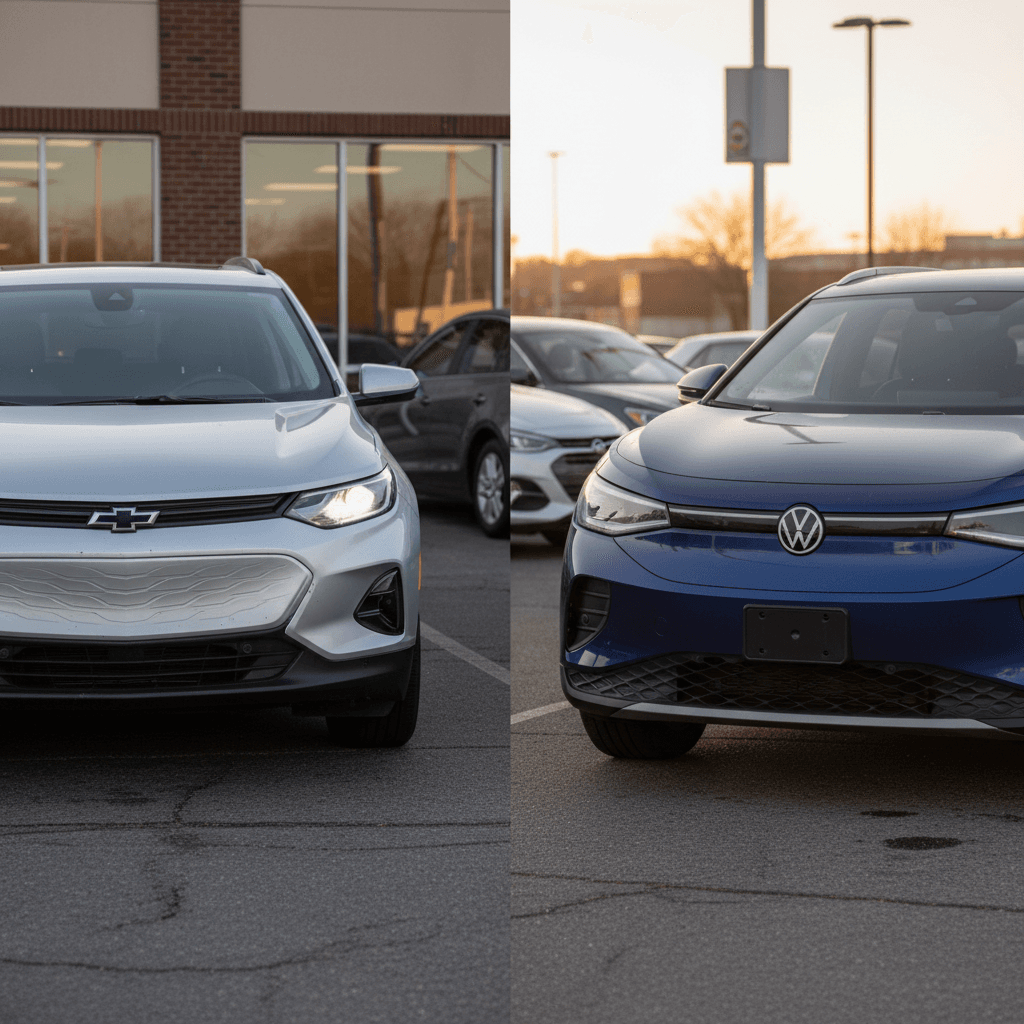
If you’re shopping the used EV market for a practical electric SUV, the used Chevy Equinox EV vs Nissan Ariya comparison is probably near the top of your list. Both are compact crossovers with real-world range, family-friendly cabins, and modern tech, but they take very different paths to get there, and those differences matter a lot once these vehicles hit the used market.
Quick Take
Overview: Used Equinox EV vs Nissan Ariya
The Chevy Equinox EV is GM’s mass‑market electric crossover, sized between the Bolt EUV and the Blazer EV and built on the Ultium platform. For the 2025 model year, FWD versions with the larger pack are EPA‑rated around 319 miles of range with an 85 kWh battery and optional eAWD trims around the high‑200‑mile range. The Nissan Ariya, launched earlier, offers multiple battery sizes, roughly 63 kWh and 87 kWh, with EPA ranges from about 205 miles up to 304 miles depending on trim and drivetrain.
From an ownership perspective, you’re also looking at different strategic positions. Chevy is ramping Equinox EV volume as its entry electric crossover, which is likely to translate into healthy used supply over time. Nissan, on the other hand, has already announced that the Ariya will be discontinued in the U.S. after the 2025 model year, which doesn’t make it a bad used buy, but it does change the story on future demand, parts pricing, and resale.
Model Availability Note
Key Specs: Used Chevy Equinox EV vs Nissan Ariya
Core Specs Comparison
High‑level specs for commonly cross‑shopped trims on the used market (U.S.-spec; exact numbers vary by model year and trim).
| Spec | Chevy Equinox EV (FWD, large pack) | Chevy Equinox EV (eAWD) | Nissan Ariya (63 kWh FWD) | Nissan Ariya (87 kWh FWD) | Nissan Ariya (87 kWh e‑4ORCE AWD) |
|---|---|---|---|---|---|
| Battery (approx. usable) | ~85 kWh | ~85 kWh | ~63 kWh | ~87 kWh | ~87 kWh |
| EPA Range | ~319 miles | ~280–285 miles | ~205–216 miles | ~289–304 miles (trim‑dependent) | ~257–272 miles |
| Power | ~210–215 hp | ~290 hp | 214 hp | 238 hp | up to 389 hp |
| Drivetrain | FWD | Dual‑motor AWD | FWD | FWD | Dual‑motor AWD |
| Max DC Fast Charge | ~150 kW CCS | ~150 kW CCS | 130 kW CCS | 130 kW CCS | 130 kW CCS |
| Onboard AC Charger | ~11.5 kW | ~11.5 kW | up to ~7.2 kW | up to ~7.2 kW | up to ~7.2 kW |
Equinox EV tends to win on range and efficiency, while Ariya offers more power and configuration complexity.
How to Use These Numbers
Pricing & Value on the Used Market
Value Signals in Today’s Used Market
On MSRP when new, the Equinox EV undercuts the Ariya pretty decisively. That pricing gap persists in the used market. All else equal, similar mileage, similar equipment, a used Equinox EV will usually be the lower‑priced option or offer more range per dollar. That’s partly because GM positioned it as the mass‑market Ultium crossover and partly because Nissan’s Japan‑built Ariya gets hit by import costs and loses ground on federal incentives.
However, the Ariya’s more premium interior and higher‑powered AWD trims mean some used examples will still be priced like near‑luxury products. If you’re comparing a base‑or mid‑trim Equinox EV to a high‑spec Ariya e‑4ORCE with the big battery, don’t be surprised if the Nissan asks significantly more despite similar or even shorter range.
How to Compare Used Equinox EV and Ariya Prices Smartly
1. Normalize for Range and Battery Size
Compare price per mile of EPA range rather than just sticker price. A cheaper Ariya with the small 63 kWh pack may actually be worse value than a slightly more expensive Equinox EV or big‑battery Ariya.
2. Check for Tax Credit History
Some units may have been bought new with federal or state incentives, which affects depreciation but not your ability to claim them now. Don’t assume you’ll get a new‑car credit on a used purchase.
3. Look Beyond Odometer Miles
A low‑mileage Ariya that has fast‑charged heavily could have more battery wear than a moderately driven Equinox EV that mostly Level‑2 charged. That’s where a verified battery‑health report is critical.
4. Compare Total Equipment, Not Just Trim Names
An Equinox EV with Super Cruise, a heat pump, and a larger screen might be a better buy than a lightly optioned Ariya, even if the Nissan’s trim name sounds fancier.
Where Recharged Fits In
Ready to find your next EV?
Browse VehiclesRange & Efficiency: How Far Will You Really Go?
Range is where the Equinox EV quietly rewrites expectations for a mass‑market crossover. With around 319 miles EPA on FWD models with the larger pack, it edges out even the most efficient front‑drive Ariya trims, which top out around 304 miles in specific configurations. Where the Ariya can swing widely, from a bit over 200 miles to just above 300, the Equinox EV lineup clusters closer to the high‑200s and low‑300s for both FWD and AWD.
Efficiency matters just as much as absolute range, especially with rising electricity rates. Real‑world testing has shown the Equinox EV delivering stronger miles‑per‑kWh than comparable Ariya trims, particularly at highway speeds. Over years of ownership, that translates into fewer charging stops and lower energy costs. For commuters who live in the suburbs but regularly cross long stretches of freeway, that efficiency edge is more meaningful than a few tenths of a second in 0–60 mph times.
- Equinox EV FWD: best for drivers who routinely do 200–250‑mile days or road trips.
- Equinox EV eAWD: still road‑trip capable, with range comfortably in the high‑200‑mile band.
- Ariya 63 kWh: a better fit for urban/suburban duty cycles and shorter commutes.
- Ariya 87 kWh: competitive highway cruiser if you find the right trim at the right price.
Don’t Buy More Range Than You Need
Charging Speeds & Road-Trip Viability
Both the Equinox EV and Ariya rely on CCS fast charging in North America, but their behavior on DC fast chargers isn’t identical. Chevy quotes peak DC rates around 150 kW for the Equinox EV, with marketing claims of roughly 70–80 miles added in about 10 minutes under ideal conditions. Nissan rates the Ariya at up to 130 kW, with 10–80% charge windows in the 30–40 minute range depending on battery size and charger output.
In practice, the Equinox EV’s stronger efficiency and decent peak rate mean you recover usable range quickly, even if its charge curve isn’t segment‑leading. The Ariya, especially with the larger pack, tends to spend longer parked at the charger to go from low state of charge back to comfortable road‑trip territory. If you envision lots of highway travel, this difference can add an hour or more to multi‑stop routes over a full day.
Everyday Charging: What Living With Each EV Feels Like
Real‑world charging scenarios that matter more than brochure numbers.
Home Level 2 Charging
Equinox EV: ~11.5 kW onboard charger means a full overnight refill on a 40–48A circuit is realistic, even from low state of charge.
Ariya: Slower onboard AC (around 7 kW) stretches full charges toward the mid‑teens in hours, especially with the big battery.
Public DC Fast Charging
Equinox EV: Recovers meaningful range quickly; a 20–55% session can be a coffee stop, not a meal break.
Ariya: Respectable but behind the latest 800‑V platforms; 20–80% often feels like the right stopping window.
Occasional 120V Charging
Both vehicles can sip from a standard household outlet in a pinch, but given their large packs, 120V is for emergencies or very light daily use only.
Don’t Ignore Your Local Infrastructure
Space, Comfort & Tech Features
Chevy Equinox EV: Practical and Familiar
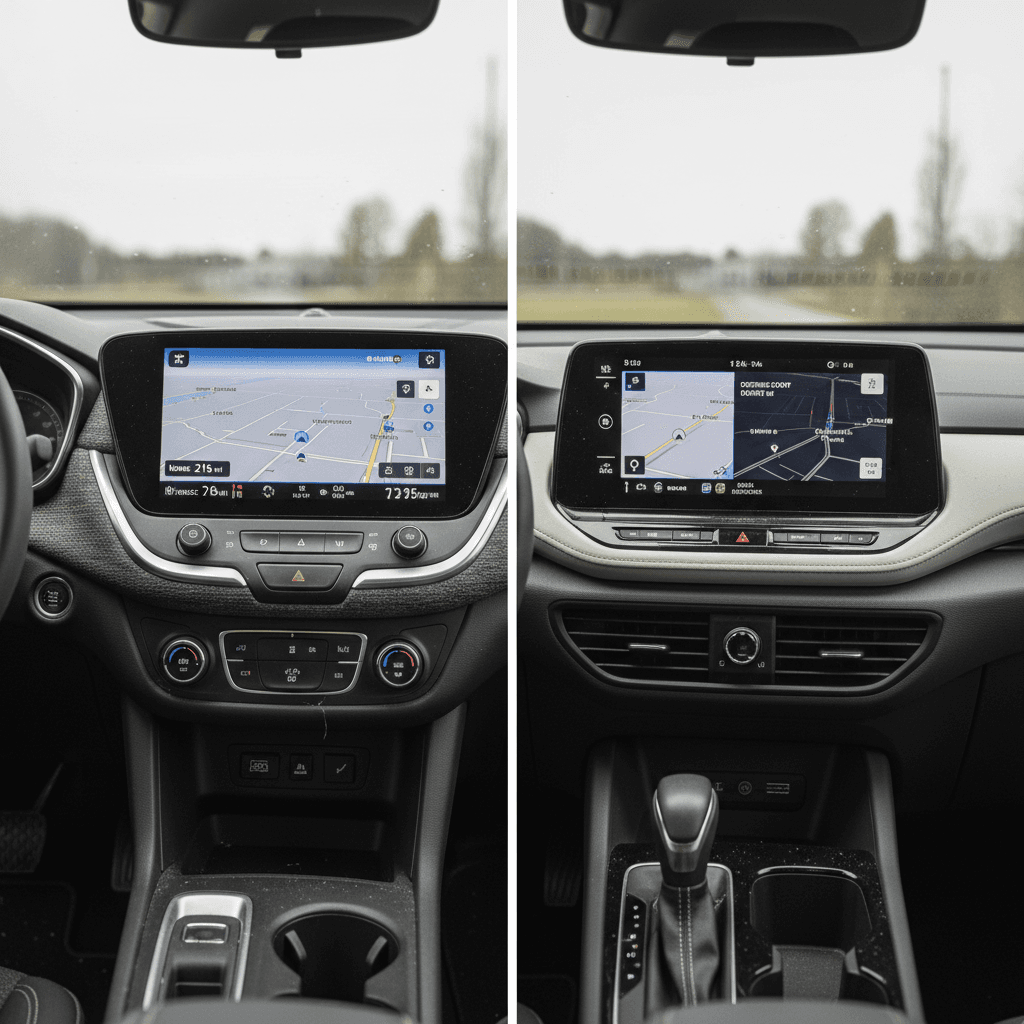
The Equinox EV’s cabin feels like a modern Chevrolet first, EV second. You get a large central display (around 17 inches on better‑equipped trims), physical controls for climate, and straightforward sightlines. Rear space is generous for a compact crossover, and cargo volume around 57 cubic feet with seats folded is competitive even if it trails some gas crossovers.
Materials and design lean more practical than luxurious, though higher trims with two‑tone seats and ambient lighting help. Tech highlights include GM’s Super Cruise hands‑free driving on some trims, Google built‑in, and robust driver‑assist features.
Nissan Ariya: Lounge on Wheels
The Ariya’s interior is one of its strongest selling points. It feels more like a near‑luxury lounge, with a low cowl, wide open dash, and materials that, in top trims, genuinely rival entry‑level premium brands. Flat floor, sliding center console, and clever storage touches make it feel airy and upscale.
Dual screens are well‑integrated, haptic climate controls on the wood‑like dash (love them or hate them), and seats are comfortable for long drives. It’s an easy EV to live with if you care about ambiance and quietness more than ultimate efficiency.
- Families prioritizing rear‑seat legroom and a more conventional control layout often gravitate toward the Equinox EV.
- Drivers who care about cabin design, materials, and a more "luxury adjacent" feel tend to prefer the Ariya.
- Both offer solid active safety suites; availability of features like 360‑camera, adaptive cruise, and lane‑centering varies heavily by trim.
Driving Experience & Performance
Equinox EV and Ariya target slightly different performance envelopes. The Equinox EV’s FWD configuration is tuned for efficiency and everyday response rather than outright speed. The available eAWD version bumps power significantly, into the ~290 hp ballpark, which makes it feel lively off the line without turning it into a performance SUV.
The Ariya, particularly in e‑4ORCE AWD form with the larger pack, can deliver well north of 300 hp and surprisingly brisk acceleration. Nissan’s AWD tuning focuses on composure and smoothness rather than tail‑happy antics, which suits the Ariya’s comfort‑oriented persona. Steering is light on both vehicles; ride comfort tilts slightly toward the Nissan, while the Chevy’s extra efficiency makes it feel more relaxed about long distances.
Who Each EV Drives Best For
Equinox EV FWD Commuter
Quiet, efficient, and predictable. Ideal if your driving pattern is mostly commuting with occasional weekend trips, and you value range and low running costs.
Equinox EV eAWD All‑Weather Driver
More power and traction without totally sacrificing range. Great for snow‑belt buyers or those who value confident highway passing.
Ariya e‑4ORCE Enthusiast
Noticeably stronger acceleration and more premium ride feel. You’ll give up some efficiency and charging speed, but gain refinement and power.
Ownership, Reliability & Depreciation
Because both models are relatively new, long‑term reliability data is still evolving. What we can say today: Ariya production has been constrained and occasionally disrupted by battery supply issues, while GM’s Ultium ramp‑up has had its own early teething problems. Neither of these facts should be dealbreakers for a used buyer, but they do underscore why warranty coverage and dealer support matter.
Ariya Discontinuation in the U.S.
On depreciation, the Ariya is already tracking steeper curves than originally expected, largely because of pricing pressure from newer competitors and that looming discontinuation. That creates opportunity: if you intend to keep the vehicle for many years, a heavily depreciated Ariya with the big battery can be a lot of EV for the money. The Equinox EV, by contrast, is earlier in its curve. Expect stronger residuals in the near term, helped by Chevy’s nationwide dealer footprint and the vehicle’s strong efficiency story.
Battery health will be central for both. Pack sizes are large enough that modest degradation doesn’t wreck usability, but a poorly cared‑for car, fast‑charged to 100% constantly, left parked at full charge in hot climates, can lose meaningful range. This is exactly the blind spot traditional used‑car shopping struggles with and where tools like Recharged’s battery diagnostics meaningfully de‑risk the purchase.
Leverage the Recharged Score
Which Used EV Is Right for You?
Choose Your Best‑Fit Used Electric SUV
Range‑First, Road‑Trip Drivers
Prioritize Equinox EV FWD with the larger pack, its ~319‑mile EPA rating and strong efficiency make long drives less stressful.
Look for trims with driver‑assist features like Super Cruise if you do lots of highway miles.
Used Ariya shoppers should stick to big‑battery FWD trims; avoid the smaller pack if you expect frequent 200‑mile days.
Comfort & Premium Feel Seekers
Start with Ariya Evolve+, Platinum+ or higher trims; you’re paying for that lounge‑like interior, so make sure you actually get it.
Big‑battery Ariya with e‑4ORCE AWD is compelling if range is “nice to have” rather than mission‑critical.
An Equinox EV in higher LT/RS trims still offers a comfortable, well‑equipped cabin, just not the same design drama as the Nissan.
Budget‑Conscious Buyers
Focus on smaller‑battery Ariya trims if the discount versus an Equinox EV is substantial and your driving is local.
Alternatively, a base or mid‑trim Equinox EV with higher mileage but verified good battery health can be a smarter long‑term bet.
Use Recharged’s fair‑market pricing data to filter out outliers, both underpriced “too good to be true” cars and overpriced dealer hopefuls.
Snow‑Belt & All‑Weather Drivers
Shortlist Equinox EV eAWD and Ariya e‑4ORCE trims only; FWD can work with good tires, but AWD takes the edge off winter anxiety.
Compare real‑world range in cold weather; both will lose some miles in winter, but the larger‑pack versions give you more buffer.
Look for features like heated steering wheels, heat pumps, and remote preconditioning, small details that matter a lot in January.
If you strip away the marketing, the used Chevy Equinox EV vs Nissan Ariya decision comes down to a simple tradeoff: the Equinox EV is the rationalist’s pick, more range for the energy, more miles for the money, and a clearer future in Chevy’s lineup. The Ariya is the emotional choice, nicer cabin, stronger high‑trim performance, and increasingly aggressive used pricing because of its looming exit from the U.S. market.
Neither is the wrong answer. What matters is matching the vehicle to your actual life and having hard data on the battery and pricing. If you want help comparing specific vehicles, Recharged’s EV specialists can walk you through individual Equinox EV and Ariya listings, explain each Recharged Score report, and even handle trade‑in and nationwide delivery so you spend your energy driving, not deciphering spec sheets.