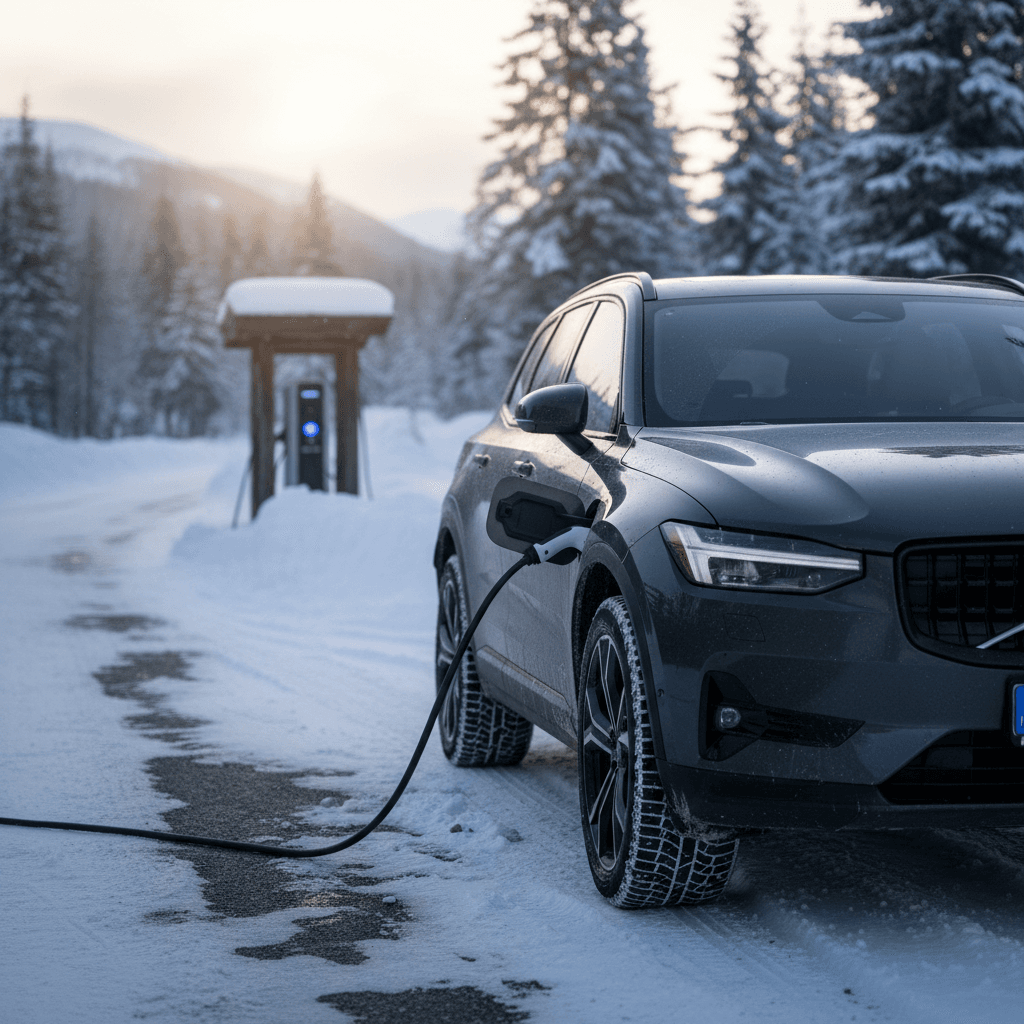
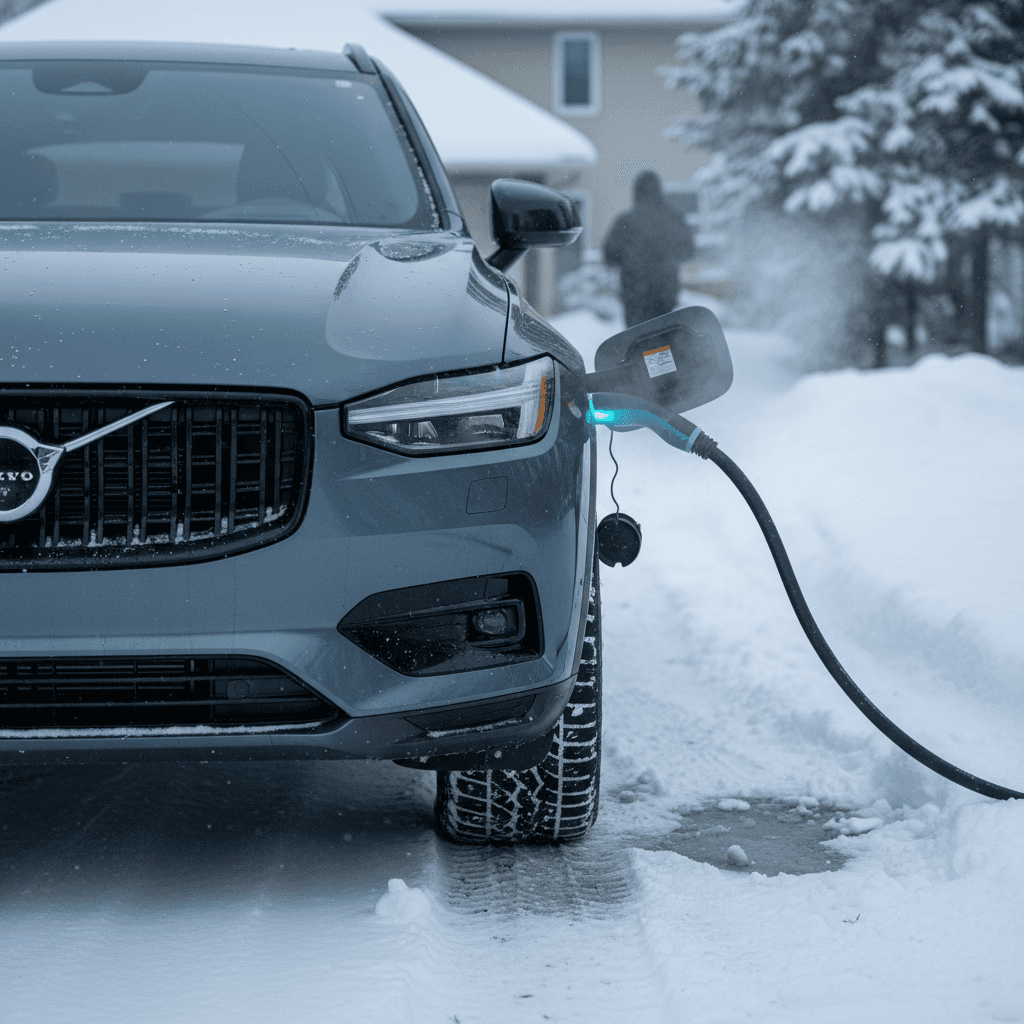
If you live in a cold climate, you’re probably wondering how much Volvo EX90 winter range loss you’ll see once temperatures drop. The headline is simple: the EX90 is a big, safe, comfortable family SUV, and like every large EV, winter eats into its range. The good news is that with some planning and a few smart habits, you can keep it extremely usable even in harsh conditions.
Cold-weather reality check
Volvo EX90 winter range loss: the short version
Volvo EX90 range: paper vs. winter pavement
For U.S. models, Volvo lists up to 310 miles of EPA-estimated range for the EX90 with 21‑inch wheels, and up to 300 miles with 20" or 22" wheels in ideal test conditions. In the real world, EVs across brands average about 80% of their rated range in freezing weather, and can drop closer to 60–75% in bitter cold when you’re running the heater hard. In owner reports from cold‑weather states, early EX90s are behaving right in line with that pattern, especially on highway drives.
Don’t plan winter trips off the EPA number
Volvo EX90 range ratings – and why winter changes them
2025–2026 Volvo EX90 EPA range at a glance
Approximate U.S. EPA range ratings under ideal test conditions. Always check the Monroney label for the exact configuration you’re considering.
| EX90 variant | Drivetrain | Wheel size | EPA-estimated range |
|---|---|---|---|
| Twin Motor | AWD | 20–22 inch | Up to 300 miles |
| Twin Motor | AWD | 21 inch | Up to 310 miles |
| Twin Motor Performance | AWD | 20–22 inch | Slightly lower than 300 miles (more power, same battery) |
Wheel size and power level matter, and so does the temperature outside.
Those figures assume moderate temperatures, gentle acceleration, and a mix of city and highway speeds. Winter ruins almost all of those assumptions at once. Cold air is denser (more drag), your tires are squirming through slush and snow, and the battery itself has to work harder when it’s cold. On top of that, you’re asking the EX90 to heat up a big, three‑row cabin, often from a cold‑soaked start.
- Below about 50°F, battery chemistry becomes less efficient, especially before the pack has warmed up.
- At highway speeds, denser cold air and snow buildup increase aerodynamic and rolling drag.
- Cabin heating, steering wheel/seat heaters, mirror and window defrosters all pull power directly from the high‑voltage battery.
- Short trips are hardest: the EX90 has to warm the battery and cabin over and over without many continuous miles to “pay back” that energy.
How much winter range loss to expect in a Volvo EX90
We don’t yet have massive fleet datasets specific to the EX90 the way we do for earlier EVs, but we do have three solid anchors: EPA ratings, large multi‑brand winter studies of EVs, and early real‑world reports from EX90 owners in places like Vermont and the upper Midwest. Put together, they give a pretty clear envelope of what to expect.
Expected Volvo EX90 winter range loss by temperature band
Use this as a planning guide, not a promise, your driving style and roads matter just as much as the thermometer.
Cool (40–50°F)
Range impact: minimal.
- Expect ~90–95% of EPA.
- Highway speeds and rain may shave off more.
Freezing (20–32°F)
Range impact: noticeable.
- Many EVs deliver ~80% of rated range in this band.
- For an EX90, that’s roughly 240–250 miles from a full charge.
Deep cold (0–20°F and below)
Range impact: significant.
- Large SUVs can drop to ~70–75% of rated range, or lower, on highway drives.
- For an EX90, plan around 200–230 miles on very cold days, less if you’re towing or driving fast.
Think in usable miles, not percentages
What actually causes winter range loss in the EX90
1. Battery chemistry and pack temperature
Like all lithium‑ion packs, the EX90’s battery is happiest around room temperature. When it’s much colder outside, internal resistance rises and the pack can’t deliver or accept energy as efficiently.
- Until the pack warms up, you’ll see slower DC fast‑charging and higher energy use per mile.
- Volvo’s thermal management system will use energy to heat the pack when needed, especially before fast charging.
2. Cabin heating and comfort features
The EX90’s large cabin, triple‑row seating, and plenty of glass are great for families, but that’s a lot of volume to heat on a cold morning.
- Seat and steering‑wheel heaters are relatively efficient; the main cabin heater is a bigger draw.
- Short, errand‑style drives from a cold start are the worst‑case scenario for efficiency.
- Higher rolling resistance from winter tires, slush, and snowpack on the road.
- Extra aero drag from roof boxes, ski racks, and crosswinds in winter storms.
- Higher sustained speeds on clear, dry interstates, which matter more than temperature alone for energy use.
- Frequent use of defrosters, rear‑window heat, and mirror heaters.
Heat pump advantage
Real owner experience: EX90 in subzero temperatures
Early EX90 owners in cold‑weather regions are already sharing their numbers, and they line up well with what we’d expect for a large luxury SUV. One Vermont owner with a 300‑mile‑rated EX90 reported getting roughly 310 miles in mild summer driving. In winter, they saw around 260 miles at 20°F and about 215 miles at −10°F while preheating the car while plugged in and using good winter tires. That’s roughly a 30% drop at deep‑winter temps, noticeable, but manageable for daily life.
It’s relatively infrequent for me to drive more than 200 miles in a day, so the drop in range isn’t a big deal for me… When I do need to drive longer distances, there are plenty of fast chargers along the way.
That mindset, accepting that range drops in the cold but realizing you seldom need the full EPA number, closely mirrors what we see in Norway and other cold‑climate EV markets. With a dense charging network and some familiarity with your car, winter range loss becomes a planning exercise, not a crisis.
Planning winter road trips with a Volvo EX90
For everyday commuting and school runs, even a 30% winter range hit won’t stress an EX90. Where you do need to think more strategically is winter road‑tripping, especially at U.S. interstate speeds, where aerodynamics and speed matter more than almost anything else.
Winter trip planning checklist for EX90 owners
1. Base your plan on 70–75% of EPA
If your EX90 is rated for ~300 miles, plan winter highway legs around 200–225 miles between stops. That keeps a healthy buffer for detours, headwinds, or unexpected delays.
2. Start with a warm, full battery
Charge to 100% at home or your hotel before a long winter leg and use scheduled departure or manual preheating to warm the pack and cabin while plugged in.
3. Prefer fast chargers near services
On cold days, you and your passengers will appreciate warm restrooms and food while the car charges. Apps from major networks make it easy to filter by amenities.
4. Watch speed and headwinds
Driving 80 mph into a headwind at 10°F will eat range much faster than cruising at 65–70 mph. Slowing down slightly can save you a whole extra charging stop.
5. Arrive with 10–20% remaining
Plan legs so you don’t regularly roll in under 5%. A modest buffer protects you from unexpectedly slow charging or temporarily busy stations.
6. Check charging performance in cold
Your first winter road trip is also a test run. Notice how the EX90 preconditions for DC fast charging and adjust your timing accordingly on future trips.
10 ways to reduce Volvo EX90 winter range loss
Practical ways to keep more winter range
These tweaks won’t turn January into July, but they will stack the deck in your favor.
Precondition while plugged in
Use the Volvo app or in‑car scheduling to warm the cabin and battery while you’re still on shore power.
- More of your battery goes to driving, not thawing.
- Windows defrost faster and you start your trip comfortable.
Lean on seat & wheel heaters
Seat and steering‑wheel heaters sip energy compared to blasting the cabin at 75°F.
- Try a slightly lower cabin setpoint (say 70°F) with seat heaters on high.
- Passengers stay warm with less electrical load.
Moderate your speed
Above ~65 mph, aero drag dominates. In cold, dense air it’s even worse.
- Backing off 5–10 mph on the interstate can add tens of miles of range.
Use Eco/Range modes
Experiment with Volvo’s drive modes that soften throttle response and limit peak power.
- They nudge you toward smoother, more efficient driving.
Optimize tires and pressure
Good winter tires are non‑negotiable for safety, but they can increase rolling resistance.
- Keep them at the recommended pressure; underinflation quietly kills range.
Rethink roof boxes
Cargo pods and ski racks are aero penalties.
- If you don’t need the box for a given trip, take it off.
Bundle errands
Several short, cold‑start trips in a row are less efficient than one longer loop.
- Combine errands so you only warm the cabin and battery once.
Charge at home when possible
Level 2 home charging lets you always start the day warm and full.
- It also keeps the pack at a healthier average state of charge year‑round.
Monitor energy use, not just %
Use the EX90’s trip computer to watch kWh/100 miles on typical winter drives.
- Once you know your own numbers, planning becomes second nature.
Keep software and services updated
Volvo is actively updating the EX90’s software stack, including efficiency and charging behavior.
- Taking updates promptly ensures you benefit from the latest optimizations.
Where Recharged fits in
Ready to find your next EV?
Browse VehiclesBattery health vs. winter efficiency: don’t mix them up
It’s easy to look at a 30% winter range drop and assume your battery is “going bad.” In almost every new EV, that’s the wrong conclusion. What you’re really seeing is temporary inefficiency, not permanent capacity loss.
Battery health (degradation)
- Changes slowly over years and tens of thousands of miles.
- Measured as maximum usable kWh or state of health (SoH).
- A healthy pack might lose 5–10% capacity in the first few years, then slow down.
Winter efficiency (seasonal)
- Changes day to day with temperature, driving style, and trip type.
- Shows up as more kWh per mile and fewer miles per charge.
- Improves again as temperatures rise or you change how you drive.
When to investigate further
Shopping for a used Volvo EX90 in a cold climate
The EX90 is aimed squarely at families who haul people and gear through all four seasons, which makes used examples especially attractive for buyers in snowbelt states. But winter performance is exactly where you want more transparency than a traditional dealer walk‑around usually provides.
Cold-climate checklist for a used EX90 purchase
Confirm the EPA rating for that exact spec
Wheel size and drivetrain affect range. Verify the window‑sticker rating and compare it to what the seller is actually seeing in mild weather.
Ask for recent winter trip data
Have the owner or dealer show you recent energy use (kWh/100 mi) and estimated range from the EX90’s trip computer on cold days.
Inspect winter tires and wheels
Good winter tires are a safety must, but they’re not cheap in these sizes. Factor in the cost if the car doesn’t come with a dedicated set.
Check charging behavior in cold
If possible, observe a DC fast‑charge session when the pack is cold. The EX90 should precondition and then ramp up to reasonable power for its hardware.
Review software and recall history
Ask whether all over‑the‑air updates and any cold‑weather related service bulletins have been applied.
Get independent battery health data
On Recharged, every vehicle listing includes a <strong>Recharged Score report</strong> with verified battery health and fair‑market pricing, so you can see how a specific EX90 compares to peers before you commit.
Leverage a digital-first buying experience
Volvo EX90 winter range FAQ
Common questions about Volvo EX90 winter range loss
Key takeaways for Volvo EX90 winter driving
The headline on Volvo EX90 winter range loss is straightforward: yes, the number on the window sticker shrinks when it’s cold out, often by 20–30% on harsh days. But that’s not a defect, and it’s not unique to Volvo. It’s simply how batteries and physics behave in winter.
If you calibrate your expectations around 200–240 miles of comfortable winter range, build in smart habits like preconditioning while plugged in, and learn how your specific EX90 responds to your routes, you’ll quickly stop thinking about percentages and start thinking about whether your day’s driving fits inside that envelope. For most families, it does.
And if you’re shopping the used EX90 market, that’s where a transparent, EV‑focused retailer like Recharged is worth its weight in lithium. With battery health diagnostics, fair‑market pricing, EV‑specialist support, and nationwide delivery, you can choose the right EX90 for your climate and your driving patterns, with your eyes wide open about how it will behave in the depths of winter.