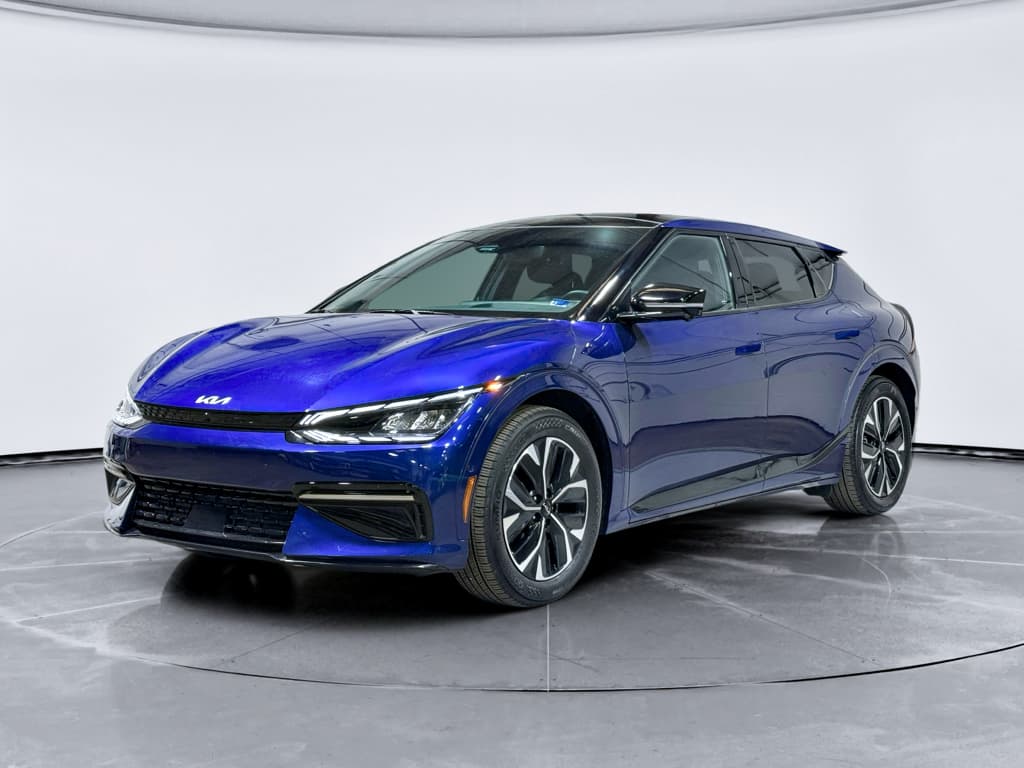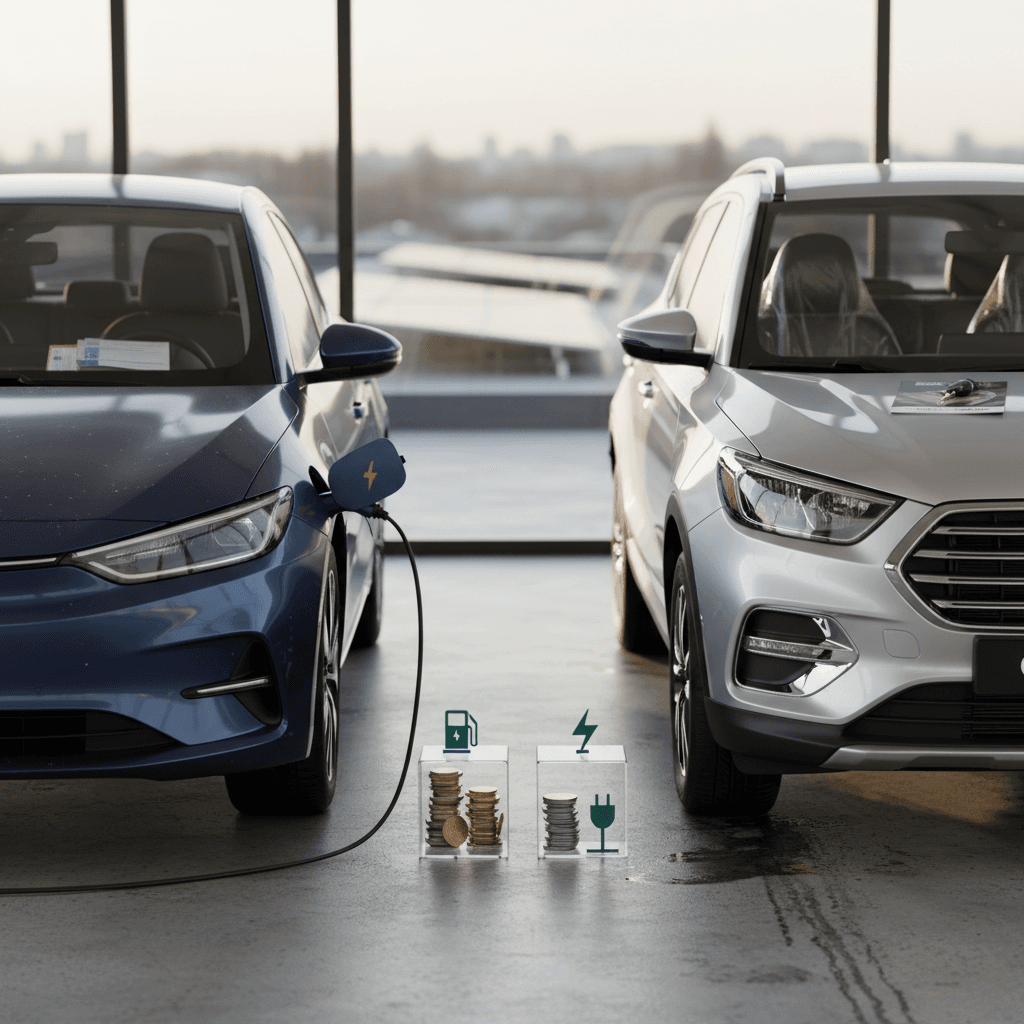
You’re staring at two very different options: a used electric car with a few years and miles on it, or a brand‑new gas car with that alluring new‑car smell. This used electric car vs new gas car cost comparison walks through real 2024–2025 numbers for price, fuel, maintenance, insurance, and resale so you can see which one actually leaves more money in your pocket.
What this guide compares
Why compare a used electric car vs a new gas car?
If you’re shopping on a budget, the realistic fork in the road often isn’t "new EV vs new gas car", it’s used EV vs brand‑new gas car for about the same monthly payment. New EV sticker prices are still higher than new gas cars on average, but used EV prices fell sharply in 2024 while used gas prices barely budged. That drop opened a window where a low‑mileage electric car can cost roughly what you’d spend on a base new gasoline sedan, but run dramatically cheaper once you start driving.
The question is whether the fuel and maintenance savings from a used EV outweigh concerns about battery life, depreciation, and charging access. To answer it, you need to look beyond the purchase price and into total cost of ownership, over five years at minimum.
Used EV vs new gas car: headline cost takeaways for 2025
Used EV vs new gas car: quick facts
Big picture
Upfront price: used EV vs new gas car
New EVs in the U.S. still sell for more than new gasoline cars. Recent data shows the average new EV price hovering around $55,000 while the average new gas car is closer to $48,000. That’s not the comparison most budget‑minded buyers are actually facing.
On the used side, though, the story flips. After a steep correction in 2024, many used EVs are now priced similarly to used gas cars in the same segments, and in some cases they’re cheaper. Well‑equipped used EVs from mainstream brands commonly show up under $25,000, and older city‑range models (think earlier Nissan Leaf, Chevy Spark EV) can dip well under $15,000.
Typical 2025 purchase prices: used EV vs new gas car
Approximate U.S. transaction prices for mainstream compact/midsize models in early 2025. Your local market will vary.
| Scenario | Example vehicle | Typical price range |
|---|---|---|
| Used mainstream EV (3–5 years old) | Chevy Bolt EV, Hyundai Kona Electric, Tesla Model 3 RWD (higher miles) | $18,000–$28,000 |
| New compact gas car | Honda Civic, Toyota Corolla, Hyundai Elantra | $24,000–$30,000 out the door |
| New midsize gas sedan | Toyota Camry, Honda Accord | $29,000–$36,000 out the door |
| Budget used EV (older, shorter range) | Early Nissan Leaf, BMW i3, Fiat 500e | $10,000–$18,000 |
Used EVs and new gas cars now overlap heavily in the $22,000–$30,000 zone.
Don’t forget used EV tax credits
Fuel costs: home charging vs the gas pump
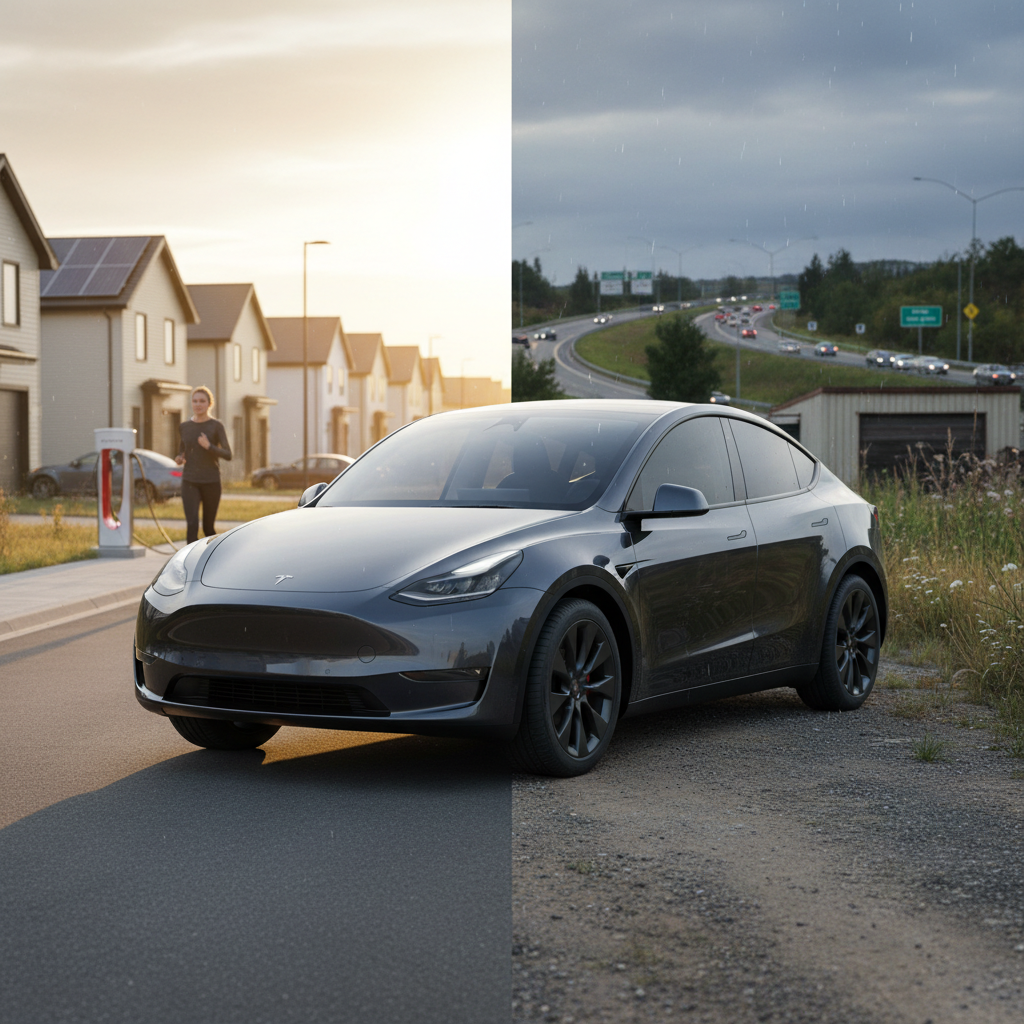
This is where the math gets lopsided. Using current U.S. averages, a typical EV charged at home costs about 3–4¢ per mile to drive. A comparable gas car sits nearer 13¢ per mile, assuming around $3.15 per gallon and roughly 26 mpg in mixed driving. Over 12,000 miles a year, that’s hundreds of dollars swinging one way or the other.
Fuel cost per mile: electric vs gas (2025 averages)
Illustrative numbers for compact/midsize cars driving 12,000 miles per year.
| Vehicle type | Energy use & price assumptions | Approx. cost per mile | Annual fuel cost (12,000 mi) |
|---|---|---|---|
| Used EV, mostly home charging | 30 kWh/100 mi, $0.17/kWh | ≈$0.05/mi | ≈$600 |
| Used EV, heavy DC fast charging | Higher fast‑charge rates blended with some home charging | ≈$0.08–$0.10/mi | ≈$960–$1,200 |
| New gas compact sedan | 26 mpg, $3.15/gal | ≈$0.12–$0.13/mi | ≈$1,500–$1,600 |
| Efficient hybrid gas car | 45–50 mpg, $3.15/gal | ≈$0.07/mi | ≈$840 |
EVs win big on fuel if you can charge at home; public fast charging narrows the gap but often still beats gas.
How to estimate your own fuel savings
Maintenance and repairs: where EVs quietly win
Modern EVs skip about half the moving parts in a gas car. There’s no engine oil, no spark plugs, no exhaust system, no timing belts, and far fewer fluids to change. Real‑world studies in 2024–2025 consistently show EV maintenance and repair spending running roughly 30–40% lower than for comparable gasoline cars over several years of ownership.
Typical maintenance differences: used EV vs new gas car
Routine care still matters, but there’s less to service on an EV.
Used electric car
- No oil changes or engine tune‑ups
- Brake pads last longer thanks to regenerative braking
- Fewer belts, pumps, and filters to replace
- Software updates can fix some drivability issues
New gas car
- Regular oil and filter changes (2–3 per year)
- Transmission service, spark plugs, belts over time
- More fluids (coolant, transmission, power steering)
- Exhaust system and emissions components to maintain
On a dollars‑and‑cents basis, many owners see an EV saving a few hundred dollars per year in routine maintenance compared with a gas car. Over five years, that’s easily another $1,000–$2,000 in the EV’s favor, and sometimes more if the gas car racks up out‑of‑warranty repairs.
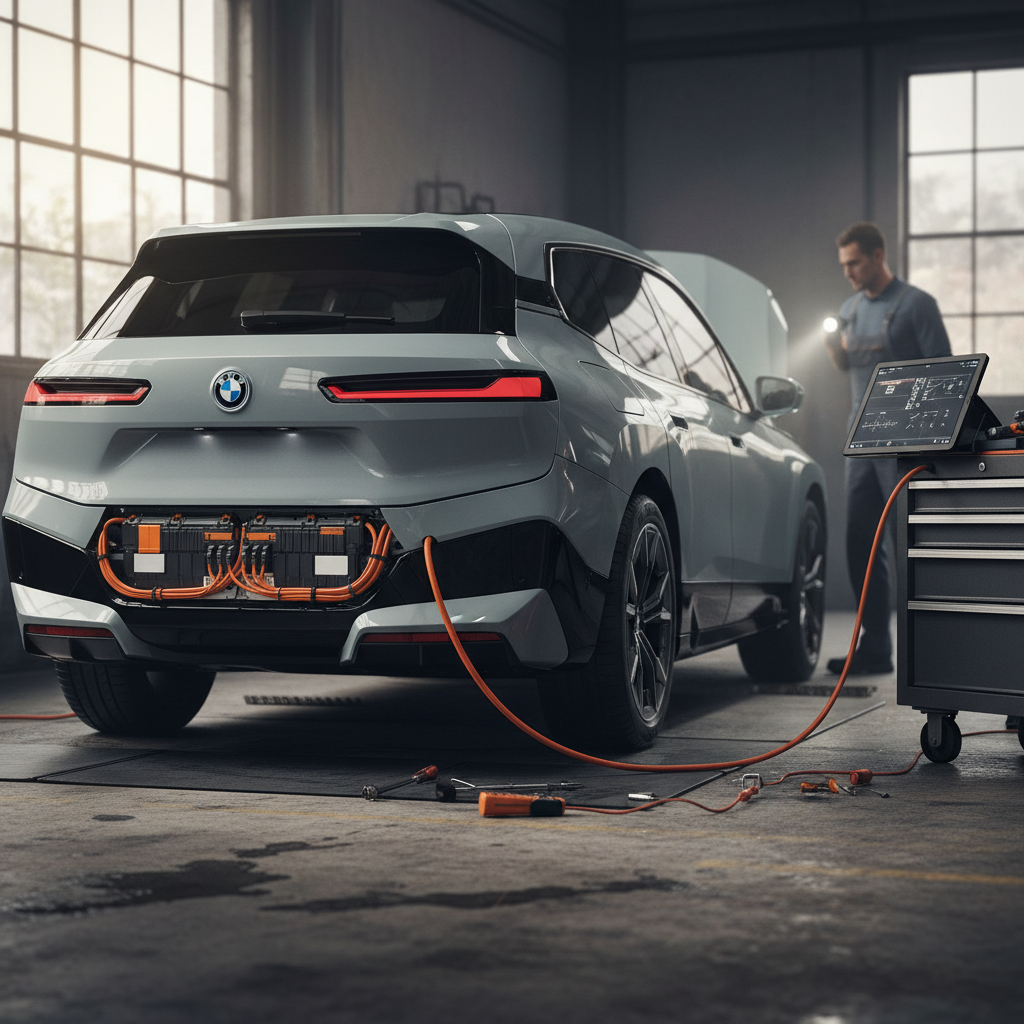
The big wild card: battery health
Insurance, fees, and EV-specific charges
Insurance is one area where EVs don’t always come out ahead. In many U.S. markets, EV premiums run 10–20% higher than comparable gas cars, thanks to pricier bodywork and limited repair capacity. If you’re cross‑shopping a used EV against a brand‑new gas car, though, that gap can narrow because you’re insuring a less‑expensive vehicle.
- Get real quotes for both vehicles before deciding; don’t guess based on averages.
- Check whether your state adds special EV registration fees to replace gas tax revenue.
- Factor in emissions testing: many EV owners skip those costs entirely, while gas cars may owe periodic testing fees.
Net effect on total cost
Depreciation and resale value: used EV versus new ICE
Depreciation, the way your car’s value falls over time, is where used EVs and new gas cars behave very differently. New EVs have been whipsawed by shifting incentives and rapid tech upgrades, which hurt their resale values in the short term. But once the first owner has taken that big hit, a well‑priced used EV often has much less room left to fall.
Used EV depreciation
- First owner absorbed the steepest drop as incentives and prices shifted.
- By 3–5 years old, many EVs have already lost 40–50% of original MSRP.
- If you buy at this stage and hold another 5 years, the remaining depreciation curve is gentler, especially for desirable models.
New gas car depreciation
- Still loses 20–30% of its value in the first two years, regardless of fuel type.
- Over five years, 40–50% total depreciation is common for mainstream sedans and crossovers.
- You’re the one eating that initial "drive‑off‑the‑lot" drop, even if costs stay predictable.
How to think about resale
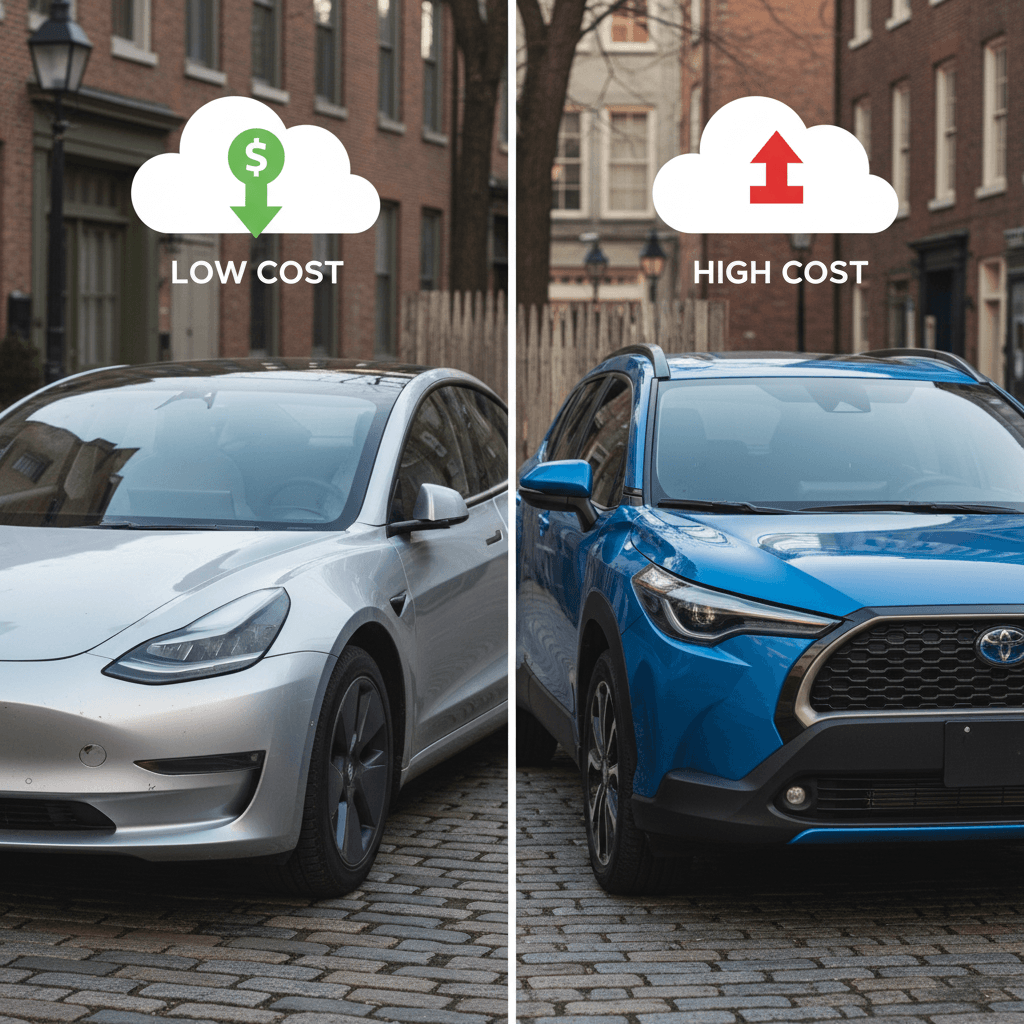
5‑year cost comparison: real‑world example
Let’s put numbers to a very common crossroads: you can afford either a lightly used electric hatchback or sedan, or a brand‑new compact gas car. We’ll keep it simple and use round numbers for a 5‑year, 60,000‑mile ownership window.
Sample 5‑year cost: used EV vs new gas car (60,000 miles)
Illustrative example using 2025‑ish U.S. averages. Your exact results will depend on local prices and specific models.
| Cost item | Used electric car (3‑4 yrs old) | New compact gas car |
|---|---|---|
| Purchase price (before any used EV tax credit) | $24,000 | $26,000 out‑the‑door |
| Estimated value after 5 years | $12,000 | $13,000 |
| Depreciation cost | $12,000 | $13,000 |
| Fuel cost (60,000 mi) | $3,000 (5¢/mi) | $7,500 (12.5¢/mi) |
| Routine maintenance & minor repairs | $2,000 | $3,500 |
| Insurance (5 years) | $7,500 | $7,000 |
| Registration, fees, taxes | Similar ballpark; may include EV fee in some states | Similar ballpark |
| Total 5‑year ownership cost (approx.) | $24,500 | $31,000 |
Even with slightly higher insurance, the used EV pulls ahead once fuel and maintenance are included.
What the example shows
When a used EV makes more financial sense
Signs a used EV will beat a new gas car on cost
If several of these sound like you, the numbers tend to favor the EV.
You can charge at home
You drive a lot
You pick a strong‑battery car
You don’t need 400 miles of range
You plan to keep it 5+ years
You value quiet, smooth driving
When a new gas car can still come out ahead
There are situations where a new gas car is still the more rational choice, at least for now. The key is being honest about how and where you drive.
Scenarios where a new gas car may be smarter
1. You can’t reliably charge at home
If you live in a dense urban area or rent without guaranteed parking or charging, relying solely on public chargers can erase much of an EV’s cost advantage and add hassle.
2. Your driving is extremely unpredictable
If you do frequent long‑distance, last‑minute trips far from major charging corridors, a gas car’s quick refueling and universal availability may save you time and stress.
3. Local electricity prices are sky‑high
In a few regions, residential electricity rates are elevated while gasoline is relatively cheap, narrowing the EV fuel savings. Always run your own local numbers.
4. You qualify for aggressive gas discounts
Some drivers get fleet fuel cards, company gas reimbursement, or heavy rewards stacking at certain stations. That can partially offset the EV’s low energy costs.
5. The only affordable EVs don’t fit your life
If the used EVs in your budget have ranges or cargo space that simply don’t work for your family, the most economical choice is the one that prevents you from needing a second car.
How to shop smart for a used EV (and avoid bad batteries)
If this used electric car vs new gas car cost comparison has you leaning electric, the next step is buying the right used EV. The mission is simple: maximize savings while minimizing risk, especially around battery health.
Used EV buyer’s checklist: cost‑smart moves
1. Look beyond the sticker price
Compare total monthly cost, not just payments: add estimated electricity, insurance, and a maintenance buffer. A slightly higher purchase price can still mean lower total cost.
2. Demand real battery‑health data
Don’t rely on guesswork or generic range estimates. Ask for a <strong>battery health report</strong> or a platform like Recharged’s <strong>Recharged Score</strong>, which quantifies usable capacity and previous fast‑charging behavior.
3. Check remaining battery warranty
Many EVs carry 8–10 year battery warranties with mileage caps. A 4‑year‑old EV with 4–6 years of coverage left can be a sweet spot for value and peace of mind.
4. Verify charging hardware and cable condition
Inspect charge ports and cables for corrosion or damage, test Level 2 charging if possible, and confirm any included adapters match the networks you plan to use.
5. Factor in home charging setup
If you’ll install a Level 2 charger, include that $800–$1,500 (installed) in your total math, or choose a home that already has adequate electrical capacity.
6. Use EV‑savvy marketplaces
Shopping through an EV‑focused retailer like <strong>Recharged</strong> means every car includes a verified battery health report, transparent pricing, and support from specialists who live and breathe electric cars.
Avoid this used EV mistake
FAQs: used electric car vs new gas car cost comparison
Frequently asked questions
Bottom line: is a used EV cheaper than a new gas car?
When you stack everything up, purchase price, fuel, maintenance, insurance, and depreciation, a well‑chosen used electric car is very often cheaper to own than a brand‑new gas car in 2025, especially if you can charge at home and drive a typical 10,000–15,000 miles per year. The longer you keep the car and the more you drive it, the more those lower running costs compound in your favor.
A new gas car can still make sense if you’re locked out of home charging or your life demands truly go‑anywhere range at a moment’s notice. But for many shoppers, the smart money move is to let someone else pay for the new‑car smell and take advantage of today’s softer used EV prices and robust battery warranties.
If you’re ready to run the numbers on real cars, not just examples, explore used EV listings with full Recharged Score battery reports, fair‑market pricing, and support from EV specialists who can help you decide what actually fits your budget and your life.