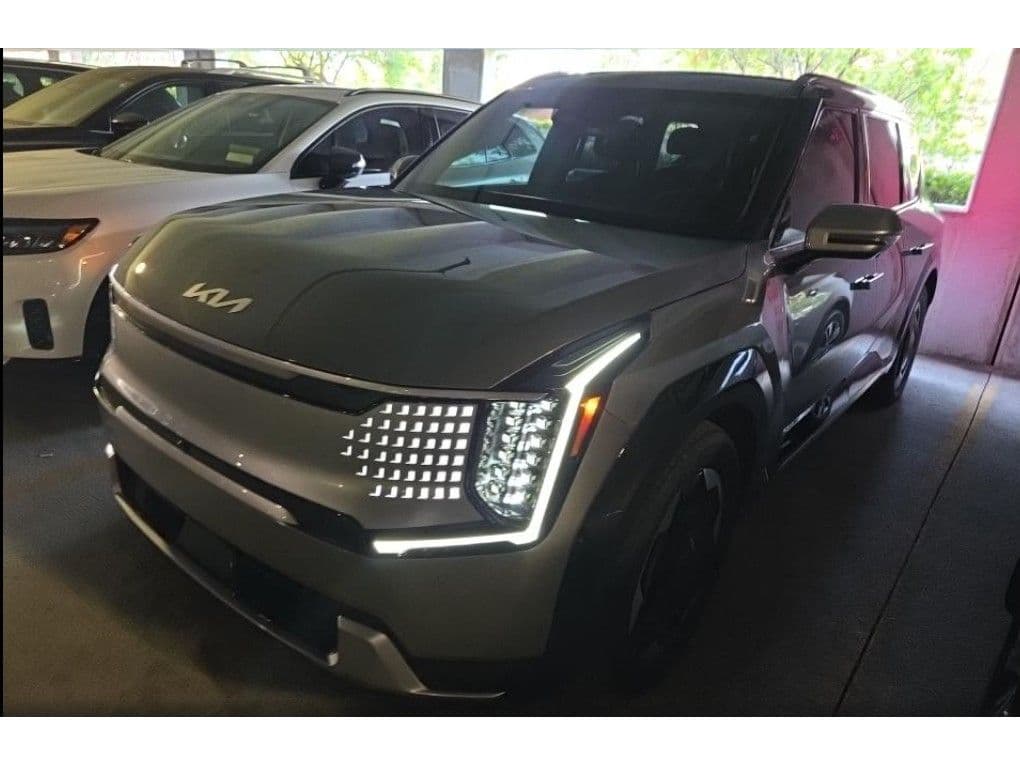
If you want a **three-row electric SUV** today, your short list almost always includes the Volvo EX90 and the Kia EV9. Both promise real family space, strong safety tech, and decent towing, without burning a drop of fuel. But they take very different approaches to price, luxury, and long‑term ownership. This guide breaks down Volvo EX90 vs Kia EV9 in plain language so you can decide which fits your life (and budget), including if you’re planning to buy used.
Two EVs, very different missions
Overview: Volvo EX90 vs Kia EV9 for U.S. shoppers
Volvo EX90 vs Kia EV9: key numbers at a glance
Think of the **Volvo EX90** as the electric successor to the XC90: a large, quiet, tech‑heavy luxury SUV with a strong safety narrative and a price to match. U.S. models ship with dual‑motor all‑wheel drive and a big battery aimed at long‑range comfort touring rather than off‑road antics.
The **Kia EV9** plays the same basic role as a Telluride replacement in Kia’s lineup: a versatile, family‑oriented three‑row SUV, but electric. It undercuts the EX90 on price, offers a wide spread of trims from basic to near‑luxury, and already shows up in meaningful numbers in the used market.
Trim names change, fundamentals don’t
Pricing and value: luxury badge vs mainstream efficiency
Typical new‑vehicle pricing (U.S., 2025–2026 model years)
MSRP ranges before destination, tax, incentives, or dealer discounts. Used prices will be lower and depend heavily on mileage, condition, and market timing.
| Model | Typical starting MSRP | Upper trims | Positioning |
|---|---|---|---|
| Volvo EX90 | Around $79,995+ for Twin Motor | Low‑ to mid‑$80k+ for Performance/lux trims | Luxury three‑row EV SUV |
| Kia EV9 | Mid‑$50k for Light/Light Long Range | Low‑ to mid‑$70k for GT‑Line / maxed trims | Mainstream three‑row EV SUV |
Always confirm current pricing and incentives locally; EV pricing is changing quickly.
On price, **Kia EV9 wins decisively**. A well‑equipped mid‑trim EV9 often lands where the EX90 effectively starts. That price delta reflects the brands’ positions: Volvo leans into luxury materials, advanced driver‑assist hardware (including roof‑mounted lidar on many builds), and a quieter, more insulated cabin. Kia leans into value, standard equipment, and long warranty coverage rather than a prestige badge.
When EX90’s price makes sense
- You want a luxury‑branded family EV and would otherwise be cross‑shopping BMW iX, Mercedes EQE SUV, or Rivian R1S.
- You value Volvo’s safety story and lidar hardware more than hitting the lowest payment.
- You prefer a calmer, minimalist Nordic interior and are willing to pay for it.
When EV9’s price is hard to ignore
- You just need a spacious, capable three‑row EV with decent range and towing at the best price.
- You’d rather spend less up front and keep headroom for home charging upgrades, road‑trip accessories, or a nicer trim.
- You’re planning to buy used, where EV9 volumes are higher and depreciation can work in your favor.
Watch real‑world transaction prices
Range, battery, and charging speed compared
- Volvo EX90: large battery (around 107–111 kWh usable), dual‑motor AWD only in the U.S., EPA range expected in the low‑ to mid‑300‑mile band depending on wheels and trim.
- Kia EV9: multiple battery options and RWD/AWD configurations, with EPA ranges roughly from the low‑230s up to around 300+ miles, again heavily dependent on wheel size and trim.
On paper, both vehicles can cover a typical U.S. commuting week on a single charge. In the real world, the **EV9 tends to be a bit more efficient per kWh**, especially in rear‑wheel‑drive, smaller‑wheel trims. The EX90 counters with a slightly larger pack and a strong focus on comfort and refinement at highway speed.
Charging experience: Volvo EX90 vs Kia EV9
Both are capable road‑trip EVs, but their charging ecosystems feel different in practice.
Volvo EX90 charging
- High‑power DC fast‑charging (roughly 30 minutes 10–80% under ideal conditions).
- Native support for major public networks via apps and built‑in route planning.
- Home AC charging up to typical Level 2 rates (11 kW) with a 240V setup.
Volvo leans on a polished in‑car interface and safety‑first charge management rather than headline peak numbers.
Kia EV9 charging
- Strong DC fast‑charging performance; long‑range trims can add substantial miles in ~25–30 minutes 10–80% when plugged into a high‑output DC fast charger.
- Today’s U.S. EV9s use a CCS port but include or support NACS adapters, opening up Tesla Supercharger access as the network transitions.
- Similar 11 kW Level 2 capability at home.
Kia’s 800V‑class architecture on higher‑spec EV9s is built for fast road‑trip charging when conditions cooperate.
Don’t over‑optimize for the fastest theoretical charge
Space, comfort, and family usability
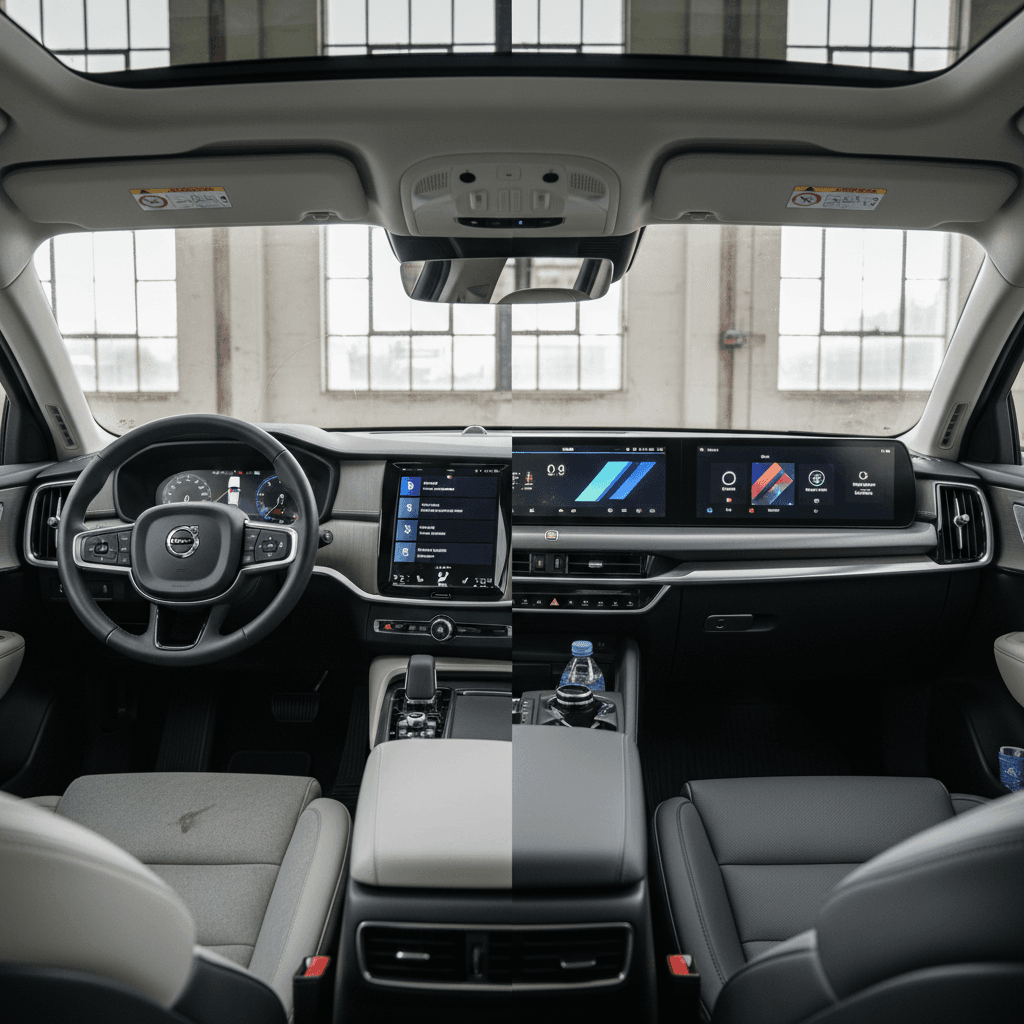
Interior philosophy: Scandinavian lounge vs family utility
Both seat seven, but they feel very different inside.
Volvo EX90 cabin
- Minimalist, airy design with **light color palettes** and sustainable materials.
- Emphasis on silence and isolation; road and wind noise are well‑suppressed.
- Front seats feel like classic Volvo: supportive, long‑distance‑friendly.
- Third row is usable for kids and shorter adults on shorter trips, similar to XC90.
Kia EV9 cabin
- More conventional SUV layout with clearly defined trims, from practical cloth to upscale leather‑like materials.
- Second‑row options include bench or captain’s chairs; some trims offer reclining "lounge" seats.
- Third row is similar in usefulness to the EX90, with a slightly more **family‑friendly vibe** than luxury ambience.
- Cabin storage, cupholders, and kid‑friendly details are thoughtfully executed.
If you’re looking for a **rolling living room** that happens to have three rows, the EX90’s material quality and calming design clearly stand out. If you’re more concerned about spilled juice boxes, muddy cleats, and easy‑to‑clean surfaces, the EV9’s mainstream focus and lower repair/trim costs can be reassuring.
Car‑seat and kid‑hauling reality check
Towing and utility: which is the better workhorse?
Towing and utility: Volvo EX90 vs Kia EV9
Maximum specs assume factory towing packages and proper equipment; always confirm the specific vehicle you’re considering.
| Metric | Volvo EX90 | Kia EV9 |
|---|---|---|
| Max rated tow capacity | Up to 5,000 lb (properly equipped) | 2,000–5,000 lb depending on trim and package |
| Drive layout | Dual‑motor AWD only (U.S.) | RWD or AWD depending on trim |
| Hitch & wiring | Factory package available; confirm on used vehicles | Factory tow package on higher trims; some lower trims limited to 2,000 lb |
| Roof load | Useful for roof boxes/bikes; check exact spec by wheelbase and roof option | Also supports boxes/racks; payload varies by trim and wheels |
Remember that towing with any EV significantly reduces range, often by 40–50% at highway speeds.
In practice, **both the EX90 and EV9 are among the more capable towing EVs** on the market today, especially for families towing campers, small boats, or utility trailers within a few hundred miles of home. The EX90 leans into stable, confidence‑inspiring towing manners and big‑battery range. The EV9 counters with flexible trims and a clear two‑tier towing story: base Light trims limited to around 2,000 lb, higher trims with the tow package rated up to 5,000 lb.
EV towing reality: plan for half the range
Towing checklist for EX90 and EV9 shoppers
1. Verify factory tow package
Look for a factory hitch, wiring connector, and (on some trims) self‑leveling rear suspension. Aftermarket hitches may not preserve the published tow rating.
2. Confirm actual tongue weight needs
Both SUVs have tongue‑weight limits. Add up your trailer’s tongue weight plus bikes, cargo boxes, and anything hanging off the hitch.
3. Match trim to trailer weight
With the EV9 in particular, Light trims have lower tow ratings. If you know you’ll be near 4,000–5,000 lb, shop higher trims with the full tow package.
4. Check payload and passengers
Towing capacity doesn’t include people or cargo. A full cabin and loaded cargo area can eat up payload quickly in any EV.
Tech, safety, and driving experience
Volvo EX90: safety‑first flagship
- Standard dual‑motor AWD and strong power, tuned for smoothness over drama.
- Volvo’s latest driver‑assistance stack with roof‑mounted lidar on many configurations, dense sensor coverage, and an emphasis on crash avoidance.
- Clean Google‑based infotainment with built‑in Google Maps, Assistant, and Play; OTA updates for features and efficiency tweaks.
- Driving character: calm, dense, and secure. Feels like a modern XC90 translated into EV form, with instant torque but restrained theatrics.
Kia EV9: tech‑forward and configurable
- Multiple power levels from efficient RWD to punchy dual‑motor AWD; GT‑Line trims feel genuinely quick for a big three‑row.
- Comprehensive driver‑assist suite (Kia Drive Wise) with highway assist, lane centering, and smart cruise. Not as sensor‑overbuilt as EX90, but very competitive in its class.
- Wide screens, customizable UI, and a more conventional infotainment layout; OTA updates are rolling out progressively.
- Driving character: lighter on its feet than you expect, with a bit more willingness to show off its power, especially in sportier trims.
If you want your three‑row EV to feel like a rolling tech demo, the Kia EV9 feels surprisingly close to premium brands for far less money. If you want your three‑row EV to feel like the safest, calmest place your family could be, the EX90 is laser‑targeted at you.
Advanced driver‑assist ≠ self‑driving
Ownership costs, incentives, and used-market outlook
One of the biggest differences between Volvo EX90 vs Kia EV9 isn’t obvious on a spec sheet: **total cost of ownership** over 5–10 years. Here, Kia’s mainstream positioning and warranty structure are a real asset, while Volvo brings a luxury badge and a more complex sensor suite.
Key ownership‑cost factors
Beyond the sticker price, consider what it’s like to live with each over time.
Maintenance and repairs
- Both EVs avoid oil changes and many traditional wear items, but tires, brakes, and suspension components still matter, especially on heavy three‑row SUVs.
- Volvo’s parts and labor rates tend to be **higher**, in line with other luxury brands.
- Kia’s warranty is among the strongest in the business and helps cap risk in the early ownership years.
Depreciation and used values
- Luxury EVs like the EX90 can depreciate faster in dollar terms, but may maintain stronger percentage residuals depending on incentives and leasing support.
- EV9’s lower starting point and higher sales volumes mean more used inventory and more price competition over time.
- For value‑focused buyers, a 2–4‑year‑old EV9 may represent a particularly strong sweet spot.
Factor in incentives and charging perks
Who should choose Volvo EX90 vs Kia EV9?
Quick decision guide: which three-row EV fits you?
Use this as a starting point, then refine based on trims, options, and local pricing.
Choose Volvo EX90 if…
- You want a luxury‑branded flagship family EV with a strong safety narrative.
- A calm, minimalist cabin and excellent NVH (noise, vibration, harshness) matter more than the lowest price.
- You’re okay paying extra for lidar‑equipped driver‑assist hardware and Volvos’ interior design choices.
- You mainly tow or road‑trip within a few hundred miles and value a big battery and refined ride over raw efficiency.
Choose Kia EV9 if…
- You want **maximum space and capability per dollar** with a long warranty.
- You’re open to a mainstream badge and prefer lower payments or a more loaded trim for the same money.
- You tow occasionally and can pick the right trim/tow package for your needs.
- You plan to buy used and want a larger pool of vehicles, more price competition, and easier nationwide service access.
Be honest about how often you’ll use row three and the hitch
How Recharged helps you shop used EX90 and EV9 confidently
As more early EX90s and EV9s enter the used market, the gap between a **good deal** and a **problem child** widens. Battery health, fast‑charge history, and how the vehicle was used (including towing) all matter a lot more than on a typical gas SUV. That’s where Recharged is built to help.
- Every vehicle on Recharged comes with a Recharged Score Report that includes verified battery health and fair market pricing, so you’re not guessing how much real‑world range you’re buying.
- Our EV‑specialist team can help you compare a used Volvo EX90 vs Kia EV9 in practical terms: charging at your home, your commute patterns, and your occasional towing or road‑trip needs.
- You can get an instant offer or consignment if you’re trading out of another EV or ICE SUV, and line up financing and nationwide delivery in a fully digital experience.
- If you’re near Richmond, VA, you can visit the Recharged Experience Center for hands‑on help and to test how these big three‑row EVs feel in person.
Why battery health matters more than window‑sticker range
Ready to find your next EV?
Browse VehiclesVolvo EX90 vs Kia EV9: FAQ
Frequently asked questions about Volvo EX90 vs Kia EV9
Volvo EX90 vs Kia EV9 isn’t a question of right or wrong, it's a question of priorities. If you want a cocoon‑like luxury flagship with a safety‑first mission, the EX90 is the more coherent product. If you want maximum real‑world capability per dollar with a deep bench of trims and a strong warranty, the EV9 makes a powerful case. Either way, treating battery health, charging access, and real‑world use cases as first‑class purchase criteria, and leveraging tools like the Recharged Score when you shop used, will matter far more in the long run than a few miles of rated range on a spec sheet.