If you’re eyeing a 2022 Rivian R1S, or already own one, you’ve probably heard about early-build glitches, repeat recalls and the occasional horror-story service visit. At the same time, plenty of owners report tens of thousands of trouble‑free miles. So where does the truth land, and how worried should you be about 2022 Rivian R1S problems?
A first-year SUV from a first-time automaker
Overview: Should you worry about 2022 Rivian R1S problems?
The good news
- Electric powertrain and battery have few systemic failures reported so far.
- Most issues are fixable under warranty, often via over‑the‑air software updates.
- Ride, performance and cabin feel are genuinely premium when everything’s working.
The not‑so‑good news
- By 2026, the 2022 R1S has accumulated around a dozen NHTSA recalls, from seat belts to suspension fasteners.
- Owners report suspension clunks, half‑shaft and damper replacements, plus water leaks and rattles.
- Software quirks, frozen screens, flaky digital keys, are common, if not universal.
Big picture: the 2022 R1S doesn’t appear to be a disaster, but it’s also not a Toyota Land Cruiser. You’re trading some early‑generation headaches for a wildly capable, high‑character EV SUV. The key is going in with eyes open, and, if you’re buying used, with a very good inspection.
How reliable is the 2022 Rivian R1S overall?
2022 Rivian R1S reliability snapshot
On paper, reliability data sends a mixed message. Consumer Reports pegs the 2022 R1S at roughly average reliability, but notes an unusually high number of recalls for such a young vehicle. At the same time, forums are full of owners with 40,000–80,000 miles and almost no unscheduled repairs, parked right next to threads about repeat suspension work and month‑long service center stays.
If you’re accustomed to the ruthless bulletproofing of Japanese luxury SUVs, the 2022 R1S may feel a little wild‑west. If you’ve lived through early‑run Teslas or German luxury crossovers, the ownership pattern will feel familiar: occasional drama, usually followed by a service visit and a software update.
Recall history for the 2022 Rivian R1S
By February 2026, the 2022 R1S has been the subject of roughly a dozen NHTSA recall campaigns. That sounds alarming until you remember how modern recalls work: they’re often pre‑emptive, sometimes software‑only, and they’re now routine for almost every new EV brand.
Key 2022 Rivian R1S recall themes
This is not an exhaustive list, but it highlights the problem areas you should ask about when shopping a used R1S.
| Area | Example issue | Risk if unfixed | Typical fix |
|---|---|---|---|
| Seat belts & airbags | Passenger seat belt retractor or anchor may be mis‑built, affecting airbag behavior or crash restraint. | Improper restraint or airbag deployment in a crash. | Replace seat belt components and verify airbag system; free under recall. |
| Steering & suspension fasteners | Upper control arm–steering knuckle fastener may have been under‑torqued at the factory. | Potential separation and loss of steering control. | Inspect and re‑torque or replace hardware. |
| Rear suspension toe link | Toe link joint may have been reassembled improperly after service between 2022–2025. | If the joint separates, rear wheel alignment can change abruptly, risking a crash. | Reinspect toe link joints; replace components and use updated procedure. |
| Warning labels & compliance items | Child seat or tire information labels printed incorrectly. | Mainly regulatory non‑compliance, not mechanical danger on its own. | Replace labels, verify documentation. |
| Software & driver‑assistance | Various campaigns to update stability control, driver‑assist logic or instrument‑cluster behavior. | In rare cases, may increase crash risk or blank displays. | Over‑the‑air or service‑center software update. |
Always run a VIN through NHTSA’s database to see which recalls apply and whether they’ve been completed.
VIN check is non‑negotiable
Common mechanical issues: suspension, steering & driveline
The R1S rides on an ambitious air‑suspension and adaptive‑damper setup, with powerful electric motors and heavy curb weight. When something in that orchestra goes out of tune, you hear it.
Most talked‑about 2022 R1S mechanical problem areas
Not every vehicle will see these, but they’re the patterns that show up again and again in owner reports.
Front suspension clunks
Owners sometimes report clunks, pops or knocks from the front end, especially at low speeds or over driveways.
- Often traced to half‑shafts, control‑arm bushings or dampers.
- Rivian has updated parts and procedures; some vehicles receive new front dampers or arms.
Half‑shaft & driveline noise
Repeated mentions of clicking or shudder under acceleration, especially at low speed or in certain suspension heights.
- Some owners have had half‑shafts replaced more than once.
- Others report the noise as mostly cosmetic and unchanged over tens of thousands of miles.
Water leaks & air‑suspension alerts
A smaller but concerning subset of owners report water under floor mats or air‑suspension warnings.
- Water often traced to A/C drain routing or door seals.
- Suspension warnings can stem from sensors, wiring or air‑spring hardware; sometimes minor, sometimes requiring parts replacement.
How to test drive for hidden suspension issues
Software glitches, screens and digital key issues
Rivian leans heavily on software. Almost every system, from climate to drive modes to door locks, runs through the twin displays and smartphone app. When that software misbehaves, the whole truck feels haunted.
- Occasional frozen center screen or instrument cluster that requires a reboot.
- Digital phone key that won’t reliably unlock or start the vehicle, or proximity lock/unlock that’s inconsistent.
- Random warning messages for suspension or driver‑assist systems that clear after sleep/reboot but come back intermittently.
- Over‑the‑air updates that add features but sometimes introduce new bugs.
The upside of an all‑digital SUV
Still, this is not a set‑and‑forget analog SUV. If you buy a 2022 R1S, plan on living with the occasional reboot, and verify that the previous owner kept it current on software updates.
Comfort, HVAC noise and build-quality complaints
Mechanically, the R1S is sophisticated; cosmetically, it still shows its startup roots. The common theme: the big stuff is solid, the small stuff sometimes feels rushed.
Comfort & build complaints you’re likely to see
These won’t strand you, but they will affect how “premium” the R1S feels day to day.
Loud A/C in hot weather
One of the most frequent comfort complaints: with the cabin over ~90°F and the system in Auto, the compressor can sound like an industrial chiller.
Some owners have had compressors or lines replaced; others are told the noise is “within spec.” Either way, it can make summer drives feel less refined.
Panel gaps & trim alignment
Early 2022 builds in particular show inconsistent panel gaps, misaligned doors and fussy trim.
Most of this is cosmetic, but bad weather seals can contribute to wind noise or leaks. A later‑build 2022 or a truck that’s had careful warranty adjustments will generally look and feel tighter.
Rattles & interior noises
Because the R1S is quiet and electric, any dash or cargo‑area rattle is instantly obvious.
Service centers will usually chase these under warranty, but budget time for at least one visit if you’re sensitive to noises.
Battery, range and charging: real-world feedback
For all the attention on recalls and suspension, the R1S’s battery and motors have been relatively drama‑free so far. That’s the good news. The less good news is that you shouldn’t expect brochure range, especially if you drive it like the performance SUV it is.
- Most owners see 10–25% less than the 316‑mile EPA figure in mixed real‑world use, especially on highway trips at U.S. speeds.
- Cold weather and big wheels/tires can knock another 10–20% off effective range.
- Fast‑charging speeds are competitive but not class‑leading; plan your road trips accordingly.
- There are very few reports of catastrophic battery failures on 2022 trucks so far; Rivian’s coolant and pack design appear robust in early life.
How to test range and charging before you buy
As with any used EV, battery health is the million‑dollar question, especially on a heavy, powerful SUV. At Recharged, every vehicle comes with a Recharged Score battery‑health report, so you’re not guessing about pack degradation or previous fast‑charge abuse.
What ownership and service are really like
Scan the Rivian forums and you’ll see two parallel universes. In one, owners gush about the best vehicle they’ve ever driven, a truck that shrugs off road trips and off‑road adventures. In the other, people are on their third set of half‑shafts and know their local service staff on a first‑name basis.
The upsides
- Mobile service can handle many issues in your driveway, from trim fixes to minor hardware swaps.
- Service advisors often have wide latitude to make things right, especially on early trucks.
- Over‑the‑air updates mean fewer trips to the center for software fixes.
The downsides
- Service centers are concentrated in major metros; many owners face long drives and long waits.
- Parts backlogs, especially for suspension and trim pieces, can stretch repairs into weeks.
- A few unlucky owners report serial repairs, the same system being fixed multiple times before it sticks.
Service availability matters more than usual
Shopping a used 2022 Rivian R1S: inspection checklist
If you’re shopping used, this is where you earn your peace of mind. A 2022 R1S can be a spectacular value, if you separate the well‑sorted trucks from the rolling beta tests.
2022 Rivian R1S pre‑purchase checklist
1. Run a full recall & service‑history check
Ask for a printout showing all recall campaigns and warranty work, plus a Carfax or similar report. You’re looking for <strong>completed safety recalls</strong> and any repeated repairs (especially suspension, half‑shafts and dampers).
2. Inspect suspension, tires and alignment
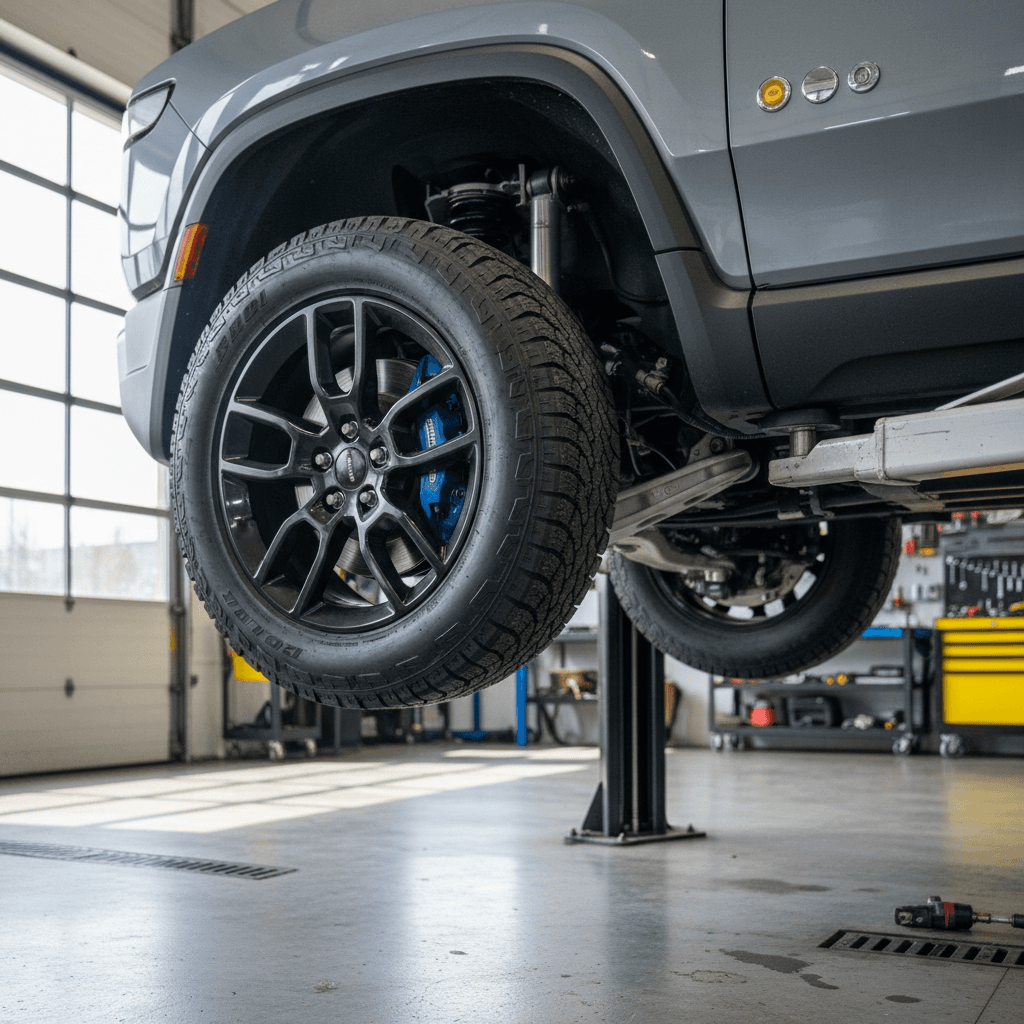
Uneven tire wear, steering pull or a truck that feels darty on the highway can point to <strong>alignment or toe‑link history</strong>. On a lift, check for fresh hardware, bent arms or leaking shocks.
3. Test every software‑dependent feature
Lock/unlock with each key type, start with the phone key, adjust all drive modes and suspension heights, run the HVAC hard in Auto, and try driver‑assist features. <strong>Any glitches you see on a short test drive will be daily annoyances</strong> later.
4. Look for water intrusion and trim issues
Pull up floor mats, especially in the driver footwell and cargo area, and feel for damp carpet or staining. Check door and hatch seals for damage, and listen for excessive wind noise at 60–70 mph.
5. Validate battery health and charging behavior
Check current software, recent range data and, if possible, a third‑party or dealer battery‑health report. At Recharged, the <strong>Recharged Score</strong> packages this into a clear battery‑health grade so you’re not guessing.
6. Confirm warranty and extended‑coverage options
Confirm how much of the original Rivian warranty remains, and what extended coverage is available. On a first‑generation vehicle with complex air‑suspension and electronics, <strong>good coverage is worth real money</strong>.
When to negotiate hard, or walk away
Not every flaw is a deal‑breaker. This is a high‑tech, low‑volume SUV, not a mass‑market crossover. Some squeaks and software quibbles come with the territory. But there are patterns that should either lower the price or send you on to the next listing.
- Walk away from any truck with unresolved safety recalls, obvious suspension clunks combined with uneven tire wear, evidence of significant water intrusion, or a history of repeated major repairs that never seem to stick.
- Negotiate hard on vehicles with cosmetic panel‑gap issues, a few one‑off warranty repairs, minor interior rattles or easily reproducible but non‑safety‑critical software quirks. Those are leverage, not necessarily red flags.
- Pay up a little for a later‑build 2022 with clean records, fully up‑to‑date software, clear documentation of recall work and a recent battery‑health report. That’s the sweet spot in the current used market.
Where Recharged fits into this picture
Ready to find your next EV?
Browse VehiclesFAQ: 2022 Rivian R1S problems answered
Frequently asked questions about 2022 R1S issues
Bottom line: is a 2022 R1S a smart buy?
The 2022 Rivian R1S is not the safe beige choice, and it doesn’t pretend to be. It’s a first‑generation electric adventure SUV from a young automaker, and it behaves exactly like that: brilliant, occasionally glitchy, and deeply satisfying when it all comes together.
If you want seamless anonymity and dealer density on every corner, there are other three‑row SUVs with your name on them. If you want a family hauler that can rip to 60 like a sports car, wade a river crossing on Saturday, and commute in eerie silence on Monday, the 2022 R1S is still in rare company, just be ready to do your homework.
For used‑market shoppers, the playbook is simple: insist on documentation, scrutinize the suspension, verify software and battery health, and price in the realities of Rivian service access. Do that, and a 2022 Rivian R1S can be less a problem child and more a long‑term co‑conspirator in whatever road trip, ski weekend or school‑run chaos you throw at it.
And if you’d like a guide on that journey, Recharged is built for exactly this kind of decision, helping you cut through the noise, understand the real‑world trade‑offs, and find an EV that fits your life, not just the spec sheet.