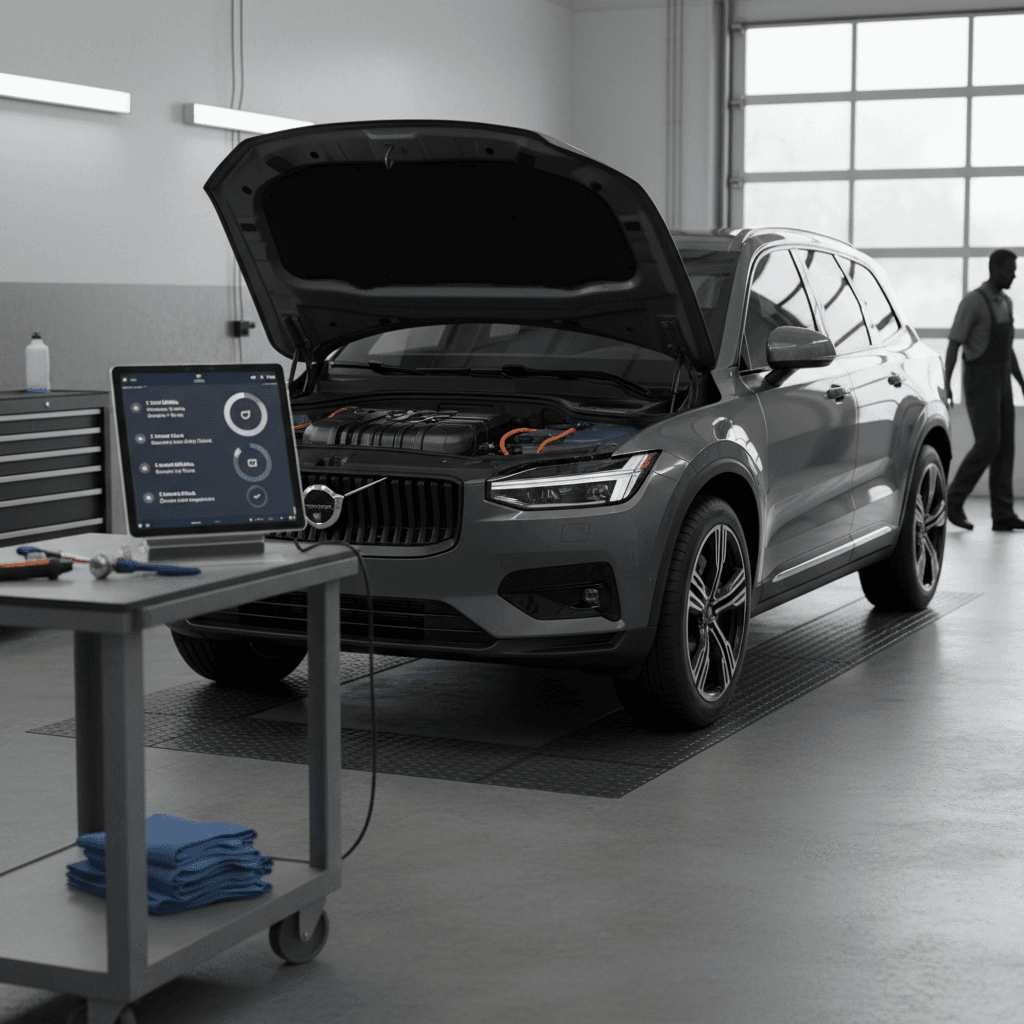
The Volvo EX90 service schedule is simpler than a gas SUV’s, but it still matters. Regular inspections, tire care, and timely fluid changes keep your big three-row EV safe, efficient, and easier to sell or trade later, especially as more used EX90s enter the market.
Quick context for U.S. owners
Volvo EX90 service schedule overview
At a high level, you can think of the EX90’s maintenance in three buckets: annual safety/inspection visits, brake fluid service every few years, and occasional deep-dive checks on suspension and cooling systems. There’s no engine oil to change, and major battery components are covered by a long separate warranty.
Key Volvo EX90 maintenance highlights
How this guide is structured
Factory maintenance, warranty, and free service
Before you worry about long-term costs, it helps to understand what’s included when the EX90 is new. Volvo’s U.S. warranty and maintenance programs are designed to cover the early years when you’re still learning the vehicle.
- New Vehicle Limited Warranty: typically 4 years or 50,000 miles, covering most repairs due to defects.
- High-voltage battery warranty: usually up to 8 years or 100,000 miles against excessive capacity loss or defects (exact terms vary by model year).
- Complimentary factory scheduled maintenance: commonly 3 years or 36,000 miles of basic scheduled service on new Volvos, which aligns with early inspection intervals.
- Roadside assistance: often bundled for the same timeframe as the new-vehicle warranty.
Model-year differences matter
If you’re buying a used EX90, ask whether any of that complimentary maintenance or battery warranty time is still active. At Recharged, every EX90 listing includes a Recharged Score Report that highlights warranty coverage and past dealer service history when available, so you’re not guessing.
Volvo EX90 service intervals at a glance
Volvo publishes detailed maintenance sheets for each fully electric model (EX30, EC40, EX40, EX90). Those factory sheets group work into 20,000‑mile blocks, but in practice U.S. dealers will usually see you about once a year and align checks with your mileage and time in service.
Approximate Volvo EX90 service schedule (U.S.)
Use this as a planning guide. Always follow your owner’s manual and in-car reminders for exact timing.
| Mileage / Time | Primary focus | Typical actions |
|---|---|---|
| Every 10,000–12,000 miles or 12 months | Basic safety & tires | Multi-point inspection, tire rotation, fluid checks, wiper and lighting check, software/recall review |
| Every 20,000–24,000 miles or ~2 years | Cabin air & brakes | All of the above plus cabin air filter replacement and more detailed brake inspection |
| Every 30,000–40,000 miles | Cooling & chassis | Inspect battery and power electronics cooling circuits, suspension, steering, and drive units; update software as needed |
| Every 3 years (time-based) | Brake fluid | Brake fluid flush and replacement; hoses and lines inspection |
| Every 60,000–75,000 miles | Deep-dive inspection | Alignment checks, more detailed suspension and steering exam, driveline inspections, bushings and mounts |
| As needed | Wear items | Tires, 12V battery, wiper blades, alignment, and brake pads/rotors depending on driving style and climate |
Intervals are "whichever comes first" between mileage and time.
Mileage vs. time
What happens at each EX90 service visit
One of the biggest differences between an EX90 and a gas XC90 is that most visits are inspections and software rather than big mechanical jobs. Here’s how the typical schedule breaks down in plain language.
Every 10,000–12,000 miles or 12 months
Think of this as your annual health check.
- Road test to check for noises, vibrations, or warning messages
- Visual inspection of suspension, steering, and underbody
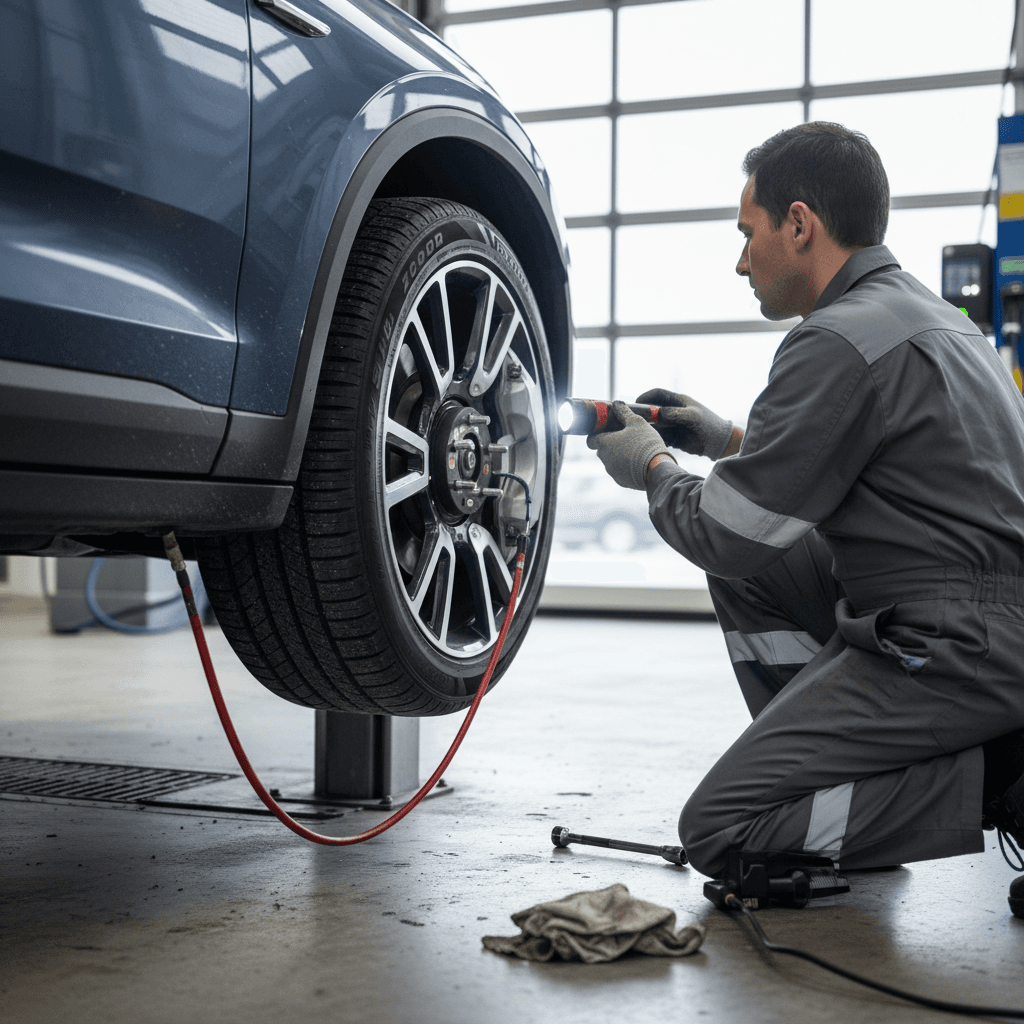
- Tire rotation and pressure adjustment (if wear patterns allow)
- Check and top off washer fluid and brake fluid level
- Wiper blade and exterior lighting check
- Diagnostic scan and software / campaign updates
Every 20,000–24,000 miles (or around year 2–3)
This builds on annual service with more cabin and brake focus.
- All items from the basic annual visit
- Cabin air filter replacement to keep HVAC and defogging effective
- More detailed brake inspection, including pad thickness and rotor condition
- Closer look at wheel bearings and steering components
- Check coolant levels for the battery and power electronics circuits
Later, as mileage climbs, visits add extra checks instead of totally new systems:
- Around 30,000–40,000 miles: closer inspection of cooling circuits, drive units, bushings, and mounts.
- Around 60,000–75,000 miles: deeper suspension and alignment checks, plus more careful look at drive unit seals and any early wear on high-mileage components.
- Beyond 100,000 miles: similar inspections repeated; most wear items are tires, brake components, and suspension parts on a heavy three-row EV.
Ask for a printed inspection report
Time vs. mileage: how Volvo actually schedules service
Volvo’s maintenance sheets for fully electric models like the EX90 break work into 20,000‑mile blocks. In the real world, your dealer relies on three triggers:
- Mileage: odometer readings around 10,000–20,000‑mile steps.
- Time: the number of months or years since in‑service date. Even low‑milers will see annual reminders.
- Condition-based alerts: on-screen messages if the car detects issues, campaigns, or software updates.
Follow the car first, the calendar second
For used buyers, this also means a gap in service history isn’t automatically a problem if the mileage is low and there are clear notes about time-based items being done. At Recharged, the Recharged Score process reviews service records and current condition so you see more than just stamps in a booklet.
EV-specific maintenance items on the EX90
The EX90 is all-electric, so its maintenance focuses on systems that support the battery, power electronics, and braking. Here are the big-ticket items you’ll hear about over the first 8–10 years.
Important EX90 EV maintenance items
These matter more on a heavy, powerful three-row electric SUV than on a smaller EV.
Brake fluid
Even with strong regenerative braking, the hydraulic brake system still relies on fluid that absorbs moisture over time.
- Plan for a brake fluid change about every 3 years, based on time
- More often if you tow, drive in mountains, or live in very humid climates
Battery & electronics cooling
The high-voltage battery, inverters, and onboard charger share complex cooling circuits.
- Technicians check levels and leak points during routine visits
- Coolant changes are infrequent (think multi‑year, high‑mileage events)
High-voltage battery health
No scheduled “battery service” like an oil change, but:
- Software keeps the pack in a healthy temperature and charge window
- Dealers can run diagnostics if range drops unexpectedly
Other components to keep an eye on
Not technically EV-only, but especially important on a big, heavy electric SUV.
Tires & alignment
The EX90 is heavy and powerful, so it can be hard on tires.
- Rotate at least once a year, often every 5,000–7,500 miles
- Consider annual alignment checks if you see uneven wear
Brakes & calipers
Regeneration means pads may last a long time, but calipers can stick if never used hard.
- Ask your tech to confirm even pad wear and free movement
- Occasionally use stronger friction braking to keep parts clean
12-volt battery
The small 12V battery powers electronics, latches, and control units.
- Expect replacement roughly every 4–6 years
- Have it tested during annual service, especially in cold climates
Don’t improvise with brake fluid or coolant
How much does Volvo EX90 service cost?
The EX90’s lack of engine, transmission, and exhaust simplifies maintenance, but you should still budget for routine visits. Exact pricing varies by dealer and region, yet patterns from Volvo retailers and owners give a reasonable planning range.
- Annual inspection + tire rotation: often a few hundred dollars once you’re past the complimentary period, depending on local labor rates and whether any extra work is found.
- Brake fluid service (about every 3 years): typically a modest add-on compared with major repairs; it’s mostly labor and a small amount of fluid.
- Cabin air filter and wipers: inexpensive parts, but costs can add up if always done at dealer rates. Some owners DIY these between major visits.
- Deep-dive inspections (60k+ miles): can be pricier visits mainly due to labor, alignment checks, more detailed suspension exams, and any parts that need replacement.
Compare menu pricing vs. à la carte
If you’re shopping a used EX90, factor the upcoming service into your budget. For example, buying a 2‑year‑old EX90 with 22,000 miles likely means a cabin filter, brake fluid in the near future, and more detailed suspension checks by the time you hit 40,000 miles. On Recharged, we highlight recent maintenance and near-term needs in plain English so you can see what’s around the corner.
Service plans, records, and buying a used EX90
Because the EX90 is still new, many will be on their first or second owners over the next few years. That makes maintenance history a big part of resale value, and a key thing to understand if you’re buying used.
Checklist for evaluating a used Volvo EX90’s maintenance
1. Confirm in-service date
The clock for warranties and complimentary service starts when the EX90 was first put into service, not the model year. A 2025 EX90 first sold in 2026 may have coverage longer than you think.
2. Look for annual visits
Review records for at least one service per year, even at low mileage. You’re looking for inspection notes, tire rotations, and software updates, not just big repairs.
3. Check brake fluid timing
If the vehicle is 3–4 years old with no brake fluid change on record, budget to have it done soon after purchase. Time matters more than miles here.
4. Review tire wear patterns
Uneven wear can hint at alignment or suspension issues. Ask for tread-depth measurements from recent inspections or have an independent shop check the set that’s on the car.
5. Verify recalls and campaigns
Because the EX90 is so software-heavy, campaigns and updates matter. Confirm that prior owners kept up with recommended software and any hardware retrofits.
6. Use third-party diagnostics
A detailed inspection, like the Recharged Score battery and systems evaluation, can catch issues not obvious from service stamps alone, especially on early-build EX90s with software updates.
How Recharged helps on service history
Ready to find your next EV?
Browse VehiclesMaintenance tips to protect EX90 value and range
Following the book is important, but a few habits will make your EX90 easier to live with and more attractive when you eventually sell or trade.
Practical EX90 maintenance tips
Simple habits that pay off in long-term reliability and resale value.
Treat tires as range tools
Correct tire pressure and alignment can swing real-world range by a noticeable margin.
- Check pressures at least monthly and before road trips
- Rotate regularly to maximize life and keep noise down
Charge habits & battery health
Maintenance isn’t just mechanical; it’s how you use the battery.
- Use DC fast charging when you need it, not every day
- For daily use, living around 20–80% charge is easier on the pack than constant 100% top-offs
Keep a clean paper trail
Save digital and printed invoices for scheduled services and any repairs.
- Buyers and appraisers pay more for documented cars
- It’s much easier to prove the car has followed Volvo’s schedule
Be cautious with non-specialist shops
Volvo EX90 service schedule FAQ
Frequently asked questions about the Volvo EX90 service schedule
Bottom line: how to think about EX90 service
If you’re used to traditional SUVs, the Volvo EX90 service schedule may feel almost too simple: yearly checkups, a brake fluid change every few years, and periodic deep inspections of suspension and cooling systems. But that’s exactly the point, electric SUVs shift the focus from repairing wear-prone engines to verifying that software and safety systems are doing their jobs.
Treat those visits as routine health checks rather than hassles. Keep up with annual inspections, don’t skip time-based items like brake fluid, and pay attention to what your tires and alignment are telling you. If you’re shopping used, lean on tools like the Recharged Score to see how an EX90 has been maintained and what’s coming next. Do that, and your EX90 should remain the quiet, confident family hauler Volvo intended, while holding its value in a growing used EV market.