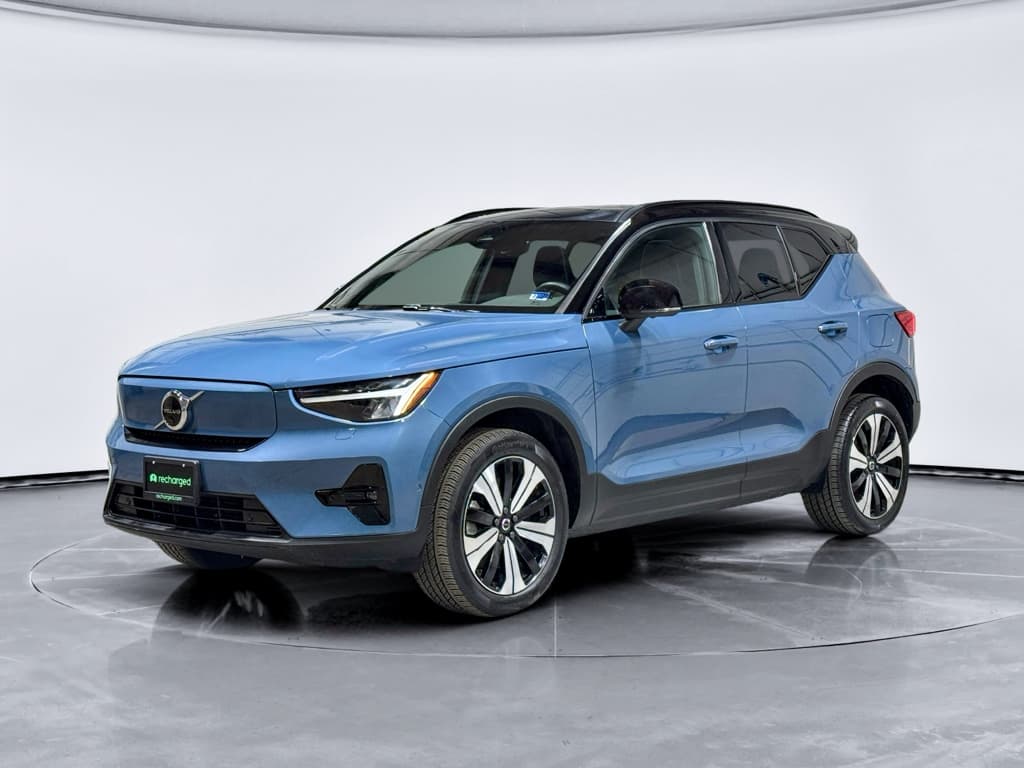
If you’re considering a Volvo EX90, chances are you’re picturing it loaded with kids, luggage, and snacks, eating up highway miles on a family vacation. This Volvo EX90 road trip review focuses on exactly that use case: real‑world highway range, charging, comfort, and how this big Scandinavian EV actually works as a long‑distance cruiser in the U.S.
What This Review Covers
Why the Volvo EX90 Makes Sense as a Road Trip EV
Volvo EX90 Key Road Trip Numbers (U.S. Models)
On paper, the EX90 checks a lot of road‑trip boxes: a huge battery, optional three‑row seating, refined chassis tuning, and Volvo’s typically excellent seats. Earlier 400‑volt EX90s traded some charging speed for efficiency; the updated 800‑volt versions charge faster but sacrifice a few miles of rated range. Either way, you’re dealing with a genuinely long‑legged electric SUV, just not a range champion.
Model Year Matters
Real-World Range: Volvo EX90 on the Highway
EPA figures are a starting point, but what matters on a road trip is how far you can actually go at 70–75 mph with a loaded vehicle and climate control running. Independent tests and owner reports paint a consistent picture: the EX90 reliably delivers mid‑200‑mile highway legs, not the full 300+ miles you might see on a window sticker.
Volvo EX90 Real-World Highway Range Snapshot
Approximate highway range based on independent testing and owner anecdotes at steady highway speeds with mild weather and mixed loads.
| Scenario | Speed | Wheels | Estimated Usable Range | Notes |
|---|---|---|---|---|
| MotorTrend road-trip test | 70 mph | 21–22" | ~247 mi | Twin Motor Performance; 100–5% depletion in real‑world driving |
| Owner long-haul in Europe | ~56 mph (90 km/h) | 21" | ~270–280 mi equivalent | Reported ~19 kWh/100 km at 90 km/h on smooth highways |
| Typical U.S. highway family trip | 70–75 mph | 20–22" | ~220–260 mi | Full load, climate on, some elevation and wind variation |
Treat these as planning baselines, not guarantees – your speed, temperature, and load will move these numbers up or down.
For planning, it’s smart to assume that a fully loaded EX90 will comfortably cover 220–250 miles between DC fast charges on U.S. interstates. Drive more gently, stick closer to 65 mph, and you can nudge that higher. Run 80+ mph into a headwind with a roof box and you’ll see much less.
Don’t Chase the Last 10%
Charging on the Road: DC Fast Charging with the EX90
Charging is where the EX90 story splits into two chapters. Early U.S. models launched with a 400‑volt electrical system and a large 107‑kWh usable battery. Volvo quoted a 250‑kW peak, but third‑party testing typically saw peaks closer to 190–200 kW with a 10–80% time around 30 minutes in ideal conditions. That’s competitive but not class‑leading in 2025.
For the 2026 model year, Volvo moved the EX90 to an 800‑volt architecture and slightly downsized the battery to about 102 kWh. The payoff is faster charging: in good conditions on a 350‑kW DC fast charger, Volvo claims roughly 155 miles of range added in 10 minutes and about 22 minutes for a 10–80% charge. That closes much of the gap to the best‑charging EVs on the market.
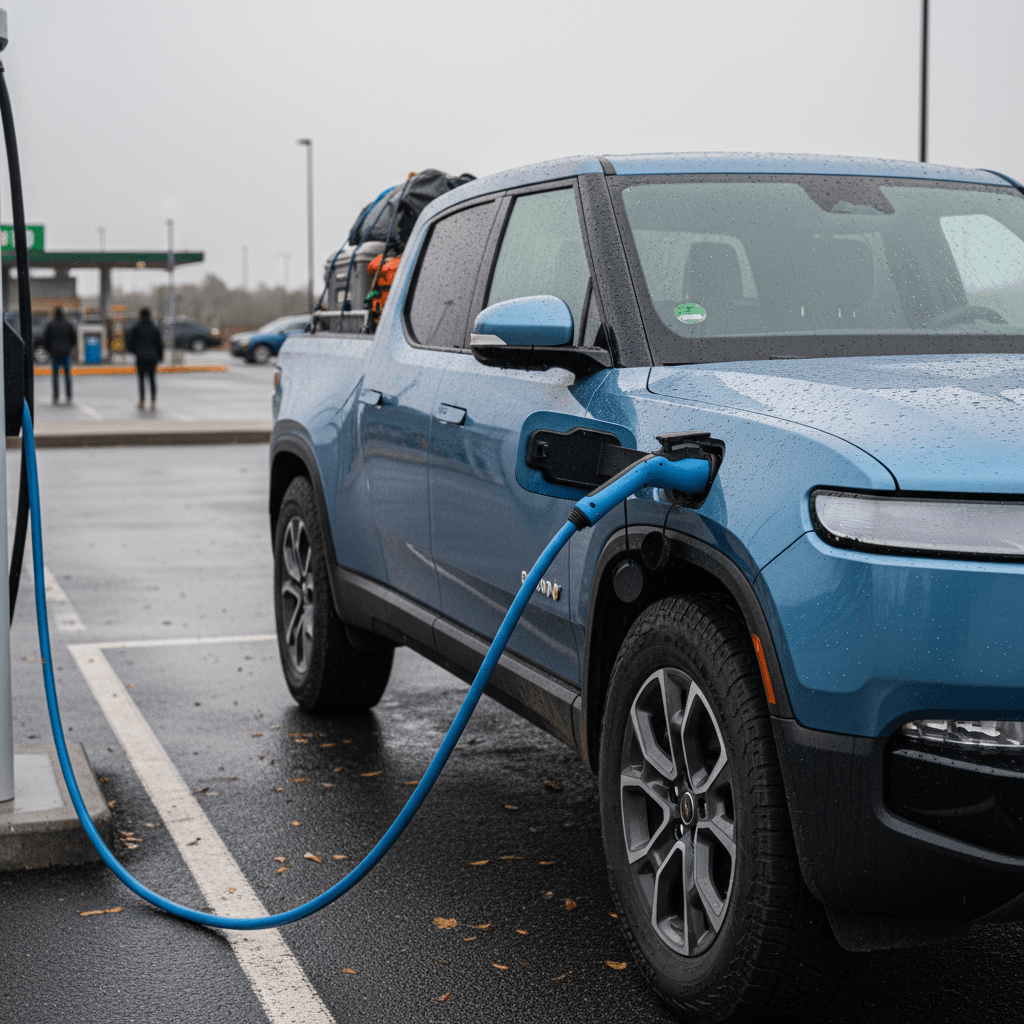
What Road-Trip Charging in a Volvo EX90 Feels Like
From early 400‑V to newer 800‑V models, here’s what to expect at fast chargers.
Stop Duration
On a healthy DC fast‑charger, expect:
- 400‑V EX90: ~30 minutes from 10–80% in ideal conditions.
- 800‑V EX90: closer to ~22 minutes 10–80% if you hit a 350‑kW unit.
Charging Curve Behavior
The EX90 charges fastest from low states of charge. Power begins to taper noticeably above ~30% and again past ~60%, so the sweet spot is shorter, more frequent stops rather than going 5–90% in one go.
Network Reality
You’re relying primarily on CCS/SAE Combo and evolving NACS access. In practice, you’ll want apps like ChargePoint, Electrify America, EVgo, and A Better Routeplanner alongside Google Maps in the car.
Use Preconditioning for Faster Charging
Fast-Charging a Volvo EX90 on a Road Trip: Best Practices
1. Aim for 10–60% State of Charge Windows
On both 400‑V and 800‑V EX90s, you’ll get the best average charging power by arriving low and unplugging around 60–70% rather than topping off to 90–100% every time.
2. Prefer 200–350 kW Stations
The EX90’s peak is high enough that it benefits from 200–350 kW hardware. Lower‑power units (e.g., 50–75 kW) will work, but you’ll add 30–60 minutes to each stop.
3. Use Multiple Apps, Not Just One Network
Electrify America often has the highest‑power DC gear, but reliability is mixed by region. Keep accounts set up with at least two major networks plus Plug & Charge or RFID cards where available.
4. Check Recent Check‑In Reports
Before committing to a stop, check PlugShare or in‑app reviews for recent issues like offline stalls or derated power. That’s especially important on lightly traveled corridors.
5. Keep AC Charging as Backup
If a DC station is down, a 50‑amp Level 2 at a hotel or RV park will still get you meaningful overnight energy. The EX90’s 11‑kW onboard charger can add ~30–35 miles of range per hour on a robust Level 2.
Comfort, Quiet, and Family-Friendly Details
Where the EX90 really shines on a road trip is how it feels to spend hours inside. Owners doing multi‑day, 1,000+ km journeys consistently highlight the car’s calm, planted highway demeanor, low wind noise, and deeply comfortable seats. Passengers often don’t realize how fast they’re actually going because the cabin stays so composed even at European autobahn speeds.
Ride & Noise
- Composed at speed: The EX90’s chassis and air suspension (where fitted) keep it stable around big trucks and in crosswinds, which reduces driver fatigue on long stretches.
- Quiet cabin: Road and wind noise are well controlled, so conversations are easy even at 75 mph. Several owners remark that their families didn’t notice when speeds crept well above typical limits.
Space & Storage
- Legit family hauler: With 3-row seating, the EX90 can carry six or seven people, though the third row is best for kids on longer hauls.
- Flexible cargo: With the third row folded, you have a generous, flat load area for suitcases, strollers, and coolers. Roof boxes are an option but will hurt range on the highway.
Family-Friendly Features That Matter on a Road Trip
Little details that make six hours on the interstate feel shorter.
Excellent Seats
Volvo still builds some of the best long‑distance seats in the business. Good thigh support, adjustable bolsters, and available massage and ventilation make a big difference after several hundred miles.
Google Built-In
The EX90 runs Google Automotive natively, so you get Google Maps, Assistant, and the Play Store built into the central screen. That means native route planning with charging stops, plus access to media apps.
Serious Audio & Ambience
Optional Bowers & Wilkins audio, elegant ambient lighting, and warm Scandinavian materials give the cabin a lounge‑like feel. That matters more than you think on day two of a family road trip.
Passengers Stay Happy
Software, Driver Assistance, and Road Trip Stress
The EX90’s launch was rocky, with early software glitches and features that weren’t fully enabled at delivery. Over‑the‑air updates through 2024 and 2025 have steadily improved matters, but software is still a key factor to understand if you’re planning to road‑trip this SUV.
- Pilot Assist / Highway Assist: Volvo’s lane‑centering and adaptive cruise combo is well‑tuned for long highway slogs. It works up to high speeds and is notably confidence‑inspiring in lane‑keeping and following distance.
- Lidar & safety stack: On newer EX90s, the roof‑mounted lidar feeds advanced driver‑assistance and safety features. It’s designed to be subtle, stepping in when you drift or aren’t paying attention, rather than nagging constantly.
- Software maturity: Most owners report that after the first few major software updates, long‑trip reliability improves significantly. However, a minority have had AC charging bugs and needed hardware replacements early in ownership, which is worth noting if you’re buying used.
Watch for Early-Build Software Quirks
“I recently took my EX90 on a long road trip, around 1,500 km over the past couple of days, and the experience was overwhelmingly positive. Not a single bug or issue throughout the drive… charging performance was excellent, with speeds reaching up to 200 kW.”
Volvo EX90 vs. Other Electric Road Trip SUVs
The question isn’t whether the EX90 can handle road trips, it can. The question is how it compares to other large electric SUVs you might be cross‑shopping, especially if you’re willing to buy used.
EX90 vs. Key Electric Road-Trip Rivals
High‑level comparison focused on road‑trip use, not full spec sheets. Specs are approximate and vary by trim and year.
| Model | EPA Range (approx) | DC Fast Charge 10–80% | Seating | Road-Trip Character |
|---|---|---|---|---|
| Volvo EX90 | ~300–305 mi | ~22–30 min | 6–7 | Exceptionally comfortable, quiet, and safe; good but not class‑leading efficiency and charging compared with newest 800‑V rivals. |
| Tesla Model X | ~330–350 mi | ~25–30 min | 6–7 | Better range and Supercharger access, but firmer ride and more polarizing design and controls. |
| Kia EV9 | ~280–304 mi | ~20–25 min | 6–7 | Excellent 800‑V charging and good space; ride and noise not quite as plush as EX90. |
| BMW iX | ~300–324 mi | ~30 min | 5 | Superb comfort and efficiency, but only two rows and a more polarizing design. |
| Mercedes EQS SUV | ~285–305 mi | ~31 min | 6–7 | Quiet and plush like the EX90, with slightly better highway efficiency but a higher price tag. |
Use this to frame strengths and trade‑offs; always verify exact specs for the year and trim you’re considering.
EX90’s Road-Trip Positioning
Planning a Road Trip in a Volvo EX90: Step-by-Step
If you’ve never road‑tripped an EV before, the EX90’s Google‑based infotainment makes planning surprisingly straightforward. Still, a bit of upfront prep goes a long way to avoiding unpleasant surprises at the charger.
Step-by-Step Volvo EX90 Road Trip Planning
1. Set a Realistic Daily Mileage Target
For a family trip, plan around <strong>400–500 miles per day</strong>, which usually means two or three fast‑charge stops plus overnight Level 2 at your hotel or rental. Pushing beyond that is possible, but fatigue starts to outweigh gains.
2. Build a Route with Redundant Chargers
Use Google Maps in the EX90 to generate an initial route, then cross‑check that path with apps like <strong>A Better Routeplanner</strong> and <strong>PlugShare</strong>. Add backup charging options every 50–75 miles beyond your planned stops.
3. Aim to Arrive with 10–20% State of Charge
Arriving nearly empty maximizes charging speeds and keeps you comfortable if a station is partially down. On the flip side, don’t stress if you reach a charger with 30–40%, especially with kids aboard, a snack and bathroom break matter more than perfect efficiency.
4. Precondition Before Fast-Charging
Whenever possible, navigate to a DC fast‑charger directly in the EX90’s Google Maps so the battery can precondition on the way. You’ll see higher initial charge power and a shorter stop.
5. Use Lodging with Level 2 Charging
Hotels or rentals with 240‑V charging effectively give you a full battery every morning and let you skip one daytime fast‑charge session. When you’re searching lodging, prioritize "EV charging" in the filters.
6. Pack a Portable EVSE and Adapters
A portable Level 1/2 charger plus the right adapters can turn RV parks and friends’ garages into backup energy sources. It’s cheap insurance on less‑developed charging corridors.
Should You Buy a Volvo EX90 for Long-Distance Travel?
Taken as a whole, the Volvo EX90 is an excellent road‑trip EV if your priorities are comfort, safety, and a calming cabin over absolute range and charging supremacy. It’s not as ruthlessly efficient as a Tesla Model X or as outright quick‑charging as something like a Hyundai Ioniq 5 or Kia EV9, but it makes up ground by being one of the least stressful big EVs to spend full days in.
Strengths for Road Trips
- Superb seat comfort and low noise levels reduce fatigue.
- Genuinely usable three‑row configuration for families.
- Strong real‑world highway range in the mid‑200‑mile band.
- Improved fast‑charging on newer 800‑V models.
- Google‑based infotainment with integrated charging navigation.
- Volvo’s safety focus and advanced driver‑assist reduce stress.
Limitations to Keep in Mind
- Early 400‑V models charge slower than the latest 800‑V rivals.
- Real‑world highway efficiency lags the best in class.
- First‑year software issues and charging quirks mean you should vet early used examples carefully.
- Big, heavy SUV footprint, great for comfort, not for tight urban cores.
Thinking About a Used Volvo EX90?
If you want a three‑row electric SUV that turns long drives into something closer to a day at the spa than a slog, the Volvo EX90 deserves to be near the top of your list. It won’t win range‑anxiety arguments on Reddit, but driven within its strengths, and especially in updated 800‑V form, it’s a seriously capable road‑trip machine for families who value comfort, safety, and a calmer approach to EV life.