If you’ve heard that the *fastest depreciating electric cars in 2025* are dropping in value like smartphones from two generations ago, you’re not far off. The used EV market is finally maturing, and that means some models are losing value at a breathtaking pace while quietly becoming incredible used-car bargains.
Quick Take
Why EVs Are Depreciating So Fast in 2025
Depreciation isn’t new, every new car starts losing value the moment you drive off the lot. What’s different in 2025 is how quickly many electric cars are shedding dollars. Rapid tech upgrades, shifting incentives, and aggressive new-car discounts have pushed used EV prices down much faster than most owners expected.
- Rapid tech advances: Newer EVs offer more range, faster charging, and better driver-assistance tech, making older models feel outdated sooner.
- Price cuts on new EVs: When automakers slash new-vehicle MSRPs, used prices have to follow, or those cars won’t sell.
- Tax credits on new, not used: In many cases, federal and state incentives apply to new EVs, not used ones, widening the pricing gap.
- Battery anxiety: Shoppers are still learning how to judge battery health, so any uncertainty pushes prices down.
Important Context
Headline Stats: How Much Value EVs Lose
EV Depreciation at a Glance
Fastest Depreciating Electric Cars 2025: Top Models
Different studies slice the data in different ways, some look at five-year depreciation, others at one-year price drops for specific model years. But the same names keep bubbling to the top. Here’s a consolidated look at which EVs are getting hit hardest in 2025.
Fastest Depreciating Electric Cars in 2025
A simplified snapshot combining five‑year depreciation data and recent used‑price drops for popular EVs.
| Model | Typical Time Horizon | Approx. Value Lost | Notes |
|---|---|---|---|
| Jaguar I‑Pace | 5 years | ≈72% | One of the steepest depreciation curves of any EV on the market. |
| Audi Q8 e‑tron / e‑tron SUV | ≈5 years | ≈72% | Large luxury EV SUV with heavy early‑adopter discounts on used. |
| Tesla Model S | 5 years | ≈63–65% | Flagship sedan hit hard by tech updates and price cuts. |
| Tesla Model X | 5 years | ≈63% | Expensive to buy new; used prices have adjusted sharply. |
| Nissan Leaf | 5 years | ≈64% | Shorter range and older tech make early Leafs especially cheap used. |
| Porsche Taycan | ≈4–5 years | ≈60%+ | High MSRP and rapid performance‑EV evolution drive big losses. |
| Tesla Model Y | ≈4–5 years | ≈50–61% | Once a resale star, now seeing big corrections from earlier highs. |
| Tesla Model 3 | ≈4–5 years | ≈46–56% | Still popular, but aggressive new‑car pricing has dented used values. |
| Hyundai Kona Electric | ≈5 years | ≈58% | Solid car, soft demand and tax‑credit math push prices down. |
| Kia Niro EV | ≈5 years | ≈59% | Compact crossover with healthy incentives new, so used prices sag. |
Depreciation percentages are rounded; actual values vary by trim, mileage, and region.
Data Sources
Model-by-Model Breakdown
How the Fastest Depreciating EVs Stack Up
Here’s what’s driving each model’s big drop, plus why that can be good news if you’re shopping used.
Jaguar I‑Pace
Approx. 5‑year depreciation: ~72%
The I‑Pace was an early luxury EV with striking design but limited range and a small dealer footprint. High original prices and a niche audience mean used examples now sell for a fraction of MSRP.
Upside for buyers: You can step into a premium interior and strong performance for midsize‑SUV money, as long as you’re realistic about range and charging access.
Tesla Model S & Model X
Approx. 5‑year depreciation: ~63–65%
Once the halo cars of the EV world, the big Tesla sedan and SUV now face tougher competition and frequent hardware and software updates that age older cars quickly.
Upside for buyers: Huge price drops mean you can get serious performance and long‑distance fast‑charging access for far less than new, if you’re okay owning outside warranty or buying coverage.
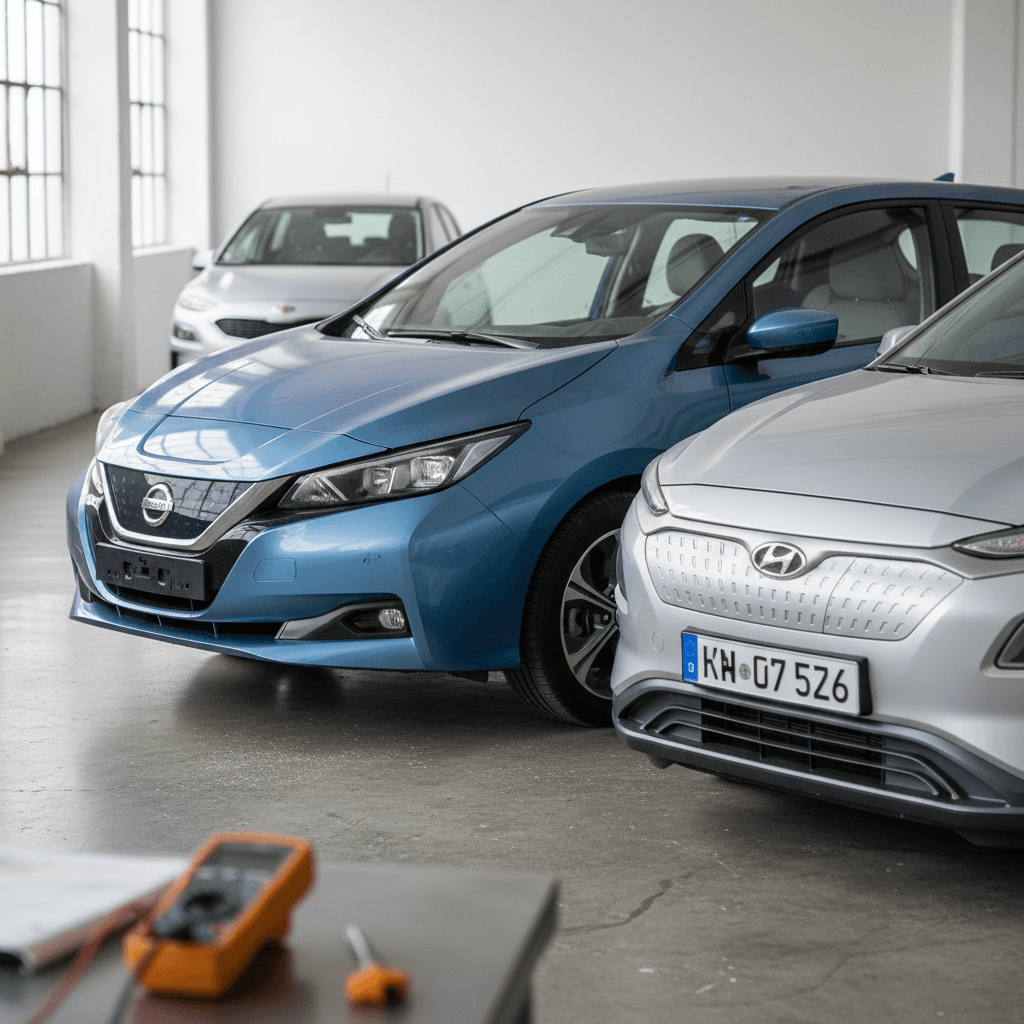
Nissan Leaf
Approx. 5‑year depreciation: ~64%
The Leaf helped launch mainstream EV ownership, but early cars used air‑cooled batteries and offered modest range. Newer long‑range EVs and tax credits have undercut used pricing.
Upside for buyers: For short‑range commuting, a used Leaf can be one of the cheapest all‑electric options on the road.
Porsche Taycan
Approx. 5‑year depreciation: ~60%+
Stunning to drive, expensive to buy. As newer performance EVs arrive and Taycan incentives shift, early cars have taken a big resale hit.
Upside for buyers: If you’ve always wanted a high‑end EV sports sedan, depreciation has done you a big favor, as long as you budget for maintenance and tires.
Tesla Model 3 & Model Y
Approx. 5‑year depreciation: ~50–61%
These have dominated EV sales, but repeated price cuts on new models and updated variants have forced used prices down sharply from pandemic‑era highs.
Upside for buyers: A used Model 3 or Y now often costs what compact luxury sedans and crossovers do, while still tapping into a massive fast‑charging network.
Hyundai Kona & Kia Niro EV
Approx. 5‑year depreciation: ~58–59%
Capable, efficient small crossovers that never captured the same attention as Tesla, and were heavily incentivized when new.
Upside for buyers: Under‑the‑radar picks with decent range and long warranties, often priced well below rival gas SUVs of the same age.
Why These Electric Cars Lose Value So Quickly
1. High MSRPs and Luxury Bloat
The steepest drops tend to hit high‑end, high‑MSRP EVs. When a car starts at $80,000–$120,000, there’s simply more room for the market to correct the price once the early‑adopter shine wears off.
Luxury brands also layer on complex tech, large wheels, and premium options that don’t hold value as well on the used market. Buyers want a great EV, but they won’t pay full freight for the bells and whistles five years later.
2. Tech Marches On, Fast
An EV built even five years ago often has less range, slower charging, and older driver‑assist tech than today’s mid‑pack models. That makes older cars feel like last year’s phone: still useful, just harder to justify at a high price.
For Teslas in particular, frequent updates and over‑the‑air improvements mean “new” cars can leapfrog older ones very quickly, pulling down resale values as the market chases the latest spec sheet.
3. Pricing Volatility and Incentives
When automakers slash prices on new EVs or roll out big lease deals, used values have to follow. price moves and changing incentives in 2023–2024 reset expectations for what an EV should cost, especially for volume models like the Tesla Model 3 and Model Y.
Add in tax credits that often favor new over used, and many buyers simply choose to spend a bit more for a factory‑fresh car, unless a used EV is deeply discounted.
4. Battery Perception and Warranty Fear
Most modern EV batteries are holding up better than early skeptics predicted, but the fear of needing a replacement still hangs over the used market. Shoppers who don’t know how to read battery health will demand a discount “just in case.”
That’s especially true for older designs like the early Nissan Leaf, which lacked sophisticated thermal management in some trims and climates.
Is Fast Depreciation Always Bad? Not If You’re Buying Used
If you’re the original owner of a Jaguar I‑Pace or a high‑spec Tesla Model S, this market hurts. But if you’re shopping the used market in 2025, steep EV depreciation is your secret weapon. It means you can buy a better, newer, safer car for the same monthly payment, or sometimes less, than a comparable gas model.
Silver Lining for Used Buyers
How to Shop Smart for Fast-Depreciating EVs
Used EV Shopping Checklist for Depreciation Hotspots
1. Focus on Total Cost of Ownership, Not Just Price
Look beyond the sale price. A heavily depreciated EV might save you thousands in fuel and maintenance over five years, even if it’s still a bit more expensive up front than an older gas car.
2. Prioritize Battery Health Documentation
Battery condition is the single biggest variable in a used EV’s value. Ask for a recent battery‑health report or diagnostic. With Recharged, every car includes a <strong>Recharged Score Report</strong> that quantifies real battery health instead of guessing from a dashboard bar graph.
3. Compare to New After Incentives
Before you fall in love with a used price, stack it against what a similar new EV would cost <strong>after</strong> federal and state tax credits and dealer discounts. In some cases, a brand‑new model may only be slightly more expensive, and come with a full warranty.
4. Check Warranty Status, Especially on the Battery
Most EVs carry separate battery and powertrain warranties, often 8 years or more. A used car that still has several years of battery coverage remaining is worth more, and may justify paying a bit extra compared with one that’s out of coverage.
5. Understand Charging and Connector Standards
Make sure you know what connector the car uses (CCS, CHAdeMO, NACS) and how that lines up with fast‑charging options where you live. A bargain EV that’s hard to charge on your usual routes isn’t a bargain at all.
6. Let Data, Not Hype, Drive Your Offer
Look at recent comparable sales and pricing trends for that exact model year and trim. If values have been dropping quickly, bake that into your offer, you don’t want to overpay in a falling market.
Pro Tip: Use Dedicated EV Retailers
Ownership Tips to Protect Your EV’s Resale Value
If you already own one of the fastest depreciating electric cars, you can’t rewrite the market, but you can control how your individual car stacks up against the pack when it’s time to sell or trade.
Five Ways to Stay Ahead of Depreciation
These habits help your EV stand out in the used market, even in a high‑depreciation segment.
Treat the Battery Kindly
- Avoid fast‑charging as your default, save it for trips.
- Don’t store the car at 0% or 100% for long periods.
- Use scheduled charging to keep daily use in the middle of the pack.
Document Every Service
- Keep organized records of software updates, tire rotations, fluid checks, and any warranty work.
- Buyers (and EV‑focused retailers) pay more for a car with a paper trail.
Fix Small Issues Early
- Address warning lights, charging quirks, or squeaks before they grow into sale‑killing questions.
- An inspection report with “no issues found” supports stronger pricing.
Keep Mileage Reasonable
- EVs shrug off stop‑and‑go driving better than gas cars, but extremely high mileage still hurts value.
- If you have multiple vehicles, spread the miles around.
Mind Cosmetic Condition
- Scratched wheels, curbed bumpers, and stained upholstery drag down resale.
- A professional detail before sale or trade‑in often pays for itself.
Know When to Exit
- If a next‑gen version of your car is about to launch with dramatically better range or tech, consider trading sooner rather than later.
- Depreciation often accelerates after a major redesign.
How Recharged Helps You Navigate EV Depreciation
Depreciation is math, not magic, but it’s hard to run the numbers when you’re staring at a dozen used EV listings and trying to decode battery health from a blurry dashboard photo. That’s where Recharged is built to make ownership simpler, from your first search to the day you sell.
- Recharged Score Report on every vehicle: You get transparent battery‑health diagnostics, fair‑market pricing, and an easy‑to‑read breakdown of how depreciation, incentives, and mileage shaped the price.
- Expert EV guidance: Recharged’s EV specialists can help you compare a fast‑depreciating luxury model with a slower‑depreciating mainstream EV, and talk through which makes more sense for your budget and driving pattern.
- Flexible ways to move on: When it’s time to sell, you can request an instant offer, trade‑in toward another vehicle, or use Recharged’s consignment‑style marketplace to capture more of your car’s remaining value.
- Nationwide, digital‑first experience: Shop online, arrange financing, and get delivery to your driveway, or visit the Recharged Experience Center in Richmond, VA if you prefer to talk things through in person.
In a young market like used EVs, good data and transparency matter more than ever. Depreciation isn’t the enemy, it’s just the price of the party. The trick is making sure you’re the guest who arrives at the right time.
Fastest Depreciating EVs 2025: FAQ
Frequently Asked Questions About EV Depreciation in 2025
The Bottom Line on EV Depreciation in 2025
In 2025, the fastest depreciating electric cars are a mixed bag of early‑adopter luxury machines, tech‑heavy flagships, and first‑generation commuter EVs. For original owners, the numbers can sting. But for used‑EV shoppers, this same depreciation is exactly what makes a Jaguar I‑Pace, Tesla Model S, Nissan Leaf, or Kia Niro EV suddenly feel attainable.
If you’re buying, lean into the deals, but insist on clear battery‑health data and fair‑market pricing. If you’re selling, focus on condition, documentation, and timing. And if you’d rather not navigate those trade‑offs alone, working with an EV‑focused marketplace like Recharged can turn depreciation from a scary unknown into just another line item in a smart ownership plan.