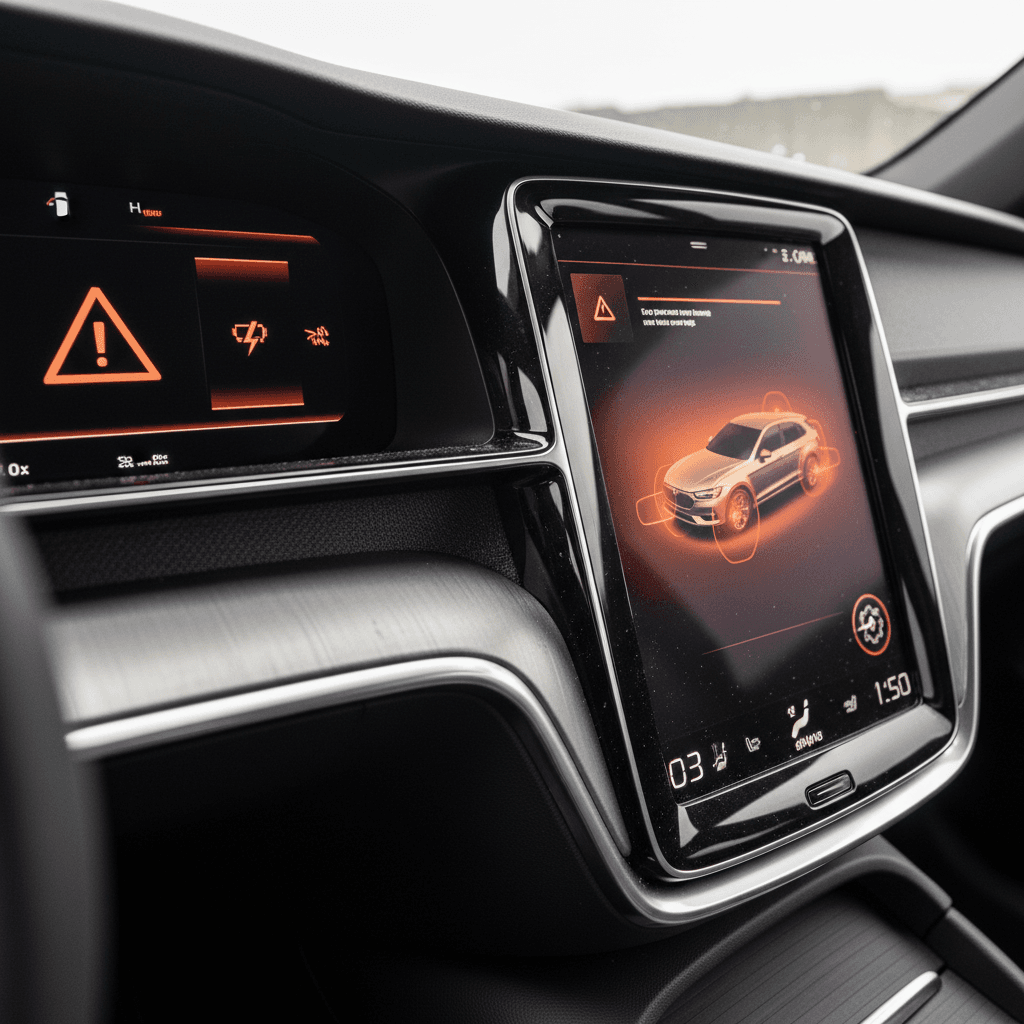
If you’re researching Volvo EX90 common problems in 2026, you’ve probably seen two very different stories: Volvo’s flagship safety-first image on one side, and early-owner complaints about software bugs, recalls, and time in the shop on the other. The truth sits in the middle, and if you’re shopping new or used, you need to understand where the EX90 has stumbled and how much of it can be fixed with software.
Important context
Overview: Volvo EX90 reliability in 2026
What’s going right
- Battery and dual-motor powertrain share architecture with other Geely/Volvo EVs and so far appear mechanically robust.
- Volvo is pushing frequent over-the-air (OTA) software updates to address bugs, improve digital key performance, and stabilize infotainment.
- Several early issues, including a headlight software bug, have been handled via formal recalls and campaigns rather than ignored.
Where owners report pain
- Software glitches that affect headlights, warning lights, cameras, Pilot Assist, and key systems.
- Charging quirks and higher-than-expected vampire drain when parked, especially on early builds.
- Scattered build-quality and hardware issues (seat bolts, power tailgate behavior, occasional sensor faults).
In short: the EX90 feels every bit like a high-tech flagship, but that complexity has brought early reliability headaches, very similar to what we’ve seen with other new, software-heavy luxury EVs.
High-level look at Volvo EX90 issues (through early 2026)
Big picture: Why the EX90 has more software issues than older Volvos
The EX90 is one of Volvo’s first fully “software-defined” vehicles. Instead of dozens of small control modules handling their own jobs, a few powerful computers run much of the car, driver assistance, lighting, climate, infotainment, even how the suspension behaves. That design unlocks advanced features and OTA updates, but it also means a single software bug can ripple across multiple systems.
Volvo openly struggled to get this new software platform out the door, delaying the EX90 and the related Polestar 3. Even now, Volvo executives admit the code will never be “super perfect,” only good enough to meet customer expectations with ongoing updates. That’s the right answer for a smartphone, but a tougher sell when those bugs hit your headlights or collision-avoidance system.
What this means for you
Most common Volvo EX90 problems (2024–2026)
Common Volvo EX90 issues owners report
A high-level roundup of the most frequently discussed 2024–2026 EX90 problems. Not every SUV will see all (or any) of these, but they’re the patterns worth watching.
| Area | Typical symptoms | How serious is it? | Fix path |
|---|---|---|---|
| Headlights & exterior lighting | Temporary loss of low/high beams, headlight warning messages | High – safety-critical but recall/updates available | Recall‑driven software update via OTA or dealer |
| Airbag & SRS system | "SRS Airbag Service Urgent" or airbag warning light on startup | High – may affect safety system readiness | Software patch or, rarely, sensor replacement |
| Driver-assist & cameras | Pilot Assist drops out, parking sensors/cameras glitchy or go dark | Medium to high depending on conditions | Software updates, calibration; occasional hardware swap |
| Keys & access | Digital key or key card not recognized, door unlock lag, profiles not saving | Medium annoyance, can be immobilizing if no backup key | OTA updates plus key re‑pairing at dealer |
| Infotainment & screens | Center screen freezing/rebooting, apps crashing, slow UI | Low to medium – frustrating but usually not safety‑critical | OTA software updates; possible screen or module replacement |
| Charging & battery drain | Charging session stops unexpectedly, higher-than-expected drain when parked | Medium – can complicate road trips or long-term parking | Software updates; check for open campaigns, adjust settings |
| Body & hardware | Second-row seat bolt recall, tailgate dropping unexpectedly, random squeaks/rattles | Varies – seat & tailgate issues are safety-related | Formal recalls or service campaigns; routine warranty repairs |
Always check an individual EX90’s repair and update history; software maturity can vary a lot by build date and software version.
Volvo EX90 recalls through 2026
As of early 2026, the EX90 has a relatively short but meaningful recall list for the U.S., centered on safety-critical issues where software and hardware intersect. Exact campaign numbers change by market, but the themes are clear:
- Headlight software recall – A software bug can cause temporary loss of low and high beams. Volvo is addressing this via an OTA update or at the dealer, free of charge.
- Second-row seat bolt recall – Certain EX90s left the factory with improperly tightened second-row seat fasteners, potentially affecting crash performance.
- Power tailgate recall – On a subset of vehicles, the power tailgate drive units can allow the tailgate to drop unexpectedly, creating an injury risk.
- Various software campaigns and technical service bulletins (TSBs) – Covering infotainment glitches, driver-assist behavior, charging quirks, key issues, and climate-control logic. These aren’t all formal recalls but can materially improve day-to-day reliability.
Always VIN-check an EX90
Software bugs, warning lights and false alerts
By far the most common 2024–2026 EX90 complaints revolve around software behavior: features that don’t work as advertised, warning lights that appear out of nowhere, and systems that feel inconsistent from one drive to the next. A few patterns stand out.
Typical EX90 software & electronics issues
Most are fixable, but they can be disruptive if not handled promptly.
Infotainment & screens
- Center display going black, freezing, or slow to respond.
- Streaming apps refusing to load or crashing.
- System rebooting itself mid‑drive.
Volvo has targeted many of these bugs in mid‑2025 and 2026 OTA updates.
Keys, profiles & access
- Phone-as-key or key card occasionally not recognized.
- Seat/mirror profiles not loading with the right key.
- Slow response when unlocking in wet or cold weather.
Later software builds improve digital key reliability and profile handling.
SRS, ABS & other warnings
- "SRS Airbag Service Urgent" on startup despite no crash.
- Random ABS, traction, or collision-warning messages.
- System resets or software updates clearing the fault.
Treat safety-system warnings as real until a technician verifies they’re spurious.
“The problems have been numerous and deeply concerning, including repeated charging failures, parking sensor malfunctions, and multiple incidents in which the seat belt unexpectedly tightened while driving.”
How to protect yourself from software headaches
Charging and battery-related issues
Mechanically, the EX90’s battery pack and dual-motor system haven’t yet shown a pattern of catastrophic failures in 2024–2026 data. What owners do talk about, though, are charging behavior and range confidence, especially on early software builds.
- Charging sessions that fail to start or stop early – Particularly on some DC fast chargers or when the car is left locked during initiation. Often improved by software updates or charger-side updates.
- Higher-than-expected park/standby drain – Early reports mention losing a few percent of charge per day when parked, especially in cold weather or with background features enabled.
- Vehicle not waking up for charging – Isolated cases where the EX90 appears “dead” or slow to respond if the high-voltage battery has been allowed to sit at very low state of charge for too long.
- Inconsistent range estimates – Typical of new EVs on young software; the algorithm learns over time but can be conservative or jumpy in mixed driving.
Cold-weather note
Charging best practices for EX90 owners
Driver-assist and safety system concerns
Safety is Volvo’s calling card, and the EX90 ups the ante with lidar, a powerful central computer, and a full suite of advanced driver-assistance systems (ADAS). That same complexity, though, means when something glitches, you’ll often see it in the form of sudden deactivations or warning messages.
Where EX90 driver-assist can misbehave
Again, most of this is software, but it still demands attention.
Pilot Assist & lane support
- System drops out unexpectedly, even on well-marked highways.
- Inconsistent steering assist or late lane-centering.
- Occasional false lane-departure warnings.
A fresh calibration or software update often helps, but don’t rely on assist systems as a crutch.
Collision avoidance & parking aids
- Parking sensors or cameras failing to appear on screen.
- Overly sensitive collision warnings in tight city driving.
- Rare cases of seat belts cinching unexpectedly when the system thinks a crash is imminent.
Treat any repeated false activation as a reason to have the car scanned for stored fault codes.
Don’t ignore safety warnings
Suspension and ride-quality watchpoints
So far, we haven’t seen a widespread pattern of EX90 suspension failures in 2025–2026 data, but it’s worth understanding how the system can fail. Higher-trim EX90s use an air suspension with adaptive damping, great for comfort and handling, but more complex than steel springs.
- Air suspension fault warnings – The car may display a message if it cannot reach target ride height or if the compressor is overworking. Persistent warnings should be investigated quickly to prevent compressor damage.
- Uneven ride height – One corner sitting lower after parking can indicate a small leak or valve issue. It may start as intermittent but get worse.
- Clunks or harshness over bumps – Can be typical early wear items (bushings, end links) or a sign of air-spring or damper issues on higher-mileage vehicles.
Good news on hardware
What this means if you’re buying a used EX90
From a used-vehicle standpoint, the EX90 is an interesting case. The hardware story (battery, motors, basic structure) is encouraging; the software story is still evolving. For shoppers, that means the difference between a great EX90 and a headache often comes down to how well a particular SUV has been updated, driven, and serviced.
This is where a data-backed inspection matters. At Recharged, every used EV we list comes with a Recharged Score Report: verified battery health, software and recall checks, and a look at real-world usage patterns. With a software-heavy SUV like the EX90, you want more than a quick test drive, you want proof that the bugs have been addressed and that the high-voltage battery is performing as expected.
How Recharged can help with an EX90
Ready to find your next EV?
Browse VehiclesPre-purchase checklist for a used Volvo EX90
Used Volvo EX90 buyer checklist
1. Verify recalls, campaigns and software version
Ask for documentation that <strong>all recalls and software campaigns</strong> are completed. On the test drive, go into Settings → System details → Software to note the current version and confirm it matches the latest available for that VIN.
2. Scan for warning messages and history
On startup, look for any SRS, ABS, or driver-assist warnings. During the drive, cycle through menus and check if the car shows any stored fault messages. If possible, have a shop or marketplace like Recharged pull a <strong>diagnostic scan</strong> before you sign.
3. Stress-test infotainment and connectivity
Spend 10–15 minutes with the center screen. Pair your phone, run apps, switch between maps, audio, and settings. You’re looking for freezes, random reboots, or functions that simply refuse to work.
4. Test keys, digital access and profiles
Make sure both physical keys work. Enable phone-as-key if the seller allows it and confirm the car locks/unlocks reliably. Save and recall a driver profile to see whether <strong>seat and mirror positions</strong> follow the key as expected.
5. Check charging on at least one Level 2 station
If you can, plug into a home or public Level 2 charger during the inspection. Confirm the car starts charging promptly, stays connected, and doesn’t throw error messages. Ask the seller about any past DC fast-charging problems.
6. Inspect suspension behavior and ride height
Cycle through the available drive/ride height modes. Look for uneven stance, warning lights, or harsh clunks over bumps. With the car parked, listen for the air compressor running excessively, which can hint at leaks.
7. Review battery and usage data
Some EX90s will show charge history and efficiency data in the infotainment system. Pair that with an independent <strong>battery health report</strong> to understand how many fast-charge sessions and deep discharges the pack has seen.
FAQ: Volvo EX90 common problems in 2026
Frequently asked questions about Volvo EX90 problems
Bottom line: Is the Volvo EX90 a bad bet?
The 2026 Volvo EX90 isn’t a disaster, but it’s not trouble‑free either. You’re buying into one of the most ambitious, software‑heavy SUVs on the market, and that means living with a car that evolves through updates, and occasionally visits the service bay for glitches you’d never have seen on a simpler XC90.
If you value cutting‑edge safety tech, a quiet electric drivetrain, and Volvo’s design language, the EX90 can still be a compelling choice. Just go in with open eyes: insist on up‑to‑date software, documented recall work, and a deep look at battery and system health. Whether you shop through a Volvo dealer or a specialist used‑EV marketplace like Recharged, the key is transparency.
Handled that way, the EX90’s early problems become manageable quirks rather than deal‑breakers, and you’re far more likely to end up with the flagship EV SUV Volvo intended to build, not the beta‑test version some early owners feel they bought.