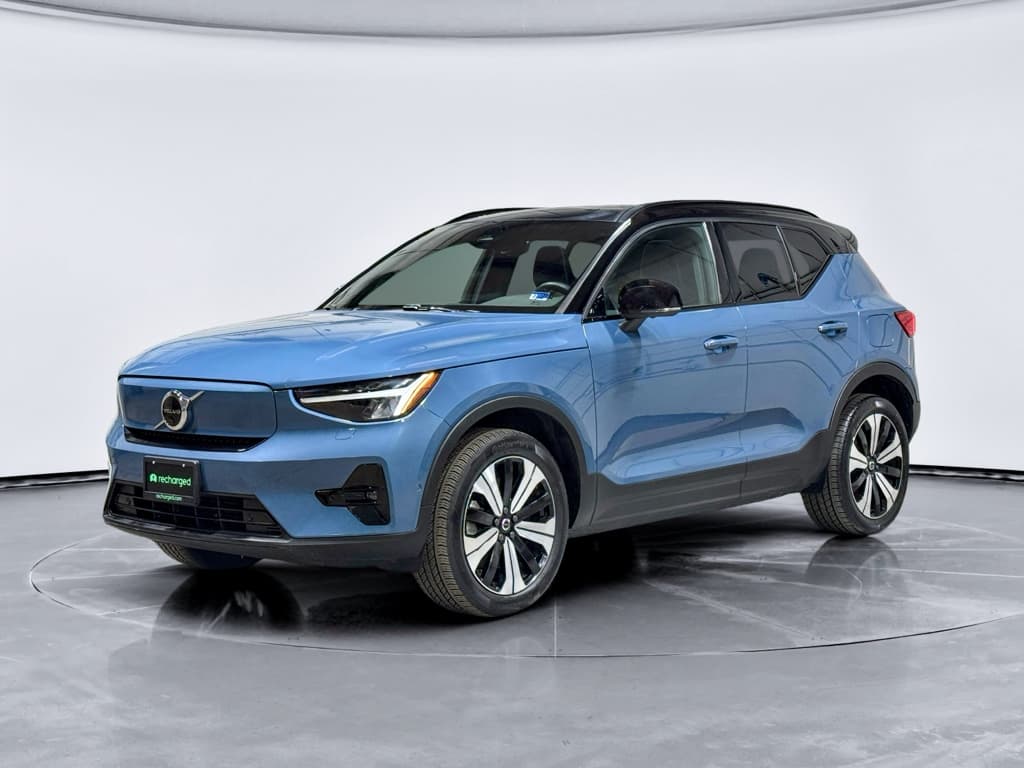
If you’re driving a Volvo EX40 and thinking about upgrading in 2026, the big question is simple: what’s my EX40 trade‑in value? With EV prices and incentives shifting fast, understanding how dealers look at this electric SUV – and how it relates to earlier XC40 Recharge models – can easily mean a difference of several thousand dollars on your next deal.
Name change, same basic vehicle
Volvo EX40 trade‑in value in 2026: quick overview
2026 Volvo EX40 value snapshot (US market)
Treat ranges as directional, not promises
How much is my Volvo EX40 worth in 2026?
By 2026, most EX40s on the road in the US will either be late‑2024 XC40 Recharge builds wearing the new badge or 2025 model‑year EX40s. New‑car MSRPs have typically lived in the mid‑$50,000s once you include destination and common options. Using early XC40 Recharge and guidebook data as a proxy, a clean, average‑mileage EX40 that’s about a year old in 2026 often pencils out with a trade‑in value somewhere in the low‑$40,000s to mid‑$40,000s, with older or higher‑mileage examples drifting toward the $30,000s.
For example, mainstream pricing guides show a 2025 EX40 with typical mileage appraising in the high‑$30,000s to mid‑$40,000s depending on trim and condition. That lines up closely with what we’ve seen historically: 2024 XC40 Recharge models have already given up around 40% of their value after roughly three years, putting them near the low‑$30,000s for resale and a bit less for trade‑in.
Use bands, not single numbers
How dealers actually calculate Volvo EX40 trade‑in value
1. Start with guidebook values
Most dealers start with wholesale numbers from tools like Manheim auction data, Black Book, and the same public sites you know – Kelley Blue Book, Edmunds, NADA, etc. For a Volvo EX40 in 2026, that usually means:
- A baseline trade‑in range for your trim and mileage band
- Separate add/deduct lines for options like dual‑motor, Ultimate trim, or advanced driver‑assist packages
- Adjustments for region – EV‑friendly markets often appraise a bit higher
2. Then adjust for risk and reconditioning
Once a manager has that baseline number, they adjust for everything your EX40 will need before it’s retail‑ready:
- Cosmetic work (wheels, paintless dent repair, interior detailing)
- Tires and brakes, especially on heavier dual‑motor EVs
- Software updates and any open recalls
- Battery health and range checks, which are unique to EVs
They’ll also build in margin for price swings in the rapidly evolving used‑EV market. That’s why two stores can be thousands apart on the same Volvo EX40.
Why your number might not match KBB
Depreciation: what EX40 values look like using XC40 Recharge history
Because the EX40 is still relatively new, the best way to understand its 2026 trade‑in value is to look at the XC40 Recharge it evolved from. Late‑model 2023–2024 XC40 Recharge SUVs that originally stickered in the mid‑$50,000s are already trading in the low‑ to mid‑$30,000s after just a few years on the road. That’s a depreciation hit of roughly 40–45% in three years – steeper than many gas SUVs, but consistent with what the broader EV market has seen as new‑EV prices and incentives bounced around.
Illustrative Volvo XC40 Recharge → EX40 value curve
Approximate depreciation pattern based on early XC40 Recharge data and typical EV trends. These are directional examples, not guaranteed prices.
| Vehicle age | Odometer (approx.) | Original MSRP | Typical trade‑in range | What it means for you |
|---|---|---|---|---|
| 1 year | 12,000–15,000 miles | $55,000 | $40,000–$45,000 | Small discount from new; you’re paying mainly for first‑year depreciation. |
| 2 years | 24,000–30,000 miles | $55,000 | $34,000–$40,000 | Steeper drop as incentives and newer rivals weigh on prices. |
| 3 years | 36,000–45,000 miles | $55,000 | $30,000–$36,000 | Curve begins to flatten; condition and battery health start to matter more than age alone. |
| 5 years | 60,000–75,000 miles | $55,000 | $22,000–$28,000 | Residual value stabilizes; buyers focus on long‑term battery life and maintenance history. |
Actual Volvo EX40 trade‑in values in 2026 will depend on trim, options, mileage, condition, region, and battery health.
EVs depreciate differently than gas SUVs
Why battery health and range matter so much for EX40 value
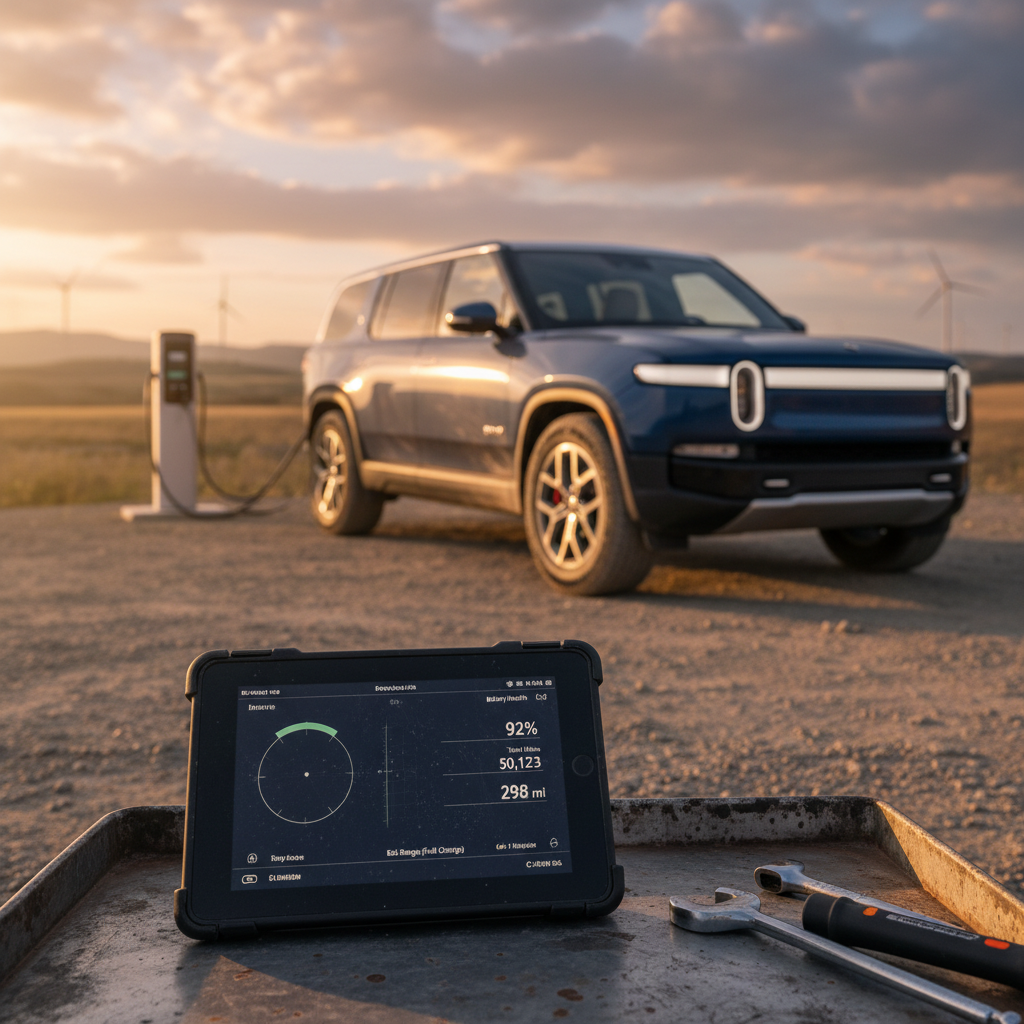
For a used Volvo EX40, the single most important component is the high‑voltage battery pack. Buyers – and dealers – aren’t just asking, “How many miles are on it?” They want to know whether the pack still delivers range that’s close to new, if fast‑charging performance is stable, and whether there’s any history of faults or replacements.
- State of Health (SOH) – a measure (usually in %) of how much usable capacity is left compared with new.
- Real‑world range – what you actually see on the dash at 100% vs. the original EPA rating.
- Fast‑charge behavior – does it still charge quickly, or does it throttle early?
- Thermal history – repeated fast‑charging in extreme heat can raise long‑term concerns.
How Recharged quantifies EX40 battery health

10 factors that raise or lower your EX40 trade‑in offer
EX40 value drivers dealers actually care about
1. Model year and trim
Newer EX40s and higher trims (Plus/Ultra, dual‑motor, Black Edition or similar packages) usually return more, but watch how added MSRP compares to real‑world used premiums.
2. Mileage vs. age
Average mileage around 12,000–15,000 miles a year is fine. Go far above that and your EX40 slides down the value band; significantly below it can be a plus if the car doesn’t feel like a “garage queen.”
3. Battery health documentation
Proof of strong battery health – via service records, diagnostic reports, or something like a Recharged Score – can justify real money over an otherwise similar EX40 with unknown history.
4. Cosmetic condition
Curb‑rashed wheels, cracked glass, interior stains, and noticeable dings all feed straight into a lower offer because the store has to fix them before resale.
5. Tires and brakes
EVs are heavy, and worn tires or rotors are expensive to replace. A fresh set can easily be the difference between the top and bottom of your trade‑in range.
6. Service and recall history
Up‑to‑date maintenance, completed recalls, and documented software updates give dealers more confidence and reduce the discount they’ll bake into the number.
7. Options and packages
Features like panoramic roof, advanced driver‑assist, premium audio, and tow packages help <em>a bit</em>, but they rarely return dollar‑for‑dollar what you paid new.
8. One‑owner vs. multiple owners
A one‑owner EX40 with a clean Carfax typically earns a stronger offer than a similar SUV that has bounced between several owners or regions.
9. Local demand for EVs
In EV‑dense metro areas with strong charging infrastructure, dealers are more confident about stocking used electric SUVs and may pay more aggressively.
10. Time of year and incentives
When new EVs are heavily discounted or fresh tax‑credit rules hit the market, used prices soften. Trading during a quieter stretch, or when new inventory is tight, can help your EX40’s number.
Fix the cheap stuff before you visit the store
Step‑by‑step: estimate your Volvo EX40 trade‑in at home
Four steps to a realistic EX40 trade‑in estimate
Do this homework before you ever step into a showroom in 2026.
1. Pull multiple guidebook values
Start with at least two online valuation tools (KBB, Edmunds, NADA, etc.). Enter your EX40’s:
- Exact model year and trim
- Mileage and ZIP code
- Options as accurately as possible
- Condition that’s honest, not optimistic
Average the trade‑in values, not the retail or private‑party numbers.
2. Sanity‑check with live listings
Search for similar used EX40 or late‑model XC40 Recharge listings in your region:
- Same year, trim, and drivetrain
- Comparable mileage band
- Similar equipment and colors
Expect dealer asking prices to be several thousand above what they can pay you on trade.
3. Adjust for your EX40’s specifics
Now move your estimate around based on your individual SUV:
- Add a bit if you’re significantly below average mileage
- Subtract if you’ll need tires, brakes, or bodywork soon
- Move higher in the range if you have proof of strong battery health
4. Expect a spread between offers
When you actually shop your Volvo EX40 around, expect at least a $2,000–$3,000 spread between low and high offers, sometimes more. Volume stores that know EVs well – or EV‑focused marketplaces like Recharged – may be more aggressive because they’re more comfortable retailing electric SUVs.
Document everything before you get quotes
Trade‑in vs. private sale for a Volvo EX40
Trading in your EX40
- Pros: Fast, simple, tax‑efficient in many states. The trade‑in amount often reduces the taxable price of your next car, which can offset a slightly lower offer.
- Cons: You’re accepting wholesale money. The store needs room for reconditioning, profit, and the risk of holding a used EV while prices move.
Trading works especially well if your EX40 is fairly common spec and you value convenience and tax savings over chasing every last dollar.
Selling your EX40 privately or via marketplace
- Pros: Potentially $2,000–$5,000 more than a traditional trade‑in, depending on demand and how well you market the car.
- Cons: More time and effort – photos, listings, test drives, paperwork, and screening buyers who may not fully understand EVs.
A platform that specializes in EVs can narrow the gap: you still access retail‑leaning pricing, but someone else handles education, paperwork, and logistics.
Watch out for confusing “over‑allowance” deals
How Recharged can help you sell or trade your EX40
Recharged was built around one idea: used EVs should be easier to value and easier to own. That’s especially important with premium crossovers like the Volvo EX40, where battery health, software history, and local charging options matter just as much as leather quality and wheel size.
Why EX40 owners look at Recharged before visiting a traditional dealer
More transparency on value, less guesswork around the battery.
Verified battery diagnostics
Every vehicle on Recharged includes a Recharged Score Report with third‑party battery‑health data, charging behavior, and service history where available. That transparency helps justify stronger pricing than a generic EV sitting on a mixed‑brand lot.
Multiple ways to sell or trade
You can request an instant offer, list via consignment, or use your EX40 as a trade‑in toward another EV on the platform. We help you compare options so you can decide whether speed or top‑dollar matters more.
Nationwide reach and delivery
Because Recharged operates as a digital marketplace with nationwide delivery and an Experience Center in Richmond, VA, your buyer pool isn’t limited to your ZIP code. That’s a big deal for used EVs, where demand can vary sharply from one region to the next.
Ready to find your next EV?
Browse VehiclesNot in Virginia? Still worth a look
Volvo EX40 trade‑in value 2026: FAQ
Frequently asked questions about Volvo EX40 value in 2026
Key takeaways for Volvo EX40 owners in 2026
In 2026, there’s no single answer to the question of Volvo EX40 trade‑in value, but there is a clear framework. Use early XC40 Recharge data to understand the depreciation curve, then place your SUV on that curve based on mileage, condition, and – most importantly – battery health. Expect a spread of at least a few thousand dollars between low and high offers, and remember that timing and local EV demand play a real role.
If you prepare well, fix the cheap stuff, and document your EX40’s battery and service history, you’ve already done more than most sellers. From there, compare at least two or three offers – including from EV‑specialist marketplaces like Recharged – and focus on the full deal math, not just one shiny trade‑in number on a worksheet. That’s how you make your Volvo EX40 work hardest for you when it’s time for the next chapter.