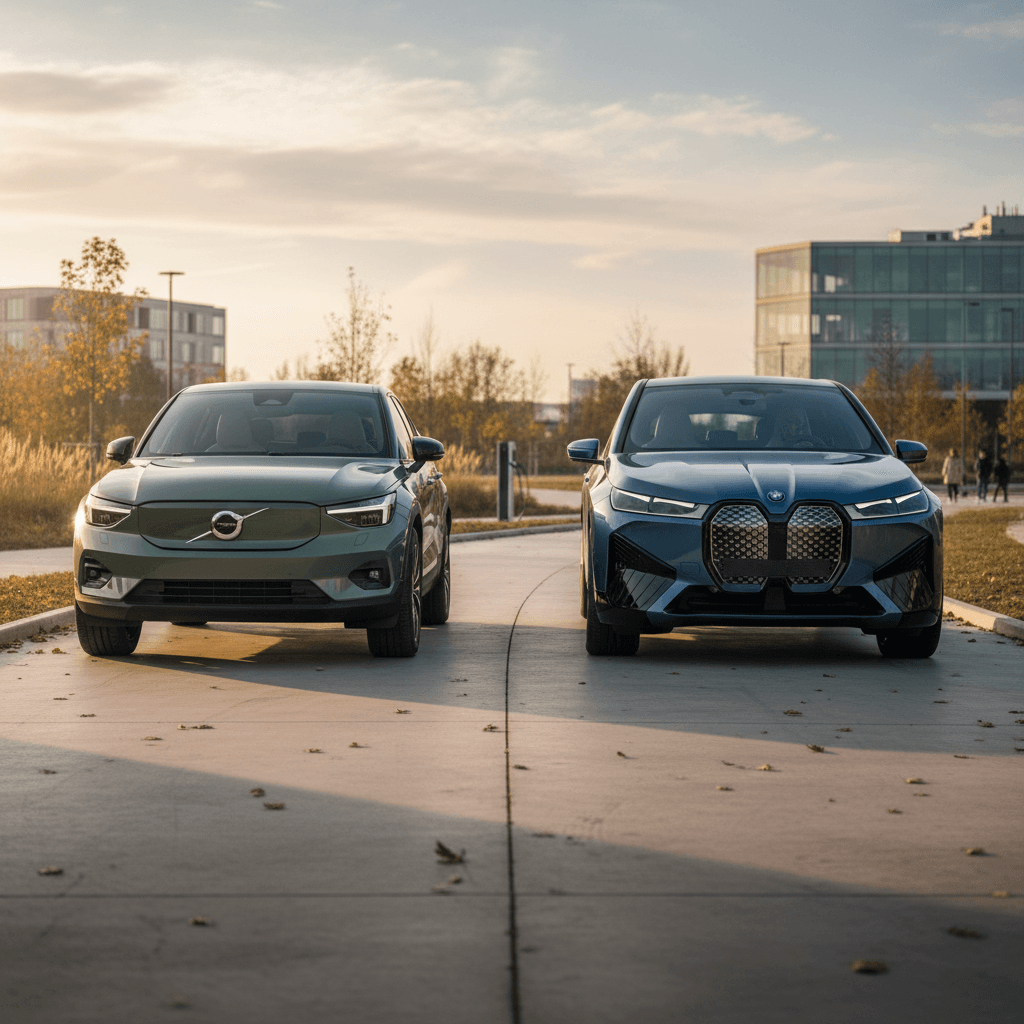
If you’re cross-shopping the Volvo EX30 vs BMW iX, you’re really deciding between two very different takes on an electric SUV: a small, value-focused Scandinavian city crossover and a big, tech-laden German luxury flagship. Both are compelling, but for very different buyers. This guide breaks down price, range, charging, space, tech, and ownership costs so you can decide which is actually better for your life, not just on paper.
Two EVs, Two Completely Different Missions
Volvo EX30 vs BMW iX: Overview
Volvo EX30: Small, Quick, and Attainable
The Volvo EX30 is a subcompact electric SUV that targets buyers who want premium design and safety without a six-figure budget. In the U.S. it offers:
- Standard single‑motor and dual‑motor performance variants
- Usable battery around the mid‑60 kWh range (for the long-range versions)
- EPA range roughly in the mid‑200‑mile band depending on wheel size and motor
- A starting MSRP in the mid‑$30,000s, with well‑equipped trims in the mid‑$40,000s
It’s sized for city life, easy parking, and shorter trips, with just enough range and DC fast‑charging speed to make occasional road trips workable.
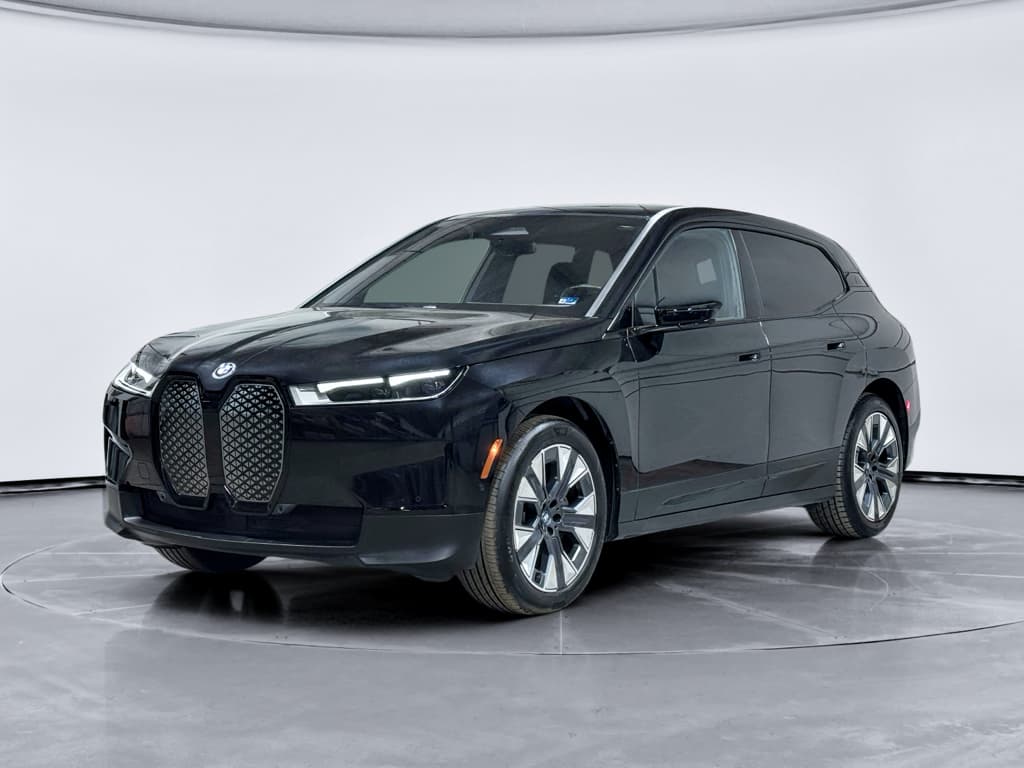
BMW iX: Big-Battery Luxury Flagship
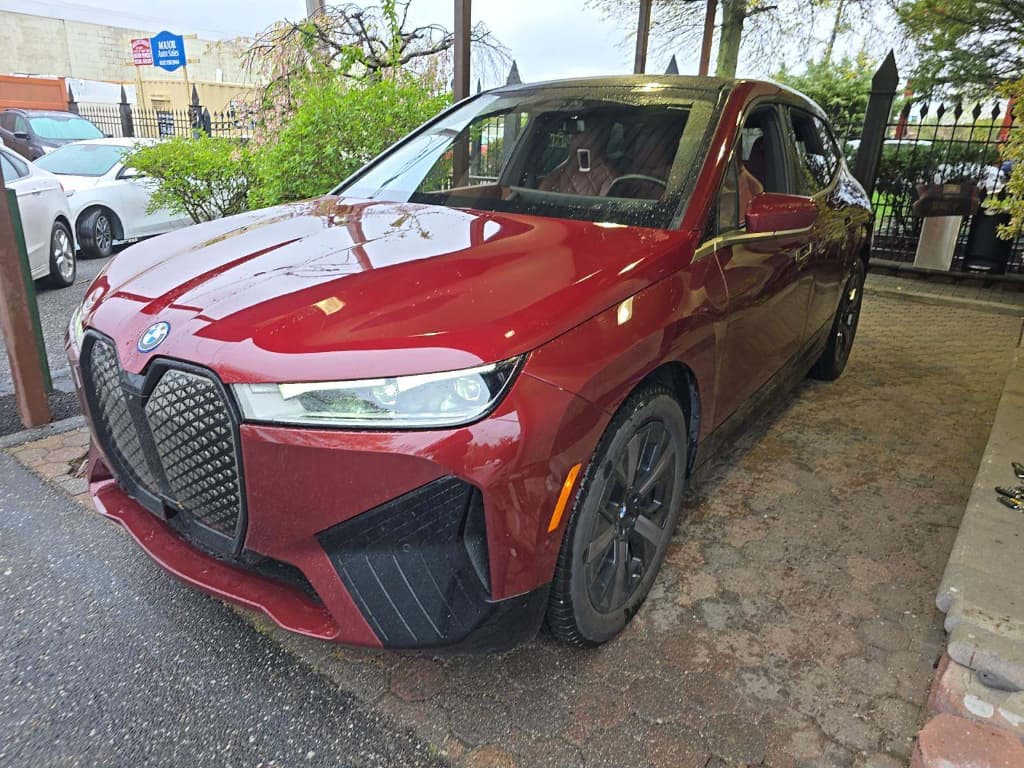
The BMW iX is a mid‑size luxury SUV with a very large battery (usable capacity slightly above 100 kWh in xDrive50 trims) and EPA ranges in the low‑300‑mile range when configured for efficiency. It offers:
- Spacious cabin and cargo room closer to an X5
- Dual‑motor all‑wheel drive as standard in U.S. trims
- Premium materials, advanced driver assistance, and high‑end audio
- New MSRPs that can easily crest $90,000, but rapidly depreciating values on the used market
The iX is built for long‑distance comfort and tech‑heavy luxury, not squeezing into tight downtown parking spots.
Headline Numbers: Volvo EX30 vs BMW iX (Typical U.S. Specs)
Key Specs: Volvo EX30 vs BMW iX
Core Specs Comparison: Volvo EX30 vs BMW iX (U.S.-Focused)
Representative configurations for shoppers: EX30 Single Motor Extended Range vs BMW iX xDrive50.
| Spec | Volvo EX30 (Long-Range Single Motor) | BMW iX xDrive50 |
|---|---|---|
| Vehicle class | Subcompact electric SUV | Mid-size luxury electric SUV |
| Drivetrain | RWD (AWD available on Twin Motor) | Dual-motor AWD |
| Usable battery (approx.) | Mid-60 kWh | ~106 kWh |
| EPA range (max trims) | Mid-200-mile range | Low- to mid‑300‑mile range |
| 0–60 mph | ~5.1–5.4 seconds (Twin Motor quicker) | ~4.4 seconds |
| DC fast-charge peak | Up to ~153 kW | Up to ~195 kW |
| AC charging | Up to 11 kW (Level 2) | Up to 11 kW (Level 2) |
| Length | ~166 in | ~195 in |
| Starting price new | Mid‑$30,000s | Around $90,000+ (varies by year/trim) |
Exact figures vary by wheel size, trim, and model year, but these numbers capture how each EV behaves in the real world.
Spec Sheets vs Reality
Price and Value: Two Very Different Propositions
When people ask which is better, Volvo EX30 vs BMW iX, what they’re often really asking is: “What kind of EV value can I get for my budget?” On price alone, these two don’t overlap much when new, but on the used market, you may see higher‑mileage iX examples cross into high‑EX30 territory.
How the Money Side Breaks Down
Think in terms of budget bands, not just MSRP stickers.
Volvo EX30: Attainable Premium
- New EX30s typically start in the mid‑$30,000s, with nicely equipped long‑range trims in the low‑ to mid‑$40,000s.
- Running costs stay relatively low thanks to smaller tires, lighter weight, and a smaller battery to refill.
- If you’re cross‑shopping other compact EVs, the EX30 usually feels like "a lot of Volvo" for the money: design, safety, and a modern Google‑based interface.
BMW iX: Luxury at a Steep Discount (Used)
- New iX pricing still lands around luxury‑SUV money, often close to or above $90,000 depending on trim and options.
- However, depreciation has been aggressive. On the used market, you can sometimes find iX xDrive50s for prices overlapping a new EX30.
- Ownership costs (tires, insurance, repairs) are more in line with a high‑end BMW than a mainstream compact SUV, so budget accordingly.
How Recharged Fits In
Range, Battery Size, and Efficiency
Range is where the BMW iX’s enormous battery really flexes. The EX30 is efficient for its size, but it simply doesn’t have the energy storage to hang with a big‑pack luxury SUV on non‑stop highway days.
- BMW iX xDrive50 pairs a usable battery north of 100 kWh with a slippery body, delivering roughly just over 300 miles of EPA range when configured with efficiency‑oriented wheels.
- Volvo EX30 long‑range trims offer a usable battery in the mid‑60‑kWh neighborhood, with EPA ranges in roughly the mid‑200‑mile band depending on motor and wheel size.
- In mixed driving, many iX drivers can realistically plan around 260–290 miles per full charge, while EX30 drivers should think more in the 190–230‑mile window, especially at highway speeds.
- Because the EX30 is lighter and smaller, its mi/kWh efficiency can look pretty good, but the iX simply carries a lot more kWh.
Cold Weather Matters More for the EX30
Charging Speed and Road-Trip Ability
On paper, the BMW iX and Volvo EX30 have fairly similar peak DC fast‑charging speeds. In practice, the iX’s larger battery and longer range between stops make it the more relaxed long‑distance cruiser, while the EX30 works best for occasional road trips and frequent home charging.
Charging: What It Feels Like in the Real World
Numbers are one thing; how many stops you make is another.
Volvo EX30 Charging Experience
- Peak DC fast‑charge power around the 150 kW mark when conditions are ideal.
- Charging curve is respectable for a small pack, but you’ll still want to plan highway trips with more frequent, shorter stops.
- Integrated Google Maps can precondition the battery when you navigate to a DC fast charger, improving real‑world charging speed.
- Best suited for drivers who mostly charge at home and take 2–4 long trips per year.
BMW iX Charging Experience
- DC fast‑charging peaks around 190–200 kW depending on conditions, with strong mid‑curve performance.
- Because the battery is so large, 10–80% can take longer in absolute time, but each stop buys you a lot more miles.
- Excellent for cross‑country travel when paired with robust fast‑charging networks (including access to NACS/CCS networks as the landscape evolves).
- Feels more like a true road‑trip machine: longer legs, fewer stops, and more comfort while you’re at the charger.
Plan for Charging Standards
Space, Comfort, and Practicality
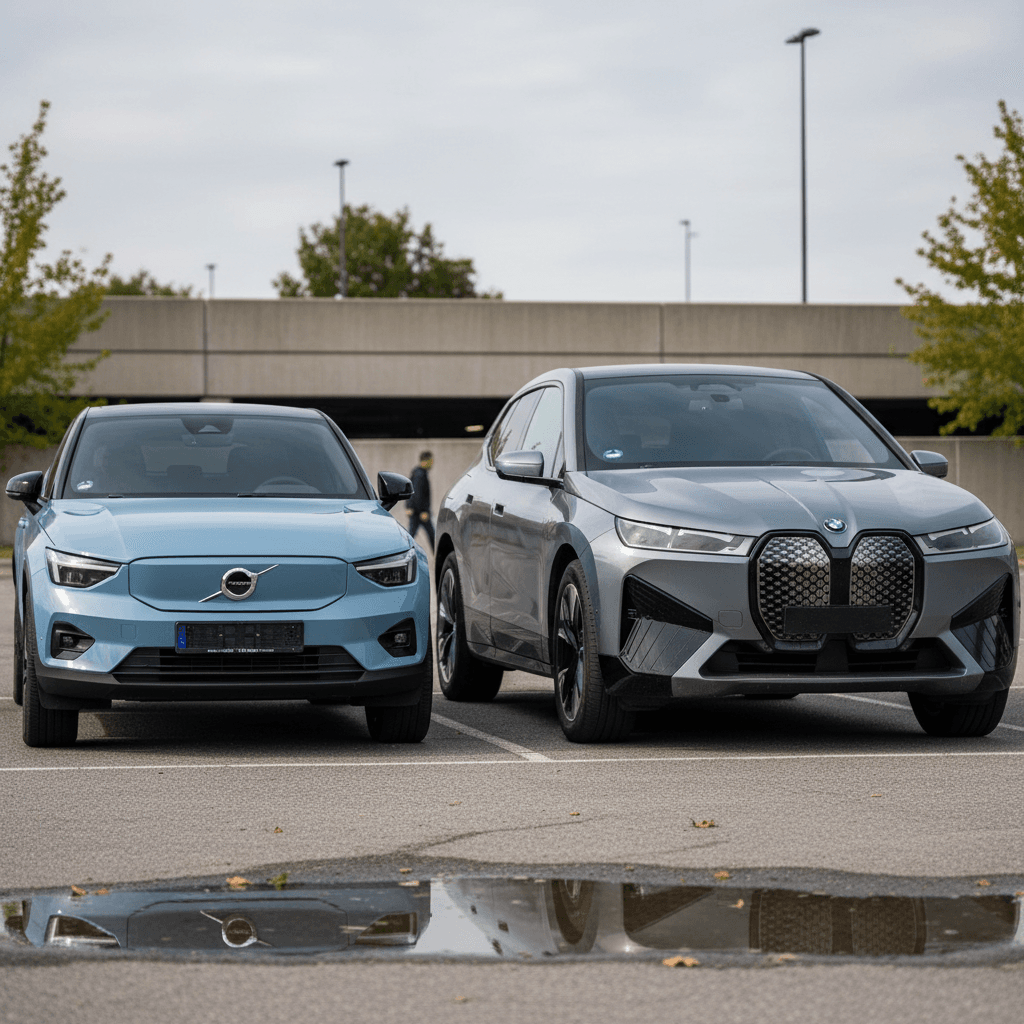
If you regularly carry adults in the back, kids with gear, or bulky cargo, the BMW iX isn’t just “a bit bigger” than the EX30, it’s a totally different class of vehicle. This is one of the clearest deciding factors between them.
Volvo EX30: Compact by Design
- Exterior footprint similar to many subcompact crossovers, great for urban parking and tight garages.
- Front seats feel airy, especially with the minimalist dash and large center screen.
- Rear seat and cargo area are acceptable for kids, pets, and light duty, but adults won’t want to do multi‑hour rides in the back every weekend.
- Best for 1–2 adults plus occasional passengers, or as a second car in a multi‑vehicle household.
BMW iX: Lounge-Like Cabin
- Interior volume closer to a BMW X5, with generous rear legroom and headroom.
- Open, lounge‑like feel with large glass area and high‑quality materials in most trims.
- Cargo space makes family road trips and Costco runs much easier than in the EX30.
- If you’re replacing a traditional luxury SUV 1:1 with an EV, the iX is the more seamless lifestyle fit.
Practical Rule of Thumb
Performance and Driving Feel
Both the Volvo EX30 and BMW iX are quick by historical SUV standards, but they deliver that performance with different priorities. The EX30 leans into playful, right‑sized fun, while the iX emphasizes effortless, almost silent thrust and long‑haul composure.
- Volvo EX30 Twin Motor Performance trims can sprint to 60 mph in roughly 3.5–3.6 seconds, astonishing for a small crossover and more than enough for on‑ramps and passing.
- Single‑motor EX30 variants are still brisk, typically in the low‑5‑second 0–60 range, with rear‑drive balance that feels engaging around town.
- BMW iX xDrive50 clocks 0–60 mph in about 4.4 seconds despite its size and weight, thanks to dual motors and a lot of torque on tap.
- The iX’s extra wheelbase and weight work in its favor for highway ride comfort; the EX30’s shorter wheelbase can feel more lively, fun on back roads, a bit busier on rough interstates.
In this matchup, the question isn’t which EV is “faster.” It’s what kind of speed you actually enjoy using. The EX30 feels like a hot hatch in crossover clothing, while the iX feels like a luxury train that just happens to do 0–60 like a sports sedan.
Technology, Safety, and User Experience
Both brands hang a lot of their identity on tech and safety, but they approach it differently. Volvo pushes a minimalist, software‑first experience with Google built in. BMW goes for maximal features and customization layered on top of a very traditional luxury foundation.
Infotainment, Driver Assistance, and Safety
Two philosophies, both very modern.
Volvo EX30 Tech & UX
- Central vertical touchscreen with Google built‑in, including Google Maps and Assistant.
- Simple, phone‑like UI that’s easy for most people to learn, but heavily reliant on the central screen for basic functions.
- Strong active safety suite, lane keeping, and collision avoidance consistent with Volvo’s safety reputation.
- Minimal physical controls: clean design, but some drivers miss knobs and buttons, especially for climate and audio.
BMW iX Tech & UX
- Curved dual‑screen setup with BMW’s latest infotainment (iDrive), voice controls, and optional head‑up display.
- Rich feature set including advanced driver‑assist bundles, premium audio, ambient lighting, and more.
- Mix of touch, voice, and physical controls, more complexity, but also more ways to interact.
- Feels like a rolling tech flagship; updates and app integrations are robust but can be overwhelming if you just want simplicity.
Safety Is Not the Differentiator Here
Ownership Costs: New EX30 vs Used BMW iX
From a total‑cost‑of‑ownership standpoint, the EX30 and BMW iX can end up closer than you’d expect if you’re comparing a new EX30 to a used iX. That’s where services like Recharged become especially valuable: you’re trading new‑car predictability for used‑luxury value and complexity.
Key Cost Factors to Weigh
1. Purchase Price vs Depreciation
A new EX30 will lose value over its first few years like any new car, but the starting price is comparatively low. A used iX may have already taken a huge depreciation hit, but long‑term repair and out‑of‑warranty costs can be higher.
2. Insurance and Registration
Luxury SUVs like the iX usually cost more to insure and register, particularly in high‑cost states. The EX30’s smaller size and lower MSRP generally work in your favor here.
3. Energy and Charging Costs
The iX’s big battery means higher absolute kWh per full charge, even if efficiency is decent. If you pay high residential electricity rates or rely heavily on DC fast charging, the EX30’s smaller pack may save meaningful money over time.
4. Tires, Brakes, and Wear Items
Big, heavy luxury SUVs are harder on consumables. Larger performance‑oriented tires on the iX can be significantly more expensive than the EX30’s rubber. Factor replacement costs into your budget.
5. Battery Health and Warranty
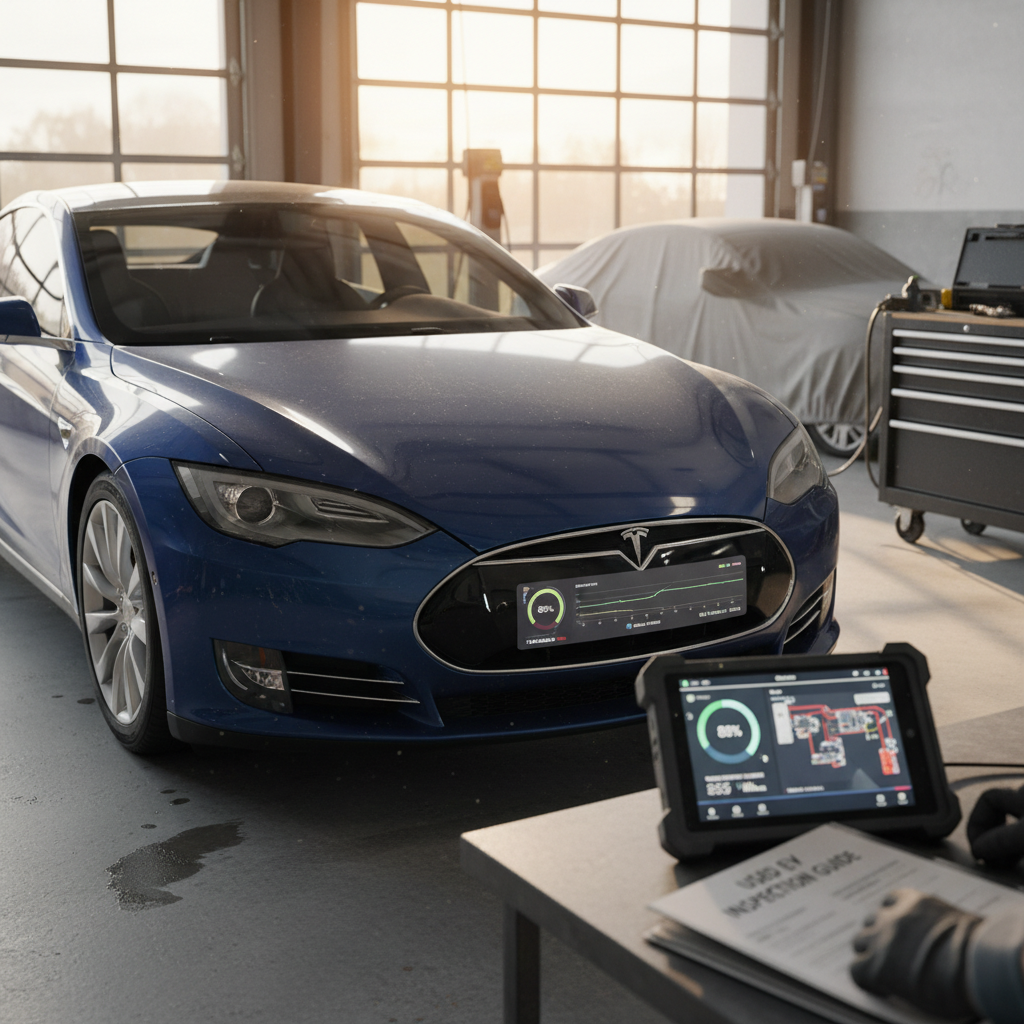
Battery replacement is the big ticket item in any EV. With a used iX, you want objective battery‑health data and clarity on remaining warranty coverage. Recharged’s <strong>Recharged Score Report</strong> is designed to surface this for used EV shoppers.
6. Software and Feature Longevity
Over‑the‑air updates can improve both cars over time, but they can also change feature availability or add subscription layers. Look at what’s standard vs paid on the specific model years you’re considering.
Don’t Skip a Battery Health Check
Volvo EX30 vs BMW iX: Which Is Better for You?
There’s no universal winner in the Volvo EX30 vs BMW iX debate. They answer fundamentally different questions. The “better” EV is the one that fits your budget, space needs, driving patterns, and tolerance for complexity.
Who Each EV Is Best For
Choose the Volvo EX30 if…
You want a <strong>premium-feeling EV</strong> without a luxury‑SUV price tag.
Your driving is mostly commuting, school runs, and city/suburban errands under 80–100 miles per day.
You park on city streets or in tight garages where size is a liability, not a bonus.
You value <strong>simple, Google-based infotainment</strong> and modern safety features over rich customization and maximal luxury.
You’d rather have a newer, lower‑mileage vehicle with warranty coverage than a larger, older luxury SUV.
Choose the BMW iX if…
You routinely drive <strong>long highway distances</strong> and want fewer, longer charging stops.
You need real SUV space for family, road trips, and bulky cargo, and you’re used to a mid‑size luxury SUV already.
You care about <strong>interior materials, sound insulation, and ride comfort</strong> more than a small footprint.
Your budget stretches to either a well‑specced used iX or a higher monthly payment, and you’re prepared for luxury‑class running costs.
You’re specifically seeking a flagship EV experience rather than “just enough” range and comfort.
If You’re On the Fence
Start by being brutally honest about how often you really take 200+ mile trips and how much space you honestly use today. For many U.S. households, the EX30 can handle 90% of real‑world driving needs at a far lower total cost. It’s the rational choice if you’re stepping out of a compact crossover or sedan and don’t crave a big, imposing SUV.
How Recharged Can Help
If a used BMW iX is tempting because you see one priced near a new EX30, that’s when expert guidance matters. On Recharged, every used EV comes with a Recharged Score Report covering battery health, pricing, and condition, plus EV‑specialist support to walk you through trade‑ins, financing, and nationwide delivery. That makes comparing a new‑ish compact EV to a depreciated luxury flagship a lot less risky.
In short: the Volvo EX30 is usually better for cost‑conscious drivers who want a modern, efficient, and easy‑to‑live‑with EV. The BMW iX is better for drivers who prioritize space, long‑distance comfort, and top‑shelf luxury, and who are prepared for the costs that come with it. If you’re ready to compare real‑world used examples side by side, a transparent marketplace like Recharged can turn that high‑stakes decision into a data‑driven one.