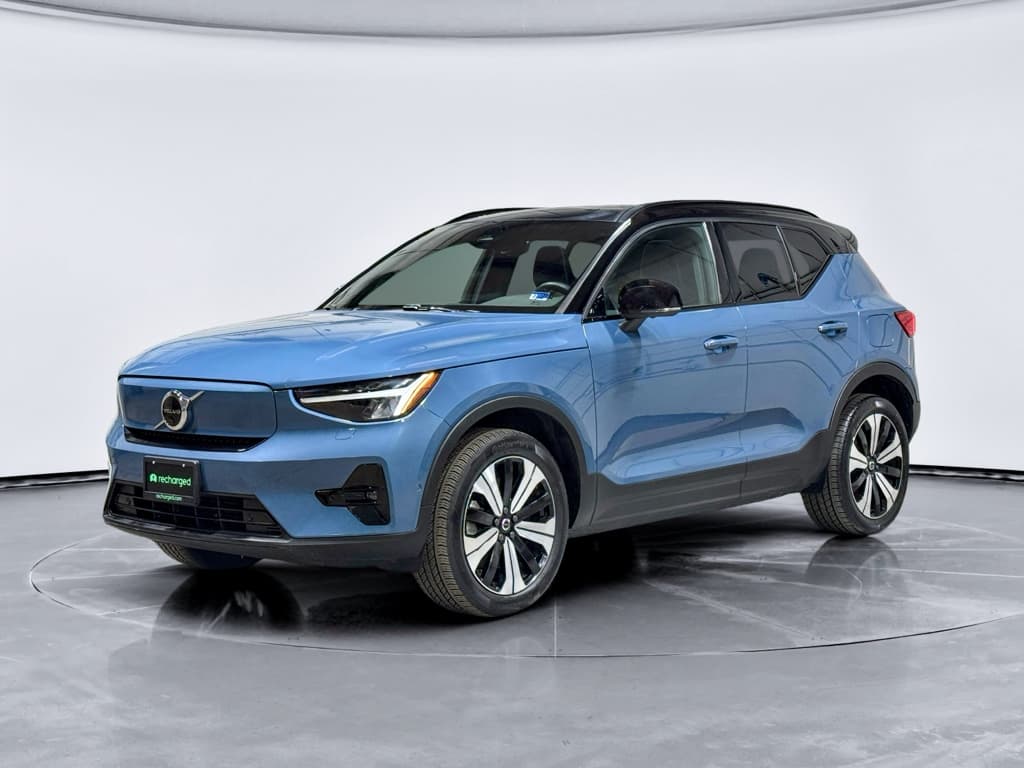
If you’re eyeing a Volvo EX30 or already have one on order, you’ve probably heard two competing stories: it’s both a bargain luxury EV and a model facing higher lease costs, tariff uncertainty, and aggressive discounting. All of that shows up in one place, its depreciation rate. Understanding how fast the EX30 is likely to lose value can save you thousands over the next few years.
Key takeaway on EX30 depreciation
Volvo EX30 depreciation overview
Let’s start with what we actually know. The EX30 is a new model in the U.S., but we already have two important clues about its depreciation:
- Independent resale‑value analysis ranks the Volvo EX30 first for resale value among electric luxury subcompact SUVs, projecting it to retain about 36.4% of its value after 5 years. That implies roughly 63–64% total depreciation over five years in that tiny class.
- Pricing tools that model depreciation for the EX30 off its current MSRPs show a similar picture: an estimated ~36–37% value loss after the first 3 years, and roughly 50% depreciation by year 5. In other words, it behaves like a typical new car, just compressed by EV market volatility.
Projected Volvo EX30 depreciation at a glance
Forecasts, not guarantees
How fast does the Volvo EX30 depreciate?
Most shoppers want a simple answer: “What’s the Volvo EX30 depreciation rate per year?” Real life is messier, but you can think of it in three phases: the new‑car cliff, the mid‑cycle slide, and the long, slow fade.
Estimated Volvo EX30 depreciation by year
Approximate model of EX30 depreciation assuming a mid‑$40,000 starting price and average annual mileage. These are directional guides, not guaranteed resale values.
| Vehicle age | Approx. market value | Total depreciation vs. MSRP | Notes |
|---|---|---|---|
| 1 year | $35,000–$37,000 | ~20–25% | Reflects typical first‑year new‑car drop plus EV discounting and incentives baked into used pricing. |
| 2 years | $32,000–$34,000 | ~27–32% | Tariff changes and new single‑motor trims could put additional pressure on early dual‑motor models. |
| 3 years | $29,000–$31,000 | ~34–38% | Roughly in line with general new‑car averages; still early in the battery’s life. |
| 4 years | $26,000–$28,000 | ~40–45% | Software updates and charging‑network support help here more than raw performance. |
| 5 years | $23,000–$25,000 | ~47–51% | Around half the original MSRP, similar to other premium EV crossovers. |
Example assumes a $47,000 Twin Motor EX30. Your results will vary by trim, mileage, incentives, and local demand.
These ballpark numbers line up with independent depreciation modeling, which projects an EX30 losing around $23,000–$24,000 of value over 5 years from a mid‑$40,000 price point. That’s not outlandish by new‑car standards, but the first owner absorbs almost all of it.
Why first‑year EX30 drops look steep
5‑year Volvo EX30 depreciation forecast
When analysts talk about the Volvo EX30 depreciation rate, they’re usually looking at a 5‑year window. That’s a typical ownership period and, for an EV, roughly the point where battery‑health concerns start to matter for shoppers.
What the data says so far
- In the electric luxury subcompact SUV class, the EX30 is currently projected to have the best resale value, keeping about 36.4% of its original price at 5 years.
- Generic depreciation models show an EX30 still worth roughly $23,000–$24,000 after 5 years if it started around the mid‑$40,000s.
- Lease residuals around 45–50% at 36 months are typical for a normal deal, signaling that lenders expect average mainstream‑luxury depreciation rather than a disaster scenario.
Wildcards that could shift the curve
- Tariffs and supply chain: U.S. import policy on Chinese‑built EVs has already moved EX30 pricing once and could do it again.
- Price repositioning: The single‑motor EX30 arrived at a higher price than Volvo first promised, while incentives and lease support have see‑sawed, both affect future used values.
- EV market resets: Broad EV price cuts from Tesla or others, or richer federal/state incentives, can reset expectations for what a used small EV should cost.
Lease residuals vs. real‑world depreciation
If you’re comparing lease offers, you’ll see a different but related metric: residual value. This is the finance company’s guess at what the EX30 will be worth at the end of your lease, usually 24–48 months out.
Residuals, incentives, and what they really mean
Why a “bad” EX30 lease doesn’t necessarily mean the car itself depreciates badly
Residual value
For many EX30 leases, residuals have hovered around 45–50% after 36 months with usual mileage limits.
This suggests lenders expect the EX30 to hold value roughly on par with other compact luxury EVs.
Money factor & lease cash
EX30 lease programs have seen high money factors (near‑9% APR equivalents in some offers) but also generous lease cash, sometimes $7,500–$9,000 applied as a factory incentive.
High interest plus strong incentives can make the lease feel expensive even if the residual isn’t unusually low.
Market vs. paper depreciation
Residuals are “on paper.” Real depreciation depends on what used buyers actually pay for a 2–3‑year‑old EX30.
Early resale listings for nearly‑new EX30s show 20%+ discounts vs. comparable new stickers, which lines up with normal first‑year luxury‑EV behavior.
Where a low residual can help you
Why EVs, and the EX30, depreciate differently
Compared with gas crossovers, EVs like the EX30 have a few quirks that push depreciation around, sometimes in your favor, sometimes not.
- Incentives distort MSRPs. Federal and state tax credits, along with lease cash, mean many EX30 buyers never truly paid the window sticker, used prices reflect those lower real‑world transaction prices.
- Battery and charging tech move fast. A future small EV with better range, faster DC charging, or wider charging‑network support can pressure older models’ values, especially if the EX30’s real‑world range remains under a spotlight.
- Tariffs and supply chains matter. Because the EX30 is built in China, tariff hikes and policy changes have already altered pricing and lease terms. That uncertainty is baked into depreciation forecasts.
- Software support is a real asset. Over‑the‑air updates, new driver‑assist features, and app integrations can help the EX30 age better than some rivals, supporting resale value if Volvo keeps investing in it.
Watch highway‑range perception
Factors that help or hurt your EX30’s value
Biggest drivers of Volvo EX30 depreciation
Some you control, some you don’t, but you should know all of them
Miles, condition, and history
- Staying near 10–12k miles per year helps your EX30 track with market averages.
- Accident‑free history, documented service, and clean cosmetic condition can be worth several thousand dollars at resale.
- Severe damage or poor repairs hurt any EV’s value quickly.
Battery health & charging habits
- Buyers of used EVs care about usable range, not just original EPA numbers.
- Frequent DC fast charging and always charging to 100% can accelerate battery wear; keeping to 20–80% for daily use can help.
- Third‑party battery‑health reports, like the Recharged Score, make your EX30 easier to sell and price confidently.
Trim and wheel choice
- Ultra and Cross Country trims may depreciate faster in absolute dollars because they start higher, even if the percentage is similar.
- Big wheels and performance‑focused dual‑motor setups can look great, but they also cut range, something used buyers notice.
Where you live
- In EV‑friendly, high‑cost markets (West Coast metros, some Northeast cities), **used EX30 demand may be stronger**, supporting prices.
- In regions with sparse charging or low EV adoption, dealers may discount more heavily to move inventory.
Strategies to reduce your EX30 depreciation cost
Practical ways to manage EX30 depreciation
1. Time your purchase around incentives
Because EX30 pricing has been heavily influenced by lease cash and occasional discounts, your real‑world depreciation starts with <strong>what you pay today</strong>, not the MSRP. Waiting for strong factory programs, or shopping nearly‑new used, can instantly knock thousands off your exposure.
2. Consider a 2–3‑year plan, not 6–7
Given how quickly EV tech evolves, a <strong>shorter ownership or lease cycle</strong> can make sense. You dodge the steepest years of battery‑tech obsolescence while staying ahead of major styling or platform changes.
3. Protect the battery to preserve range
Avoid leaving the pack at 100% for days, minimize unnecessary DC fast charging, and keep the car in moderate temperatures when you can. A healthier pack means stronger range numbers on a test drive, and more confidence from the next buyer.
4. Keep records and reports handy
Document every service visit and any warranty work. When you’re ready to sell or trade, a <strong>third‑party battery‑health report</strong> (like Recharged’s Score Report) helps justify a stronger asking price and faster sale.
5. Watch for tariff and pricing news
Significant changes in U.S. EV tariffs or large price cuts from Volvo or key rivals can ripple into the used market. If you’re flexible on timing, it’s worth selling or buying slightly early or late to avoid the worst of a price reset.
How Recharged can help
Buying a used Volvo EX30 to let someone else take the hit
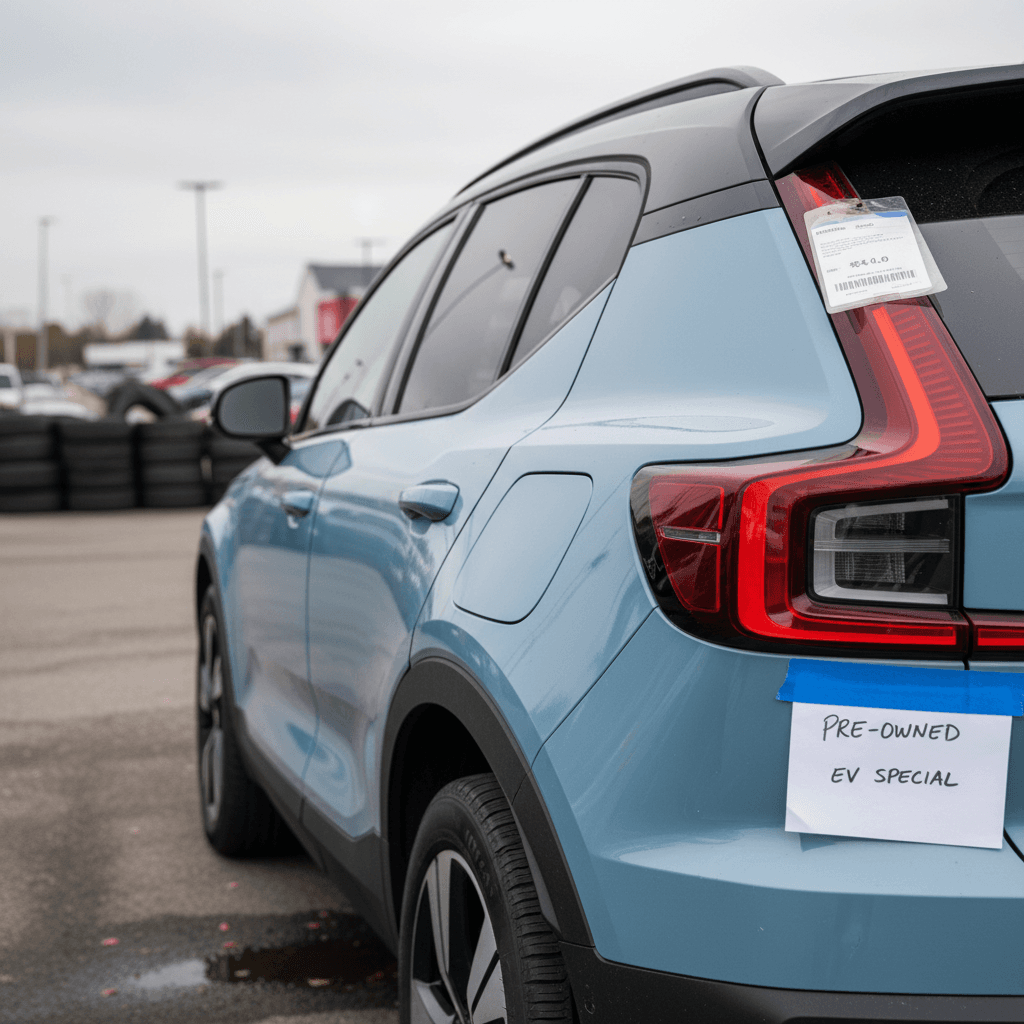
For many shoppers, the smartest way to play the Volvo EX30 depreciation rate is simple: don’t be the first owner. Let someone else absorb the new‑car drop and buy 12–36 months in.
New vs. nearly‑new Volvo EX30: who eats the depreciation?
Illustrative comparison based on current market behavior for well‑equipped dual‑motor EX30s.
| Scenario | Purchase price | Value after 3 years | Total depreciation | Who eats the most loss? |
|---|---|---|---|---|
| Buy new today, keep 3 yrs | $47,000 | $30,000 | -$17,000 | You |
| Buy 1‑yr‑old EX30, keep 3 yrs | $36,000 | $28,000 | -$8,000 | You (second owner) |
| Original owner in scenario 2 | $47,000 | $36,000 | -$11,000 | First owner |
Numbers are examples, but the pattern, steep first‑year drop, slower decline afterward, is typical for new EVs.
From a cost‑of‑ownership standpoint, that’s a strong argument for shopping the used EX30 market once more inventory builds up, especially if you’re flexible on color and trim.
Where Recharged fits in
Should you lease or buy a Volvo EX30?
Given everything going on with tariffs, incentives, and fast‑moving tech, it’s fair to ask whether leasing or buying makes more sense for an EX30.
When leasing the EX30 can make sense
- You want to **cap your technology risk**. A 2–3‑year lease lets you hand the car back before a major redesign or big range jump arrives.
- You can access **strong lease incentives**, including factory cash that effectively passes today’s tax credit through in the payment.
- You’re okay with the idea that you may never own the car; the priority is predictable monthly cost.
When buying (new or used) is smarter
- You drive more than typical lease miles or dislike mileage caps and wear‑and‑tear charges.
- You can buy an EX30 at a **meaningful discount to MSRP** (or choose a used one that’s already taken the big first‑year hit).
- You want the option to **keep the car 6–8 years** if depreciation turns out worse than forecast, spreading the cost over more miles.
Lease deals can look worse than they are
FAQ: Volvo EX30 depreciation and resale value
Frequently asked questions about Volvo EX30 depreciation
Bottom line: Is the Volvo EX30 a good long‑term bet?
Taken in context, the Volvo EX30 depreciation rate is neither a bargain unicorn nor a looming disaster. It behaves like what it is: a sharply styled, tech‑forward luxury EV that launched into a volatile market. Early signs point to average‑plus resale performance in its niche, but the combination of tariffs, incentives, and fast‑moving competitors means the first 1–3 years are anything but boring.
If you buy new, your best defense is paying the right price up front, taking care of the battery, and being realistic about a 5‑year horizon. If you buy used, you can let someone else eat that initial drop, just insist on data, not guesswork, when it comes to battery health and fair market value. That’s exactly what Recharged was built for: giving EV shoppers transparent pricing, verified battery diagnostics, financing options, and expert guidance so depreciation becomes a manageable cost of ownership, not an unpleasant surprise.