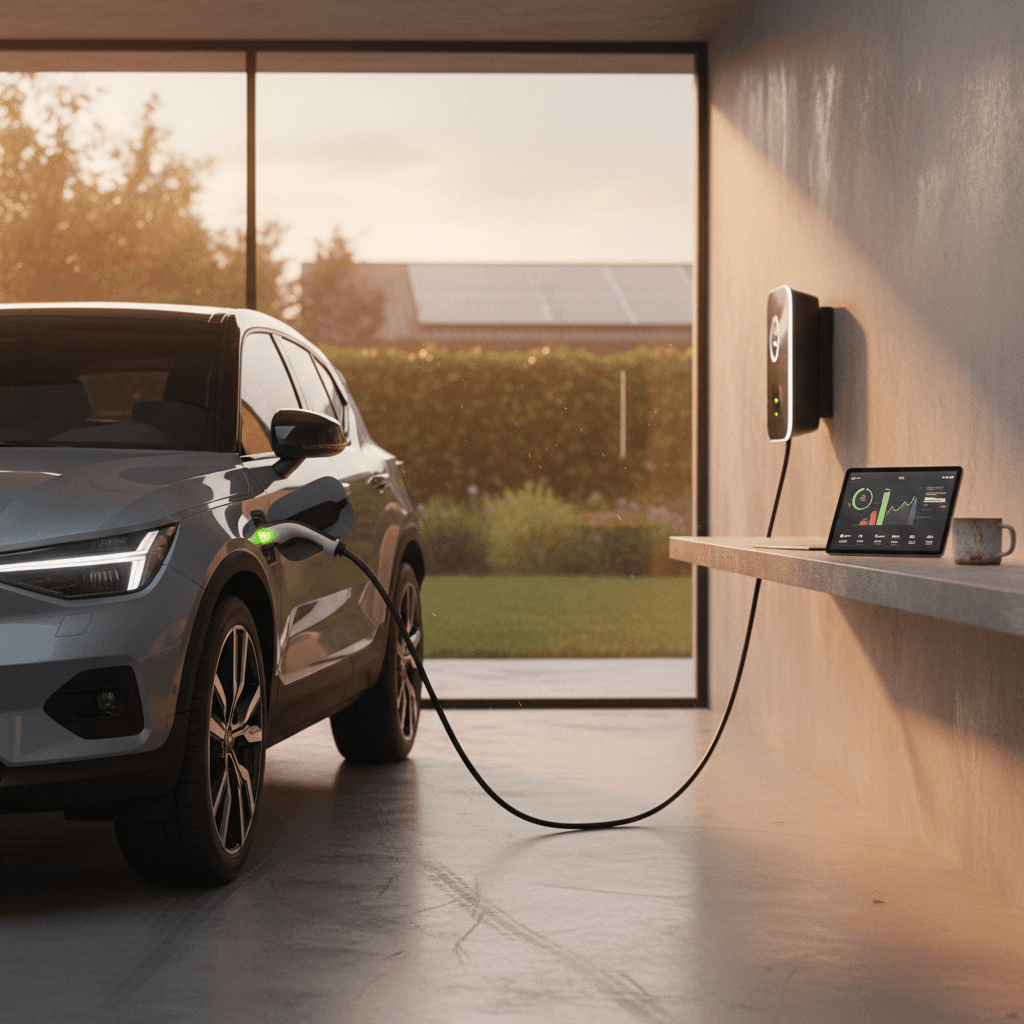
If you’re considering a Volvo EX30, or already drive one, the big money question is simple: what does it cost per mile to charge? Because electricity prices and driving styles vary, “it depends” is technically true, but with a few reasonable assumptions we can pin the Volvo EX30 charging cost per mile down to a surprisingly tight range and show you how to optimize it.
Key takeaway in one line
Volvo EX30 charging cost per mile: quick overview
Typical Volvo EX30 electricity cost per mile (U.S. averages)
Those ranges are averages built from U.S. electricity price data and realistic efficiency for the EX30’s larger battery versions. Below we’ll unpack the assumptions, walk through example calculations, and show you how to plug in your own local rates so you’re not guessing.
Volvo EX30 efficiency and battery basics
To understand the Volvo EX30 charging cost per mile, you first need two ingredients: how much energy the car uses to go a given distance, and what you pay per kilowatt‑hour (kWh) of electricity.
- Battery: most U.S. EX30s are the Single Motor Extended Range or Twin Motor Performance versions with roughly 64 kWh usable capacity.
- Lab‑style efficiency: European and independent tests often show around 18–19 kWh/100 km (about 29–31 kWh/100 miles) in gentle conditions for the big‑battery EX30.
- Real‑world mixed driving: factoring in weather, speed, and climate control, many owners report closer to 18–20 kWh/100 miles city‑heavy, and 22–28 kWh/100 miles at highway speeds or in colder climates.
Rule‑of‑thumb EX30 efficiency
The second ingredient is the price of electricity. Recent U.S. data puts the average residential rate in the mid‑teens cents per kWh, while public DC fast charging on major networks commonly runs several times higher per kWh. That gap is why home charging dominates the economics for most EX30 owners.
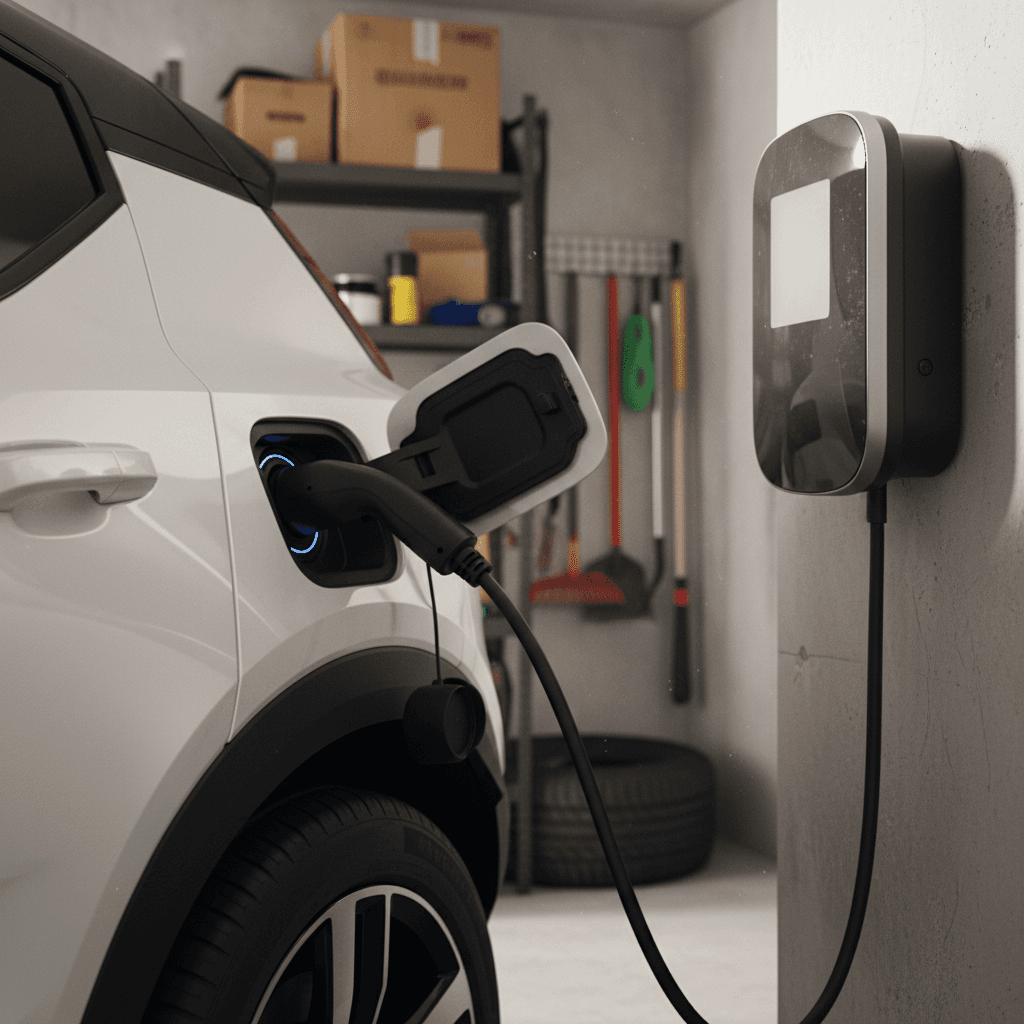
Home charging: Volvo EX30 cost per mile
Let’s start where most miles should come from: Level 2 home charging on a 240‑volt circuit. We’ll use a realistic national‑average electricity price and the EX30 efficiency baseline we set above.
Example Volvo EX30 home charging cost per mile
Illustrative cost scenarios using approximate 2024–2026 U.S. residential electricity prices. Plug in your own local rates for a more precise answer.
| Scenario | Electricity rate (¢/kWh) | Assumed efficiency (mi/kWh) | Cost per mile |
|---|---|---|---|
| Low‑cost power state | 13¢ | 3.4 | $0.038 per mile |
| Near U.S. average | 16.5¢ | 3.4 | $0.049 per mile |
| Higher‑cost metro | 22¢ | 3.4 | $0.065 per mile |
| Very high‑cost region | 30¢ | 3.4 | $0.088 per mile |
Your actual numbers will vary with your local rate plan, weather, driving style, and wheel/tire choice, but the pattern, home charging being dramatically cheaper per mile than public fast charging, tends to hold.
In other words, if you’re paying roughly U.S. average residential rates and getting typical EX30 efficiency, you’re usually somewhere around 5 cents per mile when charging at home. Even in relatively expensive electricity markets, you’re still well under ten cents a mile.
Watch for time‑of‑use pricing
Public DC fast charging cost per mile
Fast charging is where the Volvo EX30 charging cost per mile can jump. Public DC fast chargers (including CCS today and, increasingly, NACS/Tesla‑standard plugs) typically price electricity much higher than residential rates, because you’re paying for infrastructure, land, and margin as well as power.
Typical public DC fast‑charging prices in 2026
These are broad national ranges; your local rates may fall outside them.
Budget memberships
Some regional networks and membership plans land around $0.35–$0.45/kWh.
Best case for regular road‑trippers who join a program.
Common walk‑up rates
Plenty of DC fast stations now price in the $0.45–$0.60/kWh band, especially along busy corridors.
Premium or high‑demand
Urban fast chargers and high‑power sites can run $0.60–$0.80+/kWh, particularly without a membership.
If we again assume the EX30 delivers around 3.4 mi/kWh on a road trip (which is optimistic for 70–80 mph driving, but useful for comparison), here’s what that looks like per mile:
Volvo EX30 cost per mile on public DC fast charging
Illustrative cost per mile at different DC fast‑charging price points, assuming 3.4 miles per kWh.
| Price per kWh | Miles per kWh (assumed) | Cost per mile |
|---|---|---|
| $0.40 | 3.4 | $0.12 per mile |
| $0.50 | 3.4 | $0.15 per mile |
| $0.60 | 3.4 | $0.18 per mile |
| $0.70 | 3.4 | $0.21 per mile |
Because DC fast charging is several times more expensive per kWh than home charging, using it for most of your miles can double or triple your EX30’s cost per mile.
Don’t plan your budget on DC fast alone
Volvo EX30 electricity cost per mile vs gas SUV
To put the EX30’s charging cost per mile into context, compare it against a small gasoline SUV or crossover, the kind many EX30 shoppers are cross‑shopping.
Step 1: Estimate gas cost per mile
Take a typical compact SUV that averages about 28 mpg combined. At $3.50/gal gasoline, cost per mile is:
$3.50 ÷ 28 ≈ $0.125 per mile
At $4.50/gal (not unusual in coastal metros), you’re at:
$4.50 ÷ 28 ≈ $0.16 per mile
Step 2: Compare to EX30 electricity
- Home‑charged EX30 near U.S. average rate ≈ $0.05 per mile.
- DC‑fast‑heavy EX30 at many public rates ≈ $0.12–$0.18 per mile.
So an EX30 that’s mostly home‑charged can cut your fuel cost per mile in half (or better) versus gas. An EX30 that’s mostly DC‑fast‑charged may cost about the same, or more, per mile than a gasoline counterpart.
Where the EX30 really shines
What actually changes your real‑world cost per mile
Official efficiency labels are one thing; what you actually see in dollars per mile is another. Several factors nudge the Volvo EX30 charging cost per mile up or down in the real world.
6 big levers on Volvo EX30 cost per mile
Most owners underestimate how much these change the numbers over a year.
When you charge
On time‑of‑use plans, overnight rates can be dramatically cheaper than late‑afternoon peaks. Scheduling charging properly is often the single easiest way to cut cost per mile.
Climate & HVAC use
Cold weather and heavy HVAC use can reduce efficiency significantly, pushing you closer to 2.5–3.0 mi/kWh for part of the year.
Speed & aerodynamics
Running 75–80 mph vs 60–65 mph can meaningfully increase consumption, especially in a chunky SUV profile like the EX30.
Wheels & tires
Big wheels and performance tires look great but often hurt efficiency. If you care about cost per mile, the smallest aerodynamic wheel/tire package is usually the winner.
City vs highway mix
EVs often do better in stop‑and‑go than steady high‑speed driving. Urban‑heavy EX30 use can improve your mi/kWh versus constant freeway miles.
Charging mix
The share of miles you fuel at home Level 2 vs public DC fast is just as important as how many miles you drive in the first place.
Think in annual dollars, not just cents per mile
How to estimate your own EX30 cost per mile
Rather than memorizing national averages, it’s smarter to plug in your own local numbers. Here’s a simple way to estimate your Volvo EX30 charging cost per mile in under five minutes.
5‑step worksheet: Volvo EX30 charging cost per mile
1. Find your real electricity rate
Look at your most recent power bill and divide the total dollar amount (including fees and taxes) by the total kWh used. That gives you an all‑in ¢/kWh number that’s more honest than the headline rate.
2. Note any time‑of‑use EV plan
If your utility offers a cheaper overnight EV rate, note that separately. In many households, the EV can be shifted to almost entirely off‑peak charging.
3. Pull your EX30’s consumption data
In your EX30’s trip computer or app, look at your <strong>long‑term average kWh/100 miles</strong> over at least a few weeks. Convert it to mi/kWh (100 ÷ kWh per 100 miles).
4. Do the home‑charging math
Use the simple formula: <strong>Cost per mile = (rate per kWh ÷ miles per kWh)</strong>. For example, $0.17 ÷ 3.2 mi/kWh ≈ $0.053 per mile.
5. Layer in your public charging
Estimate what % of your miles use DC fast charging and at what typical price. Blend that with your home‑charging cost to get a weighted average cost per mile for a full year.
Shortcut with EV trip‑planning apps
Practical ways to lower your Volvo EX30 running costs
Once you’ve done the math, the next question is how to shrink that Volvo EX30 charging cost per mile without turning driving into a science project.
- Shift as much charging as possible to home Level 2. If you currently use DC fast charging because home charging feels complicated, getting a reliable Level 2 setup will pay back surprisingly quickly.
- Use scheduled charging. Take advantage of time‑of‑use or EV‑specific tariffs by setting the EX30 (or your charger) to top up during off‑peak hours.
- Drive a little slower on the highway. Dropping from 78 mph to 70 mph won’t ruin your trip, but it can recover a noticeable chunk of efficiency.
- Pre‑condition while plugged in. Heating or cooling the cabin while the EX30 is still charging keeps more battery energy for driving.
- Keep your tires properly inflated. Under‑inflated tires hurt both range and safety. Check them monthly, especially with big‑diameter wheels.
Where Recharged can help
Ready to find your next EV?
Browse VehiclesUsed Volvo EX30s, battery health, and cost per mile
Battery health doesn’t change your electricity price, but it does affect how far each kWh takes you, and how often you need to charge. Over time, that’s another lever on the EX30’s effective cost per mile and total ownership cost.
How degradation affects cost per mile
Mild battery degradation, say the EX30 has 90–95% of its original usable capacity after several years, won’t suddenly double your energy use. But it reduces range, which may push you toward more frequent fast charging on road trips and more time spent at higher, less efficient states of charge.
In other words, degradation often raises your indirect cost per mile by shifting you toward pricier charging and more frequent stops.
Why independent battery reports matter
On a used EX30, you want more than just a dash‑screen range guess. A structured battery health assessment, like the Recharged Score we run on every EV we sell, gives you an objective view of usable capacity and helps you understand how range and charging behavior will look over your ownership horizon.
That’s critical if you plan to rack up highway miles where DC fast costs dominate your budget.
Be cautious with heavily fast‑charged ex‑fleet cars
Volvo EX30 charging cost per mile: FAQ
Frequently asked questions about Volvo EX30 charging cost per mile
Bottom line: what you’ll really pay per mile
If you boil all the variables down, the story is straightforward: with realistic efficiency and today’s electricity prices, a Volvo EX30 charged primarily at home usually lands in the $0.05–$0.08 per‑mile band. Lean hard on public DC fast charging and that number can easily creep into the $0.12–$0.18 per‑mile range, erasing much of the EX30’s fuel‑cost advantage over gasoline.
Your own numbers will hinge on three things: your power rate, your driving style, and your charging mix. Spend a few minutes with your utility bill and your EX30’s efficiency readout and you’ll have a far clearer picture of what this compact Volvo really costs you to run, today and over the years ahead.
And if you’re still in the shopping phase, consider looking at battery health and charging access right alongside price and features. On Recharged, every used EV listing, including potential Volvo EX30s, comes with the Recharged Score and expert EV‑specialist support so you can connect the dots from kilowatt‑hours and cents per mile to a total ownership picture that actually fits your life.