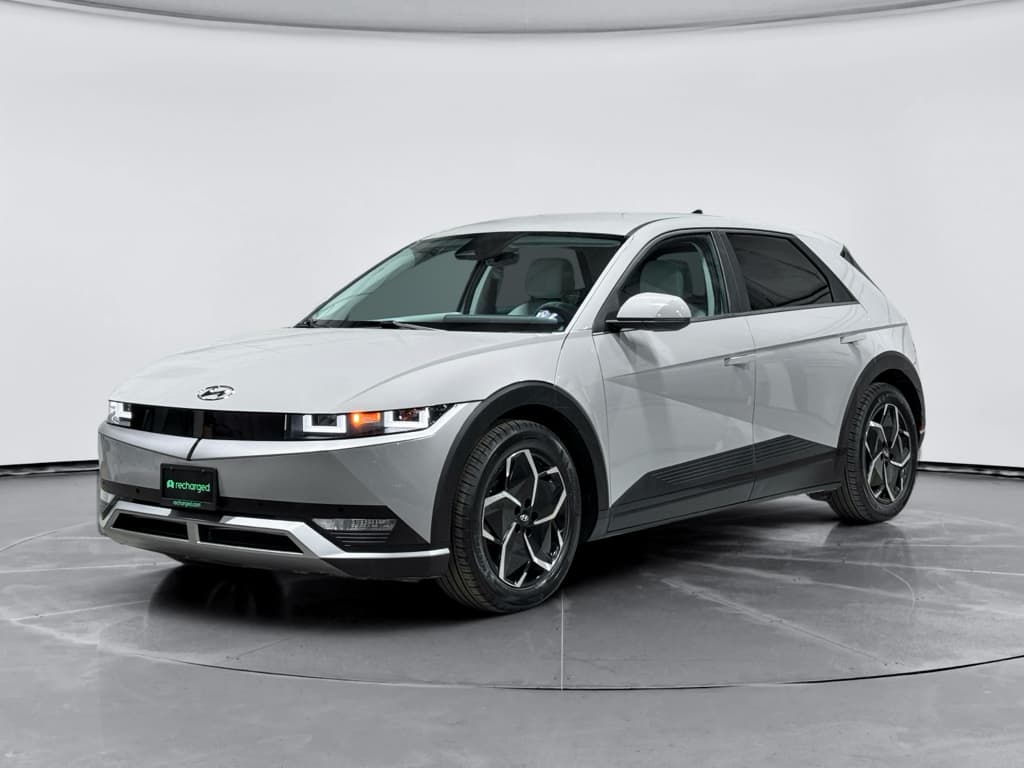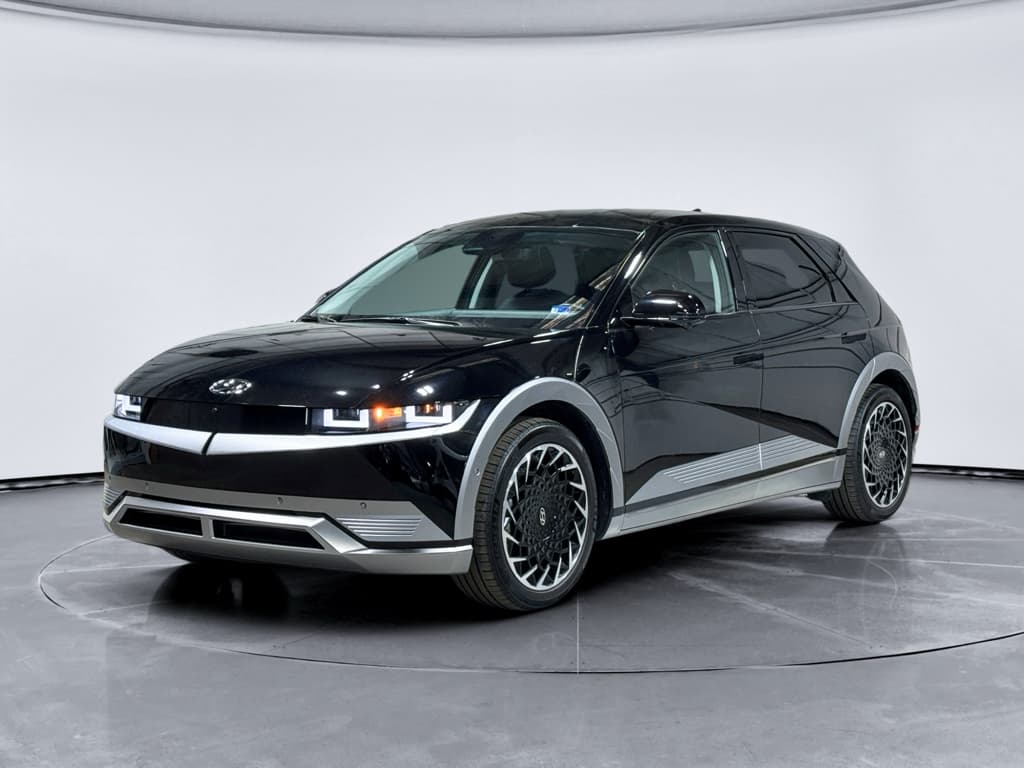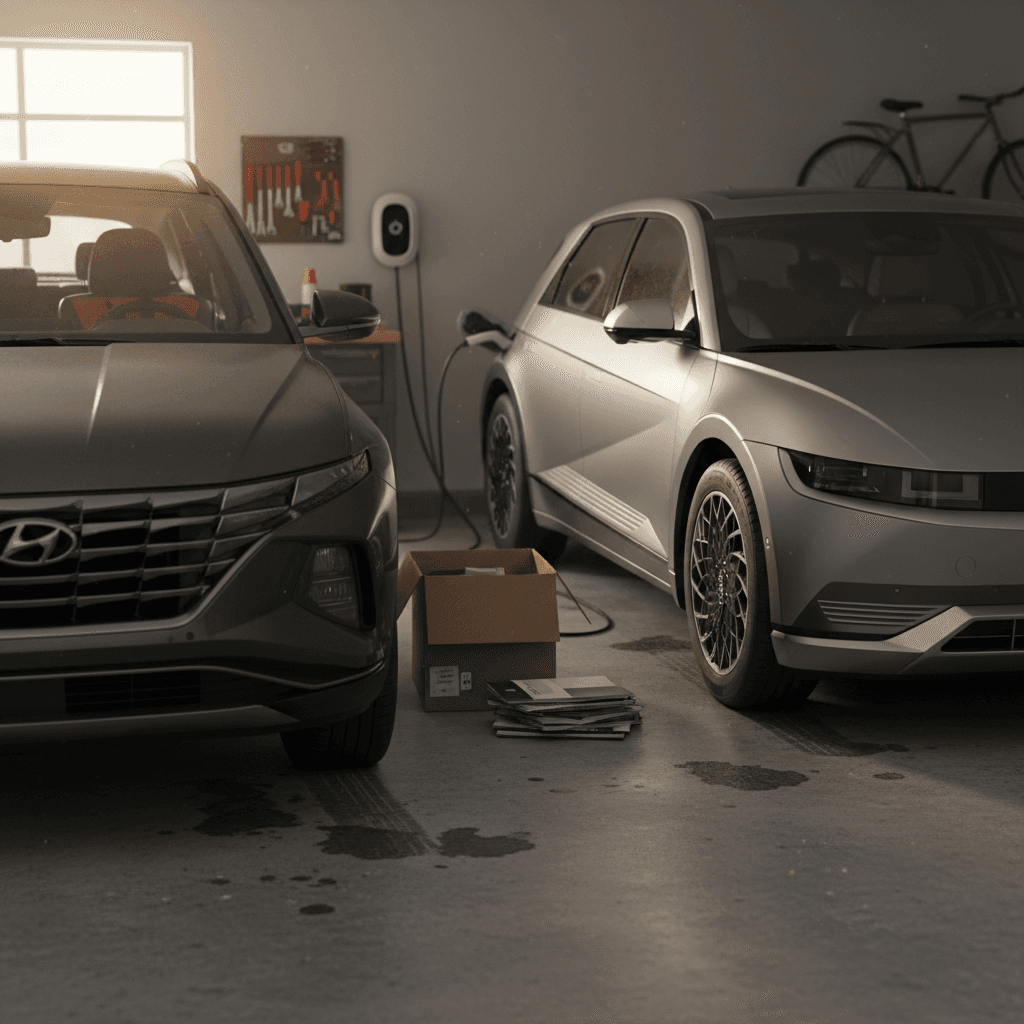
If you currently drive a Hyundai Tucson and you’re eyeing the Hyundai Ioniq 5, you’re exactly the kind of shopper reshaping the car market right now: moving from a practical gas crossover into your first serious EV. This review is written from that perspective, what really changes when a Tucson owner switches to an Ioniq 5, in terms of space, comfort, charging, range, costs, and day‑to‑day usability.
Who this review is for
Should a Tucson Owner Switch to an Ioniq 5?
Hyundai Tucson vs. Ioniq 5 at a Glance (US Market Approximates)
For a typical Tucson owner, the Ioniq 5 feels familiar in size and practicality but very different in how it moves and how you plan your energy. You trade gas stops and oil changes for charging strategy and battery‑health awareness. If your daily driving is under about 150 miles and you can charge at home (or at work), the Ioniq 5 is a strong upgrade in refinement, performance, and running costs. If you regularly drive long distances in rural areas with sparse fast‑charging, you’ll need to think harder before jumping.
Short answer for many Tucson owners
Driving Experience: Power, Ride, and Everyday Feel
Tucson: Familiar, Competent Crossover Feel
- Gas and hybrid Tucsons feel conventional: stepped automatic, engine noise under load, and gear changes you can feel.
- Power is adequate but not thrilling in most trims; passing often means a downshift and some engine revs.
- Ride is tuned for comfort with a bit of body motion, very normal for the segment.
Ioniq 5: Quiet, Instant, and Surprisingly Quick
- Instant torque from electric motors makes city driving and highway merging feel effortless.
- RWD Ioniq 5s with the larger battery make ~225 hp; AWD versions make about 320 hp, giving genuinely quick acceleration.
- The dedicated EV platform and long wheelbase give the Ioniq 5 a planted, refined ride that feels more like a premium car than a mainstream crossover.
Coming out of a Tucson, the first thing you’ll notice in the Ioniq 5 is how effortless everything feels. There’s no transmission hunting for gears, no startup rumble, you just press the pedal and go. For a lot of ex‑Tucson owners, the combination of instant power and low noise is what makes it hard to go back to gas once they’ve lived with an Ioniq 5 for a while.
One-pedal driving adjustment
Space and Practicality: Tucson vs. Ioniq 5
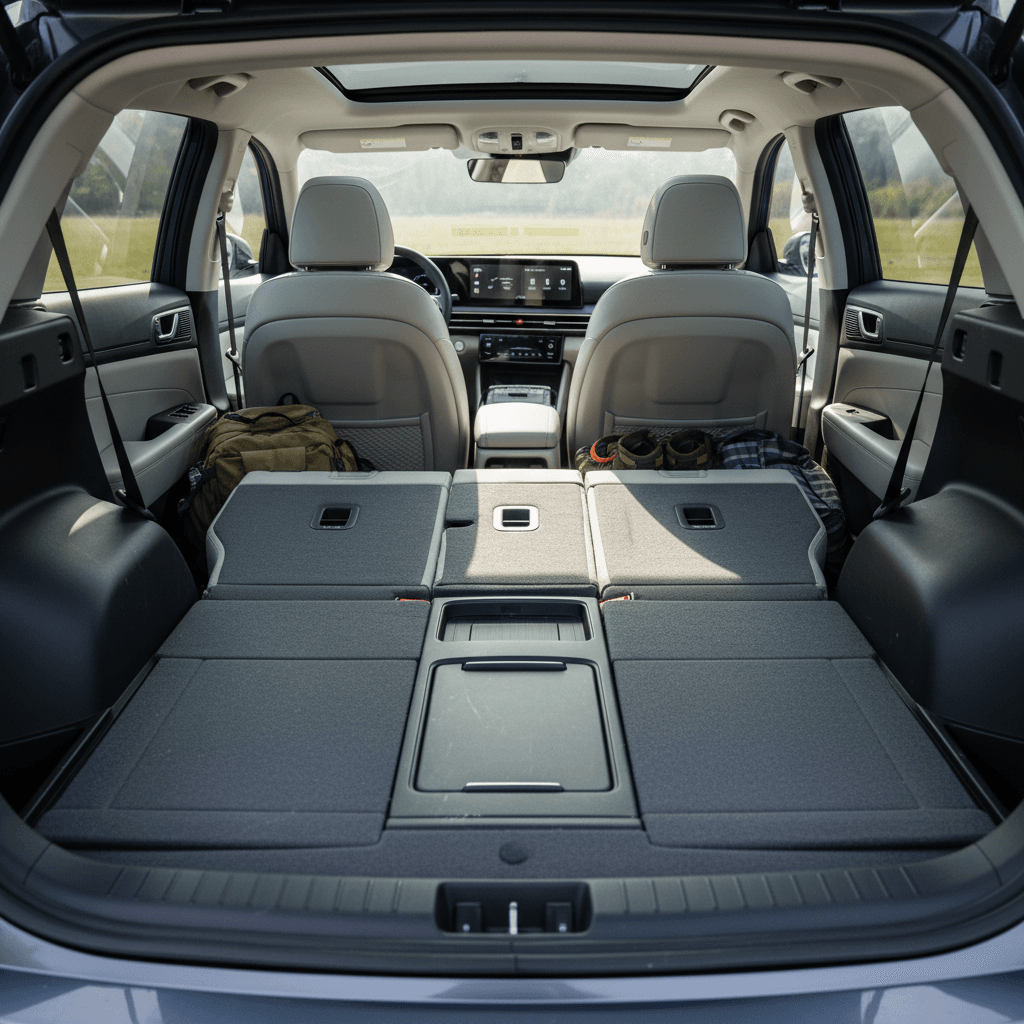
Rough Space Comparison: Tucson vs. Ioniq 5 (US models)
Approximate figures; exact numbers vary by model year and trim, but this gives a Tucson owner a directional sense of how much room you gain or lose.
| Feature | Hyundai Tucson (gas) | Hyundai Ioniq 5 |
|---|---|---|
| Overall length | ~182–184 in | ~182 in |
| Wheelbase | ~108 in | ~118 in (much longer) |
| Rear legroom | Good | Excellent – feels almost midsize |
| Cargo behind 2nd row | Competitive for class | Very similar; a bit less depth but wide opening |
| Flat floor | No (tunnel in middle) | Yes – true flat EV floor |
| Front storage (frunk) | None | Small front trunk on some trims |
Both vehicles are family‑friendly; the Ioniq 5 trades a bit of maximum cargo depth for more usable passenger space and clever storage.
On paper, Tucson and Ioniq 5 space is surprisingly close. In practice, the Ioniq 5’s very long wheelbase and flat floor make the cabin feel more open, especially for rear passengers. If you’re used to fitting kids, strollers, and Costco runs in a Tucson, you won’t feel like you’ve downsized, but you may have to pack a little more carefully for maximum‑load road trips.
Family friendliness
Range, Charging, and Road Trips
Tucson owners are used to a simple model: you drive until the fuel gauge is low and stop at any gas station. In an Ioniq 5, you’re thinking about range, battery size, and charging speeds instead. The good news is that the Ioniq 5 is one of the quicker‑charging EVs on the market, thanks to an 800‑volt architecture that allows 10–80% DC fast‑charging in roughly 18 minutes under ideal conditions on a 350 kW charger.
Ioniq 5 Battery and Range Overview (US, recent model years)
What you can expect if you’re cross‑shopping trims against your Tucson.
SE Standard Range (RWD)
- Battery: ~58 kWh
- EPA range: around 220 miles
- Best for: city drivers, shorter commutes, lower upfront cost
SE/SEL/Limited (RWD, Long Range)
- Battery: ~77–84 kWh depending on model year
- EPA range: roughly 300–318 miles
- Best for: ex‑Tucson owners who road‑trip occasionally
SE/SEL/Limited (AWD)
- Same larger pack
- EPA range: typically ~260–290 miles, depending on year
- Best for: performance feel, snow‑belt traction
Think in daily miles, not just headline range
Charging Readiness Checklist for Tucson Owners
1. Do you have a place to plug in at home?
A private driveway or garage with access to a standard 120‑volt outlet is a starting point. For a Tucson owner going full EV, a 240‑volt Level 2 charger is strongly recommended for convenience.
2. Can you install a 240‑volt outlet or wallbox?
If you own your home, budget for an electrician visit. If you rent, check whether your landlord or building offers EV charging or is open to adding it.
3. How often do you road‑trip more than 250 miles in a day?
If the answer is "a few times a year," the Ioniq 5 will work fine with some route planning and DC fast‑charging. If it’s every weekend, be honest about charging availability along your routes.
4. Are there DC fast chargers along your common routes?
Use apps like PlugShare or A Better Routeplanner to verify CCS and NACS fast‑chargers on the interstates you actually use.
5. Are you okay sitting for 20–30 minutes on long trips?
On road trips you’ll build in charging stops for food and rest, great for families, but different from the 5‑minute gas stops you’re used to in the Tucson.
Don’t rely on Level 1 only
Running Costs and Total Cost of Ownership
Tucson owners are used to budgeting for gasoline, oil changes, transmission service, and brake work as the miles pile up. In an Ioniq 5, you essentially swap that stack of mechanical complexity for a big battery, motors, and software. Over a multi‑year horizon, especially if you buy used and let the first owner take the depreciation hit, the math often favors the EV, provided you’re charging mostly at home.
Typical Cost Differences: Tucson vs. Ioniq 5 (Conceptual)
Numbers vary widely by location and energy prices. This is a directional look at where costs shift when you move from a gas Tucson to an electric Ioniq 5.
| Cost Area | Hyundai Tucson (gas) | Hyundai Ioniq 5 |
|---|---|---|
| Fuel / Energy | Gasoline costs fluctuate; often highest line item | Home charging is usually ~1⁄4–1⁄3 the cost per mile vs. gas; public fast‑charging can approach or exceed gas costs |
| Oil & routine service | Regular oil changes, transmission fluid, more complex drivetrain | No oil changes; simplified drivetrain, tire rotations and brake fluid still needed |
| Brakes | More wear in stop‑and‑go traffic | Regenerative braking reduces physical brake use, often extending pad life |
| Insurance | Mainstream crossover rates | Can be somewhat higher; varies by zip and carrier |
| Depreciation | Well‑known, mature segment | EV residuals still evolving; used Ioniq 5 pricing has become more approachable in many markets |
The Ioniq 5 tends to win on fuel and routine maintenance, while insurance and purchase price can be higher depending on trim and market conditions.
Where Recharged fits in
Reliability, Warranty, and Battery Health
The Tucson has earned its reputation as a solid, straightforward compact SUV, and late‑model examples benefit from Hyundai’s generous warranty. The Ioniq 5 inherits that warranty DNA but applies it to a more software‑heavy, complex electrical platform. That doesn’t make it fragile, but it does change what you worry about.
- Both Tucson and Ioniq 5 benefit from Hyundai’s strong factory warranties; late‑model Ioniq 5s typically include long battery coverage from original in‑service date.
- Rather than engine or transmission issues, Ioniq 5 owners pay more attention to software updates, charger compatibility, and long‑term battery health.
- Real‑world owner reports show that most Ioniq 5 packs retain a high percentage of original capacity over the first several years when properly cared for.
Battery health is the new compression test
What Surprises Tucson Owners Most
Common "Wow, I Didn’t Expect That" Moments
Based on how Tucson owners typically describe their first months with an Ioniq 5.
Near‑silence around town
Punchy acceleration
You "refuel" at home
Weather and range reality check
Used Hyundai Ioniq 5 Buying Tips for Tucson Owners
Coming from a Tucson, you already know how to shop a crossover: condition, history, mileage, and options. A used Ioniq 5 adds a few EV‑specific layers, battery health, charging behavior, and software level, that are easy to miss if you treat it like just another SUV with a different fuel source.
Key Checks When Shopping a Used Ioniq 5
1. Identify the battery size and drivetrain
Confirm whether the car is Standard Range (~58 kWh, lower price, less range) or Long Range (~77–84 kWh), and whether it’s RWD or AWD. This is the single biggest factor in range and performance.
2. Verify battery health with data, not guesses
Use tools or reports that read the battery’s state of health rather than trusting a generic "it charges fine." On Recharged, this is built into the <strong>Recharged Score Report</strong> so you see actual battery metrics.
3. Ask about home charging setup and habits
Cars that lived primarily on Level 2 home charging tend to have more consistent usage patterns than vehicles fast‑charged multiple times a week. Occasional fast‑charging is normal; constant dependency can add wear.
4. Check software and recall status
Make sure over‑the‑air updates and any service campaigns have been completed. Software updates can improve charging behavior, efficiency, and features over time.
5. Inspect tires and brakes carefully
EVs are heavier than Tucsons, and the Ioniq 5’s torque invites spirited driving. Uneven tire wear or premature brake wear can signal hard use, just as they would on a gas SUV.
6. Test‑drive your real use case
If you routinely take your Tucson on a 70‑mile freeway commute, mimic that in the Ioniq 5 on your test drive and watch consumption. Don’t just loop the block.
Why many first‑time EV buyers look used
Ready to find your next EV?
Browse VehiclesIs a Used Ioniq 5 Right for You? Decision Guide
Tucson Owner Paths: How the Ioniq 5 Fits
You’re a Mostly‑City Driver
Daily mileage under 80–100 miles.
Have or can add 240‑volt home charging.
Rarely do 300+ mile days.
Priority: comfort, quiet, lower running costs.
Verdict: A used Ioniq 5, especially a Long Range RWD, can be a huge upgrade over a Tucson with minimal compromises.
You’re a Suburban Commuter with Occasional Road Trips
50–120 mile round‑trip commute, a few long weekends per year.
Can charge at home overnight and occasionally at work.
Comfortable using apps to plan charging stops.
Priority: mix of everyday ease and family road‑trip capability.
Verdict: The Ioniq 5 works well here; just favor the larger‑battery trims and learn your local and corridor fast‑chargers.
You’re a High‑Mileage, Rural Driver
Regularly exceed 250–300 miles in a day, often away from interstates.
Limited or no access to home charging (street‑parking only).
Local fast‑charging is sparse or unreliable.
Priority: maximum flexibility and minimal planning.
Verdict: You may want to keep the Tucson a bit longer, or treat an Ioniq 5 as a second car until charging infrastructure improves.
FAQ: Hyundai Tucson Owner Switching to Ioniq 5
Frequently Asked Questions for Tucson Owners
Bottom Line: Tucson to Ioniq 5
If you’re a Hyundai Tucson owner thinking seriously about a Hyundai Ioniq 5, you’re not stepping into an alien world, you’re stepping sideways into a similarly‑sized, more refined, and far more future‑proof crossover. The Ioniq 5 keeps the everyday usability you bought the Tucson for, while adding instant torque, near‑silence, and dramatically lower fuel and routine‑maintenance costs when you charge at home.
The key questions are infrastructure and fit. If you can install solid home charging and your life isn’t one long rural road trip, the Ioniq 5 will likely feel like a genuine upgrade in almost every way. Buying used through a platform that understands EVs, and can show you real battery diagnostics instead of vague assurances, lets you make that leap with your eyes open. For many Tucson owners, that’s the moment an interesting idea becomes an easy yes.