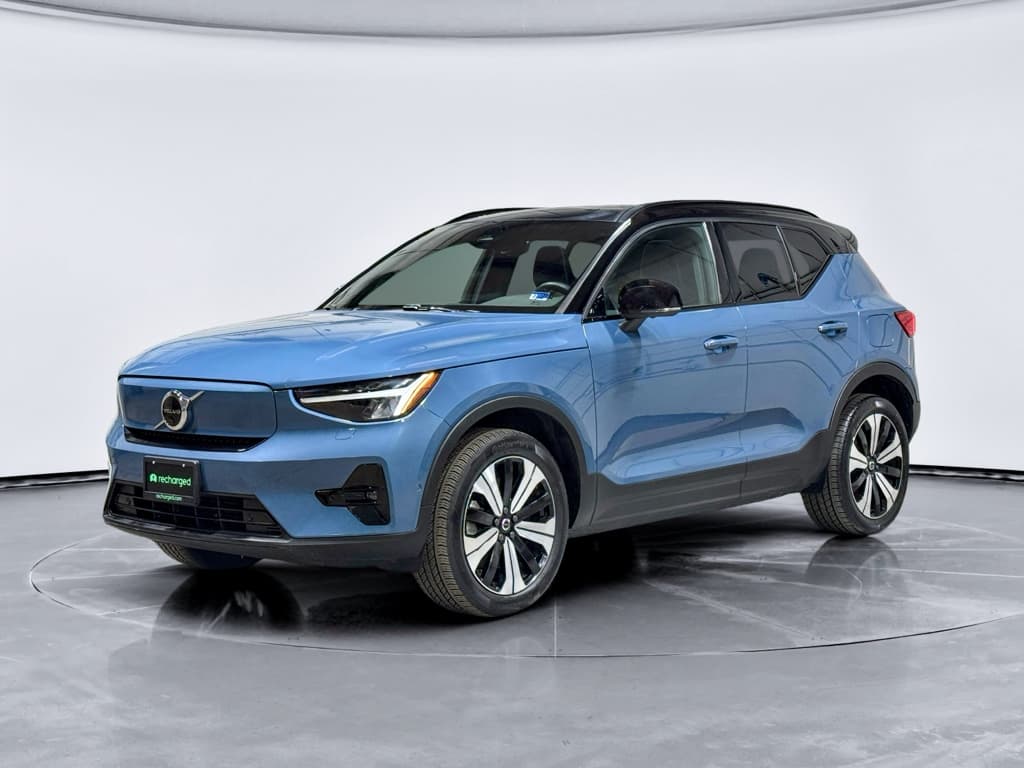
If you’re eyeing Volvo’s smallest electric SUV, you’re probably wondering: how much does it cost to own a Volvo EX30 per year? The sticker price is only the opening bid. What really matters is the money that leaves your account every year for charging, insurance, maintenance, taxes, and the slow, steady hit of depreciation.
At-a-glance answer
Overview: What you’ll spend each year
Typical U.S. EX30 yearly costs (ballpark)
Those ranges are intentionally honest, not brochure-perfect. Some owners in low‑cost states with cheap power and great driving records will be on the low end. High‑cost electricity, expensive insurance markets, or a long daily highway commute can push you to the upper end, and beyond.
Key factors that shape Volvo EX30 ownership costs
What really moves the needle on EX30 annual cost
Five levers that matter more than you think
Miles you drive
Your efficiency
Electricity price
Insurance market
Purchase price & depreciation
Taxes & EV fees
Energy cost: How much to charge a Volvo EX30 per year
Let’s start with the part most shoppers fixate on: what it costs to fuel the EX30 with electricity instead of gasoline.
Step 1: Understand the EX30’s efficiency
Every EX30 sold in the U.S. uses a battery in the mid‑60 kWh range and, depending on motor and wheels, the EPA estimates efficiency in the ballpark of the low‑20s kWh per 100 miles for rear‑drive versions, climbing higher for the all‑wheel‑drive Performance models. Real‑world owner data lines up with that: most drivers see low‑20s in mild weather and slower speeds, and high‑20s or worse on fast highways and in winter.
A safe planning number
Step 2: Plug in your electricity rate
Recent EIA data puts the average U.S. residential electricity price in the mid‑teens cents per kWh, with many households landing around $0.16–$0.18 per kWh by 2024–2025. Some coastal states and islands are far higher; some interior states are a bit lower.
Example: Average U.S. electricity
Let’s assume:
- 12,000 miles per year
- 25 kWh/100 miles
- $0.17 per kWh home rate
Math:
- 12,000 miles ÷ 100 = 120 "units" of 100 miles
- 120 × 25 kWh = 3,000 kWh/year
- 3,000 × $0.17 ≈ $510 per year in home charging
Example: Expensive electricity
Now assume:
- Same 12,000 miles and 25 kWh/100 miles
- $0.28 per kWh (high‑cost markets)
Math:
- 3,000 kWh/year × $0.28 ≈ $840 per year
That’s still often cheaper than feeding a small gas SUV at today’s prices, just with a wider spread between states.
What about DC fast charging?
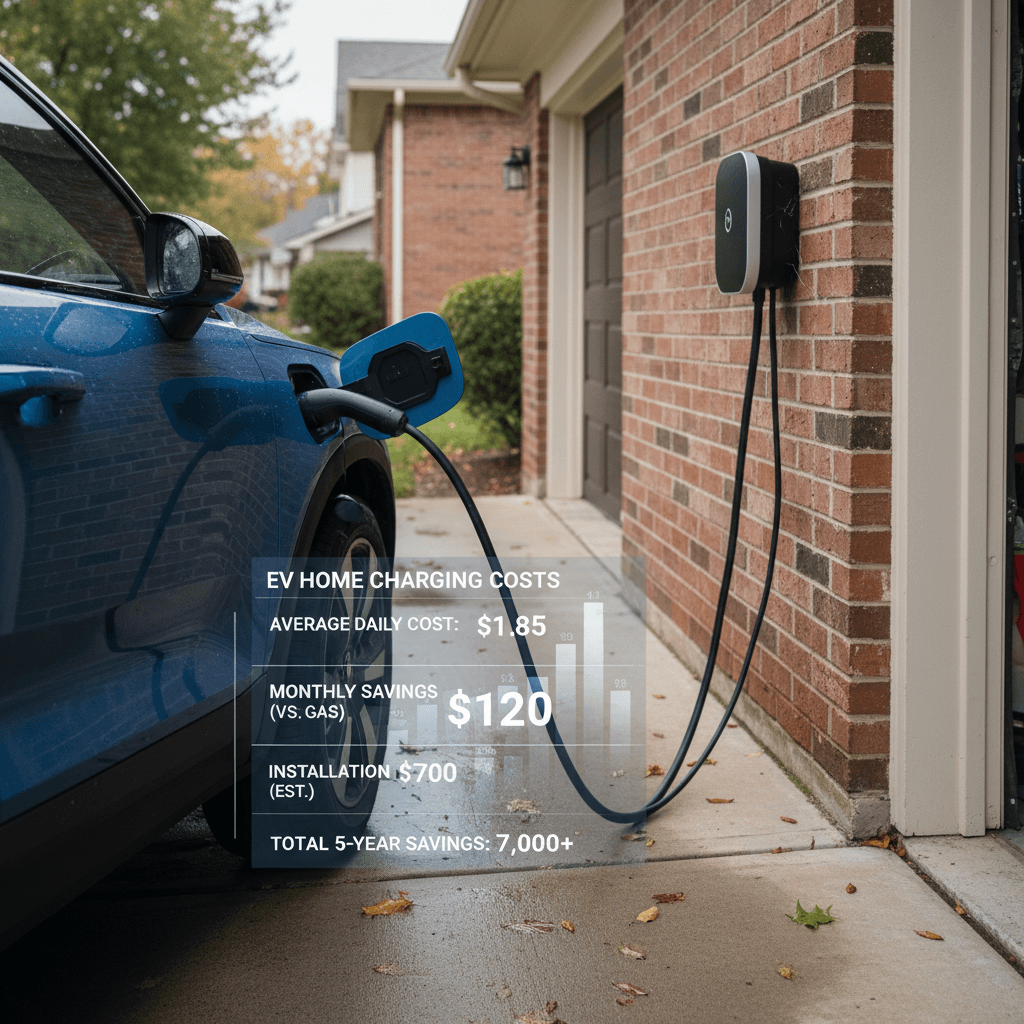
For most EX30 owners who charge mainly at home, a realistic annual electricity cost range is about $450–$900 per year, depending on how far you drive and what you pay per kWh.
Insurance costs for a Volvo EX30
Insurance is where many new EV owners get sticker shock. The EX30 is compact, but it carries premium branding, advanced driver‑assistance tech, and a big battery pack, all of which can push repair and replacement costs higher than a basic gas crossover.
Current EX30 insurance ballparks
Early U.S. insurance data for the EX30 suggests that typical full‑coverage premiums often fall between about $1,800 and $2,600 per year for many drivers, with clean records and average deductibles. Young drivers, dense urban ZIP codes, or low credit tiers can see quotes well north of that, while older drivers in low‑risk areas can sometimes slip under $1,800.
Sample Volvo EX30 annual insurance ranges
Illustrative ranges only; your real quote can be higher or lower based on your profile and state.
| Driver profile | Location type | Likely annual premium |
|---|---|---|
| Experienced driver, clean record | Suburban / smaller city | $1,800–$2,200 |
| Experienced driver, clean record | Major metro | $2,100–$2,600 |
| Younger driver or recent at‑fault claim | Any | $2,500–$3,500+ |
| Multi‑car household, strong history | Suburban / rural | $1,600–$2,000 (best cases) |
Use these as planning bands, not promises. Always get real quotes before you buy.
How to get a realistic EX30 quote
Maintenance, tires, and repairs
One of the EX30’s biggest financial perks is that it’s an EV: there’s no oil to change, no spark plugs, no timing belts, no exhaust system. But that doesn’t mean it’s free to run. You’re still going to buy tires, cabin filters, brake fluid, and the occasional diagnosis when a warning light pops up.
Routine service and wear items
- Tires: The EX30 is quick and relatively heavy for its size, and many trims wear 19–20 inch wheels. Budget $800–$1,200 every 30,000–40,000 miles for a quality set of EV‑rated tires, plus rotations. That works out to roughly $250–$400 a year if you do 12,000 miles annually.
- Basic inspections and cabin filters: Even if you’re not changing oil, plan on periodic inspections and cabin filter swaps. Figure $150–$300 per year averaged over time, depending on dealer vs. independent shop pricing.
- Brakes: Regenerative braking means pads often last a very long time. You may go 60,000–100,000+ miles before a full brake job, but plan on occasional brake fluid service and inspections, maybe $50–$100 per year when averaged out.
Warranty vs. out‑of‑warranty
Add it all up and $400–$800 per year in maintenance and wear items is a reasonable planning range for most EX30 owners, skewing higher if you run expensive performance tires or pile on highway miles.
Taxes, registration, and EV surcharges
What you pay to keep plates on your EX30 varies wildly by state. Some states use simple flat fees; others calculate registration or property tax based on vehicle value, which hits newer EVs hardest.
Standard registration and property tax
Many states charge a base registration fee plus (sometimes) an annual vehicle property tax. On a new EX30, that can easily add up to $300–$700 per year early on, then slowly decline as the car’s taxable value drops.
If your state doesn’t levy property tax on vehicles, your annual line item may be more like $100–$300.
EV‑specific road‑use fees
Because EV owners don’t pay fuel tax, several states now tack on additional EV registration fees, often $100–$250 per year. Check your state DMV site for the latest numbers before you buy.
One‑time tax credits vs. ongoing fees
Depreciation and financing
This is the part of ownership many people feel but don’t see on a bill: depreciation and the cost of borrowing. For any new EV, especially one in a fast‑moving segment like small crossovers, these are often your largest yearly costs.
How fast does a Volvo EX30 depreciate?
The EX30 is still a relatively new model, so long‑term resale data is limited. But we can look at patterns from similar premium EVs and small luxury crossovers. It’s not unusual to see an all‑new model lose 35–50% of its value in the first 3–5 years, depending on incentives, supply, and how quickly newer tech arrives.
Illustrative depreciation for a new EX30
Not a forecast, just a simple way to visualize the size of the depreciation bite.
| Year of ownership | Estimated market value | Implied annual depreciation |
|---|---|---|
| Purchase (year 0) | $48,000 | , |
| End of year 1 | $40,000 | ≈ $8,000 |
| End of year 3 | $32,000 | ≈ $4,000/year over years 2–3 |
| End of year 5 | $26,000 | ≈ $3,000/year over years 4–5 |
Assuming a hypothetical $48,000 out‑the‑door price and average resale conditions.
In that scenario, depreciation averages $3,000–$5,000 per year over your first five years, but it’s front‑loaded, with the steepest drop early on. Buying a used EX30 after someone else takes that first hit is one of the simplest ways to shrink your annual cost of ownership.
Financing cost on top
If you finance your EX30, interest becomes another annual line item. On a five‑ or six‑year loan with a mid‑single‑digit APR, it’s easy to see $1,200–$2,000 per year in interest costs early in the loan, tapering down over time as you pay down principal.
Where Recharged can help
Ready to find your next EV?
Browse VehiclesNew vs. used Volvo EX30: How costs change
Because depreciation is such a big slice of the pie, whether you buy new or used changes the annual math more than almost anything else. Here’s a simplified comparison for a typical U.S. driver doing 12,000 miles a year and charging mostly at home.
Illustrative annual ownership cost: new vs. used EX30
Rounded ballparks for planning, assuming average insurance, electricity, and mileage.
| Cost category | New EX30 (early years) | Used EX30 (3–4 years old) |
|---|---|---|
| Charging (home‑heavy use) | $500–$800 | $500–$800 |
| Insurance | $1,900–$2,600 | $1,700–$2,300 |
| Maintenance & tires | $400–$700 | $500–$900 |
| Taxes & fees | $300–$700 | $200–$500 |
| Depreciation | $3,000–$5,000 | $1,500–$3,000 |
| Financing interest (if applicable) | $1,200–$2,000 | $800–$1,500 |
| Approx. total/year | $8,000–$11,000 | $6,000–$9,000 |
New EX30 buyers pay more in depreciation; used buyers save there but may see slightly higher maintenance outside warranty.
When “used” doesn’t mean “worn out”
Smart ways to lower your EX30 annual costs
Practical ways to shrink your yearly EX30 bill
1. Charge smart at home
Install (or use) a Level 2 charger where you can take advantage of off‑peak or EV‑specific electricity rates. Even a few cents per kWh savings adds up over thousands of kWh a year.
2. Keep an eye on efficiency
Use the EX30’s trip data to watch your kWh/100‑mile average. Slower highway speeds, smoother acceleration, and preconditioning while plugged in can shave meaningful dollars off your yearly electricity bill.
3. Shop insurance aggressively
The same EX30 can cost hundreds more or less per year to insure depending on carrier. Get multiple quotes, bundle policies when it helps, and revisit your coverage after your first claim‑free year.
4. Protect your tires
Check tire pressures regularly and rotate on schedule. EVs are hard on rubber, and squeezing another 5,000–10,000 miles out of a set lowers your annual running costs.
5. Consider lightly‑used instead of new
Let the first owner eat the sharpest depreciation. A 1–3‑year‑old EX30 from a trusted source, ideally with a <strong>battery health report</strong>, can drop your annual cost by thousands without feeling like a compromise.
6. Finance thoughtfully
Shorter loan terms and larger down payments can raise your monthly payment but shrink total interest paid. If cash flow allows, that lowers your true annual cost of ownership.
Where not to cut corners
Volvo EX30 ownership cost FAQ
Frequently asked questions about EX30 yearly costs
Is a Volvo EX30 worth it for you?
When you put the whole picture together, owning a Volvo EX30 typically costs less per mile than a comparable gas SUV, but the savings don’t magically erase big‑ticket items like depreciation, insurance, and tires. If you buy new, drive a lot, and pay high electricity and insurance rates, you’ll be on the higher end of the yearly spectrum. If you buy a carefully‑vetted used EX30, charge mostly at home, and keep a light right foot, you can enjoy a premium, fast, safe EV for surprisingly reasonable annual cost.
If you’re ready to explore EX30s with transparent battery health, fair‑market pricing, and EV‑savvy guidance, browsing used EVs on Recharged is a smart next step. You’ll see each car’s Recharged Score, get help with financing and trade‑ins, and even arrange nationwide delivery, so your ownership math starts on the right foot from day one.