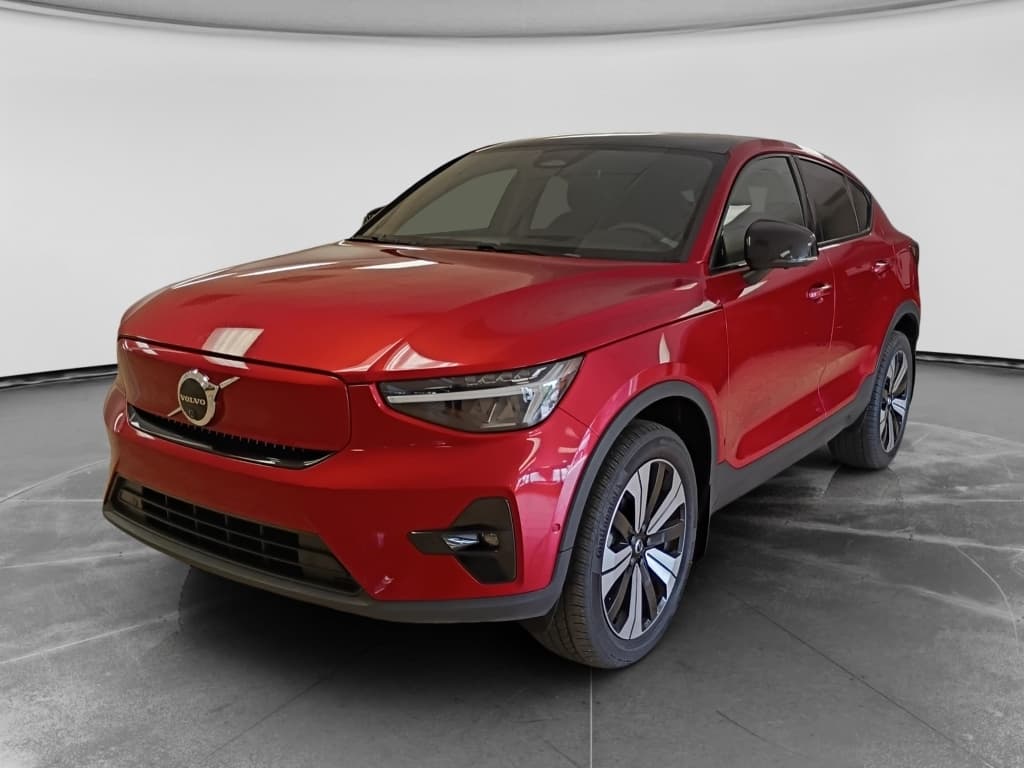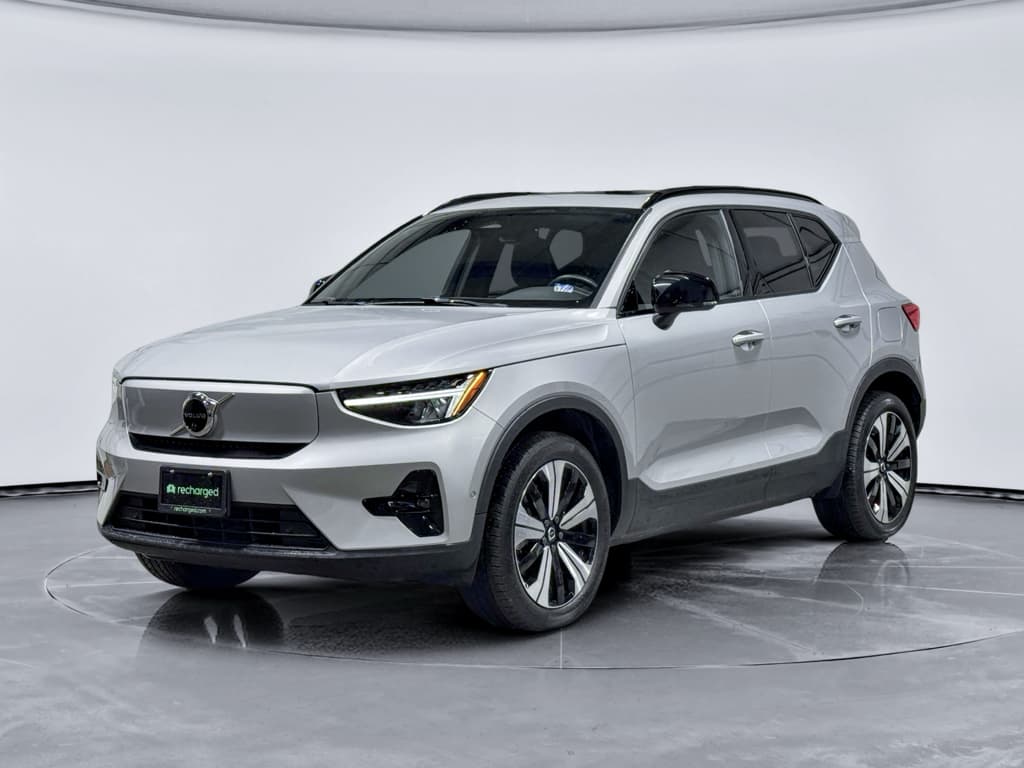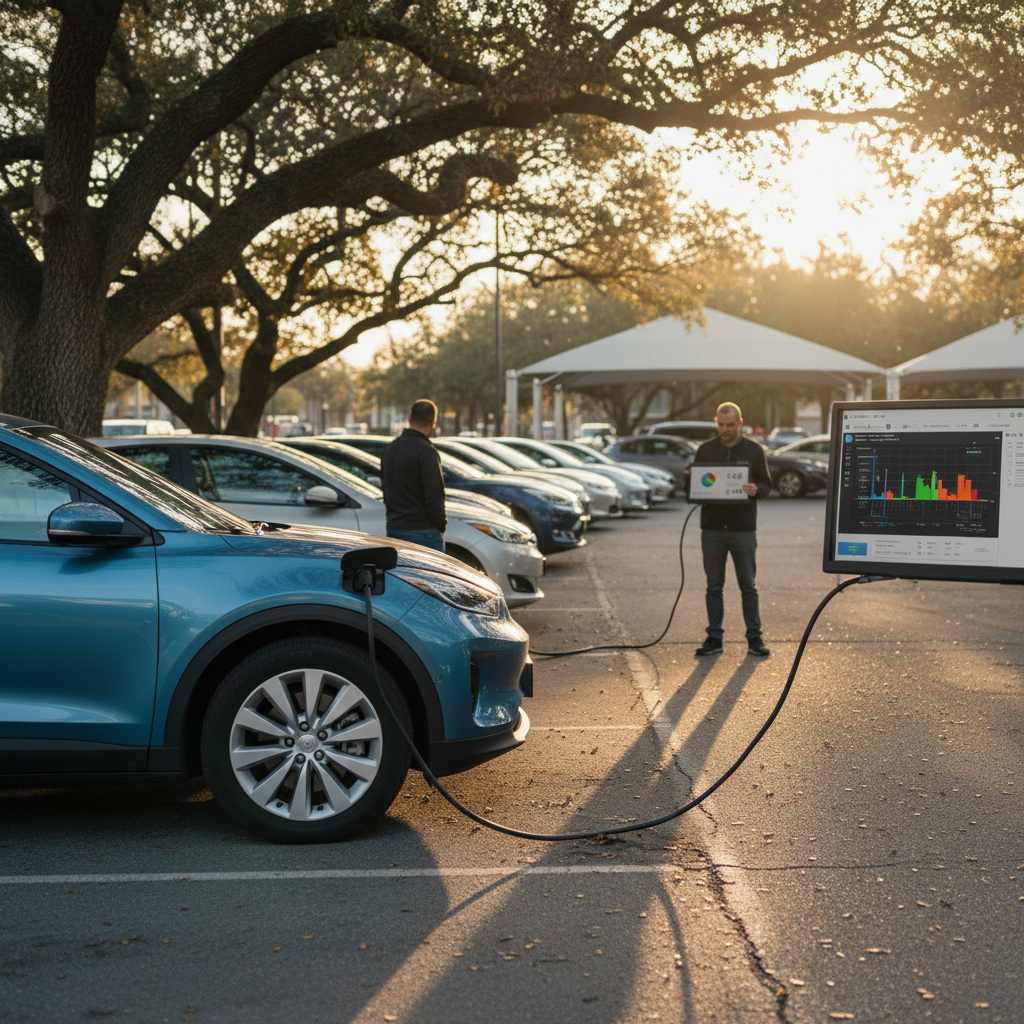
If you’re driving a Volvo C40 Recharge and thinking about your next move in 2026, you’re probably asking a simple question: what’s my C40 worth as a trade‑in right now? Between fast‑moving EV prices, changing tax credits, and concerns about battery health, it’s not obvious whether you’re getting a fair offer, especially if you bought or leased when prices were higher.
Quick take: where C40 values sit in 2026
Overview: Volvo C40 Recharge trade‑in value in 2026
- Trade‑in offers may feel lower than you expected if you’re comparing to your original sticker price.
- You still have real leverage if your battery health is strong, miles are reasonable, and you shop your car around instead of taking the first offer.
Volvo C40 Recharge value in context (2026 snapshot)
How much is my Volvo C40 Recharge worth in 2026? (baseline ranges)
Every car is unique, and local supply, color, options, and mileage can move your price meaningfully. But if you’re just trying to sanity‑check a trade‑in quote on a Volvo C40 Recharge in 2026, here’s a directional starting point for U.S. retail and trade‑in **ranges**, assuming clean history and average mileage for age.
Illustrative 2026 value bands for Volvo C40 Recharge (U.S.)
Approximate ranges assuming clean title, typical options, and average mileage. Your actual offer can be higher or lower based on condition, local demand, and battery health.
| Model year & trim | Original price band (new) | Typical 2026 retail asking | Typical 2026 dealer trade‑in |
|---|---|---|---|
| 2022 C40 Recharge Twin Motor (higher miles) | $57,000–$62,000 | $27,000–$33,000 | $23,000–$28,000 |
| 2022 C40 Recharge Twin Motor (low miles, clean) | $57,000–$62,000 | $30,000–$36,000 | $26,000–$31,000 |
| 2023 C40 Recharge Single Motor (updated battery) | $55,000–$60,000 | $29,000–$37,000 | $25,000–$32,000 |
| 2024 C40 Recharge Single Motor Extended Range | $56,000–$62,000 | $31,000–$39,000 | $27,000–$34,000 |
These are directional guideposts, not appraisals. Always get real‑time offers to confirm.
These numbers are directional, not offers
If your numbers are far outside these bands, say, a $19,000 offer on a low‑mileage 2023 single‑motor C40 with a clean history, it’s a sign to get more quotes or bring better documentation (service records, battery health) to the table.
7 key factors that drive C40 Recharge trade‑in value
What actually moves your C40 trade‑in number
Some levers you can change before you visit a dealer, and some you can’t.
1. Model year & trim
2. Mileage & usage
3. Battery health & range
4. Condition & reconditioning needs
5. Accident & title history
6. Options that matter to EV buyers
7. Local demand & inventory
Battery health: the silent deal‑maker (or deal‑breaker)
On a gasoline car, a dealer can lean on mechanical inspection and a test drive. With a Volvo C40 Recharge, the single most expensive component is the battery pack. Even though Volvo backs it with a long warranty, buyers and dealers are laser‑focused on whether the pack is still delivering the range they expect.

- A C40 whose real‑world range still closely matches its original EPA estimate will usually appraise at the upper end of its price band.
- Noticeable degradation, for example, a car that can only manage 70–75% of its original range in similar conditions, can push your offer toward the bottom of the range.
- Dealers who don’t specialize in EVs may assume a worst‑case scenario if they can’t see a clear, easy‑to‑read battery health report. That uncertainty gets priced into your trade‑in.
Use a third‑party battery health report to your advantage
If your dealer or potential buyer can’t or won’t pull a clear battery report, consider getting an independent EV inspection. It’s a small upfront cost that can easily pay for itself in a stronger offer, or help you decide to keep the car a bit longer.
Market trends 2024–2026: why EV trade‑in values shifted
To understand why your Volvo C40 trade‑in offer looks the way it does in 2026, you have to zoom out. Used EV pricing has gone through one of the sharpest swings of any vehicle segment in recent memory.
2022–2024: the drop
Between early 2022 and mid‑2024, used EV values fell fast as:
- More off‑lease EVs hit the market.
- New‑EV prices were cut aggressively, especially by Tesla.
- Early tech anxiety and charging concerns made some shoppers hesitant.
Some analyses showed used EV prices falling 15%+ year‑over‑year, far more than used gas cars over the same period.
2025–2026: stabilization and sorting
Heading into 2025 and 2026, things started to normalize:
- Used EV prices continued to soften but at a slower pace.
- The end of federal EV purchase credits in late 2025 shifted more budget‑minded shoppers toward used EVs.
- Well‑known models with solid range and strong safety reputations, like the C40 Recharge, began to settle into more typical 6–8% annual depreciation bands for their age.
Where the Volvo C40 Recharge fits
How dealers actually evaluate a Volvo C40 Recharge trade‑in
Whether you walk into a Volvo store, an independent dealer, a big‑box used‑car chain, or a digital‑first buyer, the basic trade‑in math on your C40 Recharge looks similar. The difference is how much they understand EVs and how much risk they build into that equation.
Inside the appraisal: step‑by‑step
1. Decode your VIN and options
The appraiser or buying software pulls your VIN, verifies year, trim (Single vs. Twin Motor, Extended Range, etc.), and looks for valuable packages like advanced driver‑assist or premium audio.
2. Pull history reports
They’ll run Carfax/AutoCheck to check for accidents, prior damage, odometer rollbacks, and service history. Recent dealer service and software updates on a C40 are a plus.
3. Walk‑around and quick drive
Curb rash, mismatched paint, cracked glass, uneven tire wear, and interior wear all get noted. With EVs, some buyers will also pay attention to brake feel (since regen changes typical wear patterns).
4. Battery and charging check
Sophisticated buyers will run diagnostics or at least look at state of charge vs. indicated range. Others may rely on generic EV depreciation curves, which can under‑ or over‑value a well‑kept C40.
5. Market comparison & auction data
They’ll compare your C40 against recent C40/XC40 electric sales in their market and at auctions. If similar units are struggling to move, expect a more conservative offer.
6. Built‑in margin and reconditioning
Finally, they subtract what they expect to spend on reconditioning, transportation, auction fees (if they don’t retail it), and their required margin. What’s left is your trade‑in offer.
Common pitfall: letting software decide your EV’s fate
Checklist: 10 ways to improve your C40 Recharge trade‑in value
You can’t change your model year, but you can absolutely influence how your C40 presents to an appraiser, and how confident they feel about reselling it. Use this checklist a week or two before you go shopping for offers.
Pre‑trade‑in prep for your Volvo C40 Recharge
1. Gather service and charging records
Print or download records showing regular maintenance, software updates, and any high‑voltage system checks. If you’ve replaced tires with EV‑appropriate rubber, include that too.
2. Get a battery health report
If you can, have an EV‑savvy shop or marketplace run diagnostics that show estimated state of health (SOH) and usable capacity. Bring that report to appraisals.
3. Fix cheap, obvious issues
Headlight bulbs, wiper blades, minor interior stains, and curb rash on easily refinished wheels are all relatively inexpensive fixes that can improve first impressions.
4. Resolve open recalls or service campaigns
Check with a Volvo dealer for open recalls or software campaigns and get them done before appraisal. A car that’s fully up to date looks easier to retail.
5. Detail the car (inside and out)
A clean EV sells faster. A basic professional detail, or a careful DIY wash, vacuum, and interior wipe‑down, can easily pay for itself in perceived value.
6. Bring both keys, manuals, and charging cable
Missing keys or factory charging equipment give buyers an easy reason to knock your number down. If you have roof racks or factory accessories, bring those too.
7. Check tires and brakes
If you’re close to the wear bars, be realistic: the buyer will replace them. You can replace tires yourself if you can do it cheaper than the dealer, or simply factor it into your expectations.
8. Know your payoff and equity position
If you still owe on a loan or lease, get your exact payoff amount from the lender before you start shopping offers so you know whether you’re in positive or negative equity.
9. Get multiple offers in a short window
EV prices move faster than gas cars. Try to gather offers from at least <strong>three</strong> sources (local dealer, online buyer, EV‑focused marketplace) within a few days so you’re comparing apples to apples.
10. Be ready to walk away
If every number you see is below expectations, it might make more sense to keep the C40 a bit longer, especially if the battery is healthy and you like the car. Depreciation tends to slow after the first few years.
Trade‑in vs. sell outright: what makes more sense for a C40?
For many C40 owners, a dealer trade‑in is the simplest path: drop the keys, sign the papers, and drive home in something else. But with EVs, and especially a premium electric like the C40 Recharge, it’s worth at least considering your alternatives.
Your options for moving on from a Volvo C40 Recharge in 2026
Each path balances price, effort, and risk differently.
Dealer trade‑in
Pros:
- Fast and convenient; easy to roll equity into your next car.
- Sales tax savings on the new vehicle in many states.
- No strangers coming to your home or test‑driving your car.
Cons:
- Usually the lowest dollar amount, especially if the dealer is EV‑cautious.
- Some stores still lack EV expertise and may undervalue battery health.
Sell to an online or EV‑specialist buyer
Pros:
- Often stronger offers than traditional dealers.
- Processes built around EVs, including better battery evaluation.
- Pickup and paperwork can be mostly digital.
Cons:
- You’ll handle payoff separately if you’re not trading directly into another car.
- Offers are usually time‑limited; you may need to move quickly.
Private sale
Pros:
- Potentially the highest selling price if you find the right buyer.
- You control the story around battery health and options.
Cons:
- More work: photos, listings, messages, test drives.
- Need to screen buyers and manage payment securely.
- Market for used EVs is growing, but still more niche than for gas SUVs in some areas.
When trade‑in actually wins
Why consider a used‑EV specialist like Recharged
Because EVs behave differently from gas cars, you’re often better off working with a buyer who understands them. That’s where a specialist used‑EV marketplace like Recharged can help if you’re thinking about trading your C40 in 2026.
EV‑focused valuation, not guesswork
Recharged is built around electric vehicles, including models like the Volvo C40 Recharge, so our valuations are grounded in:
- Current, model‑specific market data (not generic SUV curves).
- Battery‑health diagnostics via the Recharged Score.
- Real‑world transaction history across trims and regions.
That helps narrow the gap between what your C40 is actually worth and what a risk‑averse dealer might be willing to pay.
Flexible ways to move on from your C40
With Recharged you can:
- Get an instant offer if you just want to sell.
- Use your C40 as a trade‑in toward another used EV.
- Explore consignment if you’d like to aim for a higher selling price and are willing to wait a bit longer.
Our EV specialists can walk you through the math on each path so you can decide what makes sense for your situation.
In‑person or fully digital
FAQ: Volvo C40 Recharge trade‑in value in 2026
Frequently asked questions
Bottom line: maximizing your C40 Recharge trade‑in in 2026
In 2026, the Volvo C40 Recharge trade‑in value story is a mix of sharp early EV depreciation and growing used‑EV demand. Most C40s sit somewhere around 45–60% of their original MSRP, but where your car lands in that band depends heavily on mileage, condition, and especially battery health. The more documentation and preparation you bring, the less room there is for a lowball number.
Your best move is to treat your C40 like the premium EV it is: present it clean, up to date on service, with battery health in hand, and get at least a couple of competing offers, including from an EV specialist such as Recharged. Whether you ultimately trade in, sell outright, or decide to hold for a few more years, an informed strategy will help you capture more of your C40’s real value in a fast‑changing market.