Used Tesla prices over the last few years have looked less like a gentle depreciation curve and more like a meme stock chart. They spiked in 2021, fell off a cliff in 2023–2024, and then, just when shoppers got used to bargain-bin Teslas, values started creeping back up again in late 2025. If you’re trying to make sense of used Tesla price trends in 2025 and 2026, you’re not alone.
The short version
Why used Tesla prices went on a rollercoaster
To understand where prices are in 2025–2026, you need to understand the hangover. In 2021–2022, Tesla couldn’t build cars fast enough. New-car waitlists stretched months, fuel prices were spiking, and used Teslas were selling above original MSRP. Then three things happened: Tesla slashed new-car prices, lots of fleet and rental cars hit the used market, and overall EV demand cooled.
- New price cuts undercut used values. When Tesla took thousands off new Model 3 and Model Y prices in 2023 and 2024, used cars had to follow them down. In some cases, a lightly used car was briefly worth less than a brand‑new one with incentives.
- Fleet sell‑offs flooded the market. Rental car companies and corporate fleets pivoted away from big EV bets and off‑loaded large numbers of Teslas, especially Model 3s and Model Ys, depressing prices further.
- EV demand hit a cold snap. Higher interest rates, charger anxiety, and political backlash took the shine off EVs in late 2023 and 2024, especially for newer, more expensive models.
By early 2025, data from pricing services showed used Teslas losing value roughly twice as fast as the broader used‑car market. Year over year, used Teslas were down around 13–15%, versus low single‑digit drops for gas cars. Average Tesla resale values that once felt bulletproof suddenly looked alarmingly mortal.
The bottom wasn’t the bottom
Snapshot: used Tesla prices heading into 2026
Used Tesla market snapshot, late 2025–early 2026
In other words: if you’re shopping in early 2026, you’ve missed the very bottom, but you’re still looking at a market where used Teslas are materially cheaper than they were in 2021–2022 and more reasonably aligned with the rest of the used‑car world.
Model‑by‑model used Tesla price trends
Model 3 & Model Y: volume cars, heavy depreciation
Model 3 and Model Y are the mass‑market Teslas, and they took the brunt of the price reset. After years of overheated demand, by early 2025 pricing data showed:
- Older Model 3s (2017–2019) routinely around the high teens to low $20,000s.
- 2020–2022 Model 3s averaging in the low‑ to mid‑$20,000s depending on mileage and trim.
- Model Y values falling 16–20% year over year for many model years, still generally pricier than Model 3 but no longer resale darlings.
By late 2025, that downward slide slowed. Average used Model 3 prices have nudged up a couple of percent since fall 2025, and Model Y is roughly flat to slightly higher, reflecting renewed interest in more affordable long‑range EVs.
Model S & Model X: niche, but rebounding hardest
Flagship Teslas are a different story. They’re more expensive to buy, insure, and repair, and they depreciated brutally during the 2023–2024 reset, partly because fresh new cars kept undercutting them.
But in late 2025, the script flipped. Announcements that Tesla would pivot away from traditional S and X development and focus on other projects tightened future supply and nudged enthusiasts and collectors off the fence.
- Used Model S prices jumped on the order of 8–9% between fall 2025 and early 2026.
- Used Model X climbed roughly 10% in the same period, especially well‑optioned long‑range and performance trims.
They’re still depreciated versus new, but the days of absurdly cheap S and X examples in good condition are fading.
Where the value tends to live
How 2025 policy and market shifts changed pricing
The latest twist in used Tesla price trends for 2025–2026 isn’t really about Teslas at all. It’s about policy and psychology. When the federal clean‑vehicle credit for many new EVs effectively ended in late 2025, shoppers who’d been waiting for a subsidized new car suddenly did the math on used.
Three big forces pushing used Tesla prices back up
Why prices stopped falling and, in some cases, reversed in late 2025
Tax credit changes
Once the $7,500 incentive for many new EVs went away, the price gap between new and used Teslas narrowed. Shoppers who had planned on a subsidized new EV found that a well‑kept used Model 3 or Model Y suddenly looked like the more rational spreadsheet entry.
Brand gravity
Even in an “EV winter,” Tesla has something most competitors don’t: brand gravity. When broader used EV prices slid another 3–4% in late 2025, used Teslas rose about 4%. Love the brand or hate it, shoppers know what a Tesla is and what the charging experience looks like.
Charging advantage
With more non‑Tesla EVs still wrestling with fast‑charging speeds and fragmented networks, the ability to plug into the Supercharger system, now increasingly opened to other brands, but still native to Teslas, keeps demand for used Teslas surprisingly resilient.
EV winter, used‑EV spring
What battery health does to a used Tesla’s price
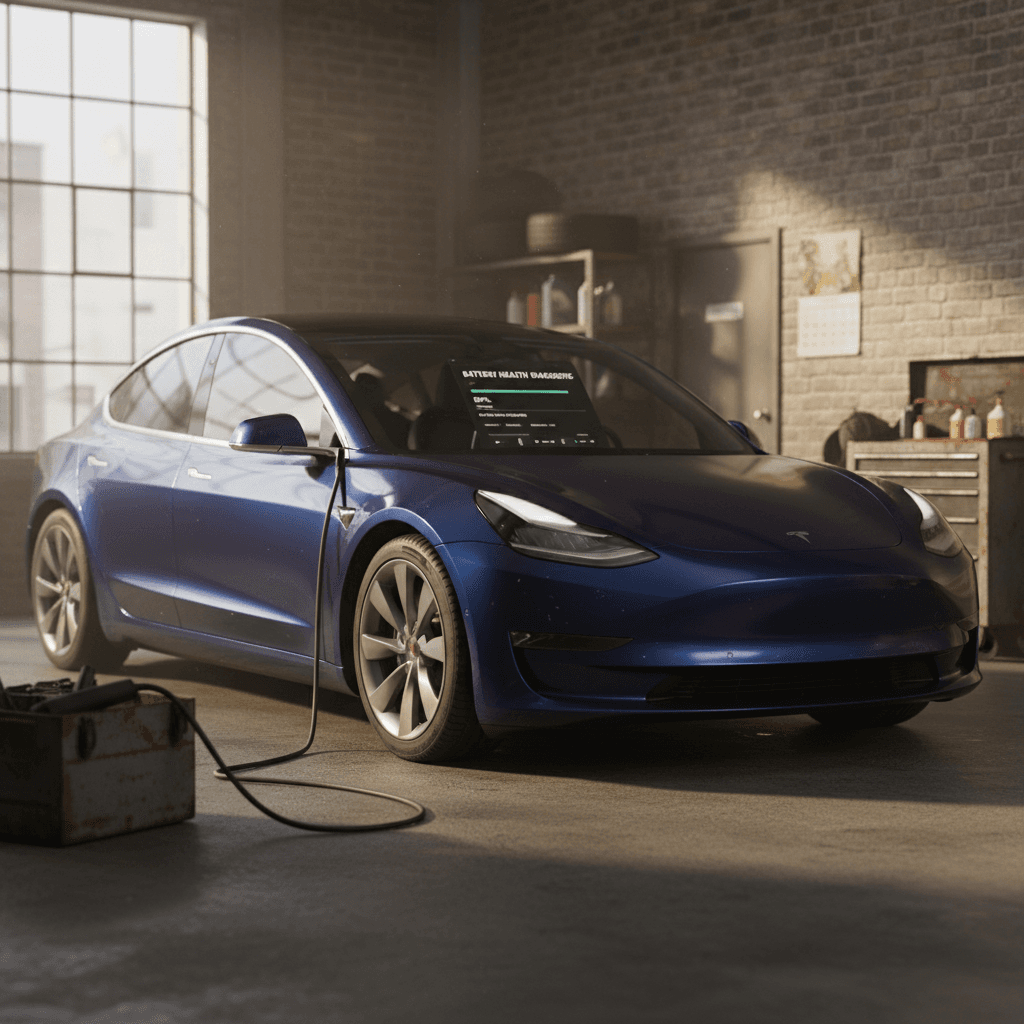
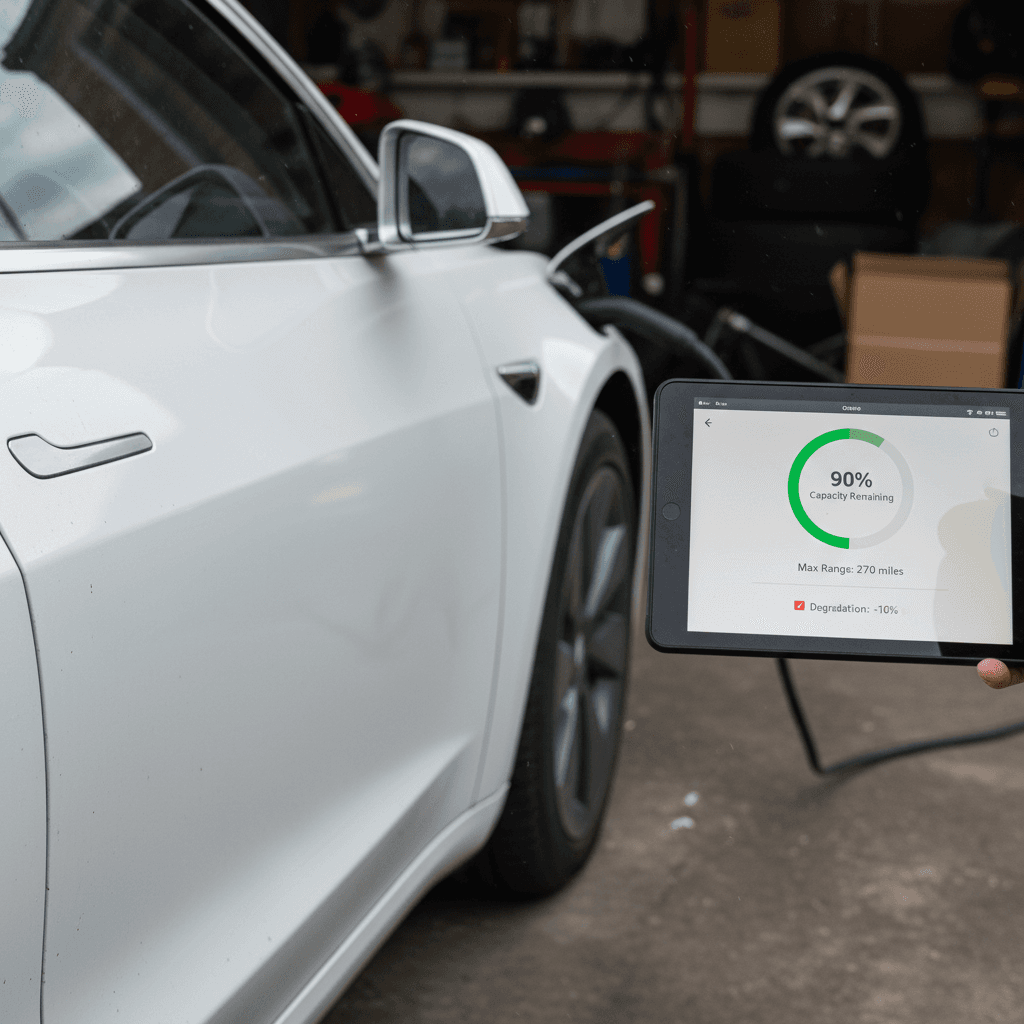
With internal‑combustion cars, mileage and maintenance history dominate resale value. With used Teslas, battery health sits on the throne. You’re not only buying a car; you’re buying the remaining life in a lithium‑ion pack that costs five figures to replace.
How battery health shapes used Tesla pricing
1. Early degradation scares buyers
A three‑ or four‑year‑old Tesla showing significantly more range loss than its peers will trade at a notable discount. Shoppers are increasingly literate about pack health and will walk from a car that looks tired too early.
2. Clean charging history commands a premium
Cars that mostly fast‑charge and live at 100% state of charge all the time are starting to be recognized as riskier bets. Vehicles charged mainly at home on Level 2, with reasonable charge limits set, tend to hold value better.
3. Verified diagnostics close the deal
A third‑party battery health report can be the difference between a skeptical buyer and a confident one. At Recharged, every vehicle gets a <strong>Recharged Score battery health diagnostic</strong>, so you see real data, not just a hopeful range estimate on the screen.
4. Warranty remaining softens depreciation
Teslas still within the 8‑year / 100k–150k‑mile battery warranty (depending on model) carry a pricing floor that older cars don’t. That warranty safety net matters a lot to second and third owners.
Why this matters for pricing
Price bands: what you can expect to pay
Exact numbers vary by region, trim, mileage, and condition, but by early 2026 the U.S. market has settled into some fairly clear lanes for mainstream used Teslas. Think of the following as ballpark ranges for private‑party and dealer‑retail pricing, assuming average mileage and solid battery health.
Typical used Tesla price bands in early 2026 (U.S.)
Approximate retail prices for well‑maintained, clean‑title cars; your local market may run higher or lower.
| Model & years | Typical price band | Notes |
|---|---|---|
| Model 3 (2017–2019) | $17,000–$22,000 | High‑mileage commuters and first‑gen tech; great entry point if the pack checks out. |
| Model 3 (2020–2022) | $22,000–$28,000 | Sweet‑spot cars with updated hardware and still‑fresh interiors. |
| Model 3 (2023–2024) | $28,000–$34,000 | Late‑model cars affected by price cuts; often lightly used off‑lease or corporate cars. |
| Model Y (2020–2022) | $28,000–$36,000 | Heavier use as family haulers; depreciation brought them much closer to new mainstream SUVs. |
| Model Y (2023–2024) | $34,000–$42,000 | Younger inventory with softer depreciation post‑reset. |
| Model S (2017–2020) | $28,000–$40,000 | Big swings based on battery, Autopilot hardware, and whether it’s pre‑ or post‑refresh. |
| Model S (2021–2023) | $45,000–$65,000 | Plaid and refreshed long‑range cars; recent rebound has stiffened prices. |
| Model X (2017–2020) | $32,000–$45,000 | Falcon doors plus family duty equal wear; still niche but less wildly overpriced than before. |
| Model X (2021–2023) | $55,000–$75,000 | Low supply, high demand; late‑model X has seen some of the strongest price resilience. |
Use these as guide rails, not gospel, battery health, options, and local demand can easily move a given car a few thousand dollars in either direction.
Beware of outliers
How to spot a fair‑priced used Tesla in 2025–2026
In a market that has whipsawed this hard, “book value” lags reality. Your job as a shopper is to use the past few years’ drama to your advantage without getting blindsided by a problem child. Here’s how to pick winners.
Checklist: separating fair deals from future headaches
1. Compare to today’s, not yesterday’s, comps
Look at similar cars listed in the last 30 days, not values from a 2023 pricing chart. A 4–6% swing in asking prices over a few months is normal in this segment.
2. Normalize for battery health
If one car has a documented strong pack and another has no data, treat the latter as riskier and discount accordingly, or walk. At Recharged, our <strong>Recharged Score</strong> packages pack health, range, and pricing into one transparent report.
3. Adjust for software and hardware quirks
Autopilot/FSD packages, MCU generations, heat‑pump vs. resistance heating, and camera hardware all matter for both usability and future updates. Two similar‑looking cars can have very different tech under the skin.
4. Consider charging reality
If you live in an apartment or rely on public fast charging, a Tesla’s Supercharger access is a bigger part of its value proposition. In those cases, paying a bit more for a clean example can be more rational than chasing the absolute cheapest unit.
5. Read the odometer like an EV owner
120,000 miles on a Model 3 commuter that’s mostly highway and well‑maintained can be less scary than 65,000 miles of short‑trip abuse and constant fast charging. Ask how the car has lived, not just how far it’s gone.
Negotiating leverage that’s unique to Teslas
Teslas are software‑defined cars living in a used‑car market that still thinks in carburetors and chrome. That mismatch gives you some unusual leverage when you’re talking price.
Levers you can pull when negotiating a used Tesla
Beyond tires and door dings
Software & options
FSD that can’t be transferred to a new owner, or a car missing expected driver‑assist features, should affect price. Likewise, a vehicle with desirable paid features enabled, and proof they’ll stay, can justify a bit more.
Charging history
Evidence of heavy DC fast‑charging, constant 100% charges, or frequent battery warnings is a negotiating point. Even if diagnostics look okay now, you’re absorbing future risk. Price should reflect that.
Recent price cuts
Tesla’s own new‑car price changes are your silent third party in the room. If a recent cut has compressed the gap between the used car you’re considering and a new one, that’s explicit ammo for a lower number.
Where Recharged fits into this
Is 2026 a good time to buy a used Tesla?
If you define a “good time” as catching the absolute rock‑bottom price, that ship probably sailed in early to mid‑2025. But if you define it as getting a technologically advanced EV at a sane, supportable price, without betting your life savings on a bleeding‑edge new model, then 2026 is quietly a very rational moment to buy a used Tesla.
Why buying now makes sense
- Prices have normalized. The wild swings are tapering off, so you’re less likely to watch your new‑to‑you Tesla shed 20% of its value in six months.
- Choice is better than ever. Years of high sales mean there’s deep inventory across trims and years, especially in Model 3 and Model Y.
- Infrastructure is proven. Supercharger coverage is wide, and many public networks have matured. You’re not beta‑testing the charging ecosystem anymore.
What to watch out for
- Lingering volatility. Tesla can still change new‑car pricing overnight, which ripples into used values. Build a little cushion into your expectations.
- Older packs aging out of warranty. Early Model S, X, and 3s are crossing that 8‑year battery‑warranty line. Those cars can still be great buys, but only with crystal‑clear battery data.
- Non‑Tesla competition improving. As other brands’ used EVs get cheaper and better supported, the Tesla premium will be more about charging and software than blind brand loyalty.
The used‑Tesla saga from 2021 to 2026 is a case study in how fast a young market can move. Values overshot on the way up, over‑corrected on the way down, and are now settling into something that looks suspiciously like normal car depreciation, with a few EV‑specific twists. If you shop with current data, demand real battery‑health information, and compare prices against today’s reality rather than yesterday’s panic, a used Tesla in 2026 can be less of a gamble and more of a smart, future‑proof daily driver. And if you’d rather skip the detective work, platforms like Recharged exist specifically to make that process transparent, one used EV at a time.