You don’t buy a 2025 Cadillac Lyriq because you love compromise. You buy it for the quiet, the theater‑grade lighting, the 33‑inch screen that curves around you like CinemaScope, and, crucially, because you expect serious electric range. The question every shopper eventually types in, though, is some version of: “2025 Cadillac Lyriq range test, how far will it really go?”
The short answer
2025 Cadillac Lyriq Range at a Glance
Official 2025 Lyriq Range Numbers
Cadillac gives every 2025 Lyriq the same roughly 102‑kWh usable Ultium battery pack; range is determined by the motors you choose, the onboard charger, and your right foot. Officially, the single‑motor RWD car posts the headline number, an EPA‑estimated 326 miles. The dual‑motor AWD version is rated at 319 miles with the standard 11.5 kW onboard charger, or 303 miles if you opt for the faster 19.2 kW home‑charging module.
Reality vs brochure
EPA Range Ratings: RWD vs AWD Lyriq
2025 Cadillac Lyriq EPA Range and Powertrain Summary
How the main Lyriq configurations stack up on paper.
| Configuration | Drive | EPA range (mi) | Horsepower | Onboard AC charger |
|---|---|---|---|---|
| Lyriq RWD | Single‑motor RWD | 326 | 365 hp | 11.5 kW |
| Lyriq AWD | Dual‑motor AWD | 319 | 515 hp | 11.5 kW |
| Lyriq AWD 19.2 kW | Dual‑motor AWD | 303 | 515 hp | 19.2 kW |
| Lyriq‑V (est.) | Performance AWD | ≈285 | 615 hp | 19.2 kW |
All 2025 Lyriq models use a 102‑kWh (usable) battery; differences are motor layout and onboard AC charger.
The RWD Lyriq is the range champ: a single motor on the rear axle, 365 hp, and none of the extra drag of a front motor. If you live somewhere warm and snow‑free and mostly do highway commuting, it’s the sweet spot for range and efficiency.
The AWD Lyriq adds a second motor, 515 horsepower, and all‑weather traction. EPA range drops slightly to 319 miles, which is typical of dual‑motor crossovers. The interesting wrinkle is the optional 19.2‑kW onboard charger: same battery, same motors, but the EPA calls that combination 303 miles, about a 5 percent haircut. That doesn’t mean the car literally loses range, it just reflects how that trim tested and was grouped for certification.
Don’t over‑interpret the 19.2 kW penalty
Real‑World Range Tests: What Drivers Are Seeing
Typical Real‑World Range Scenarios
What to expect when you’re not driving a lab cycle.
Mixed commuting
RWD Lyriq in mild weather, 35–60 mph mix of city and suburban driving, no trailer.
- Real‑world: about 280–310 miles per charge
- Close to EPA; easy to match if you drive smoothly
70–75 mph highway
AWD Lyriq at sustained interstate speeds around 70–75 mph.
- Real‑world: about 240–280 miles
- Expect roughly 15–25% lower range than the window sticker
Cold‑weather mix
Sub‑freezing temps, cabin heat on, winter tires.
- Real‑world: 210–250 miles isn’t unusual
- Battery conditioning and HVAC become the big energy hogs
Independent testers have been kind to the Lyriq. In one early 70‑mph highway test of the first‑gen RWD model, the Lyriq actually beat its combined EPA rating by nearly 20 miles on a pure highway run, EV bizarro world, where the luxury SUV does better at speed than on paper. Later testing of dual‑motor versions has shown similarly solid results: mid‑ to high‑200‑mile range at real interstate velocities, with no catastrophic crash in efficiency the moment you pass 65 mph.
MotorTrend’s Road Trip Range testing, for example, recorded an AWD Lyriq running about 286 miles before needing a recharge in mixed use. That’s right in line with what we see from owners: RWD cars often land within 5–10 percent of the 326‑mile figure in decent weather; AWDs tend to live in the 250–290‑mile band depending on speed and climate.
The good news for shoppers
Highway vs City: How the Lyriq Uses Energy
In the city and suburbs
Despite the SUV profile, the Lyriq is happiest in the low‑speed world of lights and suburbs. Regenerative braking is strong and well‑tuned, especially in one‑pedal driving, clawing back energy every time you lift off the accelerator. The car’s mass becomes an asset: once you get it rolling, the regen system can harvest a surprising amount of that momentum back into the pack.
In this setting, many owners see 3.0–3.3 mi/kWh, translating to an honest 280–310 miles from the 102‑kWh pack when driven sensibly.
On the open highway
At 70–80 mph, the Cd‑slick bodywork can’t completely hide the reality that the Lyriq is a ~5,800‑lb luxury SUV. Aerodynamic drag rises with the square of speed, and that shows up as a steady creep in consumption, more like 2.4–2.8 mi/kWh in many range tests.
The upside: the Lyriq’s aero is genuinely good for the segment, which is why you don’t see the dramatic 30–40 percent drop in highway range that plagues boxier rivals.
Easy wins for better range
Battery Pack, Charging, and the 19.2 kW Quirk
Under the Lyriq’s skin is GM’s Ultium architecture with a roughly 102‑kWh usable, ~106.8‑kWh nominal battery in a 400‑volt configuration. All trims use a CCS1 DC fast‑charge port; GM bundles a NACS Supercharger adapter for many buyers, which opens the door to a growing slice of the Tesla network. For a used‑EV shopper, that matters: it dramatically improves long‑distance charge options compared with earlier CCS‑only luxury SUVs.
2025 Lyriq Charging Specs That Matter for Range
Where the Lyriq’s charging hardware lands in the current EV landscape.
| Charging type | Max power | Typical gain | Notes |
|---|---|---|---|
| DC fast charge | 190 kW | ~100 mi in 15 min | Peak around 190 kW; 10–80% in roughly 30–45 min |
| AC Level 2 (standard) | 11.5 kW | ~29–31 mi/hr | Requires 60‑amp 240‑V circuit |
| AC Level 2 (optional) | 19.2 kW | ~47–51 mi/hr | Requires 100‑amp 240‑V circuit, higher‑trim AWD only |
Figures are manufacturer estimates and independent tests for a healthy battery in good conditions.
The 19.2‑kW onboard charger is the Lyriq’s party trick, if you have the electrical service to feed it. On a robust 240‑volt, 100‑amp circuit, you can add roughly 50 miles of range per hour, meaning a near‑empty pack can be back to full before you finish dinner and a movie. The trade‑off is cost and complexity at home, not day‑to‑day range.
Home vs public charging and your range
How Weather and Driving Style Hit Lyriq Range
Main Things That Shrink (or Stretch) Lyriq Range
1. Temperature swings
EV batteries are Goldilocks devices. Below about 40°F, the Lyriq spends energy warming itself and the cabin; above about 90°F, active cooling kicks in. Either way, expect 10–30 percent range loss in the harsh stuff.
2. Speed and airflow
The Lyriq is sleek for an SUV, but drag is physics, not marketing. Every 5 mph over ~65 mph eats range disproportionately. A steady 80 mph cruise can easily cost you 40–60 miles versus a 70 mph plan over a long leg.
3. Wheels and tires
Big 21–22‑inch wheels and stickier performance tires look right under the Lyriq’s origami sheetmetal but add rolling resistance. If range matters more than stance, stick with the smaller aero‑optimized wheels.
4. HVAC and comfort features
Heated seats and steering wheels are relatively efficient; the resistive cabin heater is not. Use seat and wheel heat first, keep the cabin temp modest, and pre‑condition while plugged in whenever possible.
5. Cargo and towing
Load the Lyriq to the gunwales or hitch up close to its 3,500‑lb tow rating and you’ll see another 10–25 percent disappearance act from the range display. That’s normal; plan your stops accordingly.
Don’t panic about winter numbers
Road‑Trip Readiness: Planning Lyriq Range on the Interstate
On a long American interstate run, say, Richmond to Orlando, the Lyriq behaves like a modern grand tourer that happens to sip electrons. You’re generally constrained less by absolute range than by where and how you want to stop. A realistic way to think about it:
- Assume 75–80% of EPA range for conservative planning at 70–75 mph.
- Plan legs of 170–220 miles between DC fast‑charge stops; that leaves a comfortable buffer on arrival.
- Use a mix of CCS sites and Tesla Superchargers (with the GM‑supplied NACS adapter where applicable) to give yourself options.
- Aim to charge from about 10–20% up to 60–80%; the Lyriq, like most EVs, charges fastest in the middle of the pack.
A simple Lyriq road‑trip rule of thumb
For many road‑trippers, the Lyriq’s secret sauce is less about headline range and more about how normal it feels. Stop every three hours, grab food, top up from 15% to 70% while you’re off the road, and you’ll usually be back at it in 25–35 minutes with another 180–220 miles in the bank.
Range and the Used Lyriq: What Shoppers Should Watch
If you’re hunting for a used 2025 Cadillac Lyriq, range isn’t just a spec‑sheet brag. It’s a proxy for how the car was treated and how it’ll fit into your life five or ten years down the road. That’s where a structured evaluation, like the Recharged Score battery health diagnostics, earns its keep.
Range Questions to Ask About a Used Lyriq
These can turn a pretty listing into a confident purchase.
What’s the real usable range today?
Don’t just quote the EPA number. Ask the seller, or better, verify yourself, how far the car will go in their normal mixed driving from 100% down to about 10%.
At Recharged, our Recharged Score Report summarizes this with standardized range testing and live battery‑health data.
Is there noticeable degradation?
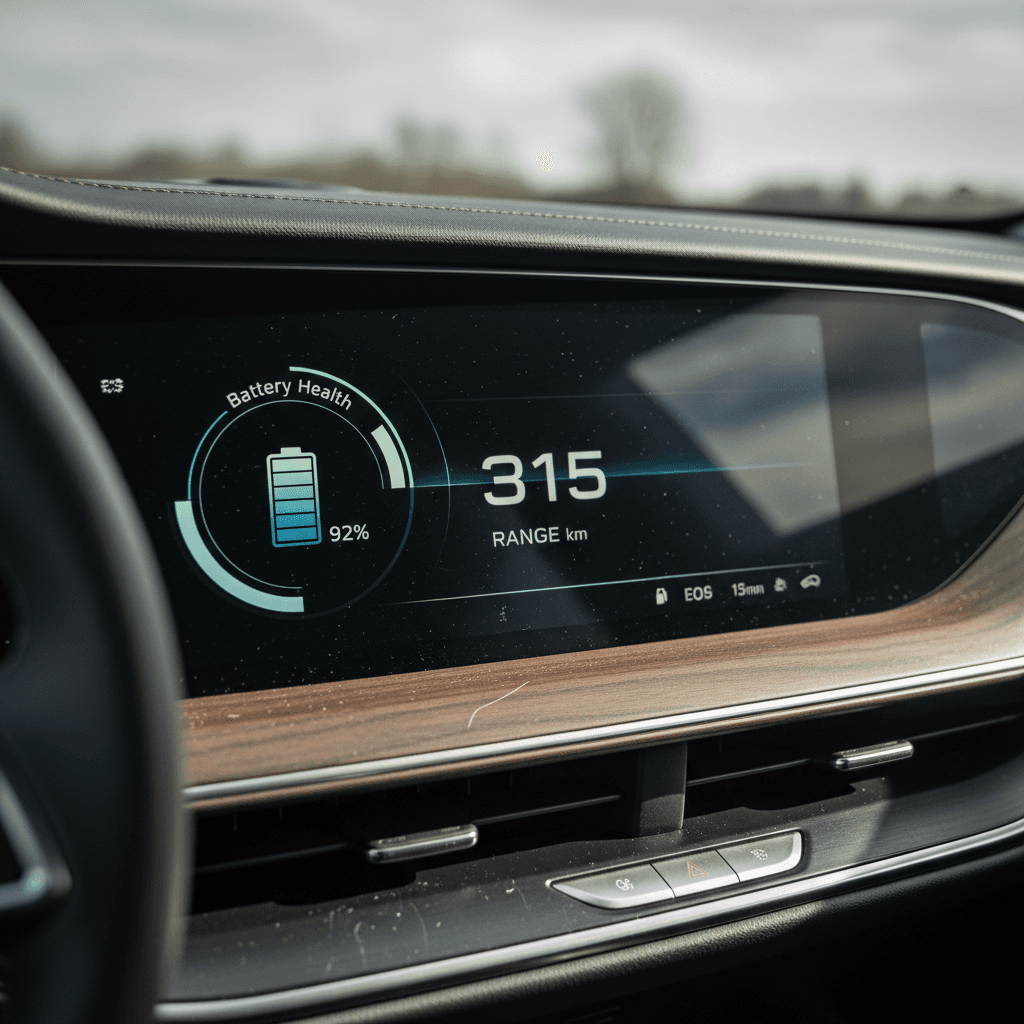
Some loss is normal. After a few years, a healthy Lyriq battery might show 5–10% less usable capacity than new. Large drops or wildly inconsistent range can be a red flag.
Look for third‑party or dealer records on battery tests, and lean on platforms that provide that by default.
How was it charged?
A Lyriq that lived on home Level 2 and occasionally fast‑charged on road trips is ideal. One that fast‑charged to 100% every other day as a rideshare mule deserves closer scrutiny.
Recharged’s intake process includes a charging‑behavior review to catch these patterns.
Does the range fit your daily pattern?
List your week: commute, errands, extracurriculars. For most U.S. drivers, even a Lyriq that’s lost 10–15% of its original range will be vast overkill, especially with home charging.
Where range really matters is if you routinely do 200‑plus‑mile days without easy charging at the end.
How Recharged simplifies Lyriq range shopping
Ready to find your next EV?
Browse Vehicles2025 Cadillac Lyriq Range FAQ
Frequently Asked Questions About 2025 Lyriq Range
Bottom Line: Is the 2025 Lyriq a Good Range Bet?
In a segment full of big promises and small print, the 2025 Cadillac Lyriq is refreshingly straightforward. Its EPA numbers are ambitious but not fantastical; its real‑world range on the highway is competitive with, and sometimes better than, similarly sized luxury EVs; and its 102‑kWh battery gives you meaningful headroom for weather, wheels, and the occasional bad decision with the throttle.
If you prioritize all‑weather traction and punchy acceleration, the AWD Lyriq will still deliver easy 240–280‑mile highway legs in decent conditions. If you want maximum range per dollar and live in gentler climates, the RWD car is the thinking person’s spec, especially as a used buy. In either case, pairing the Lyriq’s honest range with robust home charging and broad access to CCS and Tesla infrastructure turns it from a gorgeous concept‑car‑on‑wheels into a genuinely practical long‑distance tool.
And if you’re considering a Lyriq on the used market, don’t treat range as a mystery. A platform like Recharged, with verified battery health reports, fair‑market pricing, financing, trade‑ins, and nationwide delivery, turns that unknown into a spec you can shop, compare, and trust. That’s what modern luxury ought to be: not just a beautiful cabin and a big number on a brochure, but confidence every time you press the start button and head for the horizon.