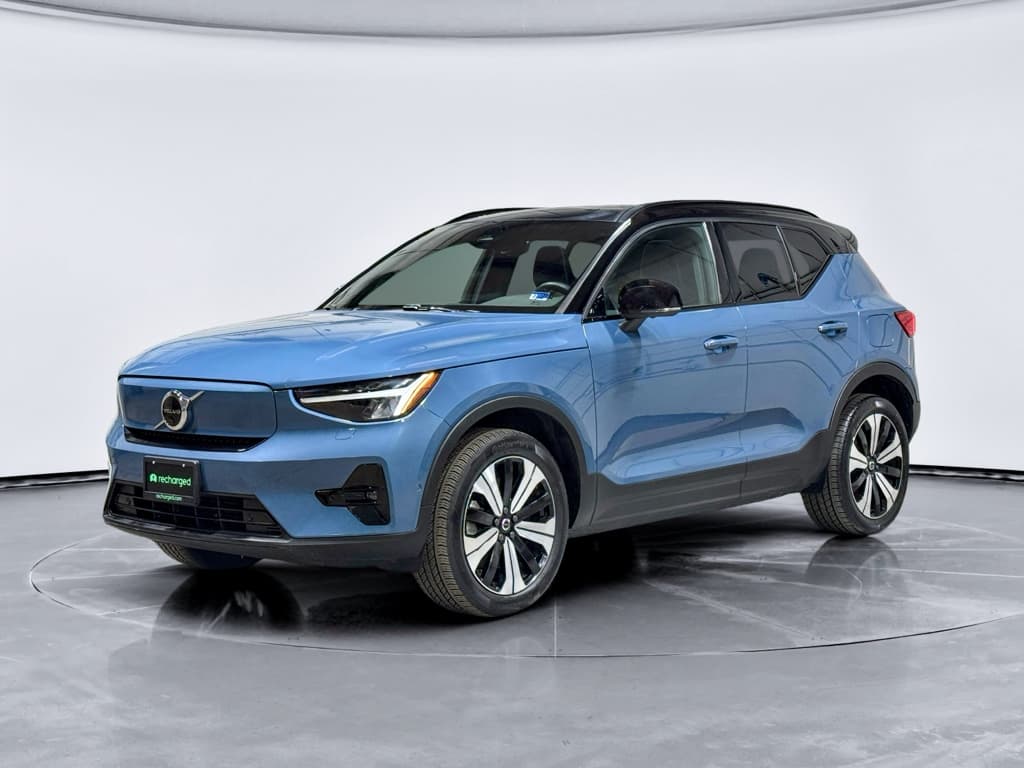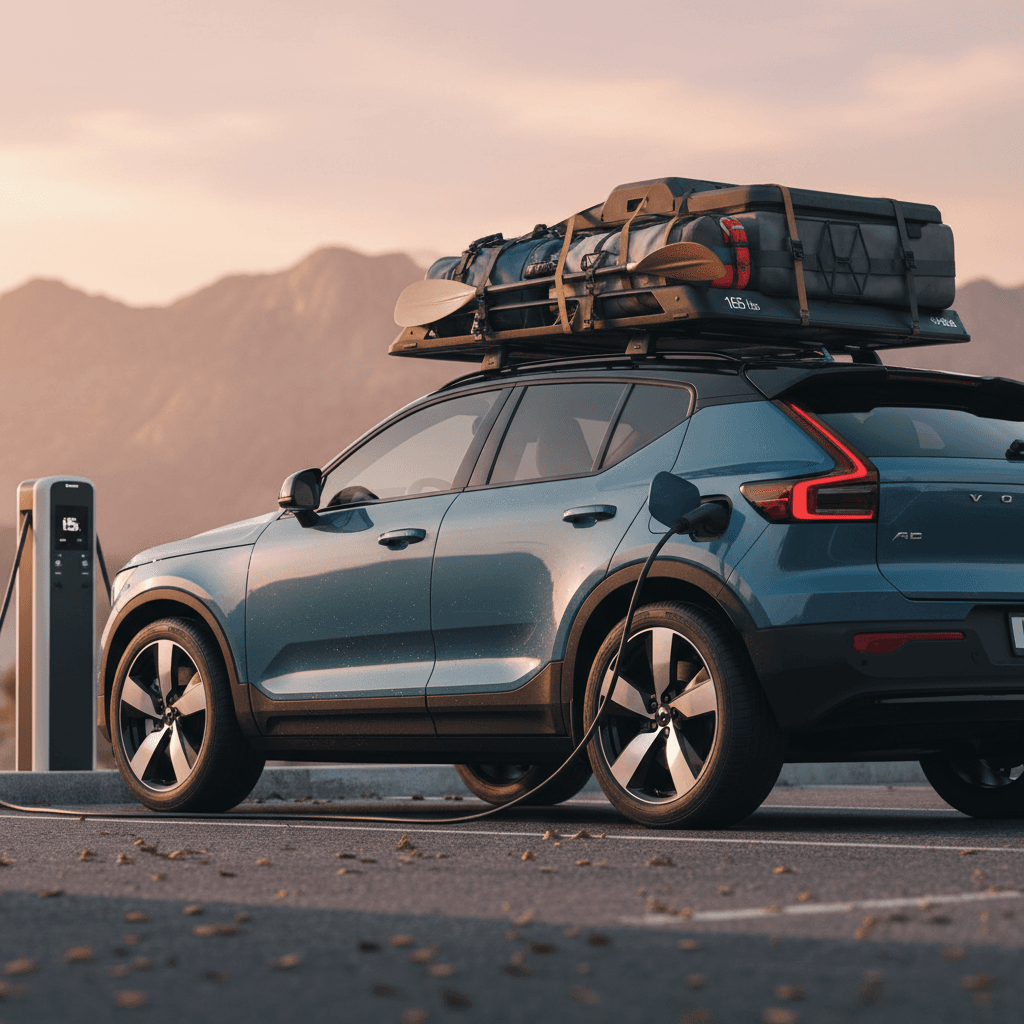
If you’re planning bikes, a cargo box, or even a roof tent for your Volvo C40, the first number you need to know is the Volvo C40 Recharge roof rack weight limit. Get it wrong and you’re risking body damage, handling issues, or a denied insurance claim. Get it right and the C40 is a capable weekender, just within some fairly strict limits.
Key C40 roof load number
Volvo C40 Recharge roof rack weight limit: quick overview
Core C40 Recharge roof load figures
Volvo’s spec sheets and accessories guides list a maximum roof load of 75 kg for the C40/EC40 line. That’s broadly in line with other compact EV crossovers and reflects both the glass roof structure and the higher center of gravity when you add weight up high.
- The 75 kg rating is a dynamic limit – it applies while the car is moving.
- It is an absolute cap for roof bars + boxes + bikes + cargo combined.
- You should assume the same limit whether you have Volvo OEM crossbars or reputable aftermarket bars, your car’s rating is the hard ceiling.
Always follow the lower number
How Volvo defines roof load on the C40 Recharge
Volvo uses “max roof load” on the C40 Recharge to mean the total payload carried on the roof while driving. That includes the mounting hardware. In other words:
- Roof load = crossbars + mounting feet + box/rack + all gear inside or on it.
- It does not include passengers or cargo inside the cabin, those are governed by the car’s gross vehicle weight rating (GVWR).
- Loose loads sitting directly on the panoramic glass are not allowed; Volvo expects you to use approved roof carriers.
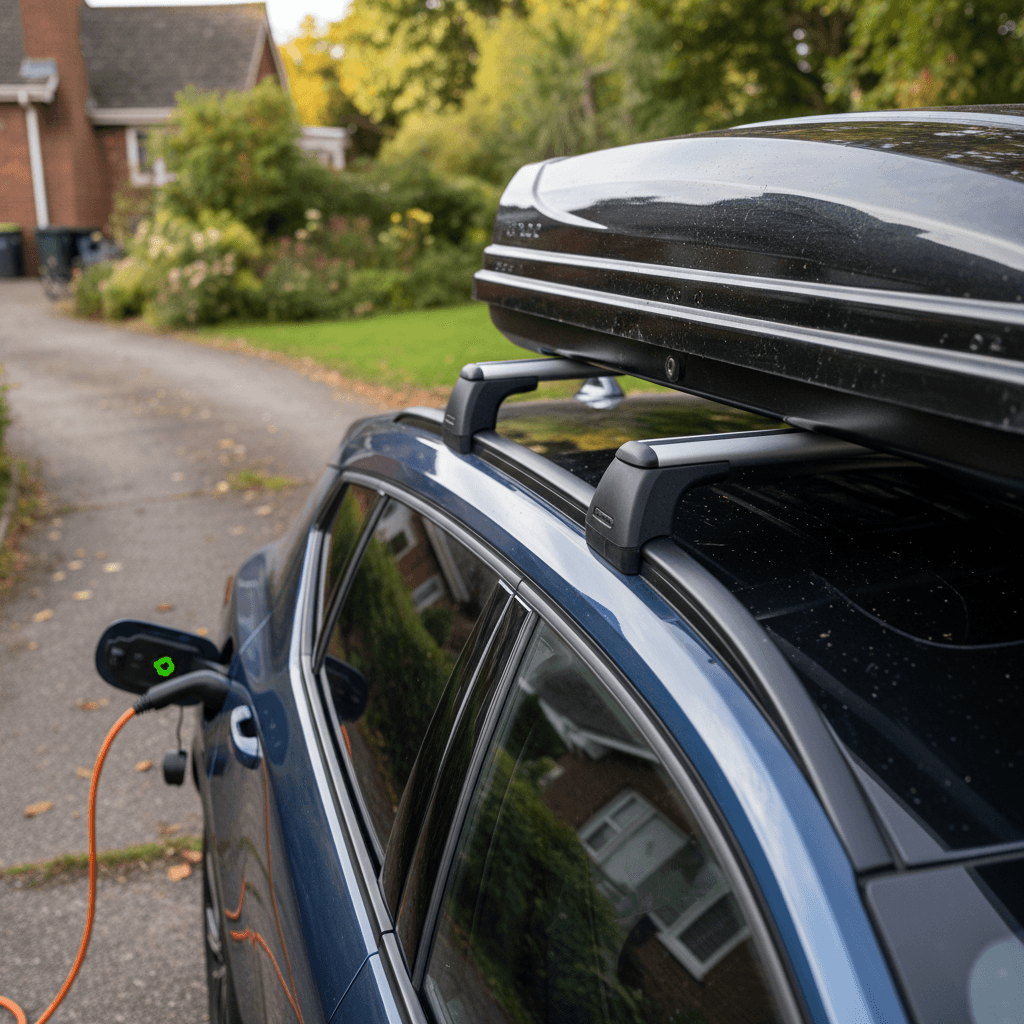
Where to find your exact rating
Dynamic vs. static load: what actually matters
The 75 kg roof load for the Volvo C40 Recharge is a dynamic limit: the safe total while the car is in motion, dealing with bumps, cornering, and emergency maneuvers. Static load, what the roof can hold when the car is parked, will always be higher in engineering terms, but Volvo doesn’t publish a separate static number for the C40.
Dynamic load (published 75 kg)
- Applies whenever the car is moving.
- Designed around handling, rollover risk, and crash safety.
- Used by police, insurers, and Volvo if they ever have to assess a claim.
Static load (not specified)
- Applies when the car is parked.
- In theory, structure can support more, but there’s no official C40 static rating.
- That’s why rooftop tents are a gray area: you’re into “use at your own risk” territory.
Don’t “game” the numbers
Common C40 roof setups and how much they really weigh
The quickest way to overload a C40 roof rack is to forget that the bars and box eat into your 75 kg allowance. Here’s how some typical setups tend to pencil out. These are ballpark numbers, always check the spec sheet for your exact accessories, but they’ll get you in the right neighborhood.
Example Volvo C40 Recharge roof rack setups
Approximate real-world weight totals for common roof configurations. All figures are illustrative; use your actual accessory specs when you do the math.
| Use case | Component weights (approx.) | Total roof load | Safe for C40 (75 kg)? |
|---|---|---|---|
| Weekend cargo box (medium) | Bars 5 kg + box 18 kg + luggage 25 kg | ~48 kg | Comfortable margin |
| Big ski box, fully stuffed | Bars 5 kg + box 23 kg + gear 45 kg | ~73 kg | Borderline – pack carefully |
| Two bikes on fork-mount carriers | Bars 5 kg + 2 carriers 5 kg + bikes 30 kg | ~40 kg | Well within limit |
| Three e‑bikes on the roof | Bars 5 kg + 3 carriers 7 kg + bikes 66 kg | ~78 kg | Over limit – don’t do this |
If your spreadsheet lands near or above 75 kg on a C40 Recharge, it’s time to remove gear or choose lighter hardware.
How to sanity‑check your setup
Roof load and EV range: what to expect
Roof weight is only half the story. On an EV like the C40 Recharge, a roof box or bike rack also creates aerodynamic drag, which is what really hurts your efficiency on the highway. Owners who add bulky roof gear to compact EVs commonly see 18–25% range loss at freeway speeds, and sometimes more in winter conditions or at higher speeds.
- Expect the biggest hit above about 60–65 mph. Around town, drag matters much less.
- A long, tall cargo box typically affects range more than a low‑profile ski box or bare bikes.
- If you’re towing and running a roof box, think in terms of two separate penalties stacking on top of each other.
- On Recharged’s own C40 towing test, we already plan in a healthy buffer; adding a full roof box would only deepen that planning need.
Plan charging stops with drag in mind
Choosing a roof rack system for your C40 Recharge
The C40 Recharge comes with a slick, glass‑heavy roofline and no traditional raised side rails. That means you’ll either be running Volvo’s own low‑profile load carriers or a clamp‑style aftermarket kit that’s designed specifically for the C40’s door openings and roof contour.
C40 Recharge roof rack options at a glance
Both OEM and aftermarket setups can work well, as long as you respect the car’s 75 kg limit.
Volvo OEM load carriers
- Tuned specifically for the C40 roof and glass layout.
- Generally match Volvo’s aero and noise expectations.
- Clear documentation and integration with Volvo‑branded roof boxes.
- Often the safest bet on a used C40 that’s still under warranty.
Aftermarket crossbars
- Thule, Yakima, and specialty brands offer C40‑specific kits.
- Sometimes higher bar ratings, but car is still limited to 75 kg.
- More variety in bar shape (square vs. aero), length, and accessories.
- Check fit notes carefully: some kits are for “naked roof” C40s only.
Watch compatibility notes
Can you mount a roof tent on a C40 Recharge?
A lot of C40 shoppers eye rooftop tents as a way to turn this compact EV into a mini overlander. The challenge is simple math plus a lack of a published static rating. Many hard‑shell and even some soft‑shell tents weigh 55–75 kg all by themselves. Once you add crossbars (5–7 kg) and two adults, you’re well beyond C40 territory on paper.
Roof tents vs. Volvo C40 Recharge limits
Why rooftop tents are a tough fit for the C40’s 75 kg roof load rating.
| Item | Typical weight | Implication on C40 |
|---|---|---|
| Crossbars + mounts | 5–7 kg | Immediately eats into the 75 kg limit. |
| Compact soft‑shell tent | 45–55 kg | Leaves very little dynamic headroom for bedding and hardware. |
| Hard‑shell tent | 60–75 kg | On paper, can exceed the entire C40 dynamic limit before passengers. |
| Two adults | 120–180 kg total | Static load only, but there’s no published C40 static rating. |
If you do pursue a rooftop tent on a C40 Recharge, you’re operating outside Volvo’s published limits, treat it as experimental, and understand the risk is on you.
Conservative view: rooftop tents are a “no”
Packing and loading checklist for C40 roof racks
Once you know your numbers, the rest is about good habits. Here’s a quick checklist you can run every time you load the roof of your Volvo C40 Recharge.
C40 roof loading checklist
1. Confirm your 75 kg (or local) limit
Double‑check the roof load figure in your C40’s manual or app. If your market lists a slightly different number, that’s the one you follow.
2. Add up every component
Weigh or estimate your crossbars, box or racks, and all gear. If you’re unsure, round <strong>up</strong>, not down.
3. Keep heavy items low
Put the heaviest items inside the cabin or cargo area, not on the roof. The roof is for <strong>bulky, lighter gear</strong> whenever possible.
4. Center the weight
Mount the box or carriers centrally and follow the bar spacing in the instructions. Uneven weight can stress mounts and affect handling.
5. Check clearances
Remember your new height for garages, drive‑thrus, and tree branches. The C40 sits taller than a sedan before you add a box.
6. Re‑torque and inspect
After your first long drive with a new setup, re‑check torque on bar fasteners and make sure nothing has shifted or loosened.
Good rule of thumb
Shopping used Volvo C40 Recharge? Check the roof story
On the used market, a “roof‑ready” C40 Recharge, bars, box, and maybe bike trays, can be a big plus. It can also be a red flag if the previous owner treated the 75 kg limit as a suggestion instead of a rule. This is exactly the kind of nuance Recharged tries to surface when we evaluate used EVs.
Roof‑related checks on a used C40 Recharge
Whether you’re buying privately or through a retailer, don’t ignore what’s happened above the glass.
Inspect the roof skin and glass
Examine mounting points
Ask about usage patterns
Every C40 sold through Recharged comes with a Recharged Score battery health report and a full digital history of how the car has been used and equipped. If a previous owner ran a rack setup, that context helps you understand both range expectations and any cosmetic or structural considerations before you buy.
FAQ: Volvo C40 Recharge roof rack weight limit
Frequently asked questions about C40 roof loads
Bottom line on C40 Recharge roof rack limits
The Volvo C40 Recharge is perfectly capable of hauling bikes, boards, and a well‑packed cargo box, as long as you treat its 75 kg roof rack weight limit as a hard line, not a suggestion. Add up every component on the roof, keep heavy items down low in the cabin, and remember that aerodynamic drag, not just mass, will eat into your range at highway speeds.
If you’re in the market for a used C40 Recharge or another EV that can pull double duty as a weekday commuter and weekend gear hauler, this is the kind of detail you want dialed in before you buy. Recharged’s battery‑health reporting, transparent pricing, and EV‑specialist support team are built for exactly these questions, so you can spend less time worrying about limits and more time planning your next trip.