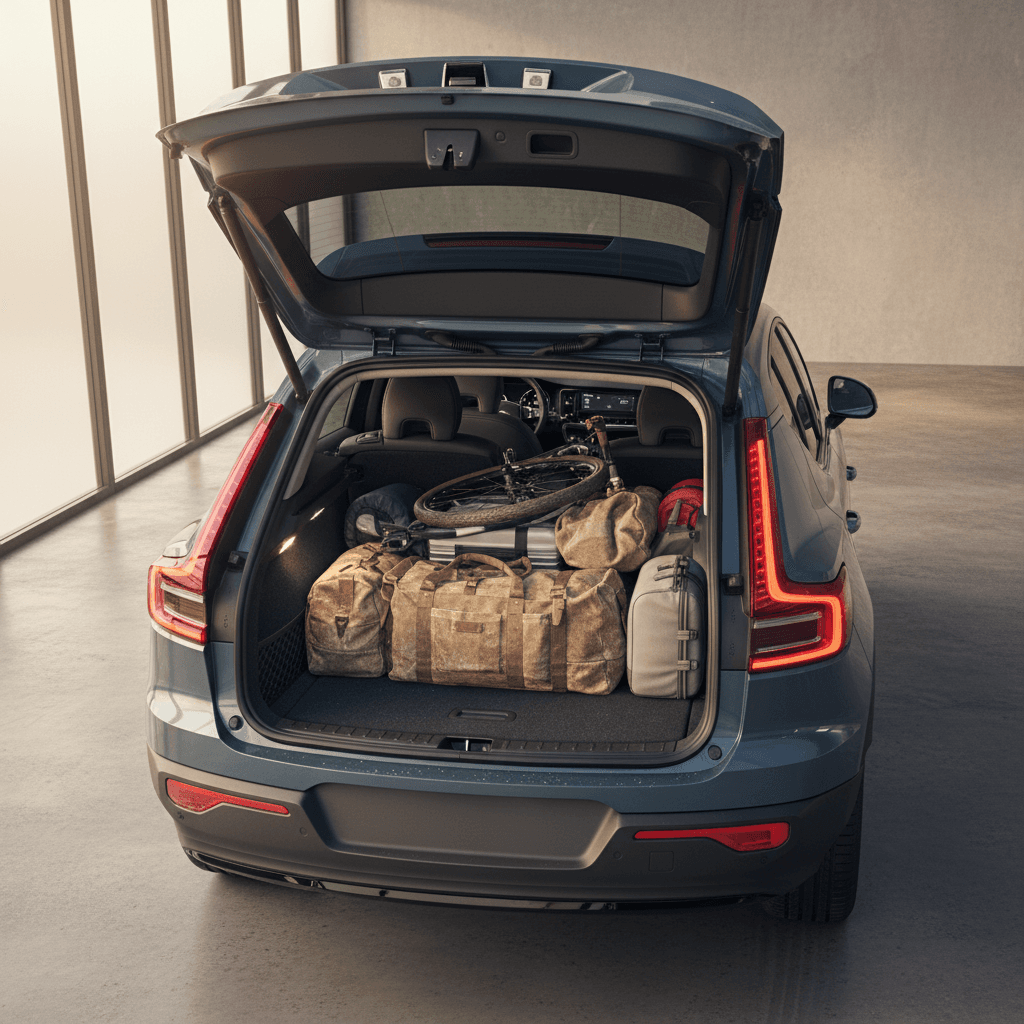
You don’t buy a Volvo C40 Recharge because you want maximum box‑store volume. You buy it because you like the way it looks and drives, and then you cross your fingers that the cargo area is “enough.” The good news: with the rear seats down, the Volvo C40 Recharge cargo space is genuinely usable for road trips, IKEA runs, dogs, and outdoor gear, so long as you understand its limitations.
Headline numbers
Volvo C40 Recharge cargo space with seats down: quick answers
- Maximum cargo volume (rear seats folded): about 49 cu ft in the main trunk area.
- Cargo volume behind rear seats (seats up): about 14.5–15 cu ft, depending on source and market spec.
- Load length with seats folded (floor to tailgate): about 66.3 inches (1685 mm).
- Load floor width between the wheel housings: about 39.6 inches (1005 mm).
- Cargo height to the load cover area: roughly 24.7 inches (around 629 mm) in the central section.
On paper, that ~49 cu ft number puts the C40 in the “compact premium crossover” camp: smaller than a Tesla Model Y, very close to a Polestar 2, and slightly down on its boxier sibling, the XC40 Recharge (now called EX40 in some markets). But the story of the C40’s cargo space is really about shape, not just volume.
C40 Recharge cargo numbers explained
If you’re combing through spec sheets, you’ll notice the C40’s cargo numbers don’t always agree to the decimal. Different agencies and markets measure interior volume differently, which is why you’ll see anywhere from 14.5 to 15 cubic feet listed for cargo with the seats up and a consistent 49 cubic feet listed as max capacity with the seats down.
Volvo C40 Recharge cargo space at a glance
Mind the fastback roof
Key dimensions with the rear seats folded
Specs don’t load a moving van, but they do tell you whether the C40 will swallow your stuff without drama. Here are the essential measurements with the rear bench folded:
Volvo C40 Recharge cargo dimensions (approximate)
Core interior cargo measurements that matter when the rear seats are folded.
| Measurement | Value (imperial) | Value (metric) | Why it matters |
|---|---|---|---|
| Max cargo volume (seats down) | ~49 cu ft | ~1387 L | Overall space for luggage and gear. |
| Cargo volume (seats up) | ~14.5–15 cu ft | ~410–425 L | Trunk space with passengers in back. |
| Load length, floor to tailgate (seats down) | 66.3 in | 1685 mm | Determines whether long items fit diagonally or lengthwise. |
| Width between wheel housings | 39.6 in | 1005 mm | Useful for coolers, golf bags, and flat‑packed furniture. |
| Approx. usable cargo height (center) | ~24.7 in | ~629 mm | How tall a box you can stack before you hit the glass. |
| Cargo floor height from ground | ~29.2 in | ~741 mm | Lift‑over height for heavy items. |
Always check fitment with your actual gear, but these numbers are a solid starting point for planning.
Think in rectangles, not just cubes
Real‑world: what actually fits in a C40 with seats down
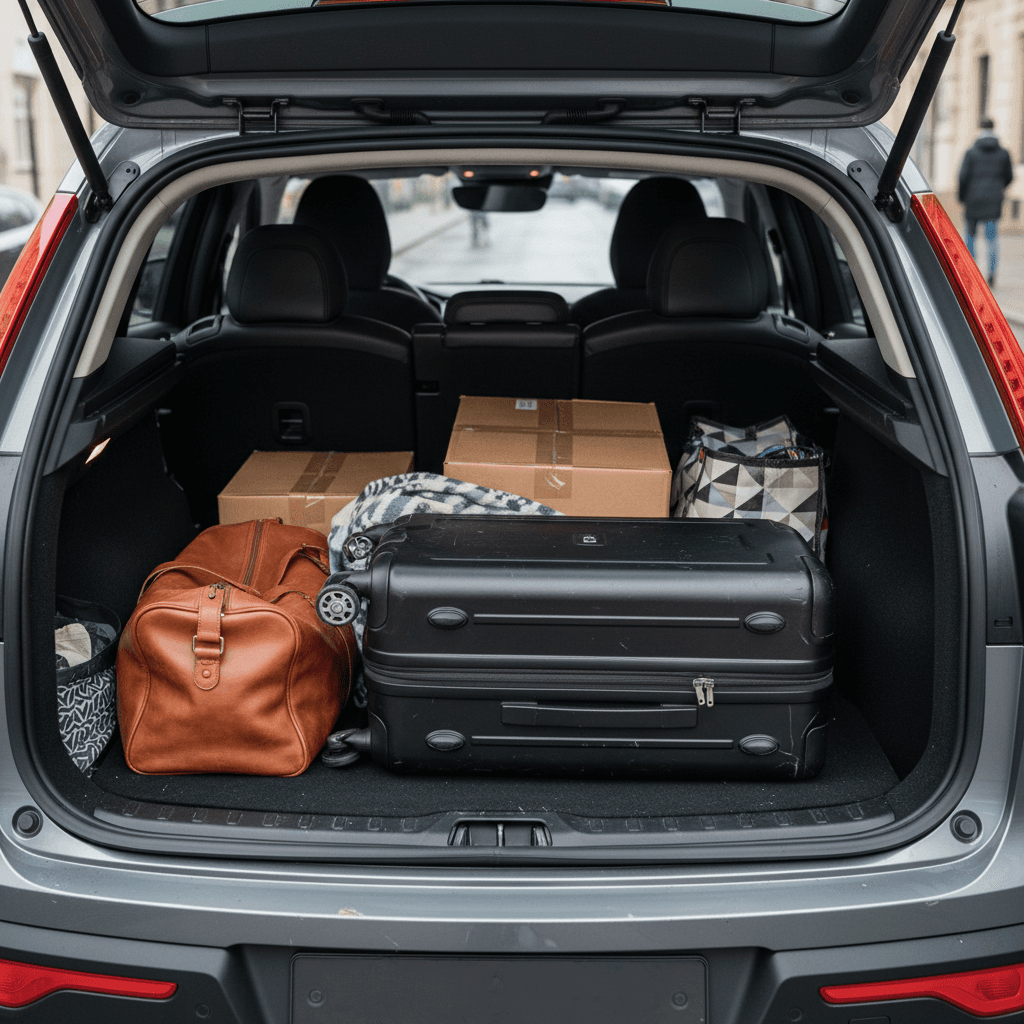
Numbers are fine, but the real question is: can the C40 play family hauler, airport shuttle, or Home Depot accomplice when you drop those rear seatbacks? In practice, yes, within reason. Here’s how that ~49 cubic feet translates into everyday life.
Typical loads the C40 can handle with seats down
Not a moving van, but more capable than the sleek roof suggests.
Airport runs & road trips
- 3–4 full‑size checked suitcases laid flat
- Plus 2–3 carry‑ons or duffel bags stacked on top
- Room under the floor for charging cables and small items
Golf & sports gear
- 2–3 golf bags diagonally with seats down
- Or a full family load of skis and boots up to ~190 cm (angled)
- Hockey bags and bulky duffels fit best with the 40‑side folded
Outdoor & DIY duty
- Flat‑packed furniture boxes up to ~5.5 ft long
- Multiple storage bins or moving boxes stacked to window line
- Camping gear for a family of four, including cooler and tent
Dogs
With the seats down, medium and large dogs get a proper flat floor and a gently rising roofline, comfortable for most breeds. With the seats up, the sloping glass reduces headroom, so tall dogs may prefer riding with a portion of the seat folded instead.
Bikes
A modern mountain bike will generally need at least the front wheel removed, sometimes both, especially for L/XL frames. Road bikes are easier, but the C40 isn’t a roll‑in‑and‑go bike hauler like a tall wagon. If bikes are frequent cargo, consider a hitch rack.
Watch the tailgate angle
C40 Recharge cargo space vs XC40 and key rivals
If you’re cross‑shopping, cargo space is usually where the Volvo C40 has to argue its case. It’s the same basic platform as the XC40/EX40, but the stylish fastback roof trades some utility for looks. Here’s how it stacks up against usual suspects.
Cargo space comparison: C40 vs XC40 and rivals
Approximate cargo volumes for popular compact electric crossovers. Values rounded for clarity.
| Model | Seats Up (cu ft) | Seats Down (cu ft) | Key takeaway |
|---|---|---|---|
| Volvo C40 Recharge | ~15 | ~49 | Stylish fastback trades a bit of space vs. boxier SUVs, but still practical enough for most households. |
| Volvo XC40 Recharge / EX40 | ~17–18 | ~57–58 | Same footprint, bigger square‑back cargo hold; the practical choice if space matters more than style. |
| Tesla Model Y | ~30 | ~72–76 | The class cargo king; taller, boxier, and more cavernous behind the second row. |
| Hyundai Ioniq 5 | ~27 | ~59 | Long wheelbase and sliding rear seats give flexible, wagon‑like cargo space. |
| Polestar 2 | ~14 | ~38–41 | Liftback sedan sibling; less total volume than C40 with seats down. |
Figures focus on main trunk volume; under‑floor and frunk storage not included unless noted.
When the C40’s space is “enough”
Packing hacks and seat‑down configuration tips
One of the underrated virtues of the C40 Recharge is how smart the interior packaging is. It’s not huge, but it’s clever, Scandi‑IKEA smart. To get the most out of the cargo area with the seats folded, use it like a modular space, not a hole you toss things into.
7 ways to make the most of C40 cargo space
1. Use the 60/40 split strategically
Fold just the 40‑percent section to carry one or two rear passengers plus skis or long boxes. Or drop the 60 side for bulkier loads and a single rear passenger.
2. Flatten the load floor
Drop the rear seatbacks fully and remove or lower the cargo cover so you have a continuous flat floor from the tailgate to the front seatbacks, essential for sliding heavy items in and out.
3. Pack low and long first
Load heavy, long items on the floor against the seatbacks. Then stack lighter, softer items on top, staying below the window line toward the rear so visibility and that fastback glass aren’t compromised.
4. Exploit under‑floor storage
The C40’s under‑floor compartment is ideal for charging cables, small tools, and valuables. Clearing clutter from the main cargo floor buys you more usable volume for bulky stuff.
5. Use soft bags instead of hard cases
Duffels and soft‑sided bags deform to the C40’s curved roof and sidewalls. They’re much easier to Tetris under the sloping hatch than big plastic totes.
6. Slide the front seats forward when you can
For the occasional giant haul, a few inches of front‑seat sacrifice yields more load length, especially helpful for lumber, curtain rods, or skis.
7. Protect the interior
The low, nicely finished load floor is great until a sharp box gouges it. A simple cargo mat or moving blanket preserves the resale‑friendly interior Volvo owners tend to care about.
Battery doesn’t steal your trunk
Is the C40 Recharge practical enough for your life?
Great fit if...
- You mostly haul people + luggage, with the big cargo runs once or twice a month.
- You prioritize design, comfort, and safety tech over sheer cubic footage.
- You don’t need to transport upright furniture, bikes, or dogs every single weekend.
- You’re moving up from a sedan or hatchback, not downsizing from a three‑row SUV.
Maybe look elsewhere if...
- You often carry bulky outdoor gear, multiple bikes, or home‑renovation supplies.
- You have large dogs that need to ride behind the back seats every day.
- You’re replacing a big wagon or three‑row SUV and expect similar capacity.
- You want a one‑vehicle solution that doubles as an occasional mini‑moving truck.
Pro move: test it with your stuff
Buying a used C40 Recharge: cargo considerations
The Volvo C40 Recharge (renamed EC40 in some markets) is starting to appear on the used market in meaningful numbers, often ex‑lease or ex‑rental cars. If you’re looking at one as a daily driver and weekend gear mule, cargo practicality should be on your checklist right next to battery health.
Cargo questions to ask when shopping used
Especially if the C40 will be your only family vehicle.
Has it lived a hard hauler life?
Check the cargo floor, seatbacks, and trim panels for deep scratches, stains, or dents where heavy items have slid around. Well‑used cargo areas aren’t a deal‑breaker, but they’re bargaining chips on price.
How’s the battery vs. what you’ll carry?
Weight affects range. If you routinely pile in tools, building materials, or heavy gear, talk to the seller about real‑world consumption. A Recharged Score battery health report can show how the pack has aged relative to similar cars.
Any signs of overloading or sagging?
Look at the rear suspension height with the car unloaded. Severely saggy rears can mean frequent overloading or worn components. During your test drive, listen for suspension clunks over bumps with the cargo area loaded.
Do your key items actually fit?
If you’re buying through Recharged, ask your specialist to walk through dimensions for strollers, wheelchairs, bikes, or work gear. We can help you compare the C40’s space to other used EVs you’re considering.
How Recharged makes it easier
Ready to find your next EV?
Browse VehiclesVolvo C40 Recharge cargo space FAQ
Frequently asked questions about C40 cargo space
The Volvo C40 Recharge is not the cargo king of the EV world, but it was never trying to be. With the rear seats down, its ~49 cubic feet of space, flat load floor, and cleverly hidden storage make it more capable than the coupelike profile suggests. If your life is full of people, luggage, groceries, and the occasional big weekend project, it’s probably enough. If your lifestyle is basically a rolling REI catalog, you may want the boxier XC40/EX40, or use Recharged to compare a few used EVs side by side and let your gear decide.