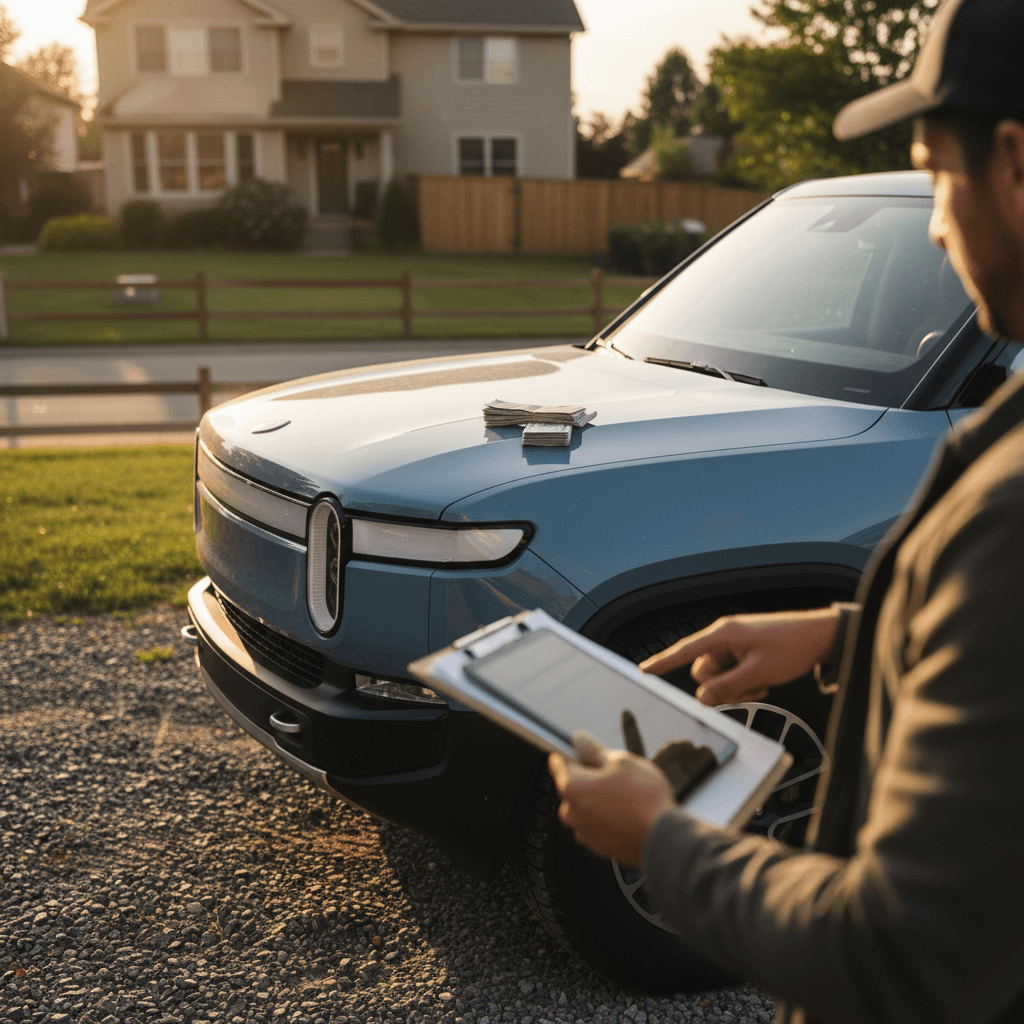
Trying to figure out how to sell a Rivian R1S in a private sale is a little different from unloading a used Highlander. You’re selling a six‑figure electric adventure rig in a market where EV incentives, Rivian’s own pricing, and rapid tech changes have shoved used values around like beach furniture in a hurricane. The good news: with a plan, you can turn that complexity into leverage, and walk away with more money and fewer headaches.
Context: The R1S Market in 2026
Why Selling a Rivian R1S Is Different from a Normal SUV
What Makes an R1S Sale Unique
Three things private buyers will obsess over
Battery & Software
Buyers aren’t just asking about miles, they’re asking about state of charge habits, fast‑charging use, over‑the‑air updates, and remaining battery warranty.
Depreciation vs. Tech
R1S pricing is a moving target as Rivian updates trims and launches the R2 lineup. Smart sellers price against current used listings, not original MSRP.
Trust & Transparency
Because Rivian is still a young brand, buyers want extra reassurance: service records, battery health data, and honest cosmetic disclosure.
Big Picture
Step 1: Decide If a Private Sale Is Right for Your R1S
Before you start taking photos and fielding lowball DMs, decide whether a private sale is actually your best option. Private‑party will usually net you the most money, but it also demands time, patience, and a certain tolerance for strangers driving your 7,000‑pound battery pack.
When a Private Sale Makes Sense
- You want to maximize sale price and are willing to do some legwork.
- Your R1S is clean, accident‑free, and well‑optioned (Adventure/Ascend, Large or Max pack, desirable colors).
- You’re in a market where Rivians are known, West Coast, Colorado, parts of the Northeast, and demand is healthy.
- You’re comfortable handling payments and paperwork yourself or with a bank’s help.
When You Should Reconsider
- You need the car gone this week or you’re moving states.
- The R1S has accident history, significant cosmetic damage, or warning lights you don’t want to address.
- You’re uneasy with large‑sum transactions and meeting strangers from classifieds.
- You’d rather have EV specialists handle valuation, buyer screening, and paperwork, this is where a marketplace like Recharged can be a better fit.
Reality Check
Step 2: Understand R1S Value and Set a Strategic Price
Pricing a Rivian R1S for a private sale starts with understanding how quickly they depreciate and where your particular truck sits in that curve. A 2025 Adventure can still show used asking prices in the upper‑$60Ks to low‑$70Ks, while earlier model years with more miles can dip well into the $50Ks. Don’t expect your original MSRP to mean much in 2026.
Rivian R1S Value Snapshot (Illustrative Ranges)
Those numbers move constantly, so treat them as a starting grid, not gospel. To get specific, you’ll want to cross‑check several data points and then position your asking price strategically above what you’re willing to accept.
How to Nail Your R1S Asking Price
1. Pull objective value estimates
Use tools like Kelley Blue Book, Edmunds, and CARFAX value reports for your exact year, trim, mileage, and ZIP. Look at both <strong>trade‑in</strong> and <strong>private‑party</strong> figures.
2. Study active listings, not just sold data
Search for Rivian R1S listings on major used‑car sites, Rivian’s own pre‑owned shop, and EV‑focused marketplaces. Focus on vehicles closest to your build, miles, and region.
3. Adjust for options and condition
Quad‑ and Tri‑Motor, Max or Large pack, premium colors, and popular wheel packages all add value. Curb rash, dings, and missing accessories (charger, mats, key fobs) all subtract.
4. Pick a “float range” price
Set your ask maybe <strong>$2,000–$3,000 above</strong> your walk‑away minimum to allow room for negotiation without undercutting yourself on day one.
5. Be ready to move
If you get zero quality inquiries in two weeks, the market is telling you something. A <strong>$1,000–$2,000 reduction</strong> plus refreshed photos can re‑ignite interest.
Private vs. Marketplace Pricing
Step 3: Get Your Rivian R1S Ready for Buyers
Detailing and prep are where private sellers usually fumble. You’re not just selling an SUV; you’re selling the idea that you, personally, have cared for an extremely complex piece of software on wheels. That needs to be obvious the moment a buyer opens the door.
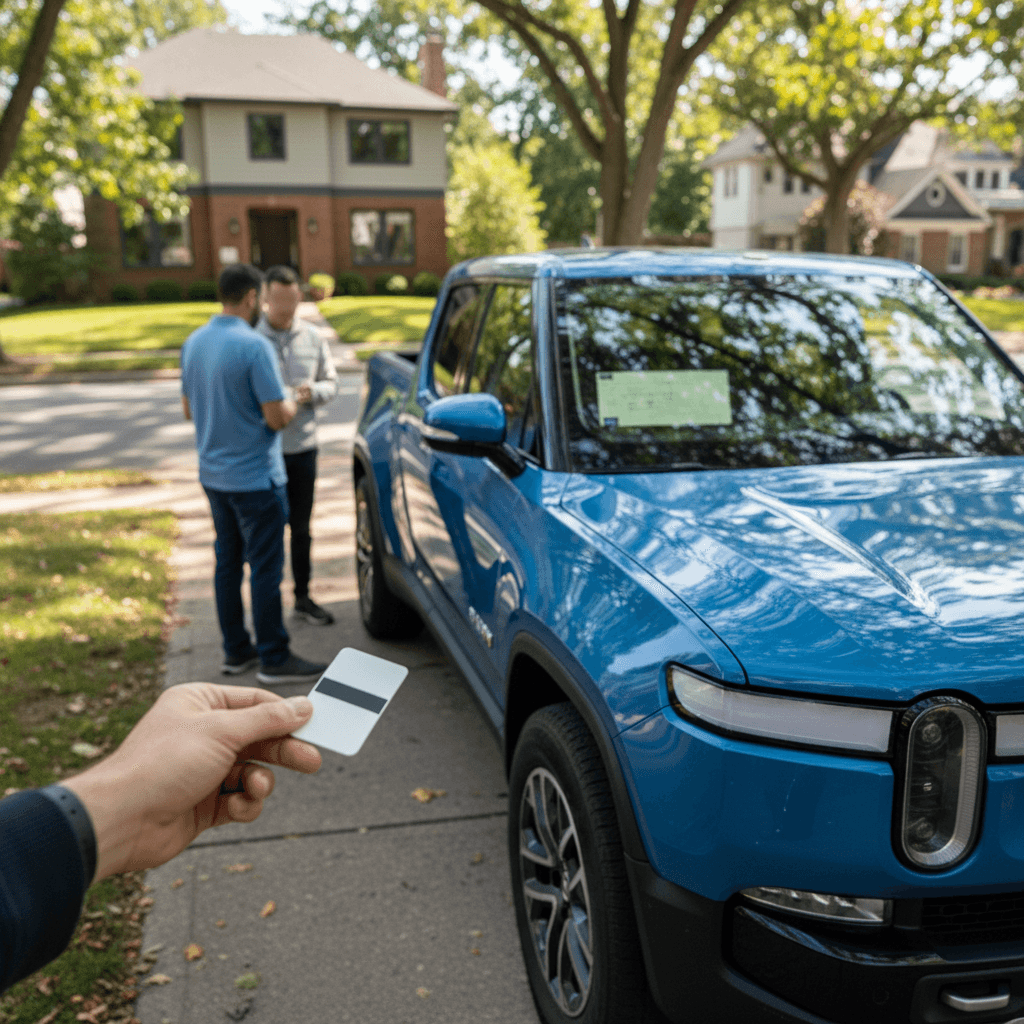
- Get a professional exterior and interior detail, including wheels and calipers, Rivian’s design depends heavily on clean surfaces and contrast.
- Remove personal items, kid gear, and roof boxes. Buyers need to see usable space, not your lifestyle.
- Address small, cheap fixes: replace cracked windshield, worn wiper blades, and missing tow hook covers; repair simple curb rash if possible.
- Gather service records and invoices from Rivian and any tire/brake work. Print them or save as a clean PDF.
- Make sure both key fobs, any RFID cards, and included charging equipment are present, labeled, and tested.
- Top off washer fluid, set tire pressures correctly, and clear all warning lights. If anything serious is lit, fix it or be prepared to discount and disclose.
Don’t Hide EV Issues
Step 4: Create a High‑Converting R1S Listing
Your listing needs to do three jobs at once: stop the scroll, answer questions, and establish trust. Bland copy like “fully loaded, great condition” is a waste of pixels on a six‑figure EV. Be concrete, factual, and specific to the R1S experience.
What to Include in Your R1S Listing
Think like a skeptical, spreadsheet‑obsessed buyer
High‑quality photos
- Front 3/4, rear 3/4, both sides
- Close‑ups of wheels and tires
- Interior, third row, cargo area
- Dash with mileage and software version
- Charging screen showing battery state
Full, honest description
- Year, trim (Adventure/Ascend), motor and battery pack
- Key options: wheels, interior, tow package, off‑road gear
- Accident history, paintwork, and cosmetic flaws
- Home charging habits and fast‑charging usage
Proof and reassurance
- Warranty status and in‑service date
- Service visits and software updates
- Any battery or charging health documentation
- Reason for selling (upgrading, lifestyle change, etc.)
“In a market jittery about EV resale, the seller who over‑shares on condition and history usually wins. Silence feels expensive to buyers.”
Step 5: Screen Buyers, Test Drives, and Safety
Interest is not the same as intent. With a Rivian R1S, you’ll get curiosity, joy‑riders, and people who simply can’t really afford the payment. The trick is to filter for serious buyers without being a jerk about it.
Smart Buyer‑Screening Process
Ask practical questions up front
Before you schedule a viewing, ask how they plan to pay (cash, bank loan, credit union), whether they’ve driven an R1S or any EV before, and if they have a home charging plan.
Verify identity before a test drive
Request a photo of their driver’s license in advance or verify it on arrival. Refuse rides to anyone who won’t identify themselves clearly.
Meet in a safe, public place
Use a well‑lit public parking lot near a bank or police station and bring a friend. Avoid having first meetings at your home if possible.
Control the test‑drive route
Start by driving yourself to demonstrate controls and one or two quick acceleration runs. Swap seats only once you’re comfortable, and keep the route short.
Mind your keys and app access
Don’t hand over both key fobs at once, and don’t add a stranger as a driver in your Rivian app. You can demonstrate app features without giving control.
Insurance & Liability
Step 6: Payments, Paperwork, and Title Transfer
This is where people get nervous, and justifiably so. You’re moving the price of a small condo between strangers. The goal is simple: no loose ends, with your money, your title, or your personal data.
Common Payment Methods for a Private R1S Sale
Pros and cons for high‑value, six‑figure‑capable transactions
| Method | Pros | Cons | Best Practice |
|---|---|---|---|
| Cashier’s check | Familiar, easy for buyers, paper trail | Counterfeits exist; after‑hours verification is tricky | Meet at the issuing bank; have teller confirm authenticity before signing title. |
| Wire transfer | Fast, hard to fake, no physical check | Both parties must trust bank info; can’t be easily reversed | Complete wire at buyer’s bank branch or your bank; don’t release vehicle until funds post. |
| Buyer’s bank/credit union loan | Bank handles part of the process, some fraud protection | More time at the branch, more signatures | Meet at lender, sign title and bill of sale with loan officer present. |
| Escrow service | Extra layer of protection, especially cross‑state | Fees, scams if using unknown services | Use only well‑known auto escrow services; verify URL and reviews yourself. |
Whenever possible, close the deal during bank hours so you can verify funds on the spot.
Paperwork You’ll Typically Need (U.S.)
State‑specific title transfer
Your state DMV website will spell out exactly how to sign over a title, what forms to include, and whether notarization is required. Follow it to the comma.
Bill of sale
Even if your state doesn’t require one, create a simple bill of sale with VIN, mileage, price, date, and buyer/seller info. Each of you keeps a signed copy.
Odometer disclosure
Many states require a separate odometer statement for vehicles under a certain age. Often this is built into the title; sometimes it’s a separate form.
Release of liability
File a release of liability or notice of transfer with your state as soon as the car leaves your possession so you aren’t on the hook for tickets or accidents.
Cancel or adjust insurance
Cancel or change your coverage only after the deal is complete. Keep proof of insurance handy until the handoff is done.
What Not to Do
EV‑Specific Details to Disclose About Your R1S
Selling a Rivian privately means you’re the de facto product specialist. The more EV‑specific clarity you bring, the easier it is for a serious buyer to say yes, and the less likely they are to grind you down on price.
- Battery health story: You probably don’t have an official percentage read‑out, but you can share typical range today versus new, your charging habits, and any fast‑charging issues you’ve seen.
- Charging equipment included: List every cord, mobile connector, adapter, and wallbox (if any) that stays with the car. Clarify whether they’re Rivian‑branded or aftermarket.
- Charging network experience: Have you used DC fast networks (like Rivian’s Adventure Network, Tesla Superchargers with an adapter, or others)? Mention what’s worked well and any problem sites.
- Software and connectivity: Note the current software version, major feature updates you’ve received (drive modes, UI changes), and whether you’ve had recurring bugs or service visits for software.
- Warranty status: Rivian’s new‑vehicle and battery warranties are big confidence builders. Include in‑service date and remaining years/miles on both basic and battery coverage as best you can.
- Usage profile: City commuter, road‑trip machine, tow rig, or ski shuttle? Buyers care about how often the battery has seen deep cycles, fast‑charge sessions, and heavy towing.
Leverage Third‑Party Reports
When to Skip Private Sale and Use Recharged Instead
A well‑handled private sale can beat trade‑in offers by thousands. But it’s not the only rational choice, especially for a complex EV like the R1S, in a market that’s still learning how to price used electric trucks and SUVs.
How Recharged Can Help with Your R1S
Options if you’re done playing salesperson
Instant offer or consignment
If you want out quickly, you can request an instant offer from Recharged. If you’d rather chase top‑of‑market pricing without doing the legwork, consignment lets Recharged handle marketing, buyer screening, and negotiations while you retain ownership until the sale closes.
Recharged Score battery diagnostics
Every vehicle sold through Recharged comes with a Recharged Score Report that includes verified battery health. That’s the single hardest thing for a private seller to prove on their own, and the thing EV buyers worry about most.
Nationwide reach and logistics
Recharged handles financing, nationwide delivery, and an EV‑savvy buying process. Your future buyer could be two time zones away and still feel comfortable wiring funds for your R1S.
Less risk, more support
Instead of improvising contracts and hoping your bank teller is in a good mood, you get a transparent, digital retail experience with specialists who sell used EVs all day, every day.
Ready to find your next EV?
Browse VehiclesIn‑Person Help if You Want It
FAQ: Selling a Rivian R1S Privately
Common Questions About Private‑Party R1S Sales
Selling a Rivian R1S in a private sale is not for the casually inclined. You’re dealing with a luxury‑priced EV whose value hinges on invisible things, kilowatt‑hours, software, and trust. But if you price against today’s market instead of your memories, over‑communicate about condition and battery care, and handle payment and paperwork like a pro, you can absolutely turn your R1S into a clean, top‑of‑market sale. And if at any point you’d rather have EV specialists carry the ball, Recharged is built to do exactly that, with verified battery‑health reporting, fair‑market pricing, and a digital buying experience that makes your old‑school private sale look positively 20th‑century.