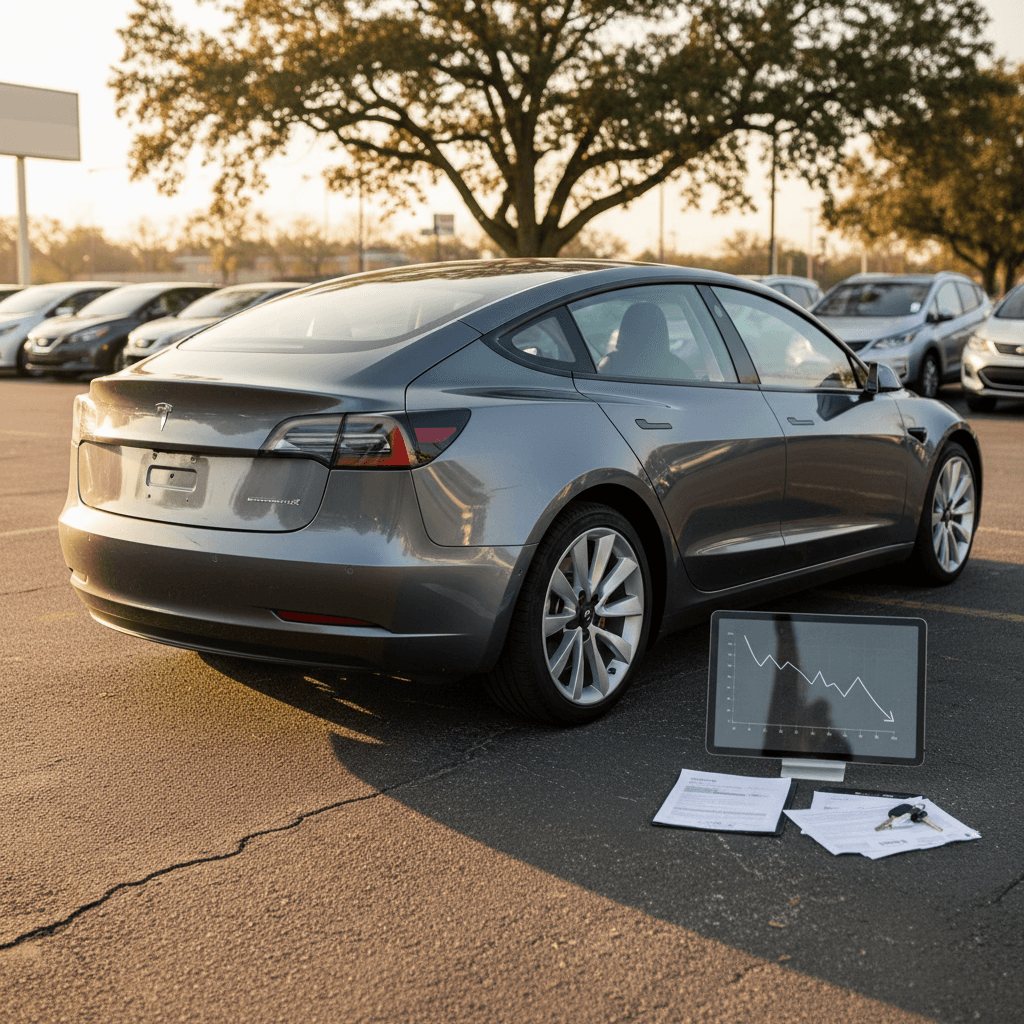
If you’re shopping for a used EV, you’ve probably noticed something surprising: the used Tesla Model 3 price in 2025 looks a lot softer than it did just a couple of years ago. After years of sky‑high resale values, Model 3 prices have cooled, and in many cases now sit below the overall U.S. used‑car average. That’s good news if you’re buying, but it also means you need to understand what’s driving those numbers so you don’t overpay for the wrong car.
At a glance
Why used Tesla Model 3 prices look different in 2025
From 2020 through 2022, used Teslas were the poster child for strong resale value. By contrast, data published through 2024 and 2025 shows used Tesla prices falling faster than most brands, with average used Teslas dropping more than 10% year‑over‑year at several points while the overall used‑car market ticked up slightly. The Model 3, once a resale standout, now averages just over the mid‑$20,000s on many pricing indexes, reflecting both changing sentiment and heavy new‑car discounting.
Used Tesla & Model 3 pricing snapshot (U.S. 2025)
The big story is supply and expectations. More Teslas are coming off lease, more owners are trading out of older tech, and Tesla has repeatedly cut new‑car prices and trimmed entry‑level Model 3 variants. When new prices fall, used prices follow. Add in shifting attitudes toward the brand and growing competition from other EVs, and you get a market where patience and good data can save you thousands on a used Model 3.
Current used Tesla Model 3 price ranges
Exact numbers move every week, but combining data from major valuation sources and marketplace listings in late 2025, here’s where used Tesla Model 3 prices generally land in the U.S.:
Typical used Tesla Model 3 price ranges (late 2025, U.S.)
Approximate retail asking prices from large used‑vehicle marketplaces for clean‑title cars with average mileage. Local markets will vary.
| Model year / segment | Typical mileage band | Common used price band* | Who this fits best |
|---|---|---|---|
| 2017–2018 (early builds) | 60,000–100,000+ miles | $17,000–$23,000 | Budget buyers, higher mileage commuters, first EVs |
| 2019–2020 | 50,000–90,000 miles | $20,000–$26,000 | Value shoppers who prioritize price over latest tech |
| 2021 | 40,000–70,000 miles | $22,000–$28,000 | Balance of price, range and fresher interior |
| 2022 | 25,000–55,000 miles | $24,000–$30,000 | Most shoppers wanting modern features under $30k |
| 2023 | 20,000–45,000 miles | $26,000–$33,000 | Buyers wanting newer hardware and warranty tail |
| 2024–2025 (lightly used) | Under 25,000 miles | $30,000–$40,000+ | Shoppers cross‑shopping new vs nearly new |
Use these bands as a starting point; condition, options, and battery health can easily move a given car several thousand dollars either way.
Important disclaimer on price ranges
Used Model 3 prices by model year
To get more specific, it helps to look at how each model year tends to price out. Remember that Tesla adjusts trims and batteries over time, so a 2018 Long Range isn’t identical to a 2022 Long Range. Here’s a high‑level snapshot for late 2025 in the U.S.:
Model‑year snapshots: what you’ll likely pay
Broad retail ranges for clean‑title cars; local results can vary by several thousand dollars.
2017–2018 Model 3
Typical price: ~$17,000–$23,000
- Often 70k+ miles
- Early build quality quirks more common
- Best deals in the entire Model 3 lineup
Check for updated MCU/computer and any major warranty repairs already completed.
2019–2020 Model 3
Typical price: ~$20,000–$26,000
- Still widely available under $25k
- Range and efficiency improved vs earliest cars
- Good sweet spot for commuters
2021 Model 3
Typical price: ~$22,000–$28,000
- Refreshed interior, heat pump introduction
- More efficient in cold climates
- Often still under basic warranty when bought in 2025
2022 Model 3
Typical price: ~$24,000–$30,000
- Strong mix of updated hardware and range
- Many lease returns hitting the market now
- Good candidates for long‑term ownership
2023 Model 3
Typical price: ~$26,000–$33,000
- Lower mileage, more warranty
- Competing directly with discounted new cars
- Useful if you want newer tech without brand‑new pricing
2024–2025 Model 3
Typical price: ~$30,000–$40,000+
- Near‑new cars, often CPO or off‑rental
- Some trims impacted by Tesla discontinuing lower‑priced variants
- Cross‑shop against new with federal/state incentives
Trim matters as much as model year
Six factors that move used Model 3 prices up or down
No two used Teslas are priced exactly alike. Behind every asking price is a story about battery health, options, mileage and the broader market. Here are six levers that can easily swing a used Tesla Model 3 price by $5,000–$10,000.
- Battery health and remaining range
- Trim (Standard/Rear‑Wheel‑Drive vs Long Range vs Performance)
- Mileage and use pattern (highway commuter vs rideshare vs city stop‑and‑go)
- Software options (Enhanced Autopilot, Full Self‑Driving, paid connectivity)
- Vehicle history (accidents, service records, number of owners)
- Macro trends: Tesla’s new‑car pricing and broader EV demand
1. Battery health & range
For any used EV, usable range matters more than a number on the trunk lid. A Model 3 that originally delivered 310 miles but now only manages 260–270 miles on a full charge should sell for more than a similar‑year car that’s slipped much lower, everything else equal.
That’s why Recharged includes a Recharged Score Report with independent battery diagnostics on every car. Instead of guessing, you see real‑world usable capacity and projected degradation.
2. Trim, mileage & history
Long Range and Performance cars command a premium, but high mileage or a rough history can erase it quickly. A clean, one‑owner Standard Range with 35,000 miles and no accidents can be a better buy than a cheap‑looking Performance car with 90,000 miles and spotty service records.
Pricing guides rarely show those nuances, that’s where vehicle‑specific history reports and expert inspection matter.
Watch for rideshare and high‑duty use
How used Model 3 pricing compares to the wider market
One of the biggest storylines of 2024–2025 is that used Teslas now average less than the overall U.S. used‑vehicle market for the first time. Analysts tracking transaction data have reported average used Tesla prices around the high‑$20,000s, slightly below the national used‑car average, and year‑over‑year declines of 10% or more for several Tesla models, including the Model 3, while the broader market eked out small gains.
Used Tesla Model 3 vs typical used car
For you as a shopper, this means two things: first, you no longer have to pay a premium just for the Tesla badge; second, sellers who are still anchored to 2022 pricing reality may sit on inventory longer. A data‑driven offer, backed by battery diagnostics and fair‑market valuations, is your best tool for negotiating.
How to build a realistic budget for a used Model 3
Sticker price is only part of the story. When you’re budgeting for a used Tesla Model 3, you’ll want to account for taxes, fees, home charging and potential financing. Here’s a framework that many shoppers find helpful.
Budgeting checklist for a used Model 3
1. Start with a realistic price band
Use the model‑year bands above to pick a realistic range, for example, $22,000–$26,000 for a 2019–2020 car or $26,000–$33,000 for a 2023. Then sanity‑check that range against live listings in your region.
2. Add 8–12% for taxes and fees
Sales tax, title, registration and documentation fees typically add 8–12% on top of the purchase price, depending on your state. A $25,000 car can easily land near $27,000–$28,000 out the door.
3. Plan for charging hardware
If you don’t already have a 240‑volt outlet and Level 2 charger at home, budget a few hundred dollars for a portable or wall‑mounted unit, plus potential electrician costs for outlet installation.
4. Consider insurance & repairs
Insurance for Teslas can be higher than for some comparable sedans. Get quotes before you buy, and assume some buffer for tires, brakes and potential out‑of‑warranty items over the next few years.
5. Decide on cash vs financing
With rates still elevated compared with the pre‑pandemic era, shop financing carefully. Platforms like Recharged allow you to pre‑qualify with no impact to your credit, so you know your payment before you fall in love with a car.
How Recharged can simplify the numbers
Recharged data
Used Tesla Model 3 battery health
88%
avg remaining capacity
From Recharged battery inspections, not manufacturer estimates.
- Lowest
- 73%
- Median
- 87%
- Highest
- 100%
- Est. range
- 277 mi avg
- Cell balance pass
- 100%
- Quick charges
- 23 avg
- Slow charges
- 75 avg
Average cell imbalance: 5.5 mV
Based on vehicles Recharged tested as of Jul 23, 2026
Recharged data
Recent Tesla Model 3 sold prices
$23,998
median sold price
What buyers actually paid through Recharged, not list price.
- Lowest
- $16,480
- Average
- $26,249
- Highest
- $48,636
Monthly median sold price
Based on Recharged sales in the last 12 months as of Jul 23, 2026
Ready to find your next EV?
Browse VehiclesChecklist: Making sure you pay a fair used Tesla price
Whether you’re buying from a marketplace, a dealer, or directly from an owner, the process of validating a used Tesla Model 3 price should look the same. Use this step‑by‑step checklist to keep emotion from overruling the math.
Seven steps to validating a used Model 3 price
1. Pull live comps, not just guides
Look at at least 8–10 similar Model 3 listings (same year, trim and similar mileage) in your region. Pricing guides are helpful, but the market is moving quickly; live comps tell you what buyers are actually being asked to pay.
2. Adjust for battery health
If you can, get a battery health report that shows usable capacity and estimated range. A car with stronger‑than‑average battery condition is worth more; one with below‑average health should be discounted accordingly.
3. Factor trim and software options
Confirm whether the car is Standard/Rear‑Wheel‑Drive, Long Range or Performance, and whether options like Enhanced Autopilot or Full Self‑Driving are active and transferable. These can meaningfully change the value.
4. Scrutinize history reports
Accidents, lemon buybacks, flood damage or branded titles should dramatically lower the price, or send you to your next option. Even minor accidents are negotiation leverage, especially if repairs aren’t documented.
5. Match condition to price
Walk the car in good light and drive it at highway speed. Excessive tire wear, curb rash, interior damage or warning lights should all translate into a lower price than a clean, well‑maintained example.
6. Compare to new with incentives
In some cases, a heavily discounted new Model 3, especially with federal or state incentives, may cost only slightly more than a used one. Always price‑check Tesla’s new inventory and any local EV incentives before committing.
7. Be ready to walk
The current used‑EV market is closer to a buyer’s market than it was a few years ago. If the seller won’t move on a price that’s clearly high vs comps, walk away. There will be more Model 3s tomorrow.
FAQ: Used Tesla Model 3 prices
Frequently asked questions about used Model 3 pricing
Final thoughts: Is a used Model 3 a good value now?
If you’ve been waiting for the right moment, 2025 is the first time in years that the used Tesla Model 3 price landscape looks genuinely buyer‑friendly. Values have come down, supply has gone up, and you no longer have to pay an automatic premium for the badge. The trade‑off is that you need to separate the great deals from the risky ones by looking past the sticker price and into battery health, history and trim.
A data‑driven purchase, grounded in live market comps, transparent pricing and verified battery diagnostics, can net you a Model 3 with years of useful life left at a monthly payment that makes sense. Whether you shop entirely online or visit an Experience Center like Recharged’s location in Richmond, VA, lean on experts who understand EVs, not just cars in general. That’s how you turn today’s softer pricing into long‑term value instead of a short‑term gamble.