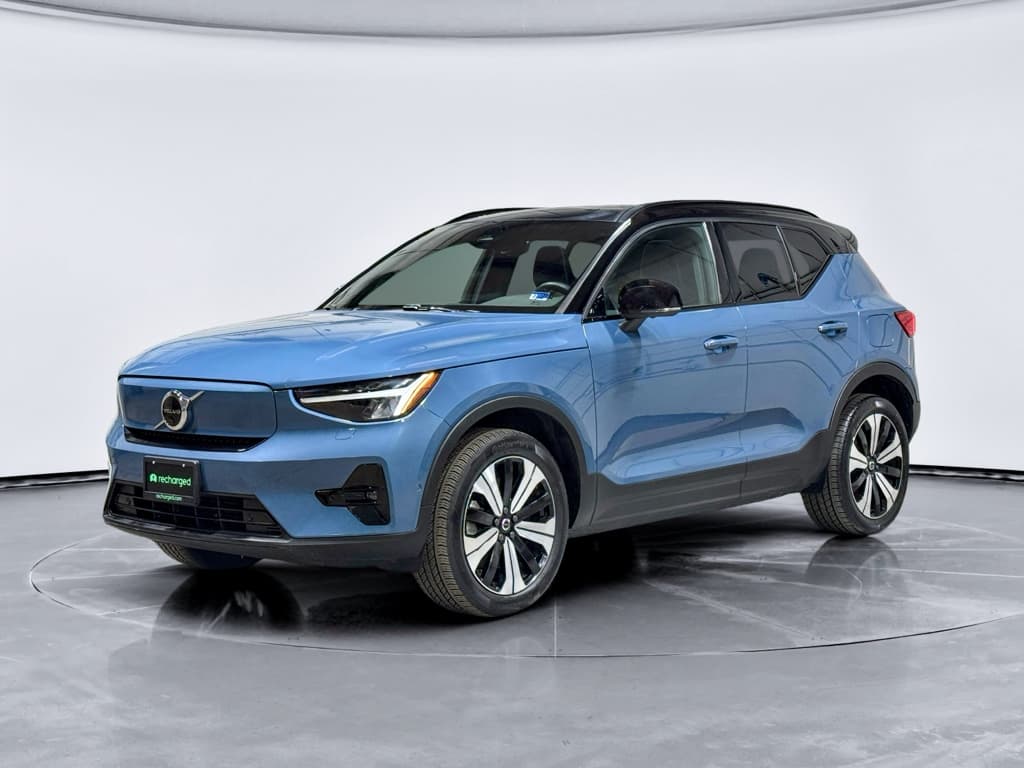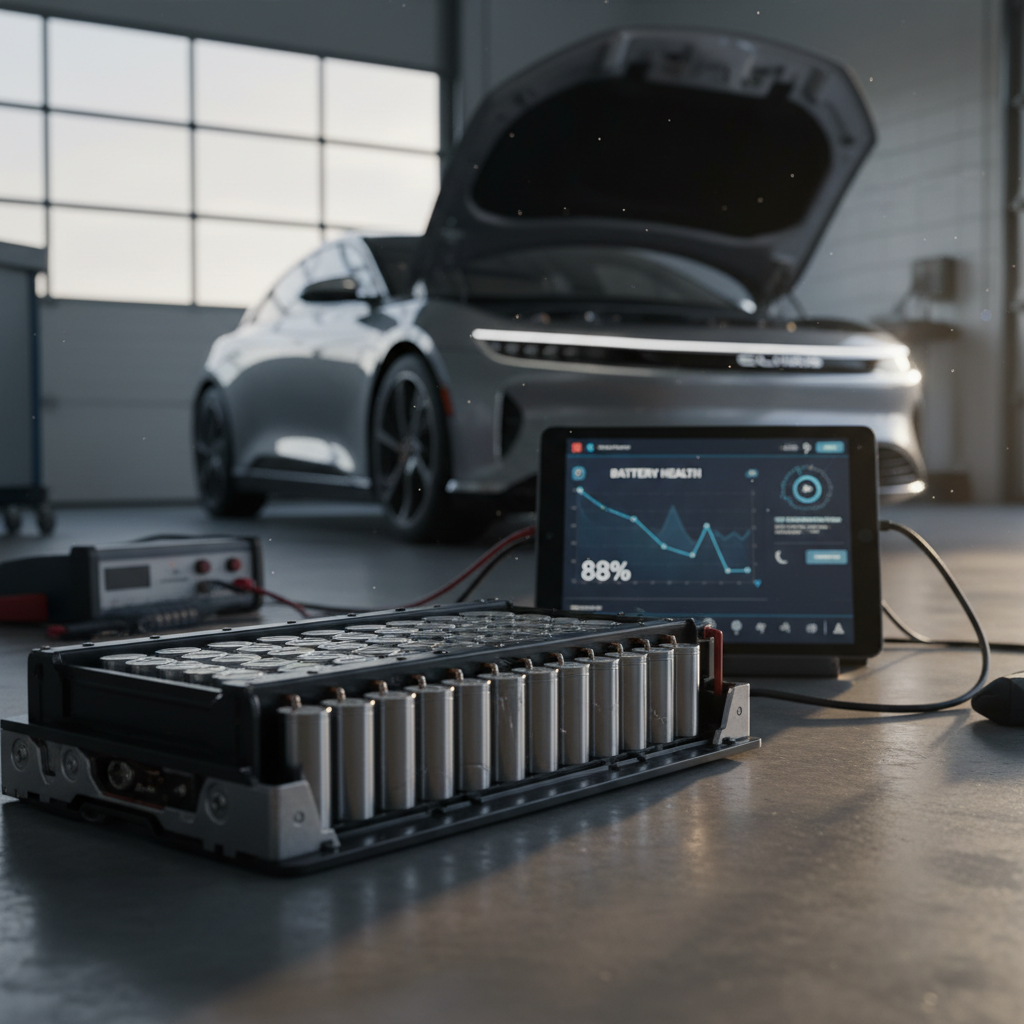
If you’re eyeing a Volvo C40 Recharge (or its refreshed EC40 twin), the question lurking in the back of your mind is obvious: how long will the battery actually last? The high‑voltage pack is the most expensive single component in the car, and it controls the one metric EV owners obsess over, range. In this guide, we’ll unpack Volvo’s warranty language, real‑world degradation data, and what it all means if you’re buying used through a marketplace like Recharged.
Short answer
Overview: How long does a C40 Recharge battery last?
Volvo C40 Recharge battery lifespan at a glance
In very broad strokes, a well‑treated C40 Recharge pack should deliver a decade or more of useful life for the average driver. The warranty doesn’t shut the battery off at 8 years/100,000 miles; it simply marks the period when Volvo promises to step in if something goes wrong. In practice, we’re already seeing early C40s with over 100,000 miles and only modest range loss, which tracks with what we’ve seen across the EV market.
Think of the battery like an engine, not a phone
Battery warranty: 8 years, 100,000 miles, and what that really means
Volvo’s paperwork for its pure electric “Recharge” models, including the C40 and facelifted EC40, spells out a simple headline: the high‑voltage battery and system are covered for 8 years or 100,000 miles (160,000 km), whichever comes first. Within that window, Volvo will repair or replace the pack if it suffers a defect or, in many regions, if capacity drops below about 70% of its original value due to a manufacturing fault.
C40 Recharge battery & vehicle warranty overview (U.S.)
How the high‑voltage battery coverage compares to the rest of the car’s factory protection.
| Component | Coverage term | Mileage limit | What it usually covers |
|---|---|---|---|
| New Vehicle Limited Warranty | 4 years | 50,000 miles | Most non‑wear components, including electronics and interior hardware. |
| High‑voltage battery & system | 8 years | 100,000 miles | Defects in the traction battery and related high‑voltage components; often includes capacity language. |
| Corrosion (perforation) | 12 years | Unlimited miles | Rust‑through of body panels from the inside out. |
| Roadside assistance | 4 years | Unlimited miles (typ.) | Towing to an authorized Volvo retailer for covered issues. |
Always confirm exact warranty terms by VIN, since coverage can vary slightly by model year and market.
Warranty covers defects, not normal aging
If you’re shopping used, remember that warranty clocks start when the first owner puts the car into service, not when you buy it. A 2022 C40 first sold in June 2022 will typically have battery coverage until June 2030 or 100,000 miles, whichever comes first. That’s a big part of why a 3–4‑year‑old C40 purchased in 2026 can still be a very safe bet on battery health, especially if the seller can document sensible charging habits.
Real-world C40 Recharge battery degradation so far
Volvo doesn’t publish official degradation curves, but we now have a few years of early‑build C40 Recharge packs in the wild, plus plenty of data from the closely related XC40 Recharge. The pattern is reassuringly boring.
- Owners with 2–3 years and roughly 25,000–40,000 miles often report little to no noticeable degradation in day‑to‑day driving.
- A few outliers report drops around 10–15% over that same period, sometimes tied to heavy fast‑charging or extreme climates.
- Anecdotes from high‑mileage drivers, north of 100,000 miles, describe “minimal degradation” and very usable range, particularly when most charging is done on Level 2.
- Independent testing and broader EV field data suggest that with decent care, most modern packs lose around 10–15% by 100,000 miles, then continue degrading slowly from there. The C40 appears to be in that mainstream pack of the herd.
Software vs. true degradation

What actually affects Volvo C40 Recharge battery lifespan?
Five big levers that determine how long your C40 battery lasts
The hardware is solid; your habits and climate do the fine‑tuning.
1. Charging style
Frequent DC fast‑charging, especially back‑to‑back sessions on road trips, warms the pack and accelerates wear over many years. Heavy fast‑charging isn’t instant death, but living on DC instead of Level 2 will shorten lifespan at the margins.
2. State of charge extremes
Keeping the battery parked at 100% or frequently running it near 0% is harder on the cells. Volvo’s software hides a buffer, but your best long‑term bet is living mostly between about 20–80% for daily driving.
3. Heat and cold
High heat is the real villain; deep cold mostly steals range temporarily. Repeated fast‑charging in very hot conditions, or parking in blazing sun at high SOC for days, will age the pack more quickly.
4. Mileage and duty cycle
A C40 doing short, gentle suburban trips on Level 2 will age differently from a rideshare car fast‑charging twice a day. More miles equals more wear, but long highway runs at steady speeds are surprisingly gentle.
5. Driving style
Hard launches and sustained high‑speed blasts heat the battery, but the effect on lifespan is modest compared with charging habits. You don’t need to baby it, just don’t abuse it relentlessly.
6. Software & maintenance
Keeping software up to date and following Volvo’s basic service schedule helps the battery management system do its job. Firmware updates can tweak how the pack is charged and protected over time.
The simple rule of thumb
Translating years, miles, and degradation into real lifespan
Light‑to‑average driver (10,000–12,000 miles/year)
At U.S.‑average mileage, you’ll hit 8 years well before 100,000 miles. That’s a typical suburban family or commuter who plugs in at home and fast‑charges mainly on road trips.
- By year 8 and ~80,000–90,000 miles, a healthy C40 pack might sit at ~85–90% of original capacity.
- That’s the difference between, say, a 220‑mile highway range when new and 190–200 miles now in similar conditions.
- The car is still entirely usable; you just plan earlier charging stops on road trips.
High‑mileage driver (20,000+ miles/year)
If you pile on miles with lots of fast‑charging, rideshare, sales, regional delivery, you might reach 100,000 miles in 4–5 years.
- By that point, a well‑treated C40 could sit closer to 80–90% of original capacity, depending on climate and charging habits.
- Plenty of owners report very usable range even as odometers roll past 100k.
- The pack does not “fall off a cliff” at 100,001 miles; it just continues aging gradually.
Stretch the tape measure further and you’re looking at practical lifespans of 12–15+ years and 150,000–200,000 miles before range loss becomes the dominant reason to part ways with the car. Long before the chemistry taps out, many owners will move on for other reasons: changing needs, upgraded tech, or simple boredom.
Good news for second and third owners
Buying a used C40/EC40 Recharge? How to judge battery health
If you’re shopping for a used C40/EC40 Recharge, battery lifespan stops being an abstract thought experiment and becomes a line item in your budget. The goal isn’t to find a unicorn with zero degradation, that’s impossible, but to avoid hidden abuse and understand how much life is left.
Used C40 Recharge battery health checklist
1. Verify remaining battery warranty
Ask for the original in‑service date or check with a Volvo dealer by VIN. Subtract that from 8 years and 100,000 miles to see what’s left. A 3‑year‑old C40 with 30,000 miles often still has about 5 years and 70,000 miles of battery coverage remaining.
2. Look at charging behavior clues
DC‑fast‑charging isn’t lethal, but a car that’s practically lived at fast chargers will show it. Ask the seller how they charge most of the time and look at infotainment logs if available. Heavy home or workplace Level 2 is a positive sign.
3. Test range in realistic conditions
Don’t chase the perfect EPA number. Instead, do a mixed‑driving test at 70–80% charge in familiar weather and see whether the estimated and actual range feel reasonable for the car’s age and mileage.
4. Scan for battery warnings or derating
Any persistent high‑voltage system warnings, sudden drops in estimated range, or unexplained power limits under acceleration are orange flags worthy of a professional inspection.
5. Get a third‑party battery health report
Whenever possible, get a <strong>data‑driven battery health assessment</strong>. Every EV sold through Recharged includes a Recharged Score Report with pack health, charge history clues, and pricing aligned to real condition, so you’re not guessing.
6. Consider climate history
A C40 that spent its life in Phoenix and lived at 100% state of charge has had a harder life than one from coastal Washington. Ask where the car has lived and how it was stored.
How Recharged de‑risks used C40 batteries
C40 Recharge battery life vs other EVs
The C40 Recharge doesn’t live in a vacuum; it competes with Tesla’s Model Y, Hyundai’s Ioniq 5, Kia’s EV6, and a growing field of compact electric SUVs. From a battery‑lifespan perspective, it’s squarely in the mainstream, which is exactly what you want.
How the C40 Recharge’s battery coverage stacks up
Approximate high‑voltage battery warranty terms for popular compact electric SUVs (U.S. market). Always confirm with the manufacturer for a specific VIN.
| Model | Battery warranty (years / miles) | Capacity guarantee (typ.) | Notes |
|---|---|---|---|
| Volvo C40 / EC40 Recharge | 8 years / 100,000 mi | Often ~70% SoH | On par with most mainstream EVs. |
| Tesla Model Y | 8 years / 120,000–150,000 mi (varies by pack) | ~70% SoH | Slightly higher mileage cap on some trims. |
| Hyundai Ioniq 5 | 10 years / 100,000 mi | 70% SoH | Longer term but similar mileage cap. |
| Kia EV6 | 10 years / 100,000 mi | 70% SoH | Near‑identical to Hyundai’s terms. |
| VW ID.4 | 8 years / 100,000 mi | 70% SoH | Same basic structure as Volvo. |
Volvo’s C40/EC40 warranty matches or closely tracks most direct rivals.
Volvo doesn’t try to win this arms race on paper; it simply matches industry norms and backs that up with conservative battery management. Where some rivals squeeze every last EPA mile with aggressive usable capacity, Volvo leans slightly toward longevity and predictability, very on‑brand for Gothenburg.
Simple habits to extend your C40 battery’s life
You don’t need a PhD in electrochemistry to keep a C40 pack happy. A handful of boring, repeatable habits will buy you years of extra useful range.
- Favor AC charging. Use Level 2 at home or work for at least 80–90% of your charging. Save DC fast‑charging for road trips and true time crunches.
- Aim for 20–80% for daily use. Let yourself hit 100% before a road trip, but avoid leaving the car parked at full charge for days. Likewise, don’t routinely run it down into the single digits unless you have to.
- Be kind in extreme heat. If you live in a hot climate, park in the shade or a garage when you can, and avoid baking a fully charged car in the sun all weekend.
- Use preconditioning. Let the car warm or cool the battery while plugged in before fast‑charging in very hot or cold weather. That lets the thermal system do its best work without eating into your usable range.
- Stay current on software. Take Volvo’s software updates; they often include tweaks to charging, range estimation, and thermal management that can subtly help long‑term health.
- Drive like a human, not a TikTok clip. Enjoy the instant torque, but if every on‑ramp is a drag race, you’ll be adding heat the pack doesn’t need. Balance fun and sanity.
Set a smart daily charge limit
Will you ever need a C40 battery replacement, and what would it cost?
The nightmare scenario in every shopper’s head is a five‑figure battery bill landing on the kitchen table. In reality, full pack failures on modern EVs remain rare, and when they do happen inside the coverage window, the automaker usually handles it under warranty.
When might replacement be on the table?
- Catastrophic failure inside warranty: A genuine defect that leaves the car undrivable. Volvo would typically repair or replace the pack under the 8‑year/100k‑mile terms.
- Severe degradation under warranty: If capacity drops below the stated threshold (around 70% in many regions) due to a defect, you may qualify for repair or replacement.
- Post‑warranty, very high miles: Think well over 150,000–200,000 miles, or more than a decade of use, plus hard charging conditions. Even then, many owners simply adapt to reduced range rather than springing for a new pack.
What does a pack cost in the real world?
Exact pricing is hard to pin down and changes over time, but a full high‑voltage pack replacement on a modern EV can easily run into the mid‑four to low‑five figures before any goodwill assistance.
That sounds scary until you remember two things:
- Most owners sell or trade the car long before the battery is clinically “worn out.”
- Batteries are trending cheaper over time, and refurbished or module‑level repairs are becoming more common than full replacements.
The real risk isn’t sudden death, it’s buying blind
Volvo C40 Recharge battery lifespan: FAQs
Common questions about C40 Recharge battery life
Bottom line: Should battery lifespan scare you away from a C40 Recharge?
If your main hesitation about the Volvo C40 or EC40 Recharge is battery life, you can exhale. The pack carries an 8‑year/100,000‑mile warranty, real‑world reports show degradation that’s comfortably in line with peers, and chemistry plus cooling are engineered for the long haul. You’re far more likely to trade the car because you want a new toy than because the battery has given up the ghost.
The smarter move is to focus less on speculative end‑of‑life scenarios and more on buying the right example today: one with a verified battery, honest range, and a price that reflects its true health. That’s exactly what Recharged is built for, every used EV we list, including the C40 and EC40 Recharge, comes with a Recharged Score battery report, expert EV guidance, nationwide delivery, and transparent pricing. If you’re ready to let an electric Volvo do the quiet, effortless‑torque thing in your driveway, battery lifespan shouldn’t be the thing that holds you back.