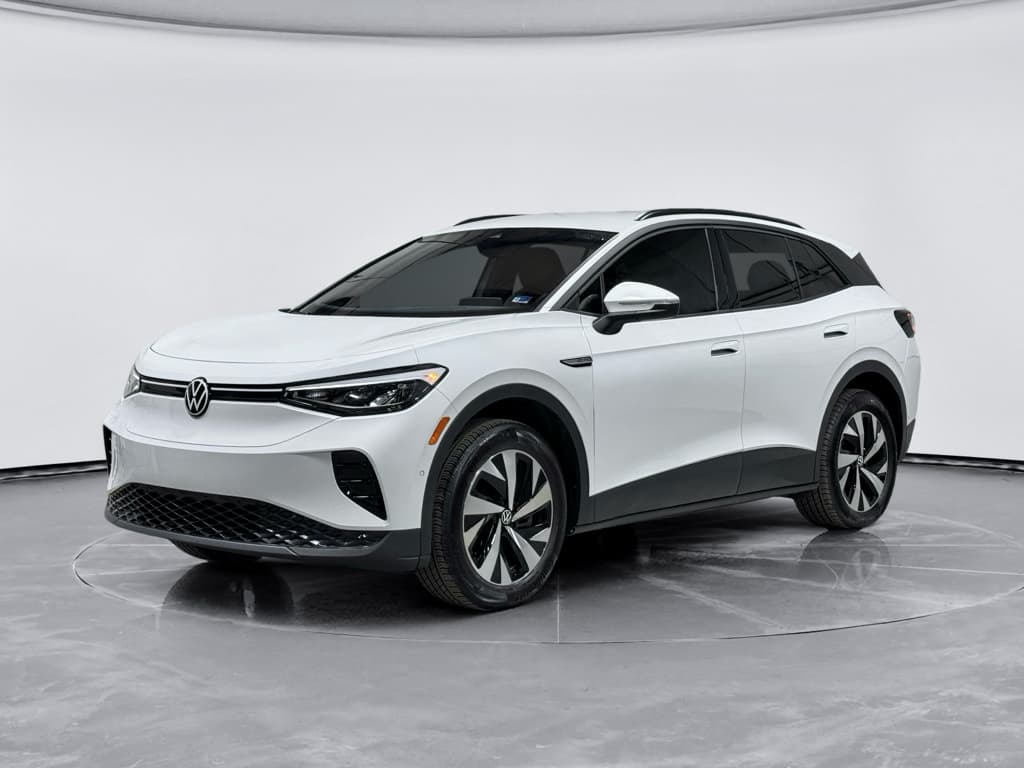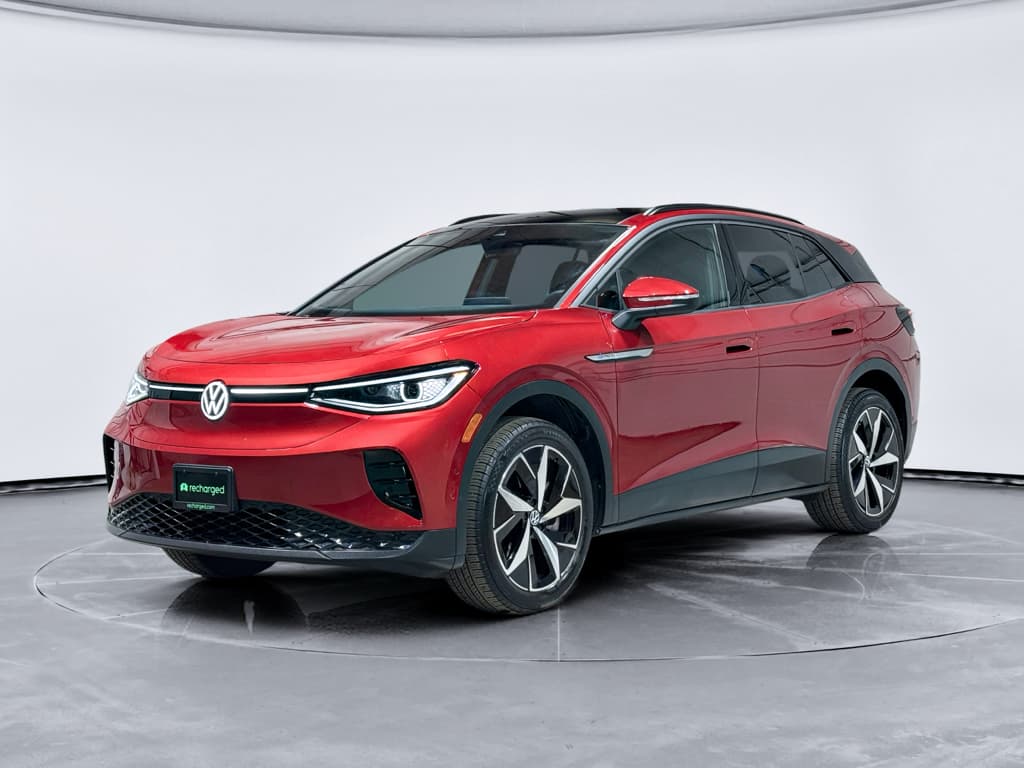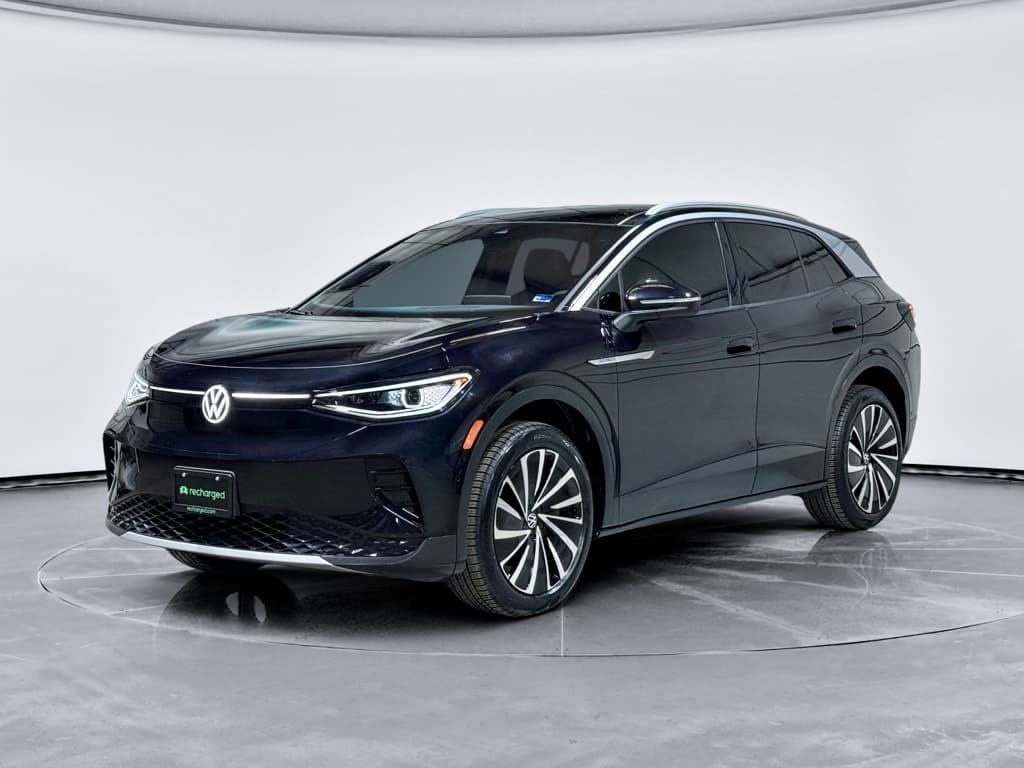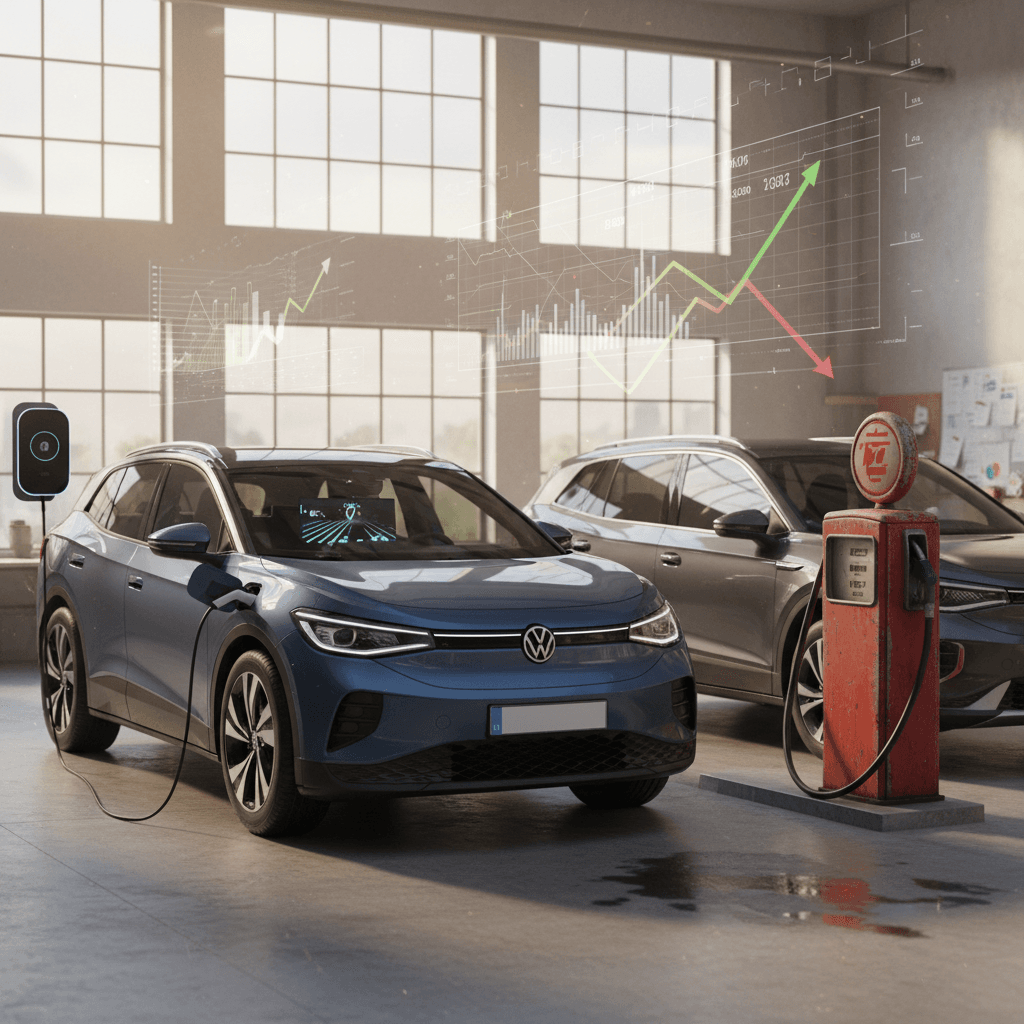
When you price out a new or used Volkswagen ID.4 next to a popular gas compact SUV like a Toyota RAV4 or Honda CR‑V, the sticker can look similar, or the EV can even be higher. The real question smart shoppers ask is: what’s the Volkswagen ID.4 total cost vs a gas car equivalent over 5–10 years? This guide walks through real‑world energy, maintenance, depreciation and incentive numbers so you can see where the ID.4 wins, where it doesn’t, and what that means for your wallet.
Short answer
Why compare Volkswagen ID.4 total cost vs a gas SUV?
Compact crossovers are the heart of the U.S. market, and the Volkswagen ID.4 goes head‑to‑head with gas best‑sellers like the Toyota RAV4, Honda CR‑V and Hyundai Tucson. If you’re cross‑shopping, you’re not just asking “Which one is cheaper to buy?”, you’re asking: - How much will I actually spend on energy? - Will EV maintenance really be lower? - How fast is each one depreciating in the real used‑car market? Getting those answers requires looking beyond EPA window stickers and into total cost of ownership, the full cost to buy, power, maintain and eventually sell the vehicle.
Volkswagen ID.4 vs gas SUV: quick numbers
Our assumptions for this Volkswagen ID.4 vs gas car cost comparison
No two households drive the same way, but to compare the Volkswagen ID.4 total cost vs a gas car equivalent we need a clear baseline. Here’s what this article assumes. You can mentally adjust the numbers for your own situation.
- Timeframe: 5 years of ownership (2025–2030).
- Annual mileage: 12,000 miles (U.S. average is in this ballpark).
- Electricity price: $0.17/kWh all‑in national residential average (many states fall between ~$0.14 and $0.20; some like CA are higher, some are lower).
- Gasoline price: $3.00/gal for regular unleaded over the period (a conservative middle‑of‑the‑road assumption).
- ID.4 efficiency: 33 kWh/100 miles combined (around 3.0 mi/kWh), consistent with EPA and long‑term real‑world tests.
- Gas SUV efficiency: 30 mpg combined for a non‑hybrid compact SUV, and ~38 mpg for a hybrid like RAV4 Hybrid or CR‑V Hybrid.
- Purchase price: Late‑model used Volkswagen ID.4 and used gas SUV priced similarly up front, so we can focus on running costs. (New buyers can expect similar relative patterns even if dollar amounts differ.)
Your local rates matter
Electricity vs gasoline: ID.4 energy cost per mile
The core of any EV vs gas comparison is simple: energy cost per mile. Let’s translate efficiency and national price averages into dollars you’ll feel in your budget.
Volkswagen ID.4 vs gas SUV: energy cost per mile
Using typical U.S. prices for electricity and gasoline.
| Vehicle | Assumed efficiency | Energy price | Cost per mile | Annual energy cost (12k mi) |
|---|---|---|---|---|
| VW ID.4 (electric) | 33 kWh / 100 mi | $0.17 / kWh | $0.056 | ≈ $670 / year |
| Gas compact SUV (non‑hybrid) | 30 mpg combined | $3.00 / gal | $0.10 | ≈ $1,200 / year |
| Gas compact SUV (hybrid) | 38 mpg combined | $3.00 / gal | $0.079 | ≈ $950 / year |
Energy costs will move with local utility and fuel prices, but the ID.4’s per‑mile energy cost advantage is robust in most scenarios.
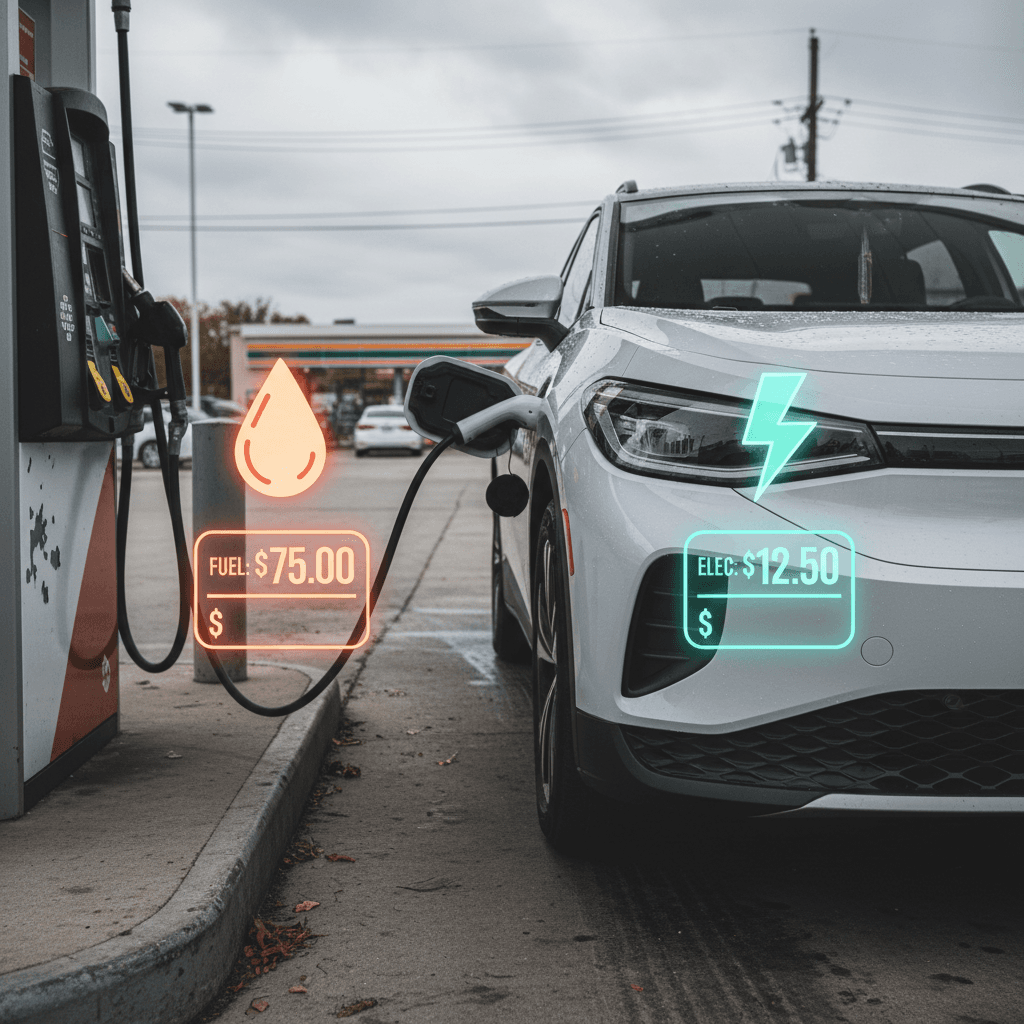
Under these assumptions, an ID.4 driver spends roughly $530 less per year than a 30‑mpg gas SUV just on energy. Versus an efficient hybrid SUV, the ID.4 still saves about $280 per year. Over five years, that’s roughly $1,400–$2,600 in fuel/energy savings, before we touch maintenance or tax credits.
Off‑peak charging can double the gap
Maintenance and repairs: where the ID.4 really pulls ahead
Fuel isn’t the only moving part in your budget. Gas SUVs have complex drivetrains, engines, transmissions, exhaust, emissions systems, that require regular service and occasionally fail. The Volkswagen ID.4, like other EVs, eliminates most of that. You’re primarily maintaining tires, brakes, coolant for the battery/drive unit, and cabin filters.
5‑year maintenance expectations: ID.4 vs gas compact SUV
Real‑world averages for out‑of‑warranty ownership
Volkswagen ID.4 (EV)
- No oil changes, spark plugs, timing belts, or transmission service.
- Brake wear is slower thanks to regenerative braking.
- Typical 5‑year out‑of‑pocket maintenance: $1,000–$1,500 if you stay on schedule and rotate tires.
- Unexpected repairs mostly limited to suspension, electronics, or wear items.
Gas compact SUV (RAV4 / CR‑V class)
- Regular oil and filter changes, engine air filters, and spark plugs (eventually).
- Transmission fluid service and more complex exhaust/emissions hardware.
- Typical 5‑year out‑of‑pocket maintenance: $2,000–$3,000, potentially more as mileage climbs.
- Higher risk of costly failures as the vehicle ages (gaskets, pumps, sensors).
On maintenance alone, many ID.4 owners will see a $1,000–$1,500 advantage over five years vs a comparable gas SUV. That’s before any major engine or transmission work, which can quickly add four figures on the gas side if you’re unlucky.
Don’t ignore EV‑specific issues
Insurance, taxes and incentives for ID.4 vs gas car
Insurance, registration and taxes are highly state‑ and driver‑specific, but a few patterns matter when you’re comparing Volkswagen ID.4 total cost vs a gas car equivalent.
- Insurance: In many markets ID.4 premiums are similar to a comparable gas SUV with the same MSRP. Some carriers price newer EVs slightly higher due to repair complexity; others offer green‑vehicle discounts. Expect a wash to a small EV penalty, call it ±$100/year either way depending on your profile.
- Registration and EV fees: A growing number of states add annual EV fees ($50–$250) to offset lost gas tax revenue. Even with those fees, the ID.4’s fuel savings usually dominate unless you drive very little.
- Federal tax credit: Depending on model year, assembly location and your income, a new ID.4 may qualify for up to a $7,500 federal clean vehicle credit, and certain used EVs bought from dealers can qualify for up to $4,000. Many gas SUVs don’t qualify for anything comparable.
- State/local incentives: Some states and utilities add rebates, bill credits or discounted EV charging rates that effectively reduce your energy cost even further. Gas SUVs rarely have equivalent support.
Where incentives really move the needle
Depreciation: how the ID.4 holds value vs gas SUVs
Depreciation is where a lot of EV cost comparisons used to fall apart. Early EVs lost value quickly. The picture for mainstream crossovers like the ID.4 has become more nuanced: some early buyers saw heavy depreciation as EV supply caught up with demand, but that also means today’s used‑ID.4 shopper often gets a steep discount baked in.
Volkswagen ID.4 depreciation
- Early model years (2021–2022) have already taken the biggest hit, making them strong value buys in 2025–2026.
- As CCS and NACS infrastructure expands, charging anxiety shrinks, which supports residual values.
- Battery health is the wildcard: a well‑maintained pack with documented diagnostics is far more valuable than one with an unknown history.
Gas compact SUV depreciation
- Popular models like RAV4 and CR‑V have exceptional resale value thanks to long reputations for reliability.
- A 3‑ to 5‑year‑old gas SUV will typically have lost 35–45% of its original MSRP.
- Long‑term, rising fuel prices and urban emissions rules may put structural pressure on gas resale values, especially in dense metros.
If you’re buying new, a RAV4 or CR‑V may still have a resale edge over an ID.4 in some markets. If you’re buying used, a 2‑ to 4‑year‑old ID.4 that has already absorbed early‑EV depreciation can be a total‑cost sweet spot, especially when you factor in fuel savings and lower maintenance.
5‑year total cost: Volkswagen ID.4 vs gas SUV side by side
Let’s put all the pieces together. Below is a simplified 5‑year cost of ownership comparison for three vehicles, assuming similar initial purchase prices so we can focus on running costs. These aren’t precise quotes; they’re directional numbers to show how the pieces stack up.
Illustrative 5‑year total cost of ownership (12,000 mi/year)
Assumes similar purchase price; focuses on running costs for energy, maintenance, fees and a rough depreciation estimate.
| Category (5 yrs) | VW ID.4 (EV) | Gas SUV (30 mpg) | Hybrid SUV (38 mpg) |
|---|---|---|---|
| Energy (fuel/electricity) | ≈ $3,350 | ≈ $6,000 | ≈ $4,750 |
| Maintenance & repairs | ≈ $1,250 | ≈ $2,500 | ≈ $2,300 |
| Extra EV fees / misc. | ≈ $500 (EV fees, charging cable, etc.) | ≈ $0 (no EV fee) | ≈ $0 (no EV fee) |
| Depreciation impact* | Baseline (used ID.4) | Similar class SUV | Slightly stronger resale |
| Net 5‑yr running cost | ≈ $5,100 | ≈ $8,500 | ≈ $7,050 |
Your exact numbers will differ, but the structure of the savings, energy + maintenance vs depreciation, will look similar.
About that depreciation row
Who saves the most with a Volkswagen ID.4?
The Volkswagen ID.4 total cost vs gas car equivalent question doesn’t have a single answer, some owners save thousands, others only modestly come out ahead. It comes down to how and where you drive.
Driver profiles: when the ID.4 wins big (or doesn’t)
Match your situation to understand your likely savings
High‑mileage commuters
Homeowners with off‑peak rates
Urban, low‑mileage drivers
Apartment and fast‑charger‑heavy usage
How Recharged minimizes your real ID.4 ownership cost
Total cost of ownership isn’t just a spreadsheet, it’s how confident you feel that the numbers you’re modeling will actually show up in your bank account. That’s where buying a used Volkswagen ID.4 through Recharged changes the equation.
What you get with a Recharged Volkswagen ID.4
1. Verified battery health with the Recharged Score
Every ID.4 on Recharged comes with a <strong>Recharged Score Report</strong>, including battery diagnostics and an easy‑to‑read battery health rating. That makes it much easier to predict real‑world range, charging behavior and long‑term value.
2. Fair, transparent pricing
Recharged benchmarks every vehicle against the market, so you’re not overpaying up front. Starting from a realistic price is the single best way to keep your total cost of ownership in check.
3. EV‑savvy financing options
You can <strong>finance your ID.4 directly through Recharged</strong> and even pre‑qualify online with no impact to your credit. That makes it easy to compare monthly payments on an ID.4 vs a gas SUV and see where fuel and maintenance savings fit in.
4. Trade‑in and instant offer support
Have a gas SUV today? Recharged can give you an <strong>instant offer or consignment option</strong>, so you see exactly how swapping into an ID.4 will change your net monthly outlay.
5. Expert EV guidance, online or in person
From explaining home charging to comparing ID.4 trims, Recharged’s <strong>EV specialists</strong> help you make decisions that minimize your long‑term cost, not just your drive‑off price. If you’re near Richmond, VA, you can even visit the Recharged Experience Center.
Turn savings into a simple monthly number
Ready to find your next EV?
Browse VehiclesVolkswagen ID.4 total cost vs gas car: FAQs
Frequently asked questions about Volkswagen ID.4 total cost vs gas SUV
When you add up all the pieces, energy, maintenance, potential incentives and realistic depreciation, the Volkswagen ID.4 usually undercuts the total cost of a comparable gas compact SUV, especially if you drive average‑to‑high miles and can charge at home on reasonably priced electricity. The goal isn’t to win an abstract spreadsheet war; it’s to pick the vehicle that matches your life and keeps more of your money over the next 5–10 years. If you’re ready to see what those numbers look like on an actual car, browsing used ID.4s with Recharged’s battery‑health reporting and EV‑specialist support is one of the fastest, lowest‑risk ways to turn that math into a car in your driveway.