The Volkswagen ID.4 was supposed to be the people’s electric SUV, roomy, sensible, and cheaper to run than a gas crossover. The obvious question, though, is the one that shows up on every shopping spreadsheet: what are Volkswagen ID.4 maintenance costs actually like once the new‑car sheen wears off?
The quick answer
Volkswagen ID.4 maintenance cost at a glance
Volkswagen ID.4 ownership: maintenance snapshot
Those are headline numbers. To understand where they come from, and whether the ID.4 fits your budget, you have to look at how its maintenance schedule works, what actually wears out, and how VW’s battery warranty changes the risk calculus.
Why ID.4 maintenance costs look nothing like a Tiguan’s
What the ID.4 doesn’t need
- Oil changes – No engine, no oil. That alone wipes out a couple of visits a year.
- Transmission service – There’s a single‑speed reduction gear, not a multi‑gear automatic.
- Spark plugs, fuel filters, timing belts – The usual combustion‑engine Greatest Hits are absent.
- Emissions system repairs – No catalytic converter, oxygen sensors, or EGR valves to fail.
What the ID.4 does need
- Tires – Heavy battery, instant torque, and often staggered fitments; you’ll buy tires.
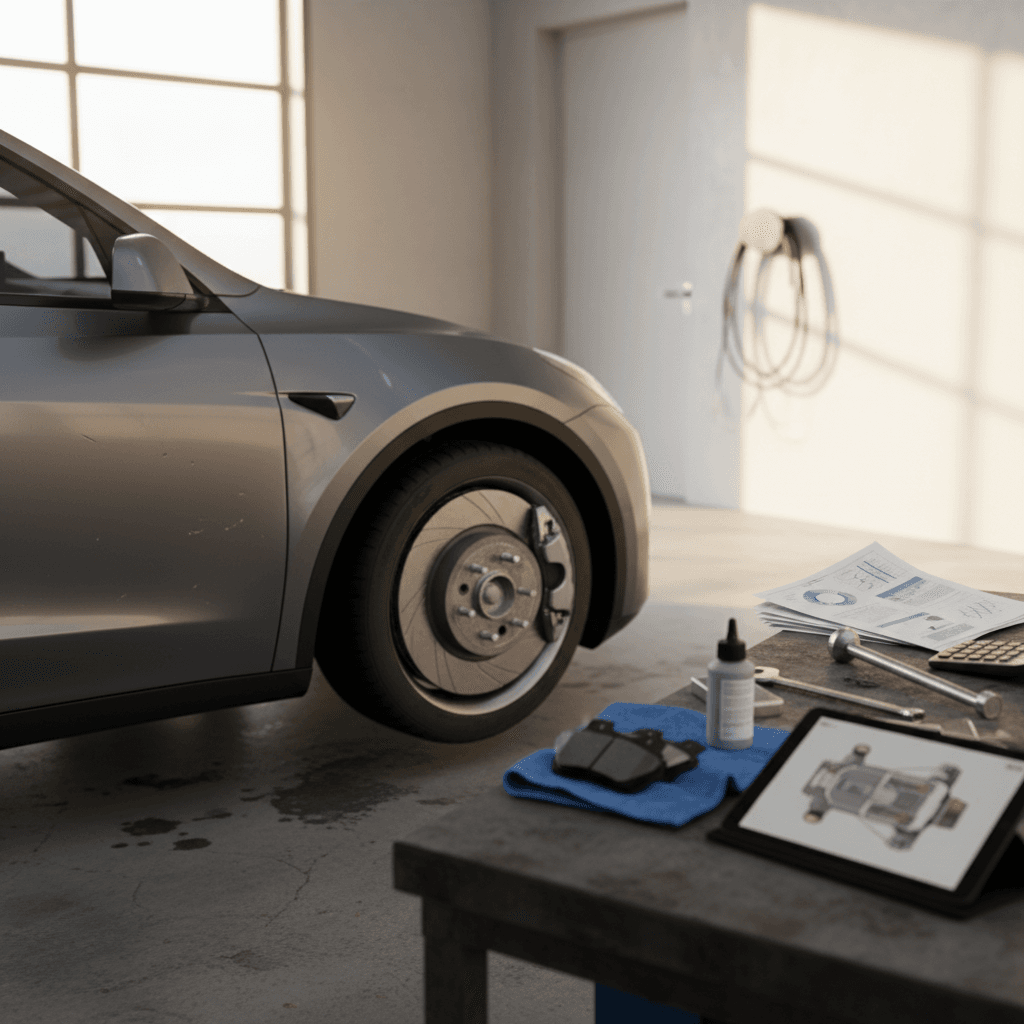
- Brake fluid & pads – Regenerative braking helps, but you still have friction brakes.
- Cabin air filters – Same as any modern SUV; they clog with pollen and city life.
- Coolant checks – The battery and power electronics are liquid‑cooled and need periodic attention.
Think in systems, not miles
Volkswagen ID.4 maintenance schedule (what actually gets serviced)
Volkswagen’s official ID.4 maintenance schedule is framed in years more than miles, because there’s no engine oil dictating 5,000–10,000‑mile visits. Most U.S. dealers default to annual or 2‑year inspections, with a couple of jobs you’ll see on repeat.
Simplified Volkswagen ID.4 maintenance schedule (U.S. pattern)
Typical recurring ID.4 service items. Always confirm the latest schedule in your owner’s manual or with a VW dealer.
| Interval | Service item | Notes |
|---|---|---|
| Every 1 year / 10,000–15,000 mi | Multi‑point inspection & tire rotation | Visual check of brakes, suspension, cooling system; rotate tires if non‑staggered. |
| Every 2 years | Brake fluid change | Common for European brands; prevents corrosion and maintains pedal feel. |
| Every 2 years | Cabin air filter replacement | More often if you drive in dusty or urban environments. |
| Every 3–4 years | Coolant inspection / service as needed | Battery and power electronics coolant checked; interval can vary by climate and use. |
| As needed | Wheel alignment | Anytime you notice pull, uneven wear, or after a big pothole encounter. |
| As needed | Wiper blades, key fob batteries, bulbs | Standard wear‑and‑tear consumables. |
Core ID.4 service items repeat every 1–3 years rather than every few thousand miles.
Dealer add‑ons to question
Year‑by‑year Volkswagen ID.4 maintenance budget
No two owners are identical, your costs depend on mileage, roads, and how hard you lean on those instant‑torque launches. But if you’re shopping a new or used ID.4, this is a reasonable planning baseline for U.S. ownership assuming ~12,000 miles per year.
- Years 1–2: $200–$350 per year – Mostly inspections, tire rotations, and cabin filters. Many cars are still under bumper‑to‑bumper warranty, so anything weird is often covered.
- Years 3–5: $350–$550 per year – Add a brake fluid change, possibly an alignment, and you’re probably buying your first set of replacement tires.
- Years 6–8: $450–$700 per year – More frequent tires, maybe front brake pads/rotors depending on how you drive, and another round of fluid service.
- 8+ years: Highly variable – Battery is still under warranty up to 8 years/100,000 miles for capacity, but older suspension bushings, shocks, and rubber parts may start factoring in just as they would on any SUV.
Where the savings quietly pile up
Common Volkswagen ID.4 wear items and what they cost
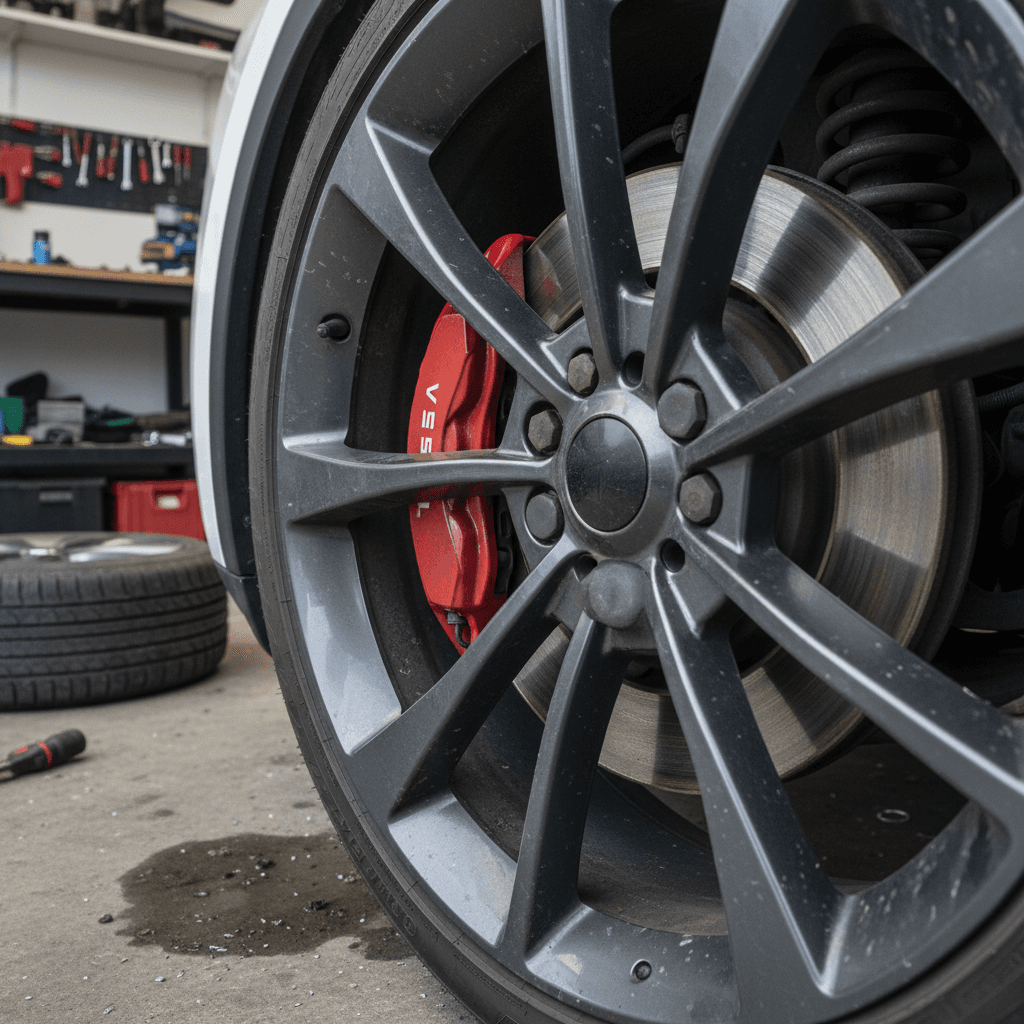
The ID.4 is a heavy, family‑duty compact SUV, and it eats the same consumables any 4,500‑pound crossover does, just with fewer surprises under the hood. Here’s what typically shows up on invoices and what you might expect to pay at independent shops versus dealerships in the U.S.
Typical Volkswagen ID.4 wear‑and‑tear costs
Approximate U.S. pricing ranges; local labor rates and tire choices matter a lot.
| Item | Typical interval | Approx. cost (parts + labor) | Notes |
|---|---|---|---|
| Tires (set of 4) | 25,000–40,000 mi | $800–$1,400 | EV‑rated tires cost more but handle the ID.4’s weight and torque better. |
| Front brake pads & rotors | 60,000–90,000 mi+ | $450–$800 | Aggressive driving or hilly commutes will shorten this; regen braking extends it. |
| Rear brake service | 70,000–100,000 mi+ | $400–$750 | Often last longer than fronts thanks to regen bias. |
| Brake fluid change | Every 2 years | $150–$250 | Dealer pricing is usually on the higher end; independent shops can be cheaper. |
| Cabin air filter | Every 2 years | $80–$150 | DIY is easy and cheaper if you’re handy; it’s behind an interior panel. |
| Wheel alignment | As needed | $120–$220 | Worth doing when you mount new tires to avoid premature wear. |
| Wiper blades | 1–2 years | $40–$120 | Depends on brand and whether you DIY or have a shop install. |
You’ll spend the most on tires; brakes and fluids are modest by comparison.
Save money with selective DIY
Warranty, software updates, and the hidden gift of over‑the‑air fixes
Where the ID.4 breaks from traditional Volkswagen ownership is in how much of its behavior can be changed with software. On top of the standard limited warranty, you get a long battery guarantee and, for many model years, over‑the‑air (OTA) updates that quietly fix bugs and improve range or charging logic without a service visit.
- Bumper‑to‑bumper warranty: Typically 4 years/50,000 miles from in‑service date on new ID.4s. Many used examples still benefit from this.
- High‑voltage battery warranty: 8 years/100,000 miles against excessive capacity loss (often defined as below 70% state of health).
- OTA updates: Range optimization, charging improvements, infotainment fixes, delivered while the car is parked, not on a lift.
When software replaces a service bulletin
VW ID.4 vs gas SUV: maintenance cost comparison
If you’re cross‑shopping an ID.4 with a Tiguan, Honda CR‑V, or Toyota RAV4, the economics sharpen. Those vehicles are paragons of gas‑SUV reliability, yet all of them still drag the costs of internal combustion behind them like ballast.
Annual maintenance: Volkswagen ID.4 vs typical gas compact SUV
Assumes ~12,000 miles per year over the first 8 years of ownership.
Volkswagen ID.4
- Average: about $350–$550 per year, skewed toward tires and basic fluids.
- No engine, transmission, or emissions‑system work.
- Battery covered by a long warranty during peak ownership years.
Typical gas compact SUV
- Average: $600–$850 per year, including oil services, transmission fluid, and occasional emissions repairs.
- More frequent shop visits (every 5,000–7,500 miles).
- Higher risk of big‑ticket items after the powertrain warranty ends.
Real‑world takeaway
- Over 8 years, the ID.4 can reasonably save $2,000–$3,000 or more in maintenance alone versus a comparable gas SUV.
- Electricity vs gasoline savings stack on top of this, depending on your rates.
The fine print: tires and alignment
Maintenance tips if you’re buying a used Volkswagen ID.4
A used ID.4 can be a bargain way into EV ownership, if you know how to read its service history and battery health. Unlike a used GTI, you’re not listening for misfires; you’re checking how the electrons and rubber have been treated.
Used Volkswagen ID.4 maintenance checklist
1. Review documented service history
Look for evidence of <strong>regular brake fluid changes, tire rotations, and cabin filter replacements</strong>. Gaps don’t automatically kill the deal, but consistent care is a good sign.
2. Inspect tire wear patterns
Uneven wear, cupping, or feathering on an ID.4 usually points to <strong>poor alignment or hard curb encounters</strong>. Budget for an alignment and possibly new tires if the edges are worn down.
3. Check brake condition
Ask for a visual report or photos of pads and rotors. Light surface rust from sitting is normal; deep grooves and lips on the rotor edges can mean you’re close to a brake job.
4. Ask about software update history
ID.4s that have received the major OTA or dealer updates often enjoy <strong>better range, faster charging, and fewer glitches</strong>. It’s a form of maintenance, even if there’s no oil stain to prove it.
5. Verify high‑voltage battery health
On Recharged vehicles, the <strong>Recharged Score Report</strong> includes independent battery diagnostics so you can see remaining capacity and charging behavior before you buy.
6. Confirm remaining warranty
Ask exactly when the car was first put into service. That in‑service date governs how much <strong>bumper‑to‑bumper and battery warranty</strong> coverage you have left.
Use total cost of ownership, not just the sticker
How Recharged keeps Volkswagen ID.4 ownership costs transparent
One of the underappreciated anxieties around used EVs is the fear of the unknown bill: a battery scare, a surprise dealer service, software gremlins that only appear at highway speeds. At Recharged, we try to de‑mystify that ledger before you ever sign paperwork.
- Recharged Score Report: Every ID.4 we list gets a verified battery health assessment, so you can see capacity and charging performance up front instead of guessing from the range estimate on a cold morning.
- Transparent pricing: Our valuations factor in typical Volkswagen ID.4 maintenance costs, including upcoming tires and brake work, so you’re not buying a future repair bill at a premium price.
- Expert EV guidance: Our specialists walk you through what service will look like in your zip code, from VW dealers to independent EV‑savvy shops and mobile services.
- Financing and trade‑in: You can finance your ID.4, trade in your current car, and even arrange nationwide delivery in a single digital journey.
See your payment, not just the price
Volkswagen ID.4 maintenance cost: FAQ
Frequently asked questions about Volkswagen ID.4 maintenance
Bottom line: is Volkswagen ID.4 maintenance cheap or just different?
The Volkswagen ID.4 doesn’t completely free you from the indignities of automotive upkeep, you’ll still buy tires, you’ll still curse potholes, and you’ll still see the inside of a service bay. But the pattern of spending changes. Instead of a drip, drip, drip of oil services and emissions repairs, you get fewer visits, fewer moving parts, and a lot more predictability over the first decade.
If you’re the sort of driver who notices every line item, the ID.4 can feel like a quiet financial relief: lower maintenance costs than a gas SUV, plus the satisfaction of charging at home instead of donating to the local fuel station’s yacht fund. And if you’d rather someone else read the fine print for you, a Recharged‑inspected Volkswagen ID.4 with a full battery‑health report lets you step into EV ownership with your eyes open, and your maintenance budget already mapped out.