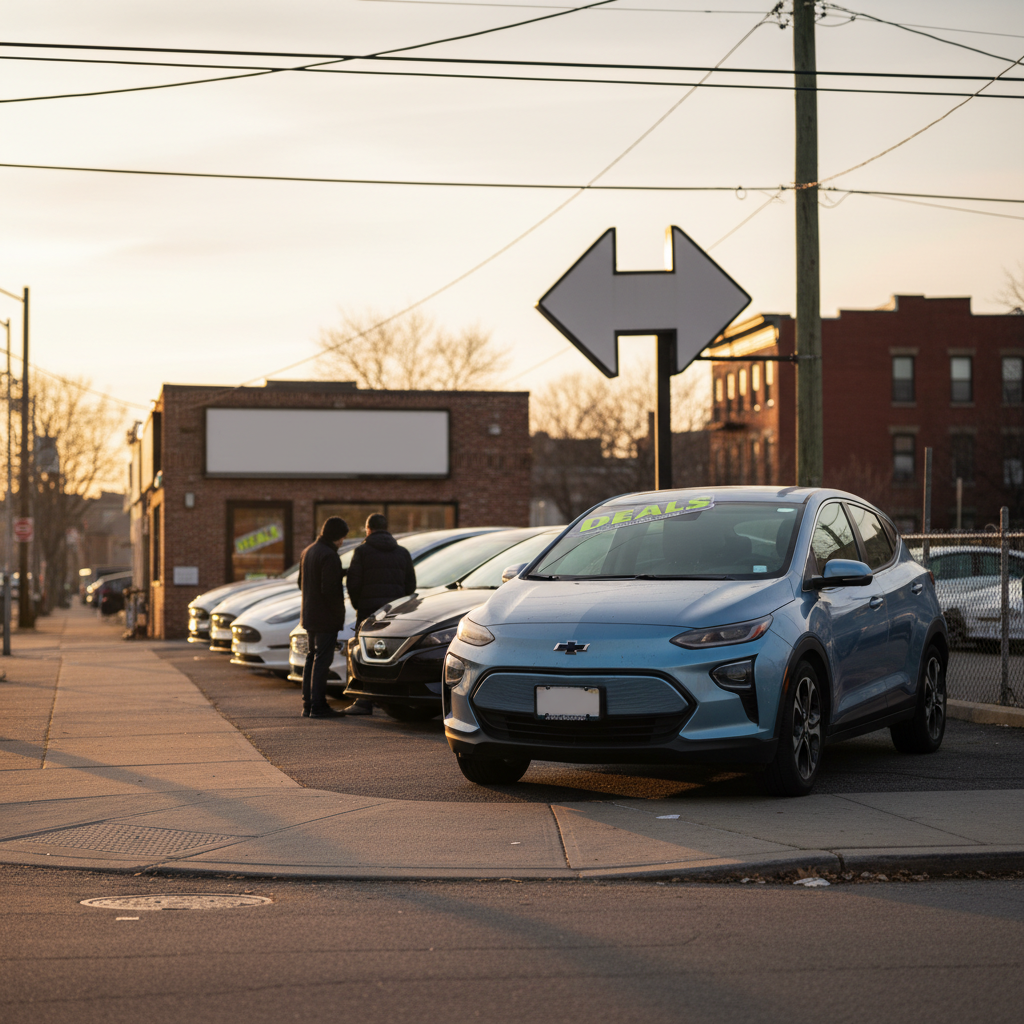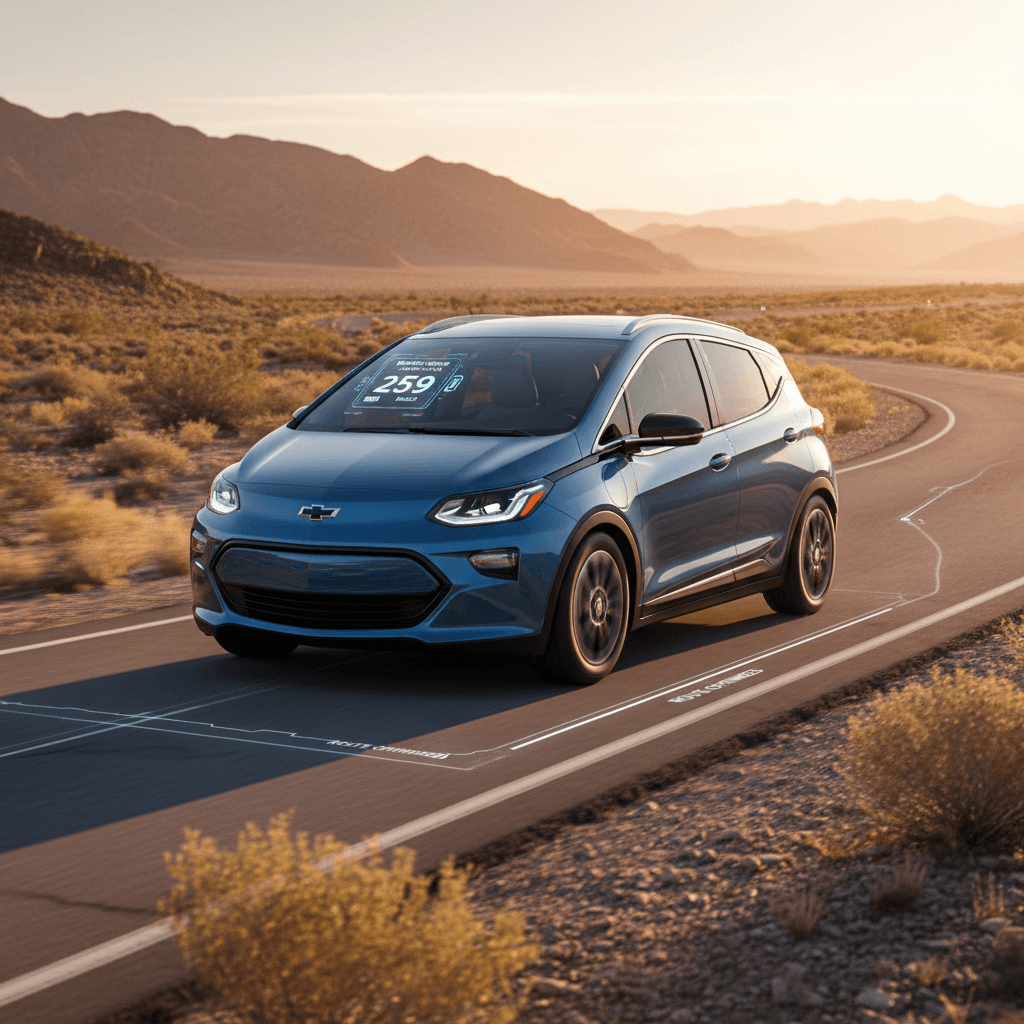
If you’re looking at a 2023 Chevy Bolt EV, the very first question is simple: how far will it really go on a charge? On paper, the 2023 Bolt EV is rated at 259 miles of EPA range, but real-world range tests tell a more nuanced story, especially on the highway, in cold weather, and once the car has a few years and miles on it.
Key takeaway up front
Why the 2023 Bolt EV’s Range Matters So Much
The 2023 Chevrolet Bolt EV hit a sweet spot that’s still hard to match: long-range EV practicality at compact-car money. Brand new, it undercut many rivals while offering real road-trip potential. Today, many of those 2023 cars are showing up on the used market, where their combination of price and range can make them one of the smartest EV buys out there, if you understand how that range actually plays out in your life.
Range isn’t just about a single big number on a window sticker. It’s a blend of battery capacity, efficiency, driving style, weather, and how carefully the previous owner treated the pack. At Recharged, every used Bolt we list comes with a Recharged Score battery health report, so you’re not guessing about how much of that original range is still on tap.
2023 Chevy Bolt EV official range and battery specs
2023 Chevy Bolt EV range & battery at a glance
Chevrolet carried over the upgraded battery pack used in 2020–2022 models, so by 2023 the Bolt EV had a well-proven 65 kWh lithium-ion pack and an EPA rating of 259 miles of combined range. In independent instrumented testing, outlets have typically seen around 220 miles at a steady 75 mph on the highway, and even more than the EPA rating in slow, hot-weather testing.
EPA vs. your driveway
How we structure a 2023 Bolt EV range test
When we evaluate range on a used 2023 Bolt EV at Recharged, we’re not trying to squeeze out a record number on a perfectly flat, empty road. We focus on the situations you’ll actually drive in, so our range testing framework covers four main scenarios:
- Highway cruise: 70–75 mph, mostly interstate, minimal traffic.
- Suburban / city mix: 35–55 mph with lights, traffic, and brief freeway hops.
- Cold-weather driving: Temperatures near or below freezing with cabin heat set to a realistic level.
- Fast-charging segments: Watching how the car charges from roughly 10–80% and how that influences real trip times.
How we keep tests comparable
- Start with the battery conditioned and at similar state of charge.
- Use Eco or Normal drive modes; avoid extremes.
- Set cruise control where traffic allows.
- Note temperature, wind, and elevation changes.
What we look for
- Average mi/kWh efficiency over each leg.
- Realistic remaining‑range estimates vs trip computer.
- How much usable capacity the pack still seems to have.
- Whether behavior changes after multiple DC fast‑charge stops.
Real‑world testing is messy
Highway range: what to expect at 70–75 mph
For many drivers, the toughest test for the 2023 Bolt EV is simple: jump on the interstate, set cruise at 72–75 mph, and go. That’s where aerodynamics and efficiency matter most, and where the Bolt’s upright hatchback shape gives away a little to sleeker sedans.
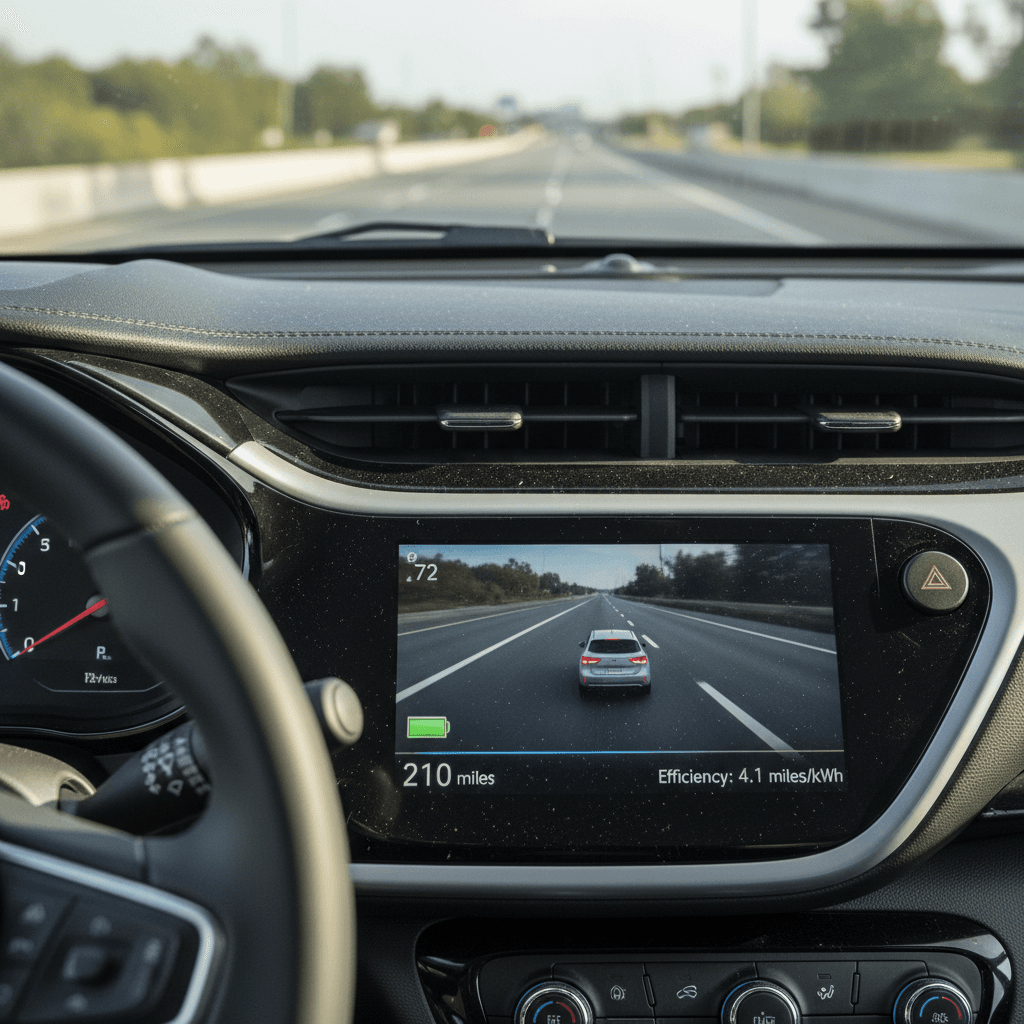
Realistic highway range for a healthy 2023 Bolt EV
Assuming stock tires, mild weather, and 70–75 mph cruising
Best case: 230–240 miles
Think: light winds, 65–70 mph, temps in the 60s–70s°F, gentle terrain, and a light foot. You’ll see efficiency around 3.8–4.2 mi/kWh and can come surprisingly close to the EPA number on a single highway leg.
Typical: 190–220 miles
Real‑world mixed interstate (70–75 mph), some hills, maybe a crosswind. Efficiency is more like 3.0–3.5 mi/kWh. This is where most 2023 Bolts land on long U.S. freeway drives.
Worst case: 160–180 miles
Sustained 75–80 mph, heavy headwinds, roof box or bike rack, or steep climbs. Your consumption can fall below 3.0 mi/kWh, and you’ll want to plan much shorter legs between chargers.
Think in mi/kWh, not miles
City and mixed driving: where the Bolt really shines
The Bolt EV was practically built for the American commute. In stop‑and‑go and 35–55 mph driving, its motor sips electrons and recovers energy aggressively when you lift off the accelerator. This is where that 259‑mile EPA number starts to look conservative.
2023 Bolt EV range in lower‑speed driving
Approximate numbers for a healthy pack in mild weather, driven from ~90% down to ~10% state of charge.
| Driving profile | Typical efficiency (mi/kWh) | Approx. usable energy (kWh) | Estimated real range (mi) |
|---|---|---|---|
| All‑city / suburban (25–45 mph) | 4.0–4.5 | ~61 | 245–275 |
| Mixed commute (city + freeway up to 65 mph) | 3.5–4.0 | ~61 | 215–245 |
| Heavier traffic with lots of stops | 3.8–4.2 | ~61 | 230–255 |
Use these as planning baselines, not promises, your right foot still makes the final call.
You can nudge these numbers higher if you lean into one‑pedal driving, pre‑condition the cabin while plugged in, and resist the temptation to mash the accelerator away from every light. But the bottom line stays the same: in everyday commuting, the 2023 Bolt EV often feels like a 250‑plus‑mile car.
Daily‑driver sweet spot
Cold weather: how much range you lose in winter
Every EV hates winter. Batteries are less efficient when cold, and cabin heat is a huge energy draw. The Bolt EV is no exception, though its heat pump‑less system responds predictably once you know the pattern.
How winter hits a 2023 Bolt EV’s range
Based on owner data and our own cold‑weather drives in temperatures around 20–35°F
Moderate cold (30–45°F)
With temps just around freezing, you’ll likely see 15–25% less range if you run the cabin at a comfortable 70°F and make short trips. Efficiency dips into the low 3s on the highway and mid‑3s around town.
Deep winter (below 20°F)
Start‑cold short trips with heavy heater use can shave 25–35% off range. It’s not unusual to see highway legs in the 150–180‑mile window, even with a healthy pack, if you’re running defrost and heated seats constantly.
Winter range survival kit
Charging speeds and how they change trip planning
Range isn’t just how far you go on a charge, it’s how long it takes to get back out there. The 2023 Bolt EV doesn’t have headline‑grabbing fast‑charge numbers, but it’s perfectly workable if you understand how to use its charging curve.
2023 Bolt EV charging in the real world
What we typically see on used cars in good health
Level 2 at home (240V)
With the onboard 11 kW charger and a 40‑ or 48‑amp home EVSE, you can add roughly 30–35 miles of range per hour. An overnight session easily fills the pack from 10–80% or more.
DC fast charging (peak)
In ideal conditions, most 2023 Bolts we see will briefly peak around 50–55 kW and then taper. From ~10–80% state of charge, you’re usually looking at 40–55 minutes on a typical public 50 kW unit.
Trip‑planning reality
Think of the Bolt EV as a car that’s happiest doing 150–180‑mile legs between chargers on a road trip. That keeps you in the fattest part of its charging curve and gives you a comfort buffer if a station is down or busy.
Be cautious with 0‑mile arrivals
Battery degradation: what we see on used Bolts
The 2023 Bolt EV uses updated LG Chem cells with a recalibrated pack after Chevy’s high‑profile recall. In practice, that’s been good news for long‑term health. Owner data and calibration tables for these packs suggest that capacity loss is relatively gentle, especially in the first 50,000–75,000 miles when they’re charged sensibly.
Approximate expected capacity over mileage
Based on calibration data for the N2.2 Bolt pack and real‑world owner reports. These are averages, not guarantees.
| Odometer (mi) | Estimated remaining capacity | Approx. loss vs. new | Typical “feels like” range (mixed driving) |
|---|---|---|---|
| 0–15,000 | ~100% | 0% | Around 250–270 miles |
| 30,000 | ~97% | 3% | Around 240–260 miles |
| 60,000 | ~95% | 5% | Around 235–250 miles |
| 90,000 | ~93% | 7% | Around 225–240 miles |
| 120,000 | ~91% | 9% | Around 215–235 miles |
| 150,000+ | ~87–90% | 10–13% | Around 205–230 miles |
Individual cars will sit above or below these numbers depending on climate and charging habits.
On a typical used 2023 Bolt EV with, say, 20,000–40,000 miles, we usually see only a modest hit to range, on the order of a few percent. That’s small enough that weather, tires, and driving style matter more day to day. Where things get interesting is at higher mileages or after years of frequent DC fast charging.
How Recharged checks a used Bolt’s battery
Range checklist if you’re shopping a used 2023 Bolt EV
Used 2023 Bolt EV range & battery checklist
1. Ask how the car was charged
Regular overnight Level 2 charging to 70–90%, with only occasional DC fast charge use, is ideal. A car that lived on 100% charges and DCFC every day deserves closer scrutiny.
2. Look at mi/kWh on the trip computer
Higher lifetime efficiency (say, above 3.5 mi/kWh) usually means the car was driven gently. Very low numbers might indicate lots of high‑speed or heavy‑load use, which can stress the pack more over time.
3. Evaluate your real daily range needs
Be honest about your longest regular drives. If your typical day is under 80 miles, even a slightly degraded Bolt EV leaves a very comfortable buffer. If you’re doing 200‑mile days in winter, you’ll want a car with excellent battery health and easy access to fast charging.
4. Inspect tires and wheels
Oversized wheels or aggressive all‑terrain tires are range killers. Stock wheels and low‑rolling‑resistance tires make it easier to match the numbers we’ve outlined here.
5. Check for recent software updates
GM has rolled out updates for charging behavior and battery management on later Bolts. A dealer‑maintained service history that includes software updates is a plus for both safety and long‑term range.
6. Get a battery health report
Whether through <strong>Recharged’s battery diagnostics</strong> or another trusted source, don’t guess. Ask for data that translates into estimated usable kWh and practical range at 100% charge.
Why used Bolts punch above their weight
Frequently asked questions about 2023 Bolt EV range
FAQ: 2023 Chevy Bolt EV range test
Bottom line: is the 2023 Bolt EV’s range enough?
If you strip away the marketing and look at real‑world tests, the 2023 Chevy Bolt EV still comes out looking like exactly what it set out to be: an affordable EV with genuinely practical range. You don’t buy one to chase 400‑mile numbers; you buy it because, even a few years on, it still covers most American commutes, errands, and many road trips with far fewer compromises than its price tag suggests.
For everyday driving in the U.S., a healthy 2023 Bolt EV gives you roughly 200‑plus usable miles in almost any season, more around town, and a workable rhythm on the highway if you’re willing to stop a bit more often than a big‑battery luxury EV. On the used market, that combination of range, efficiency, and price is hard to beat.
If you’re considering a 2023 Bolt EV, or comparing it to other used EVs, Recharged can help you see past the window‑sticker range. Our Recharged Score battery diagnostics, transparent pricing, financing options, and nationwide delivery make it simple to find a Bolt whose real‑world range matches the way you actually drive.