If you’re considering a Volkswagen ID.4, you’ve probably heard that early EVs can take a big resale hit. The **Volkswagen ID.4 depreciation curve over 5 years** is steeper than the average gas SUV, but that can be a *huge* opportunity if you’re buying used, and a manageable risk if you understand what’s going on.
Key takeaway in one line
Overview: How the VW ID.4 Depreciates Over 5 Years
Volkswagen ID.4 Depreciation at a Glance
Put simply, the ID.4 has not been a resale hero so far. Data from residual‑value trackers and used‑price guides show it depreciating a bit faster than the **average electric SUV**, and noticeably faster than a strong resale leader like a Tesla Model Y. But that doesn’t mean it’s a bad buy, especially in 2026, when many 2021–2023 ID.4s have already taken the heaviest hit and now sit on the flatter part of the curve.
Context matters
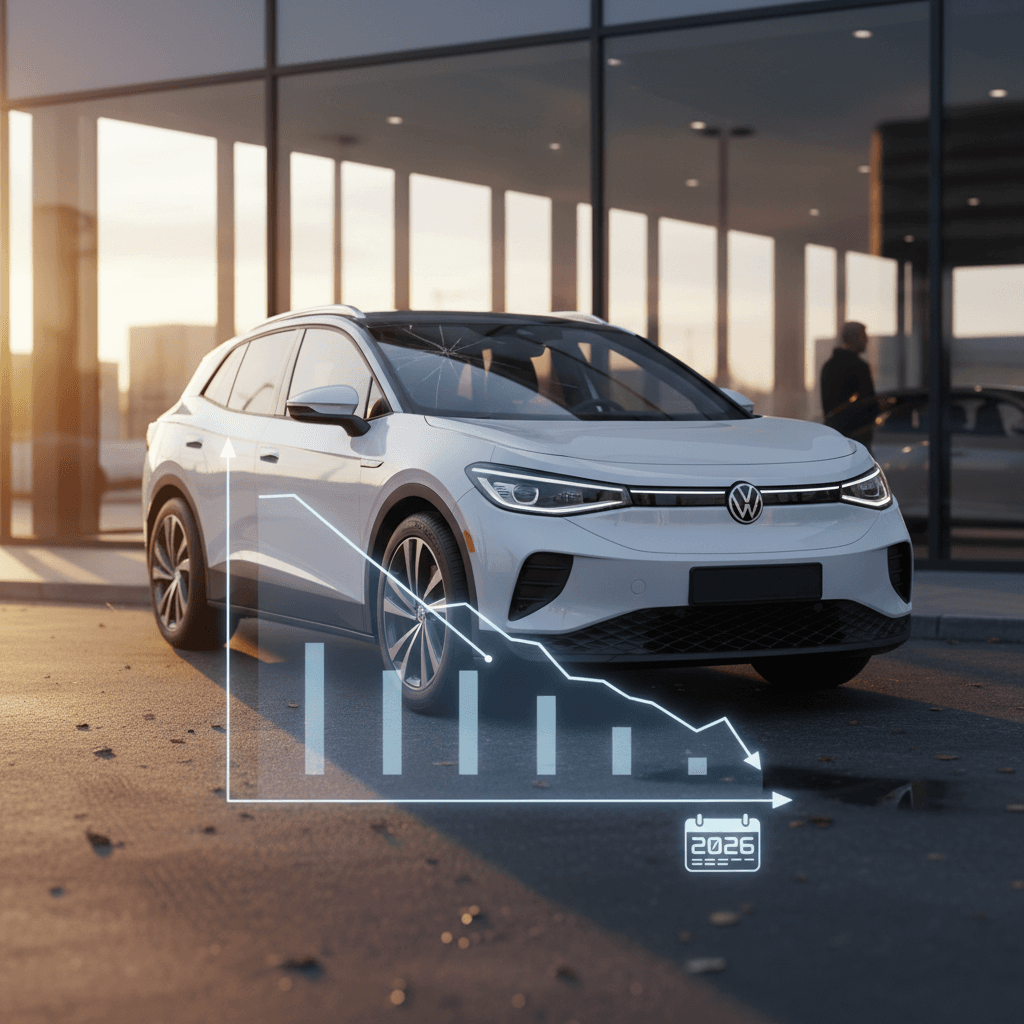
The Volkswagen ID.4 5-Year Depreciation Curve, Year by Year
Let’s turn the market noise into a clear mental model. We’ll focus on a typical rear‑wheel drive Pro or Pro S with an original MSRP around **$45,000–$50,000** (before incentives). Numbers below are generalized from multiple valuation tools and EV‑specific depreciation studies as of early 2026.
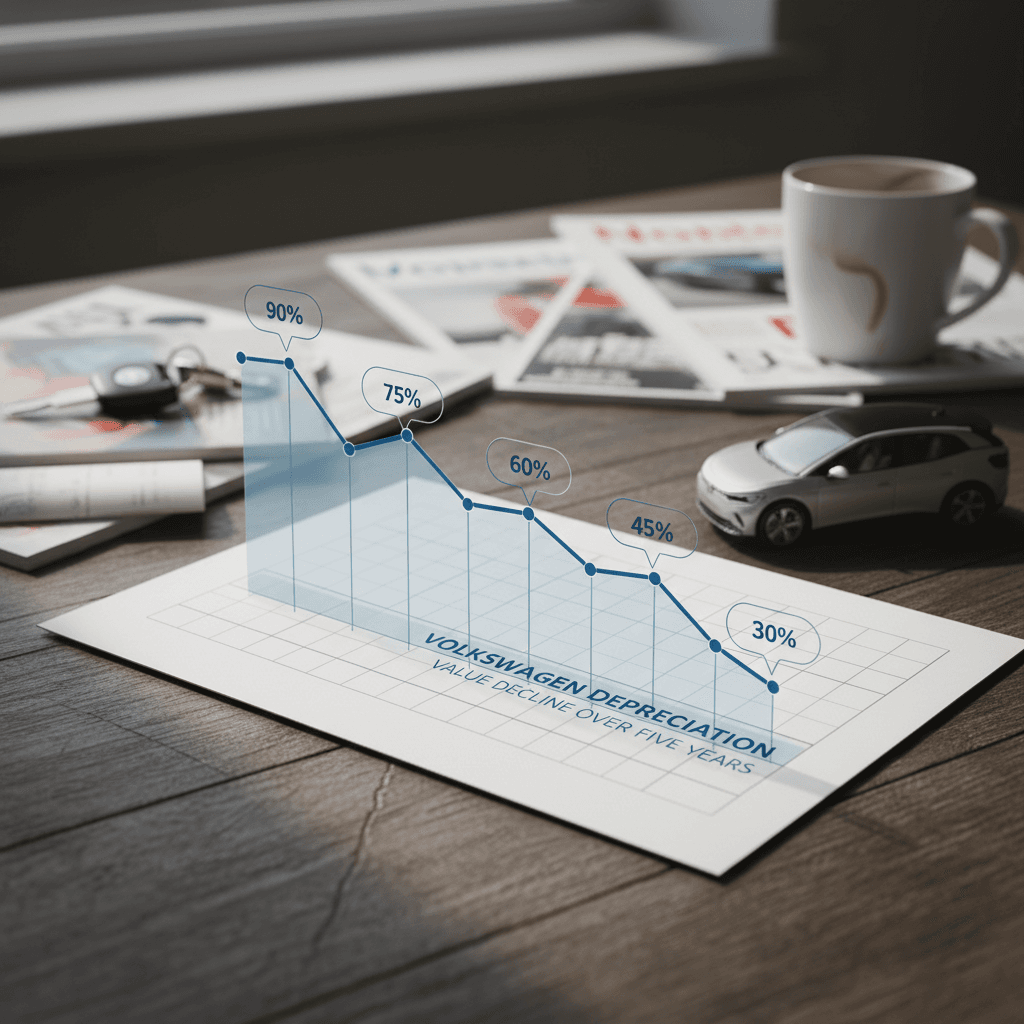
Illustrative 5‑Year Depreciation Curve for a VW ID.4
Approximate curve for a well‑equipped ID.4 with a $48,000 MSRP, driven ~12,000 miles per year and kept in good condition. Rounded for clarity, not a guarantee.
| Age of Vehicle | Approx. Value vs. $48k MSRP | Dollar Depreciation | Notes on Market Behavior |
|---|---|---|---|
| Brand new | $48,000 (100%) | , | Window sticker price before tax, fees, and any rebates or credits. |
| Year 1 | $32,000–$34,000 (~68–71%) | -$14,000 to -$16,000 | Steep initial drop as instant‑rebate effect and softening EV demand get priced in. |
| Year 2 | $28,000–$30,000 (~58–63%) | -$18,000 to -$20,000 | Further reset as more used supply hits the market and newer models improve range/features. |
| Year 3 | $24,000–$26,000 (~50–54%) | -$22,000 to -$24,000 | Curve starts to flatten; good sweet spot for used buyers. |
| Year 4 | $21,000–$23,000 (~44–48%) | -$25,000 to -$27,000 | Battery warranty still strong; values track more with mileage and condition. |
| Year 5 | $17,000–$20,000 (~35–42%) | -$28,000 to -$31,000 | Most estimates place 5‑year depreciation for the ID.4 around 60–65% of original MSRP. |
Real‑world values will vary by trim, mileage, equipment, and local market, but this table reflects the typical pattern ID.4 owners are seeing.
How to read this curve
How the ID.4’s 5-Year Curve Compares to Other EVs and SUVs
VW ID.4 vs. Other 5‑Year Depreciation Curves
Where it lands among EVs and mainstream compact SUVs
VW ID.4
Approx. 5‑year depreciation: ~60–65% of original MSRP, leaving ~35–40% residual value.
Positioned in the middle of the EV pack: not the worst, not a standout either. Software baggage and heavy incentives drag values down, but battery durability helps on the back half of the curve.
Other Volume EVs
Typical 5‑year depreciation: high‑50s to mid‑60%.
Many mass‑market EVs, especially those hit hardest by falling new‑EV prices, show similar or worse curves. Some early premium EVs have lost 70%+ over five years.
Gas Compact SUVs
Typical 5‑year depreciation: mid‑40s to low‑50%.
Popular gasoline crossovers usually retain more value than today’s EVs. That gap is precisely what makes used EVs like the ID.4 so compelling for value‑hunters.
If you benchmark the **Volkswagen ID.4 depreciation curve over 5 years** against gas SUVs, it looks rough. If you benchmark it against other EVs sold in the 2021–2023 window, it looks right in line, and in some cases better, thanks to relatively solid long‑term battery behavior and a practical crossover format.
What Actually Drives Volkswagen ID.4 Depreciation?
- **Federal and state incentives.** New ID.4 buyers often stacked thousands of dollars in tax credits, rebates, and VW promotions. The used market quickly bakes those savings into pricing, so resale values look low against the original sticker.
- **Rapid new‑EV price cuts.** As newer ID.4s and rival EVs dropped in MSRP and gained features, used prices for earlier ID.4s had to follow down.
- **Software reputation.** Early 2021–2022 owners saw laggy infotainment and glitchy driver‑assist systems. Many of these issues have been improved with updates, but resale values still reflect that reputation.
- **Charging experience and network.** While the ID.4 supports DC fast charging, it doesn’t have Tesla‑level charging convenience everywhere. That limits demand for some shoppers and softens values versus more road‑trip‑oriented EVs.
- **Mileage and use case.** High‑mileage rideshare or fleet ID.4s can depress auction prices, nudging pricing expectations down across the board even if retail examples are nicer.
- **General EV uncertainty.** Many buyers still worry about long‑term battery costs and future standards, which shows up as deeper discounts on used EVs in general.
The silver lining for buyers
Real-World VW ID.4 Price Examples in 2026
To ground this in reality, here’s what shoppers and owners are actually seeing in early 2026 for clean‑title, average‑mileage ID.4s sold through dealers and marketplaces:
Typical 2026 Asking Price Ranges for Used VW ID.4
Illustrative ranges for U.S. retail asking prices from dealer listings and EV marketplaces, assuming clean history and typical mileage for age.
| Model Year (Age in 2026) | Typical Miles | Common Trims | Typical Asking Range |
|---|---|---|---|
| 2021 (5 years) | 45,000–70,000 | Pro, Pro S, AWD Pro S | $15,000–$21,000 |
| 2022 (4 years) | 35,000–60,000 | Pro, Pro S, AWD | $18,000–$24,000 |
| 2023 (3 years) | 25,000–45,000 | Standard, Pro, AWD | $22,000–$28,000 |
| 2024 (2 years) | 15,000–30,000 | Standard, Pro, S trims | $27,000–$34,000 |
Always check local listings, these bands are directional, not guarantees.
Watch out for the extremes
Buying a Used Volkswagen ID.4: How to Use the Depreciation Curve to Your Advantage
If you’re shopping used, the ID.4’s 5‑year depreciation curve is your friend. The goal is to buy after the steepest part of the curve but before you run out the clock on the battery and bumper‑to‑bumper coverage.
Smart Steps for Buying a 3–5‑Year‑Old VW ID.4
1. Target the right model years
For value, 2021–2023 ID.4s often hit the sweet spot: they’ve absorbed that brutal early depreciation and still have years of battery warranty coverage left. Later 2024+ builds add refinements and may command a premium.
2. Favor well‑optioned, not over‑priced
Pro and Pro S trims with heat pumps, upgraded audio, and AWD where you need it often hold value better, and are simply nicer to live with. Don’t overpay for rare colors or cosmetic packages that don’t help resale.
3. Prioritize clean history and low hassle
Accident history, lemon buybacks, or repeated electrical issues can tank resale later. Pull full history reports and avoid anything with vague or unresolved electrical and charging complaints unless you’re deeply discounted and comfortable with risk.
4. Make battery health non‑negotiable
Ask for objective battery diagnostics, not just a guess from the dash gauge. At Recharged, every vehicle includes a **Recharged Score** report, so you see verified battery health before you commit, crucial for a used EV.
5. Compare to new after incentives
Sometimes a discounted new or nearly‑new ID.4 with federal or state incentives ends up close in price to a 2‑year‑old used one. Always compare **total out‑the‑door cost** of new vs. used in your zip code.
6. Think about your exit
If you expect to keep the ID.4 5–7 years, today’s heavy front‑loaded depreciation may barely touch you. If you turn cars quickly, you’ll want to buy deeper into the curve (year 3–4) to avoid getting caught in another steep drop.
Where Recharged fits in
Selling or Trading In an ID.4: Getting the Most for a 3–5 Year Old Car
If you already own an ID.4 and you’re approaching that 3–5‑year mark, you’re right where depreciation curves and real life decisions collide. Your goal is to position the car like the **best version** of itself in a crowded EV market.
Optimize the car itself
- Stay ahead on software updates. Document that the car is on the latest stable build, this reassures buyers worried about early‑ID.4 quirks.
- Fix glaring cosmetic issues. Curb rash and small dents are surprisingly cheap to address and can move you up a whole pricing tier.
- Service records matter. A tidy folder (or digital history) showing regular maintenance makes any EV easier to sell at the top of the market range.
Pick the right selling channel
- Instant offer vs. private sale. Private party usually nets more but takes time; instant‑offer tools and EV‑focused marketplaces trade a bit of money for speed and certainty.
- Leaning on EV specialists. Platforms like Recharged understand EV shoppers, battery health, and incentives, so they’re often willing to pay more for a clean ID.4 than generic wholesalers.
- Time your move. Listing just before peak seasonal demand (spring–early summer) often yields better interest than trying to sell into the depths of winter.
Lease vs. buyback wrinkles
Battery Health, Warranties, and Their Impact on 5-Year Value
No discussion of the **Volkswagen ID.4 depreciation curve over 5 years** is complete without talking about batteries. For most buyers, long‑term pack health is the make‑or‑break factor in whether an older EV feels like a smart buy or a ticking time bomb.
- **VW’s battery warranty.** U.S.‑market ID.4s typically carry an **8‑year/100,000‑mile** battery warranty against excessive capacity loss. That means a 5‑year‑old ID.4 still has meaningful coverage left, which props up values versus older used EVs with expiring warranties.
- **Real‑world degradation so far.** Early data from Volkswagen’s MEB platform (shared with the ID.3) suggests relatively modest degradation when properly maintained, often within the teens percentage range after high mileage. That’s reassuring for second owners who plan to keep the car into years 7–10.
- **Fast‑charging habits.** A car that spent its life supercharging on DC fast chargers may show more degradation than one that mostly charged at home on Level 2. Battery reports and owner history can help you distinguish the two.
- **Cold‑climate considerations.** Range loss in winter is often temporary (due to temperature) rather than permanent capacity loss. Understanding that distinction can prevent buyers from undervaluing otherwise healthy cars.
Why third‑party battery diagnostics matter
FAQ: Volkswagen ID.4 Depreciation Over 5 Years
Frequently Asked Questions About the VW ID.4 5‑Year Depreciation Curve
Bottom Line: Is the VW ID.4’s 5-Year Depreciation Curve a Dealbreaker?
If you buy a Volkswagen ID.4 brand new and sell it quickly, the numbers are blunt: the **Volkswagen ID.4 depreciation curve over 5 years** is steep, especially in the first two. But that same curve flips into an advantage for informed used‑EV shoppers and for owners who plan to keep the car long enough to ride out the early drop.
A realistic expectation is that a typical ID.4 will be worth roughly **one‑third of its original MSRP after 5 years**, give or take, assuming normal mileage and solid condition. If you buy at years 3–5 with good battery health, you’re stepping in once the worst of the curve is behind you.
Recharged was built around that reality. By combining **transparent battery‑health diagnostics, fair market pricing, financing, trade‑in options, and nationwide delivery**, Recharged makes it much easier to navigate depreciation instead of being surprised by it. Whether you’re buying your first used ID.4 or figuring out what to do with the one in your driveway, understanding the curve, and pairing it with good data, is the difference between feeling burned and feeling like you found the smart end of the market.