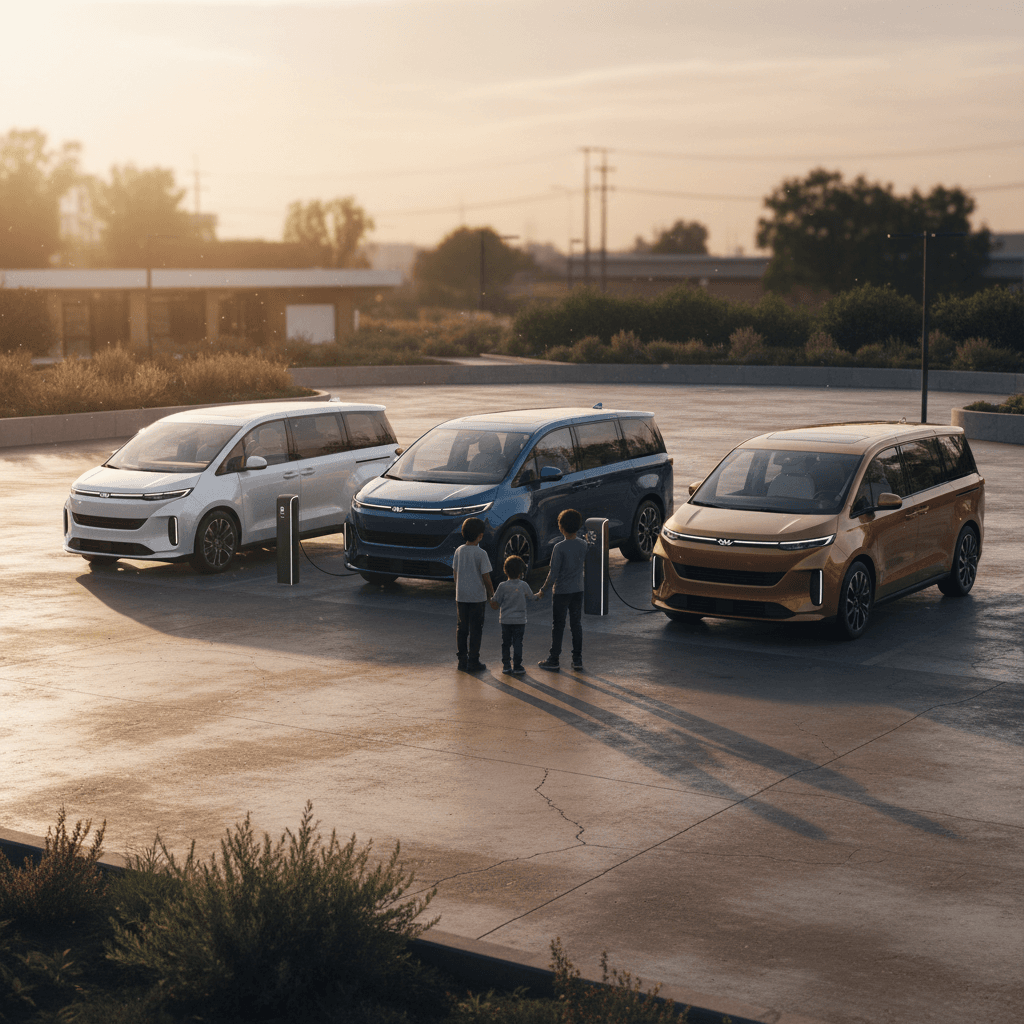
If you’re hunting for electric minivan options in 2025, you’ve probably already discovered the uncomfortable truth: there still aren’t many. Carmakers have poured money into electric crossovers and trucks, while truly van‑shaped family EVs remain rare. That doesn’t mean you’re out of luck, but it does mean you need to think a bit more strategically about body style, range and budget.
Quick reality check
Why Electric Minivans Are So Hard to Find in 2025
Before we dive into individual models, it helps to understand why the market for electric minivans looks so thin. Automakers love crossovers because they sell in huge volumes and command higher margins. Minivans, by contrast, are a smaller slice of the pie, so they’re usually last in line for expensive new EV platforms.
Three reasons the electric minivan is lagging
Understanding the market helps you shop smarter
1. Economics first
2. Range & aero challenges
3. Price sensitivity
How this affects you
Fully Electric Minivan Options in 2025
Let’s start with the models that come closest to a true electric minivan experience in 2025. Availability and body style vary by region, so think of this as a spectrum: from van‑like “people movers” you can actually buy in the U.S., to global‑market electric MPVs that hint at where things are headed.
2025 electric minivan–style options
Key specs for notable battery‑electric vans and MPVs that serve minivan‑like roles.
| Model | Region (2025) | Seats | Est. Range (EPA/CLTC) | Starting Price* | Notes |
|---|---|---|---|---|---|
| Volkswagen ID. Buzz (3‑row) | US & Europe | 6–7 | ~230–260 mi EPA | ≈$60,000 | Retro‑styled electric van with sliding doors and flexible seating. |
| Volvo EM90 | China (global launch TBD) | 6 | Up to ~450 mi CLTC | ≈$110,000+ (China) | Luxury electric MPV sharing platform with Zeekr 009. |
| MG M9 EV | India (premium import) | 6–7 | ~350–400 mi CLTC (est.) | ≈Rs 69.9 lakh | High‑end electric MPV positioned against Kia Carnival. |
| VinFast Limo Green (VF MPV 7) | Vietnam, expanding in Asia | 7 | NEDC‑rated range; family‑focused | Local pricing | Mid‑size three‑row electric MPV with modest battery and DC fast‑charge capability. |
Specifications are approximate and may vary by trim and region; always confirm with the manufacturer or dealer before buying.
Check regional availability
Volkswagen ID. Buzz: The headline electric van
For U.S. shoppers, the **Volkswagen ID. Buzz** is the closest thing to a mainstream electric minivan in 2025. It’s a three‑row EV on VW’s MEB platform, styled as a modern reboot of the classic Microbus. Underneath the nostalgia, you get sliding doors, a high seating position, and the kind of interior volume that makes life with kids or carpools easier.
Volkswagen ID. Buzz at a glance (U.S. 3‑row)
Don’t skip safety bulletins
Luxury & global‑market EV vans
Above the mainstream, vehicles like the **Volvo EM90** target a different buyer altogether: think business‑class cabins with lounge‑style second rows, big batteries and six‑figure price tags. In markets like China and parts of Southeast Asia, you’ll also see electric MPVs from brands like MG, Wuling, Leapmotor and VinFast serving as family haulers, taxis, and corporate shuttles. If you’re in North America, these matter less as immediate options and more as a preview of the electric minivans we’re likely to see later this decade.
Plug‑In Hybrid and Hybrid Minivans: Bridging the Gap
Because fully electric minivans are scarce, many families end up in **plug‑in hybrid** or **strong hybrid** vans instead. These give you electric driving in town without forcing compromises on long‑distance trips or towing.
Plug‑in hybrid: Chrysler Pacifica Hybrid
The Chrysler Pacifica Hybrid remains the only true plug‑in minivan sold widely in the U.S. for 2025. It offers roughly 30–35 miles of electric range in real‑world driving, enough for many school‑day and errand loops to be almost entirely electric, before switching to a gasoline hybrid mode for road trips.
- Standard minivan features: power sliding doors, Stow ‘n Go flexibility (with some compromises on the PHEV), and family‑friendly ergonomics.
- Works with a basic Level 2 home charger, often adding a full charge in about two hours.
Hybrid: 2025 Kia Carnival Hybrid
Kia’s updated 2025 Carnival Hybrid adds a turbo‑hybrid powertrain to an already popular family hauler. With around 242 hp from a 1.6‑liter turbo engine and electric motor combo, and EPA ratings in the low‑30s MPG combined, it slashes fuel use versus a traditional V6 minivan while keeping long‑range flexibility.
- Seats up to eight with SUV‑inspired styling but **van‑like cabin volume**.
- Hybrid‑only (no plug), so you don’t get electric‑only commuting, but you also don’t need to think about charging.
Why consider a PHEV minivan first
3‑Row EV SUVs vs. Electric Minivans
Here’s the real pivot for many families: instead of waiting for the perfect electric minivan, they buy a **three‑row EV SUV** that behaves like one. You trade sliding doors and a low step‑in height for better range, more choices, and often lower pricing, especially on the used market.
Popular 3‑row EV alternatives to an electric minivan
These crossovers and SUVs quietly do minivan duty for many families.
Hyundai/Kia 3‑row EVs
Cadillac Escalade IQ / IQL
Emerging 3‑row crossovers
Minivan vs. 3‑row EV SUV: which fits your life?
Key trade‑offs families face when choosing between traditional minivans and three‑row EV SUVs in 2025.
| Factor | Traditional Minivan | 3‑Row EV SUV |
|---|---|---|
| Rear doors | Sliding; easier in tight parking | Conventional; bigger swing area |
| Step‑in height | Lower, easier for small kids | Higher, more SUV‑like climb |
| Seating flexibility | Often best‑in‑class for car seats | Good, but sometimes tighter third row |
| Powertrain | Gas, hybrid, plug‑in hybrid | Mostly fully electric |
| Range & road trips | Great with gas; PHEV fine, full EV rare | Strong with big batteries; charging planning needed |
| Charging at home | Optional for PHEV; not required for hybrids | Strongly recommended to get full benefit |
| Resale & supply | Mature market, predictable | EV depreciation cuts both ways, great for used buyers |
“Electric minivan” shoppers should compare real‑world usability, not just body style labels.
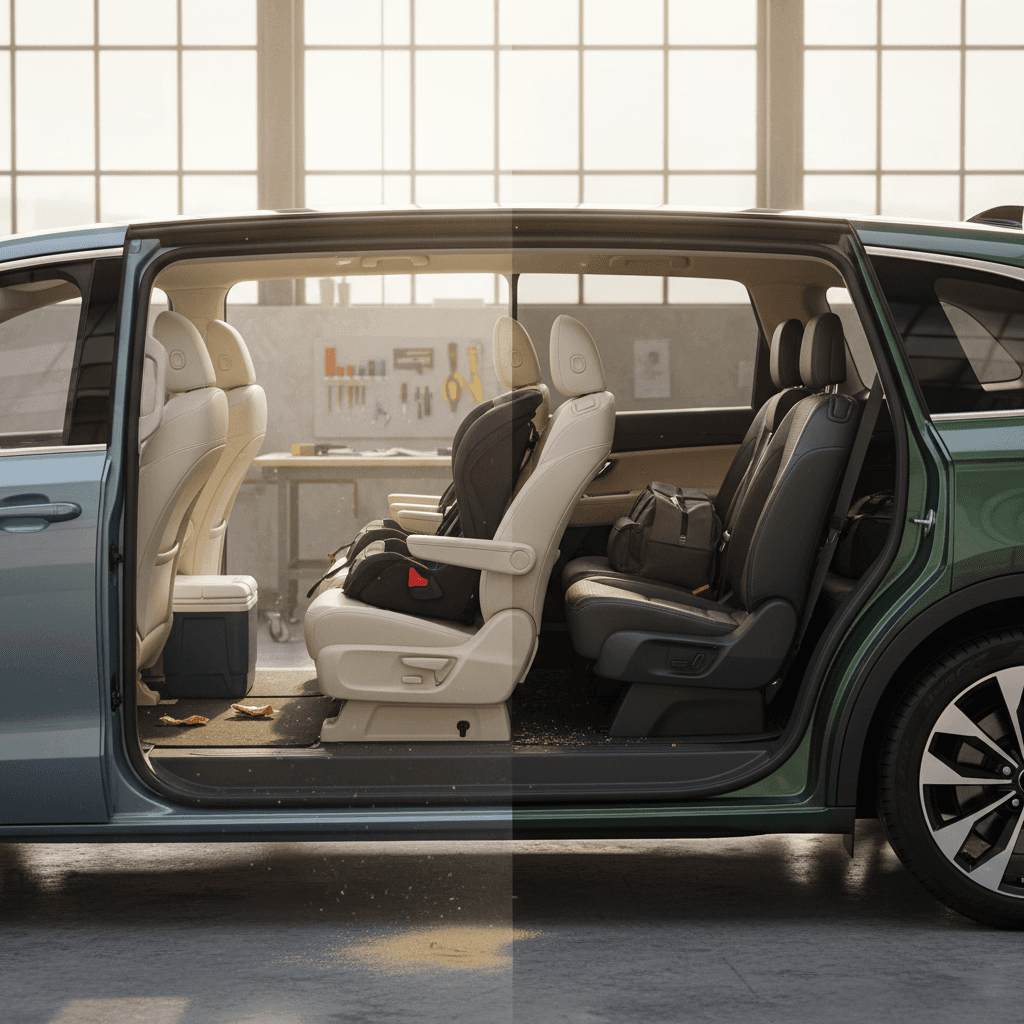
How Much Do Electric Minivans Actually Cost to Own?
Sticker price is only part of the story. Electric minivans and their stand‑ins often look expensive up front, but you recover a lot through lower running costs, especially if you can charge at home on a low, overnight electricity rate.
Cost levers that matter more than MSRP
Run the numbers, not just the price
Used EV Strategies for “Minivan Families”
Here’s where the market really opens up. If you’re willing to buy used, you can often **pair a practical minivan or hybrid with a used EV**, or skip the van altogether and get a roomy used 3‑row EV for similar money to a new gas van.
Smart ways families use used EVs instead of new electric minivans
1. Replace the second car with a used EV
Many households keep a minivan for road trips and hauling, but use a second car for commuting and errands. Swapping that second car for a used EV can cut fuel use dramatically while you wait for better electric minivan choices.
2. Downsize to a 3‑row used EV
If your current minivan is mainly a people‑mover and you’re okay giving up sliding doors, a used three‑row EV can tick the same boxes with lower running costs and modern safety tech.
3. Use EV range honestly
Look at your real daily miles. If 90% of your driving is under 60–80 miles, even a used EV with some battery degradation can cover weekdays easily, leaving the van or hybrid for longer runs.
4. Lean on battery health data
With used EVs, the battery is the new engine. Tools like the <strong>Recharged Score</strong> give you a verified view of battery health, so you’re not guessing about range or longevity.
5. Finance and trade‑in together
If you’re moving out of an older gas minivan, use trade‑in and financing tools to roll into a newer EV with a payment that still works for your budget, and factor in your lower fuel spend.
6. Consider nationwide shopping
Because EV supply is uneven, the best used 3‑row EV for your family may not be local. Working with a retailer that supports **nationwide delivery** widens your options dramatically.
Where Recharged fits in
Charging and Road‑Trip Realities With an Electric Van
Whether you’re eyeing a VW ID. Buzz or a three‑row EV SUV, the family‑travel questions are the same: where will we charge, how long will it take, and what does that do to our road‑trip rhythm compared with a gas or hybrid minivan?
- Home charging is non‑negotiable for most families. A Level 2 charger in the garage or driveway turns every night into a "full tank" so you’re not living at public stations.
- Plan around 150–250 kW fast chargers for trips. Big vehicles like vans benefit from high‑power DC fast charging to keep stop times reasonable.
- Expect more frequent, shorter stops. Instead of one 600‑mile slog with two gas fill‑ups, think 200–250‑mile legs with 20–30 minute charging breaks that line up with meals and bathroom stops.
- Cold weather shaves range. A boxy van plus winter temperatures can easily cut usable range 20–30%, so build margin into your plans.
- Apps are your friend. Native navigation, PlugShare, A Better Routeplanner and others help you see real‑time charger status and plan conservative routes.
If you tow or load up heavily…
Checklist: Do You Actually Need an Electric Minivan?
Before you lock in on body style, it’s worth stepping back. What you really need is space, safety, and lower running costs, not a specific silhouette. Use this checklist to pressure‑test whether an electric minivan is the right target, or if a hybrid van or 3‑row EV SUV would serve you just as well.
Is an electric minivan really your best fit in 2025?
You truly need sliding doors
If tight parking garages, small kids, or mobility issues make sliding doors a must‑have rather than a nice‑to‑have, a plug‑in or hybrid minivan might make more sense until more electric vans show up.
Your daily driving fits EV strengths
If most days are under 80–100 miles, a fully electric van or 3‑row SUV fits beautifully, and you can rely on hybrids or rentals for the once‑a‑year mega‑road‑trip.
You can install home charging
If you’re in a single‑family home or a building that supports Level 2 charging, you’ll get the full benefit of an electric van. If not, a PHEV minivan may be the safer play today.
You’re flexible on model & timing
If you’re willing to consider used 3‑row EVs, or wait a model year or two, your options expand rapidly compared with insisting on a brand‑new fully electric minivan right now.
You’ve run a total‑cost‑of‑ownership comparison
If you can show that fuel + maintenance savings offset a higher purchase price, you’ll feel better about the decision, and be less rattled by resale value swings.
You’ve thought about resale and battery health
Battery warranties, independent health reports like the Recharged Score, and brand track records all matter. Make sure you’re comfortable with the long‑term picture, not just the first owner experience.
FAQ: Electric Minivan Options in 2025
Frequently asked questions about 2025 electric minivans
Bottom Line: The Smart Path to an “Electric Minivan” in 2025
If you came looking for a long list of **electric minivan options for 2025**, the honest answer is that the list is still short. The Volkswagen ID. Buzz is the only real mainstream electric van on sale in the U.S., and it’s priced and positioned more like a lifestyle vehicle than a budget family hauler. Around it sit a handful of global‑market EV MPVs, plus a much healthier ecosystem of plug‑in minivans, hybrid vans and three‑row EV SUVs that quietly do the same job.
The smart move is to focus less on labels and more on how you actually use a vehicle: school runs, road trips, cargo, and cost of ownership. That might mean a plug‑in Pacifica or Carnival Hybrid today, a used three‑row EV from a marketplace like Recharged, or a short wait for the next wave of electric people‑movers. However you slice it, families have more electrified options in 2025 than the minivan badge alone would suggest, and that trend is only accelerating.